Punatsangchhu-II Inaugurated, New MoUs Signed
Gelephu Project Gains Momentum in India-Bhutan Talks
Thimphu: Prime Minister Narendra Modi arrived in Bhutan today for a visit that underscored the depth of India-Bhutan ties, coinciding with the 70th birthday of the Fourth King of Bhutan, the Global Peace Prayer Festival, and the exposition of the Holy Piprahwa Relics of Lord Buddha from India. From the outset, the visit combined solemnity, celebration, and strategic partnership.
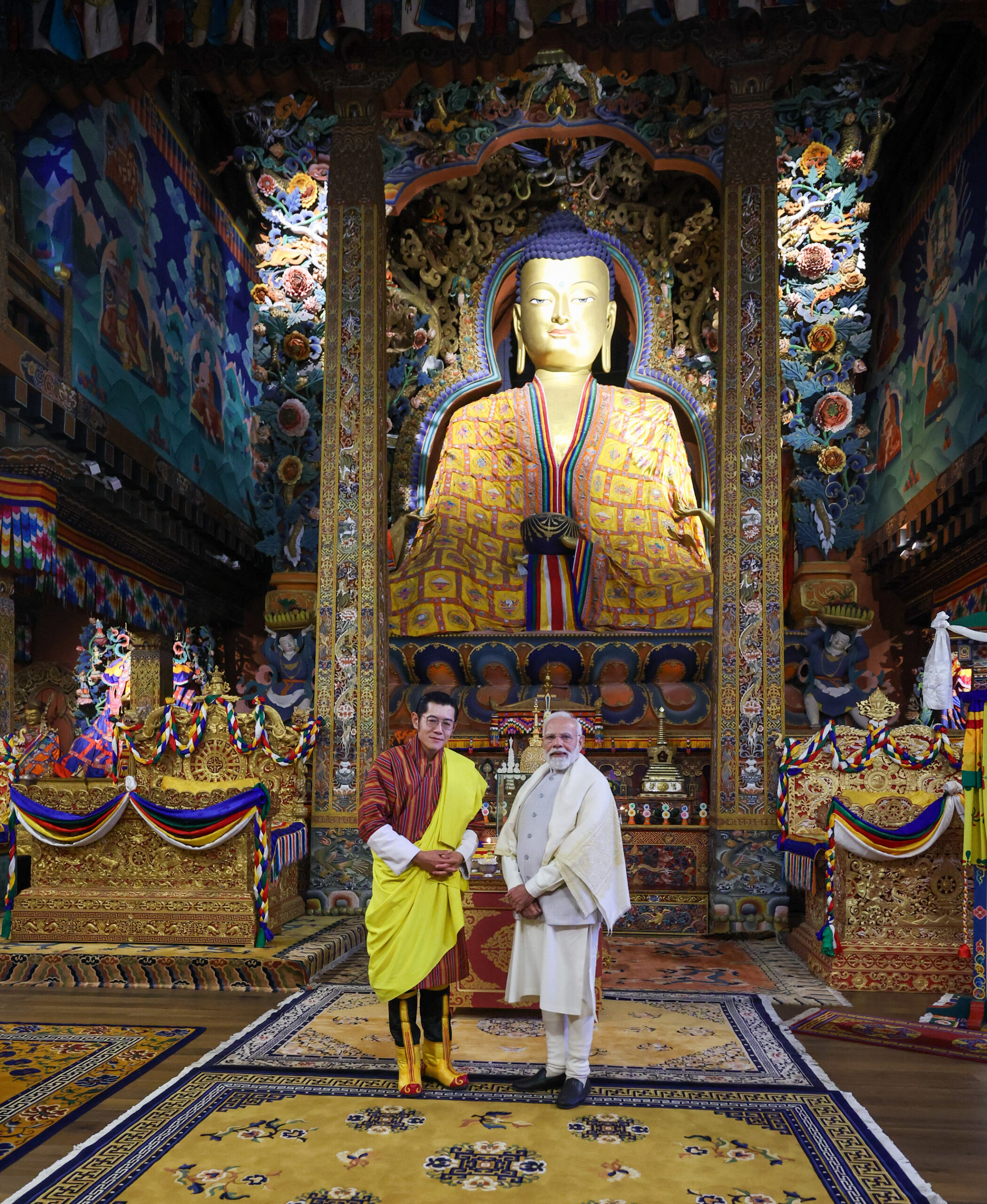
Upon arrival, the Prime Minister received an audience with the King of Bhutan, Jigme Khesar Namgyel Wangchuck, where both leaders discussed strengthening bilateral cooperation, regional and global challenges, and paid tribute to the victims of the Delhi blast on 10 November 2025. The king conveyed condolences, while Prime Minister Modi acknowledged the ongoing investigations, assuring that “all those responsible will be brought to justice.”
India announced an expanded financial support package, confirmed the commissioning schedule of the 1,020-megawatt Punatsangchhu-II hydropower project, and opened new cooperation tracks in digital public infrastructure, space applications, and cross-border connectivity during the visit. The visit, marked by extended talks with King Jigme Khesar Namgyel Wangchuck and Prime Minister Tshering Tobgay, reaffirmed the strategic continuity of a partnership that has been built sector by sector over six decades.

At the centre of the outcomes was a fresh concessional credit support line and a reiterated commitment to Bhutan’s 13th Five-Year Plan priorities, including the development of the Gelephu Special Administrative Region, a cross-border economic zone that both sides describe as a long-horizon project aligned with climate-resilient infrastructure and sustainable industry. India also confirmed that Punatsangchhu-II, a project that has faced cost overruns and geological challenges for over a decade, is now in its final implementation stage, with commercial operations scheduled for 2024–25. Once operational, it will substantially expand Bhutan’s renewable export capacity and deepen the mutually-beneficial hydropower trade that finances a significant share of the Bhutanese state. During the visit, Prime Minister Modi and the King jointly inaugurated the Punatsangchhu-II project, symbolically marking the next phase of India-Bhutan energy partnership.
The visit also advanced a set of new sectoral understandings. Space agencies on both sides will move from data sharing to joint applications in agriculture and disaster management; digital public infrastructure teams will begin interoperability pilots involving Bhutan’s emerging e-governance frameworks and India’s Aadhaar-based identity stack; and border trade logistics will be eased through the planned expansion of rail connectivity from Assam into Gelephu and Samtse. In addition, a further standby credit facility, building on the ₹1,500-crore line announced in 2023, was discussed as a financial cushion to ensure liquidity support in a global environment where Bhutan has faced pressures from tourism downturns and delayed hydro revenues. The Government of India also announced a grant of land in Varanasi for the construction of a Bhutanese temple and guest house, further cementing cultural and spiritual ties.
These decisions carry weight because the India-Bhutan relationship has always been anchored not in episodic diplomacy but in incremental institutional design. Since the first Indian assistance programme to Bhutan in 1961, the partnership has grown through hydropower phases: the Chukha project in the 1980s, the Tala plant inaugurated in 2007, and the Mangdechhu plant that began generating in 2019. Punatsangchhu-II is the next inflection point. Each project strengthened Bhutan’s fiscal base while embedding India as its principal energy partner, and the new agreements suggest that both sides see future cooperation extending into green hydrogen, transmission corridors, and joint grid balancing models in the coming decade. Complementing this, three MoUs were signed to institutionalise bilateral cooperation in renewable energy, health and medicine, and mental health capacity-building through NIMHANS, reinforcing sectoral linkages across energy, healthcare, and human capital development.
The political atmosphere of the visit was steady, unhurried, and strategic. For Bhutan, the priority is to maintain economic stability during a period of structural transition, including high youth emigration, a shift toward service-led growth, and the design of the Gelephu Special Administrative Region as a node connecting South Asia to Southeast Asia. For India, the visit underscored a long-standing principle: that Bhutan’s security and developmental choices are treated as sovereign, but supported materially and predictably. This stance has particular salience as Bhutan continues its quiet boundary negotiations with China. While India is not party to those talks, Thimphu’s leadership repeatedly signalled during the visit that its regional diplomacy will continue to be anchored in trust-based coordination with New Delhi, especially on security and border infrastructure.
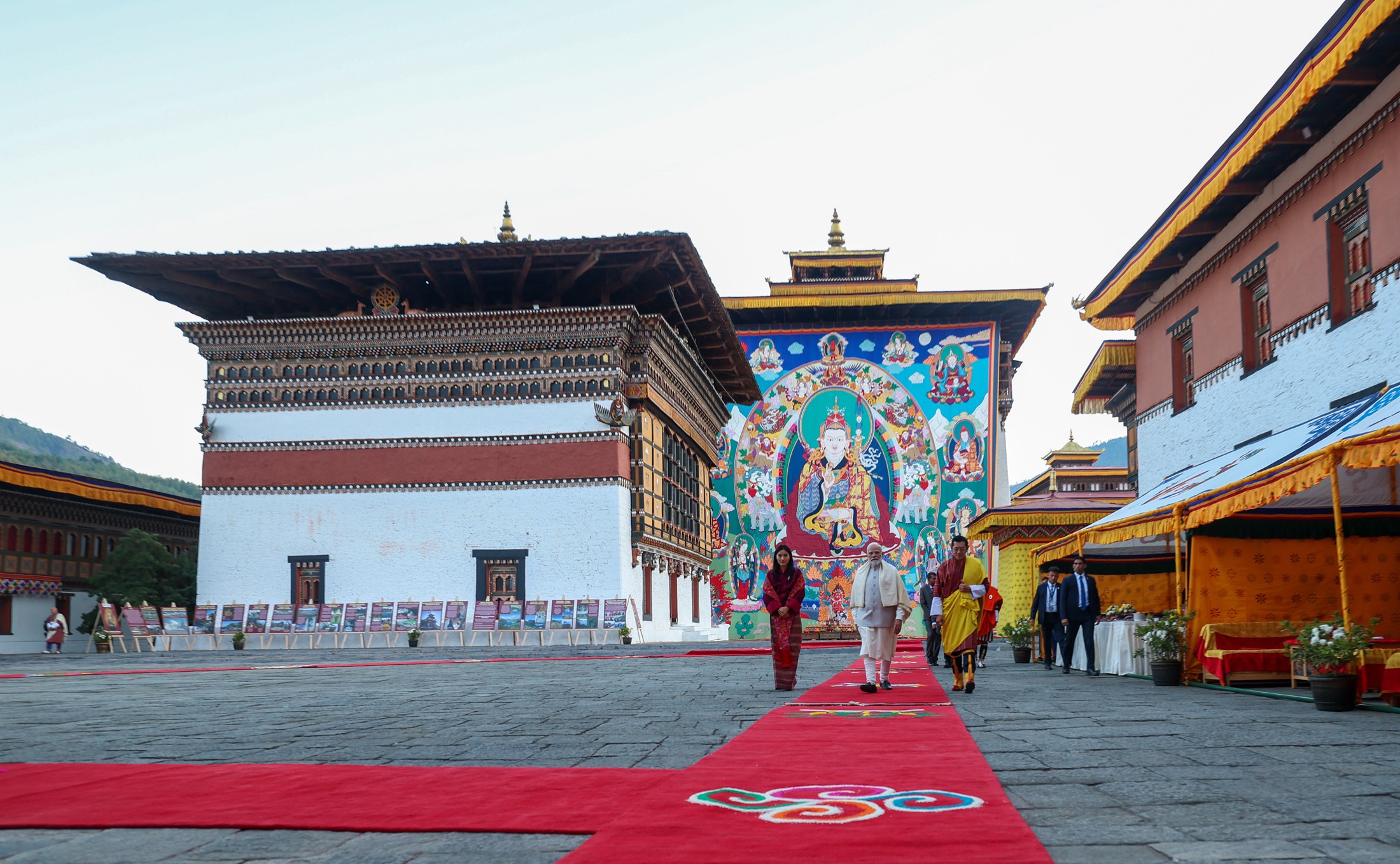
The timeline of the visit reflected this layered agenda. The talks in Thimphu focused first on energy and financial support, then moved to connectivity and digital systems, and concluded with regional strategic consultations. Alongside policy discussions, Prime Minister Modi participated in the Global Peace Prayer Festival, joined prayers before the Piprahwa relics of Lord Buddha, and attended celebrations marking His Majesty the Fourth King’s 70th birthday. The inauguration of the Gyaltsuen Jetsun Pema Mother and Child Hospital, the rollout of a skills and education cooperation programme, and cultural engagements added a domestic grounding to what might otherwise have seemed a purely policy-driven visit. Bhutan’s public expressions of solidarity with India following the Delhi tragedy—through prayers and ceremonial observances—were also formally acknowledged by the Prime Minister, reinforcing the moral and spiritual dimensions of bilateral ties.
The expected next steps flow directly from the visit’s outcomes. Technical teams will now finalise the hydropower tariff arrangements for Punatsangchhu-II before commissioning; a joint project office will begin feasibility and zoning work for the Gelephu Special Administrative Region; railway authorities will accelerate surveys for the Gelephu and Samtse cross-border rail links; and digital governance specialists will draft the interoperability and data-security protocols for the new public-digital projects. Sectoral follow-ups, including energy, health, renewable integration, and mental health capacity-building, will be synchronised through the India-Bhutan Development Cooperation mechanism.
Seen in totality, the visit avoided spectacle in favour of measured continuity. It produced clear outcomes, linked them to past commitments, and laid out a forward route map that is likely to shape the economic, strategic, and cultural contours of India-Bhutan relations through the rest of the decade.
– global bihari bureau