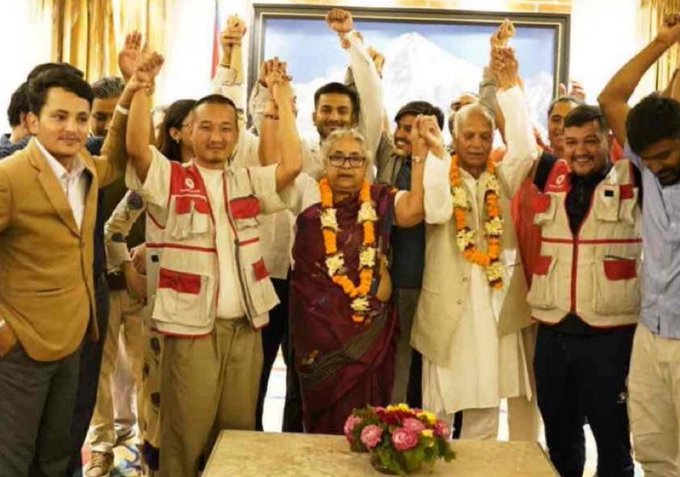
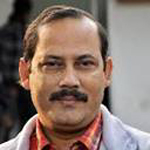
Sushila Kharki after her swearing in as Nepal's interim Prime Minister. Photo courtesy @SushiIaKarki|X
 By Nava Thakuria*
Karki Leads Nepal’s Recovery After Violent Protests
Kathmandu/New Delhi: Sushila Karki is prioritising dialogue with political parties, Gen Z protest leaders, and the Nepal Army to stabilise the Himalayan nation of over 30 million people, following her appointment as interim Prime Minister on September 12, 2025. Sworn in by President Ram Chandra Paudel at Sheetal Niwas in Kathmandu, in the presence of youth representatives, dignitaries, and foreign diplomats, including Indian Ambassador Naveen Srivastava, the 73-year-old alumna of Banaras Hindu University is tasked with forming a caretaker cabinet and organising national elections by March 5, 2026. Her appointment follows a week of deadly unrest in Nepal, sandwiched between India and China’s Tibet region, driven by youth-led protests against corruption, nepotism, and a government-imposed social media ban, which forced the resignation of former Prime Minister KP Sharma Oli and the dissolution of Nepal’s second federal Parliament.
As of September 13, Karki’s interim government is engaging stakeholders to ensure stability and prepare for elections. Constitutional lawyer Om Prakash Aryal and former energy chief Kulman Ghising are expected to join her cabinet, according to sources close to the administration. However, the Nepali Congress and Oli’s Communist Party of Nepal (Unified Marxist-Leninist) issued statements on X today calling for Parliament’s reinstatement, signalling potential challenges. Kathmandu Mayor Balendra Shah, a vocal supporter of the protesters’ demands, has endorsed Karki’s leadership.
The United Nations, through Resident Coordinator Hanna Singer Hamdy, welcomed Karki’s appointment and pledged support for peace, justice, and transparency. UNICEF Nepal congratulated Karki, who was Nepal’s first female Chief Justice of the Supreme Court (2016–2017), noting her leadership as an inspiration for women and girls. Indian Prime Minister Narendra Modi, in a post on X, extended best wishes to Karki, terming the violence in Nepal “heart-rending” and reaffirming India’s commitment to Nepal’s “peace, progress, and prosperity.”
The Nepal Army, which assumed control of law and order on September 10, continues to enforce nationwide restrictions on public movement, particularly during night hours, with partial curfew lifts for essentials. Scattered clashes occurred near the Army Headquarters on September 12, but no major incidents were reported today. The death toll from the unrest stands at 51, including 21 protesters, nine prisoners, three police officers, and 18 others, with over 1,300 injured. Over 600 people remain hospitalised. The Army has recovered more than 100 looted firearms, including automatic rifles, and urged civilians to surrender remaining weapons. A reported jailbreak at Dilli Bazaar prison resulted in over 12,500 inmates escaping, with roughly 12,533 still at large, some attempting to cross into India, where border forces in Uttar Pradesh and Bihar have apprehended dozens. President Paudel and Army Chief General Ashok Raj Sigdel have appealed to citizens to ignore misleading and false information amid the turmoil.
The United Nations and Amnesty International have called for independent investigations into the excessive use of force by police during the protests. International travel advisories, including from the U.S. Embassy, urge caution, while India, China, and Russia have issued statements supporting peace. Analysts warn that without swift reforms addressing corruption and inequality, underlying grievances could spark renewed unrest before the elections.
The crisis began on September 4, when the Oli-led government, a coalition with the Nepali Congress and known for its proximity to Beijing, banned 26 social media platforms, including Facebook, Instagram, WhatsApp, YouTube, Snapchat, Pinterest, Reddit, LinkedIn, and X, citing concerns over fake news and hate speech. Critics accused the government of suppressing dissent amid online campaigns exposing the lavish lifestyles of politicians’ children, dubbed “Nepo Kids.” The ban triggered initially peaceful protests by groups like Hami Nepal, demanding accountability and better governance in a nation with a per capita income of approximately $1,400 annually. On September 8, protests in Kathmandu, Pokhara, Biratnagar, Bharatpur, Butwal, and Birgunj turned violent as police used water cannons, tear gas, rubber bullets, and live ammunition, killing at least 19 unarmed protesters, mostly youths, and injuring over 150. Interior Minister Ramesh Lekhak resigned on September 8, accepting moral responsibility. Amnesty International condemned the “unlawful use of lethal force.”
On September 9, hundreds of thousands of demonstrators ransacked government buildings, including Parliament, the Supreme Court, Singha Durbar, and offices of the Nepali Congress and other parties. Protesters set fire to the residences of leaders like former Prime Minister Sher Bahadur Deuba, his wife Arzu Rana Deuba, and Deputy Prime Minister Bishnu Prasad Paudel. Rajyalaxmi Chitrakar, wife of former Prime Minister Jhalanath Khanal, was injured in a fire at their Kathmandu home but is recovering in a hospital, contrary to initial reports of her death. Several ministers in the Oli government resigned and left Nepal, fearing protester backlash, though Oli and former Prime Minister Pushpa Kamal Dahal (Prachanda) remain in Kathmandu. Unpleasant visuals surfaced from Lumbini, the birthplace of Lord Buddha, showing angry dissenters physically abusing Deuba, his wife, Paudel, and others.
Septuagenarian Oli, who led the Communist Party of Nepal (Unified Marxist-Leninist) government (with support from Nepali Congress), came to power for the fourth time, upholding proximity to Beijing, and he often used to make anti-India statements. However, Indian Prime Minister Narendra Modi expressed his concern over turmoil in the northern neighbour without delay. Terming the violence in Nepal as heart-rending, Modi condoled the demise of many young people in the conflict. Soon after Sushila’s elevation, the Indian Prime Minister commented that India remains fully committed to the peace, progress, and prosperity of the people of Nepal.
Media outlets faced attacks, with Kantipur Media Group (publisher of The Kathmandu Post and operator of Kantipur news channel) and Annapurna Media Network targeted. Journalists Shyam Shrestha (Kantipur Television), Dipendra Dhungana (Naya Patrika), Umesh Karki (Nepal Press), Barsha Shaha (Desh Sanchar), and Shambhu Dangal (independent) were injured while covering the unrest. Two Indian journalists faced intimidation while reporting. The Army’s deployment on September 10 restored order, with former King Gyanendra Shah also appealing for calm, though pro-monarchy sentiments remain marginal.
*Senior journalist
(With inputs from the global bihari bureau)