 By Nava Thakuria*
Nepal Concludes Polling for 275-Seat Parliament
Election Tests Old Guard and Reformist Wave
Polling has concluded in the Himalayan nation of Nepal to elect a new Parliament in Kathmandu, with nearly 19 million registered voters eligible to participate in the nationwide exercise that unfolded under tight security across the country. Election authorities estimated that around 60 per cent of the electorate cast their ballots in what is widely viewed as a crucial political test for the republic following last year’s political upheaval.
Across the South Asian nation’s 77 districts, authorities had established 23,112 polling centres under 10,963 polling stations where voting began at 7 am Nepal Standard Time, which is 15 minutes ahead of Indian Standard Time, and continued until 5 pm local time in a single phase. The entire polling process was conducted under a massive security deployment involving 341,113 personnel, including nearly 149,000 temporary election police personnel tasked with maintaining order and protecting polling stations across the mountainous regions and the southern plains.
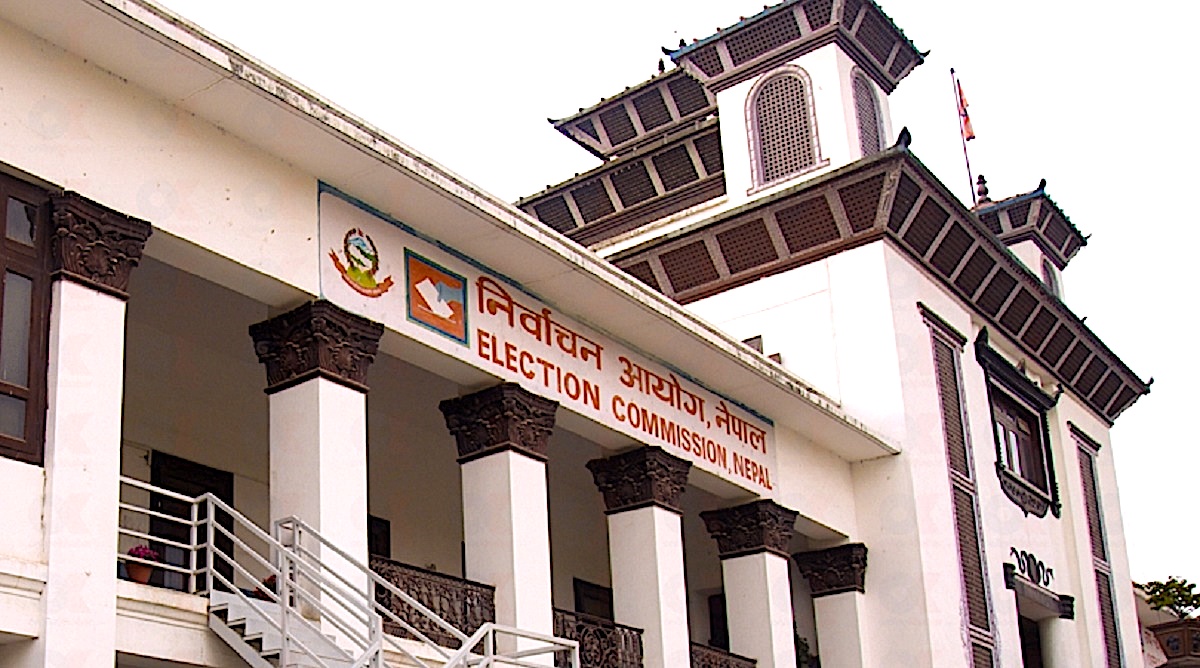
According to the Election Commission of Nepal, a total of 18,903,689 voters were registered for the parliamentary election, including more than eight lakh newly enrolled electors participating in the democratic exercise for the first time. The electorate voted to choose 275 members of the House of Representatives through Nepal’s mixed electoral system that combines direct constituency contests with proportional representation. Each voter casts two ballots — one for an individual candidate under the first-past-the-post constituency system and another for a political party under proportional representation.
Altogether 3,406 candidates representing more than 65 political parties, along with 1,143 independent contenders, contested for 165 seats under the constituency-based first-past-the-post system. Another 3,135 candidates sought representation through the proportional representation mechanism, which allocates the remaining 110 seats in the lower house. Election officials indicated that ballot boxes from remote mountainous districts were being transported to counting centres, sometimes by helicopter, before vote tabulation began. While initial trends are expected to emerge soon after counting starts, the complete results may take several days as the proportional representation ballots are counted separately.
The election has attracted widespread attention because it comes after a turbulent period in Nepal’s politics marked by large-scale youth-led protests against corruption, unemployment and governance issues. The unrest eventually resulted in the dissolution of the previous Parliament and the resignation of the government led by former prime minister K. P. Sharma Oli in September last year, paving the way for the formation of an interim administration to oversee the transition to fresh elections.
Among the prominent figures associated with the electoral contest are Kathmandu mayor Balendra Shah, widely known as Balen and linked with a reform-oriented political wave; veteran communist leader Oli of the Communist Party of Nepal (Unified Marxist–Leninist); senior leader Gagan Thapa of the Nepali Congress; and communist leader Pushpa Kamal Dahal, a key figure in the country’s leftist political landscape. Political observers see the election as a contest between established political parties and emerging reformist forces that gained visibility during the anti-corruption movement driven largely by younger voters.
Analysts believe that the outcome may produce a fragmented mandate, making coalition negotiations likely before a new government is formed in Kathmandu. Once the results are formally declared and a new administration assumes office, the tenure of the interim government headed by former chief justice Sushila Karki is expected to conclude.
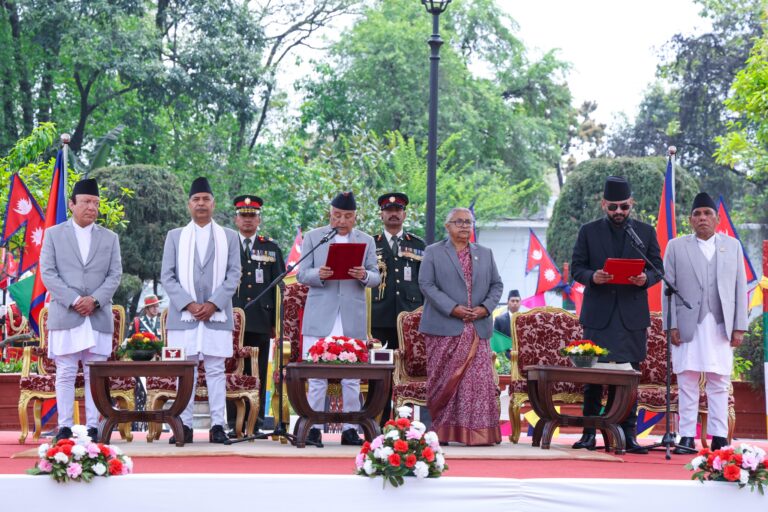
Karki accepted the responsibility of heading the interim administration during the political crisis in September last year after the youth-led anti-corruption agitation compelled the Oli-led coalition government of the Communist Party of Nepal (Unified Marxist–Leninist) and the Nepali Congress to step down. In a televised address to the nation earlier this week, ahead of the national elections and the Holi festival, Karki appealed to citizens to participate in the democratic exercise while maintaining peace and harmony. She emphasised that the government and election authorities were committed to conducting the polling in a free, fair and fearless manner and urged voters not to fall prey to misinformation and disinformation during the electoral period.
Meanwhile, the election campaign has also revived debate over Nepal’s constitutional identity. The right-leaning Rastriya Prajatantra Party has once again advocated the restoration of a Constitutional Monarchy and the reinstatement of Nepal as a Sanatani Hindu Rashtra. The party fielded candidates in several constituencies and has previously organised rallies supporting the former monarch Gyanendra, who has lived as a private citizen in Kathmandu since the monarchy was abolished nearly two decades ago. A section of conservative Hindu nationalist groups continues to demand the return of the monarchy, even if only in a ceremonial capacity, replacing the current presidential system. Pro-monarchist supporters often gather during the former king’s visits to rural regions, waving national flags and chanting slogans calling for the restoration of the crown.
India, Nepal’s closest neighbour and long-standing development partner, also responded to the electoral exercise. Responding to media queries regarding the elections, India’s official spokesperson Randhir Jaiswal said New Delhi welcomed the successful conduct of the polls and the enthusiastic participation of Nepali citizens in exercising their democratic mandate.
In a statement issued in New Delhi on March 5, Jaiswal congratulated the interim leadership, the Government and the people of Nepal, as well as various stakeholders, for successfully holding the elections despite the exceptional circumstances the country experienced last year. He added that India has consistently supported peace, progress and stability in Nepal and, in keeping with that commitment, had provided logistical supplies at the request of the Government of Nepal to assist in the conduct of the elections.
New Delhi also expressed its willingness to work with the new government in Kathmandu to further strengthen the longstanding and multifaceted relationship between the two countries and their peoples for mutual benefit.
As counting preparations continue across the Himalayan republic, attention now turns to the emerging electoral trends that will determine Nepal’s next government and shape the country’s political trajectory in the years ahead.
*Senior journalist