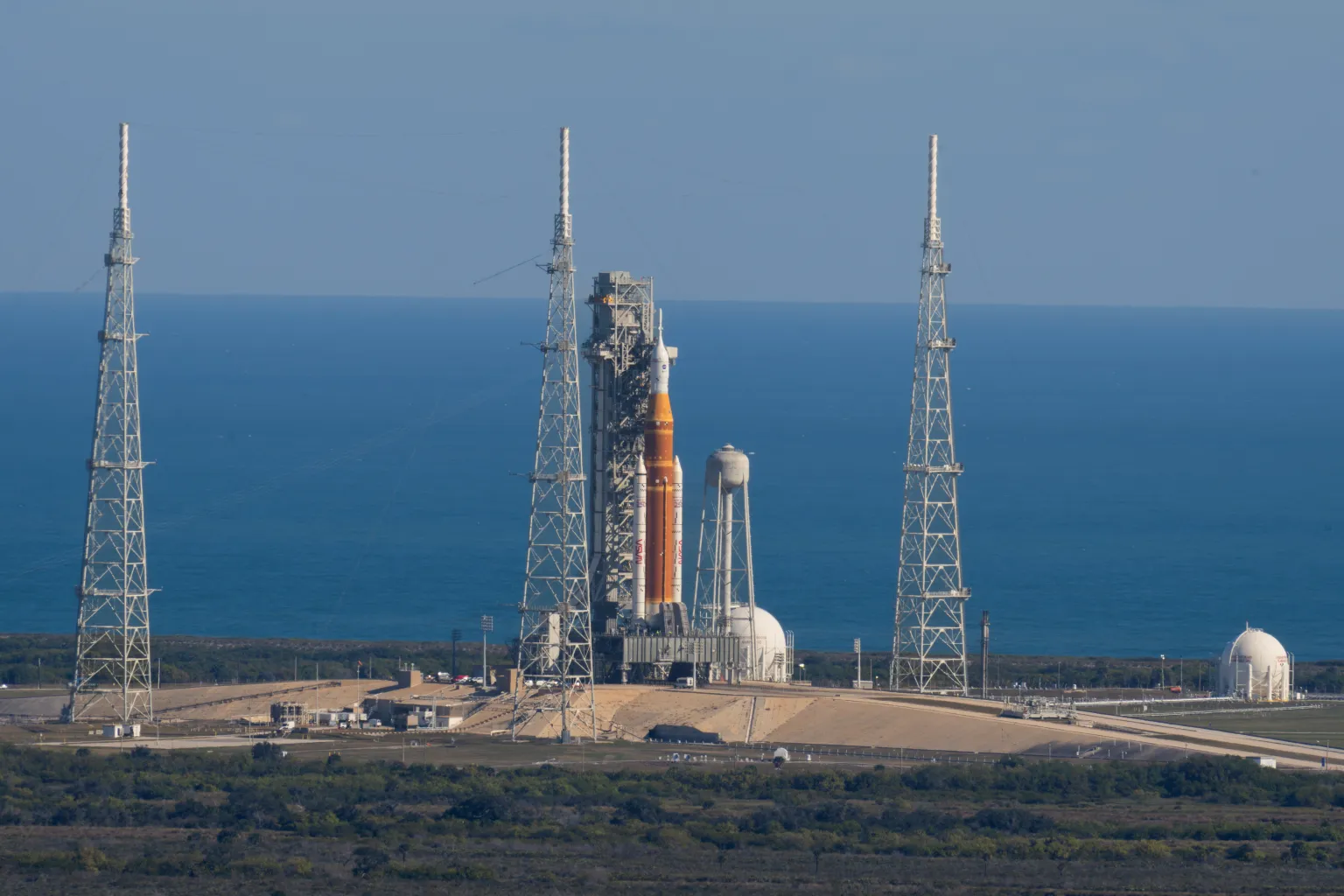
NASA’s Artemis II SLS (Space Launch System) rocket with the Orion spacecraft atop a mobile launcher is seen at Launch Complex 39B, Thursday, Jan. 29, 2026, at NASA’s Kennedy Space Center in Florida. NASA/Jim Ross
NASA Resets Artemis II Rehearsal Amid Arctic Cold
Cold Snap Shifts Artemis II Schedule, Crew-12 Nears Launch
Cape Canaveral, Florida: A rare Arctic cold snap moving across Florida has prompted NASA to reset the timeline for a critical dress rehearsal of its Artemis II mission, underscoring how even Earth’s weather can shape humanity’s next steps toward deep space.
NASA is now aiming for Monday, February 2, to conduct the wet dress rehearsal tanking test of the Artemis II rocket at the Kennedy Space Center. The shift in schedule, driven by forecasts of unusually low temperatures and strong winds, also means the earliest possible launch opportunity has been moved to no earlier than Sunday, February 8.

For several days, mission teams have been closely tracking weather models as the cold front approached the Space Coast. Engineers evaluated the predicted conditions against the rocket’s hardware limits and determined that proceeding on the earlier timeline would place the system outside acceptable launch parameters. NASA said the expected weather this weekend would violate formal launch criteria. Although crews and equipment at the launchpad remain fully prepared, managers concluded that waiting for safer conditions offers the best chance for a successful rehearsal.
The wet dress rehearsal will mirror launch day as closely as possible. During the test, the Space Launch System rocket will be loaded with cryogenic propellants and taken through the full countdown sequence. The simulated launch window is scheduled to open at 9 p.m. Eastern Standard Time on February 2, with the countdown beginning about 49 hours earlier. Weather conditions will continue to be monitored as the test draws nearer.
While Artemis II teams adjust their plans on the launchpad, another group of astronauts has already entered a quieter phase of preparation hundreds of miles away in Houston.
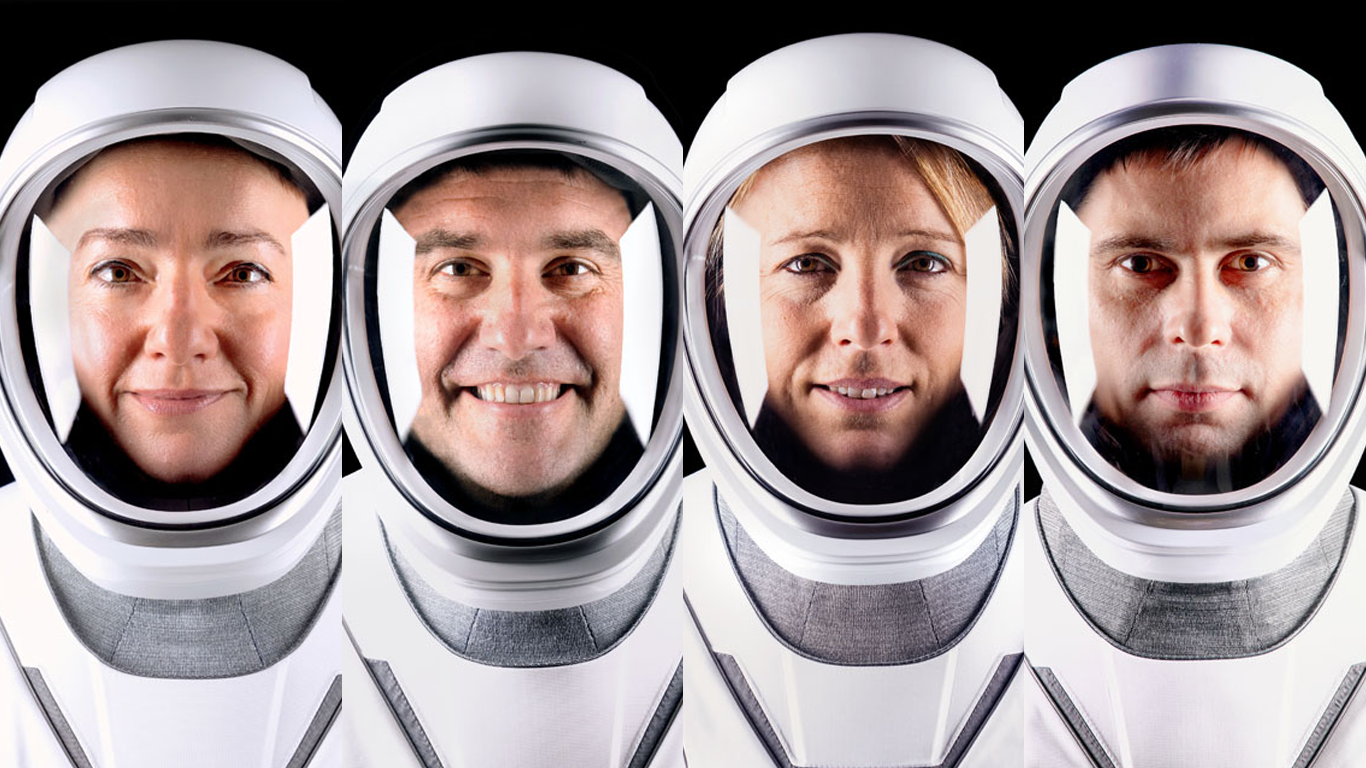
The four crew members of NASA’s SpaceX Crew-12 mission began their two-week quarantine routine on Wednesday, January 28, 2026, at NASA’s Johnson Space Center ahead of their flight to the International Space Station.
The earliest launch opportunity for Crew-12 is 6 a.m. Eastern Standard Time on Wednesday, February 11, from Space Launch Complex 40 at Cape Canaveral Space Force Station in Florida. Backup launch windows are available at 5:38 a.m. on Thursday, February 12, and 5:15 a.m. on Friday, February 13. NASA said it is working simultaneously toward launch opportunities for two important crewed missions this February—Artemis II and Crew-12—and will decide on the most suitable dates for each mission closer to flight based on readiness and weather.
The Crew-12 astronauts—NASA’s Jessica Meir and Jack Hathaway, European Space Agency astronaut Sophie Adenot, and Roscosmos cosmonaut Andrey Fedyaev—are scheduled to travel from Houston to Kennedy Space Center on Friday, February 6. There, they will remain in quarantine while completing final prelaunch operations.
Quarantine has been part of human spaceflight since the Apollo era, when it was introduced to prevent astronauts from becoming ill before launch or developing symptoms during flight. During this period, contact with others is tightly restricted, with most interactions conducted remotely. Family members and select mission personnel must undergo medical screening and receive clearance before meeting the crew.
Before entering quarantine, the Crew-12 team completed a crew equipment interface test on January 12. The daylong exercise saw the astronauts don their spacesuits, enter the SpaceX Dragon spacecraft, perform suit leak checks, and confirm seat fittings. They also familiarised themselves with the capsule’s interior, tested communications systems, and listened to the hum of the Dragon’s fans and pumps—sounds they will hear during their journey to the orbiting laboratory.
As February approaches, NASA finds itself balancing two high-profile human spaceflight missions against the unpredictability of winter weather. With Artemis II awaiting its final rehearsal and Crew-12 already in isolation, the agency continues preparing for a month that could advance both its deep-space ambitions and its ongoing presence aboard the International Space Station.
– global bihari bureau