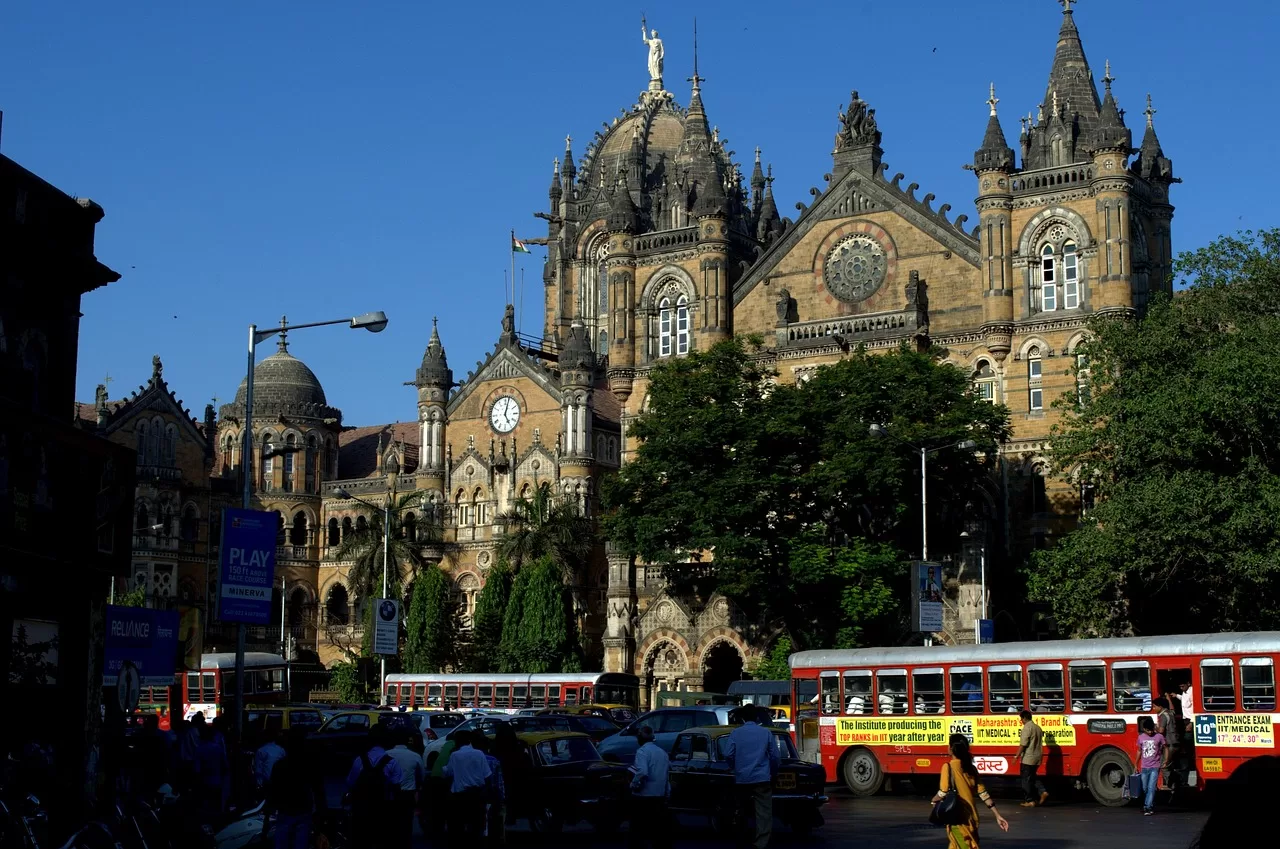
CST
 By Vidyadhar Date*
Protests Choke City’s Historic Core
Mumbai: For over three decades, my office in a heritage stone building near Chhatrapati Shivaji Terminus (CST- formerly Victoria Terminus or VT) was more than a workplace; it was a testament to Mumbai’s enduring charm. In the early years, the commute was a daily ritual of simplicity: a short local train ride to CST, a step off platform one, a quick crossing of the road, and I’d enter the iconic Times of India building. The station’s Gothic arches, intricate carvings, and bustling energy framed this effortless journey, a quiet joy amidst the city’s pulse.
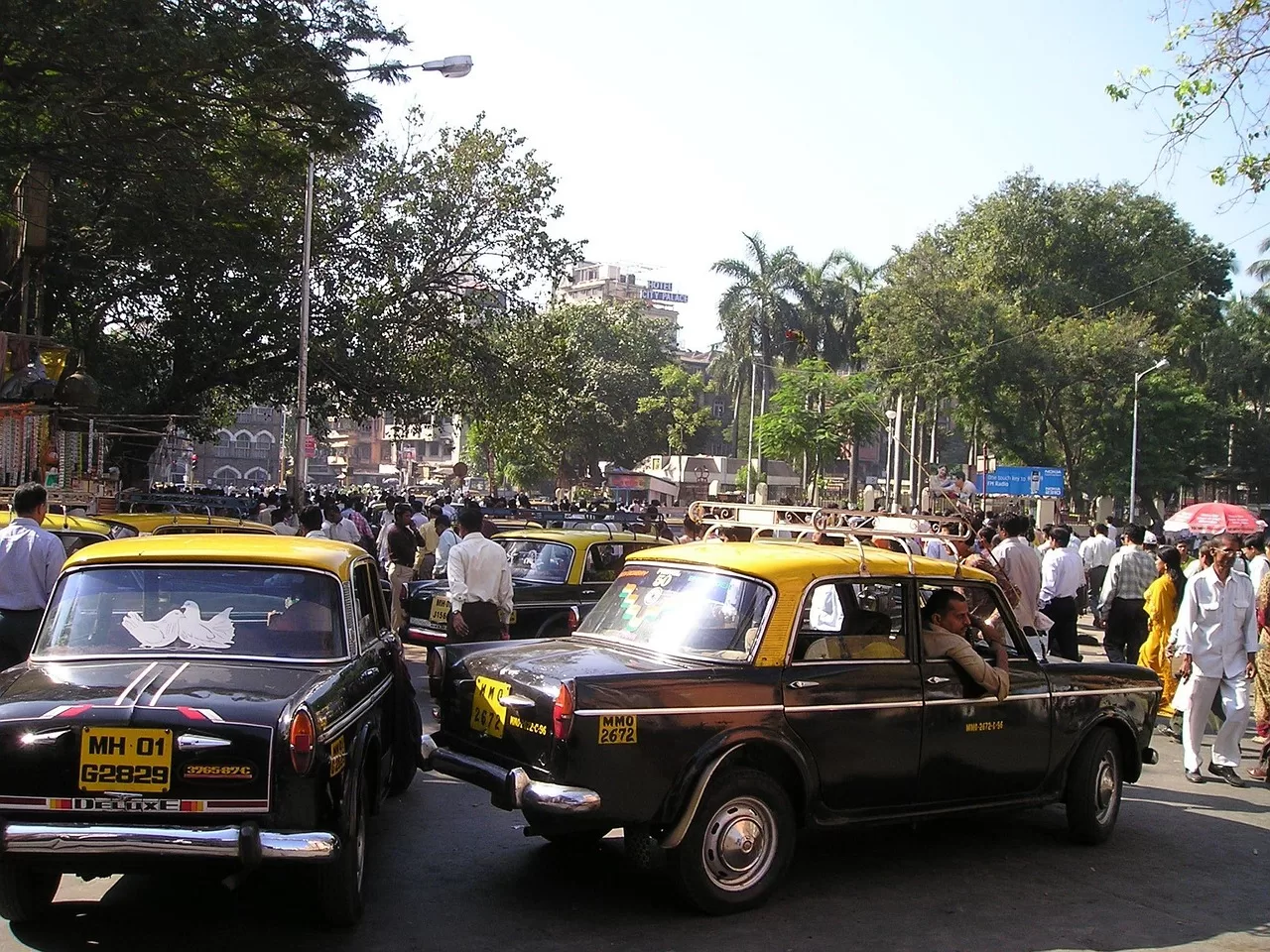
But over the last two decades, this simplicity began to unravel. Barricades, an underpass, and an overbridge emerged, piece by piece, transforming the crossing into a daunting obstacle course. These changes, prioritising motor traffic, ensured cars flowed freely—until they were stalled by the city’s growing chaos.
Today, Mumbai’s main artery, a lifeline of its bustling business district, is frequently seized by demonstrators. They dance, sit, eat, and bathe on the streets and within the 19th-century terminus, a UNESCO World Heritage jewel rivalling London’s grandest stations. Once, protests were fleeting flash mobs, drawing attention to causes and dispersing swiftly without halting daily life. Now, these gatherings linger, paralysing the city.
On August 29, 2025, I planned to join a protest at Patraakar Sangh, opposite CST, to condemn the killing of journalists and civilians in Palestine. But the station and its surroundings were engulfed by crowds, resolute in their disruption, believing their cause justified the upheaval. Trains stalled, the business district froze, and I abandoned my plan, unable to navigate the throng. Hawkers, reliant on daily earnings, shuttered their stalls; restaurants closed in panic or political disaffiliation, reflecting fear of unrest or dissent from the protesters’ agenda. Ordinary Mumbaikars—vendors, office workers, daily wagers—suffered, many going hungry as livelihoods crumbled. A similar scene unfolded at Churchgate station, its majestic architecture overshadowed by chaos opposite the Western Railway headquarters.
This two-day paralysis in Mumbai’s heart lays bare a troubling double standard in the government’s approach to public dissent. Small, peaceful demonstrations by progressive groups—whether for labour rights, environmental justice, or free speech—are tightly controlled, confined to cramped corners of Azad Maidan or a sliver outside Churchgate, hemmed in by police barriers and bureaucratic hurdles.
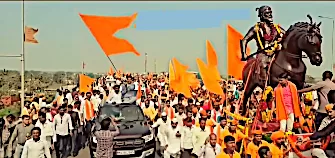
Yet massive agitations, like the Maratha morcha led by Manoj Jarange Patil, sweep through the city, defying all restrictions. This movement, rooted in demands for Maratha community rights, occupied CST, Churchgate, and adjacent areas, bringing Mumbai to a standstill.
The government, seemingly paralysed by the political sensitivity of such large-scale protests, surrenders to their sheer numbers, offering no resistance. Had this been a workers’ morcha agitating for genuine grievances—fair wages, safer conditions—history suggests it would face swift bans or brutal crackdowns, as countless incidents have shown. The police, quick to apologise to motorists for traffic delays, extend no such courtesy to pedestrians or daily wagers. I recently witnessed officers and paramilitary forces cordoning off pedestrians with ropes near Talk of the Town at Marine Drive, prioritising cars with blatant disregard for the common commuter’s plight. Never do they curb the flood of vehicles that choke Mumbai’s roads, causing daily congestion for ordinary people, yet apologies are reserved for motorists alone.
This selective leniency echoes a stark contrast with the 1988 Bheem Morcha, a powerful yet disciplined Dalit protest against the Maharashtra government’s decision to delete a chapter critical of Ram and Krishna from Dr. B.R. Ambedkar’s collected works, published by the state. Launched from Azad Maidan near Boribunder (CST) station, the march proceeded to Kala Ghoda in Fort, led by luminaries like R. S. Gavai, Namdeo Dhasal, Raja Dhale, Prakash Ambedkar, J.V. Pawar, Arjun Dangle, Jogendra Kawade, Avinash Mahatekar, Bhai Sangare, Jaydev Gaikwad, and Neelam Gorhe. Women and Ambedkarites from Maharashtra’s Satara, Kolhapur, Jalgaon, Pune, Vidarbha, and Marathwada joined in droves, alongside supporters from Madhya Pradesh, Uttar Pradesh, Tamil Nadu, Rajasthan, and Karnataka.
Suresh Pawar recalls, “The massive turnout was evident from the fact that the road from Victoria Terminus to the Central Telegraph Office, Fort, was filled with morcha participants heading toward Azad Maidan.” Unlike Shiv Sena-led protests, where fear of vandalism by antisocial elements forces shops to close, the Bheem Morcha remained peaceful, with businesses staying open, as J.V. Pawar notes in his book. This discipline set it apart, alarming Mumbai’s capitalist elite, who saw such a massive assembly in the heart of the then-business district as a threat. The next day, Chief Minister Shankarrao Chavan met the delegation from the Dr. Babasaheb Ambedkar Vichar Sanwardhan Samiti, agreeing to reinstate the contested chapter with a disclaimer: “Government does not concur with the views expressed in this Chapter.” Opportunists like Chhagan Bhujbal, then a Shiv Sena aide, spread rumours of vandalism at Hutatma Square—symbols of the Samyukta Maharashtra movement for a separate Marathi state—staging a “purification” ritual with Ganges water and Gayatri Mantra chants to exploit the moment. Yet, the Bheem Morcha stood as a beacon of rationality and organisation, channelling a discourse on logic that remains a benchmark in modern India’s history, too often overlooked by mainstream narratives.
The Bheem Morcha’s legacy of rationality resonates today, especially amid the recent murders of rationalists, which have silenced voices of reason and renewed concerns about intellectual freedom. Its disciplined approach contrasts sharply with the Maratha agitation, which, though ideologically distinct, lacks such restraint.
The Maratha morcha’s scale, occupying Mumbai’s historic termini, recalls the 2011 Occupy movement, born in New York’s Zuccotti Park with the slogan “We are the 99%.” That global, leaderless movement protested economic inequality, corporate influence, and democratic erosion, spreading worldwide with camps and demonstrations. While it raised significant awareness about wealth disparity, it faltered without clear leadership or goals.
Mumbai’s recent disruptions pose a similar dilemma: when protests paralyse a city, who bears the cost? The answer lies in the silenced hawkers, shuttered shops, and ordinary citizens caught between the right to dissent and the right to survive.
Since the 1988 Bheem Morcha, Mumbai has imposed a near-total ban on large assemblies in its business district, a reaction to the alarm it caused among the city’s elite. Yet, the Maratha agitation’s unchecked dominance suggests this ban is selectively enforced, bending to political expediency. The police’s deference to motorists, coupled with their indifference to pedestrians and small vendors, underscores a systemic bias toward power and privilege.
Mumbai, a city where heritage and hustle coexist, deserves governance that balances the right to protest with the livelihoods of its most vulnerable. The Maratha morcha, while not criticised for its cause, highlights the government’s helplessness before politically sensitive issues, allowing disruptions that defy normal restrictions. Small progressive groups, confined to Azad Maidan’s margins, deserve equal protection to voice their grievances, yet face hurdles the powerful evade.
This imbalance, rooted in Mumbai’s socio-political fabric, demands reflection on how dissent can coexist with the city’s daily survival.
*Senior Journalist