Diamond Jubilee Trumpets Echo Through Rashtrapati Bhavan
New Delhi: The lights gleamed off polished boots and gilded saddles as the President’s Bodyguard (PBG) assembled in perfect formation on the lawns of Rashtrapati Bhavan, their horses stamping the earth in anticipation. On Tuesday evening, history and pageantry converged as President Droupadi Murmu presented the Diamond Jubilee Silver Trumpet and Trumpet Banner, celebrating 75 years of the regiment’s service since it became the President’s Bodyguard in 1950.
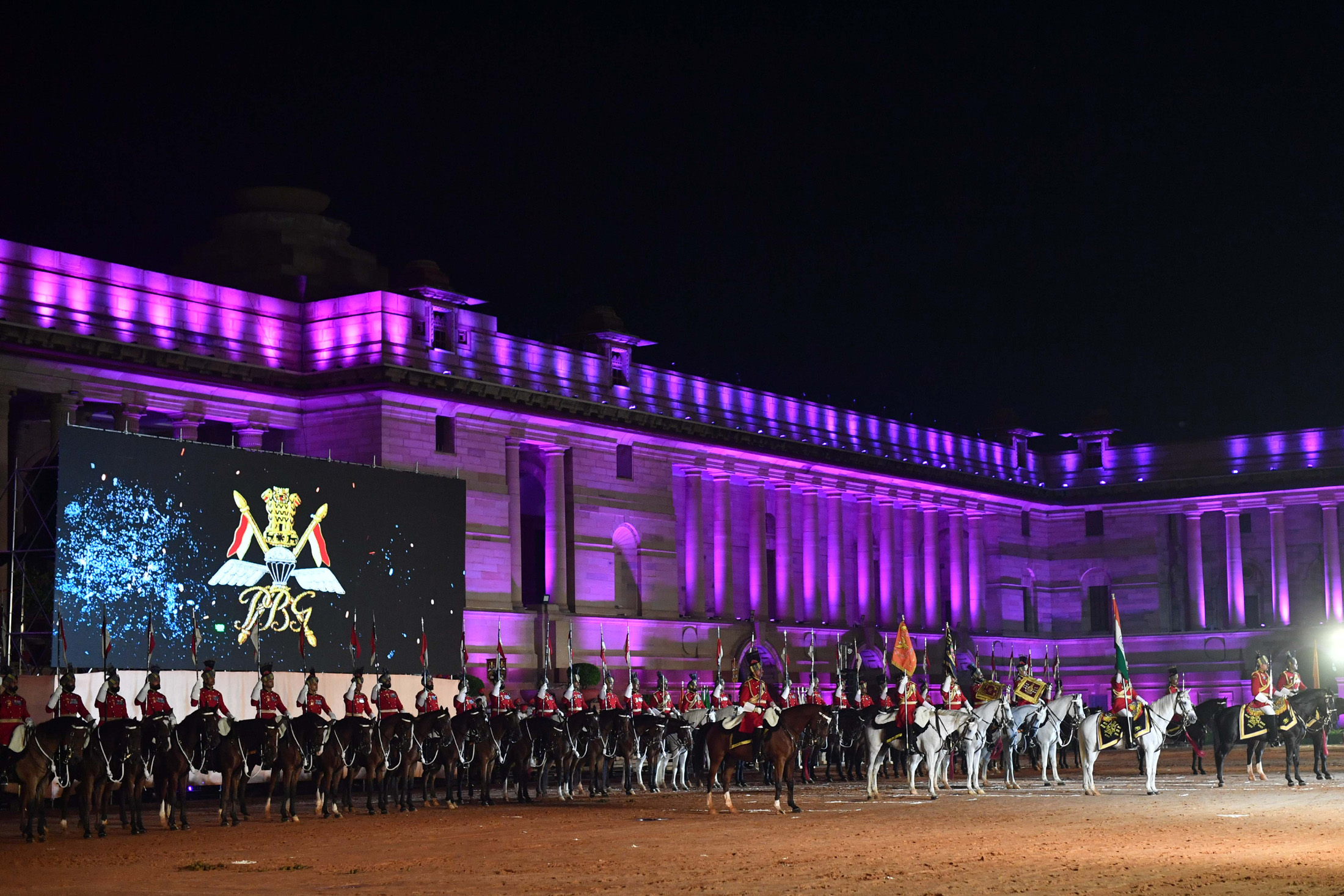
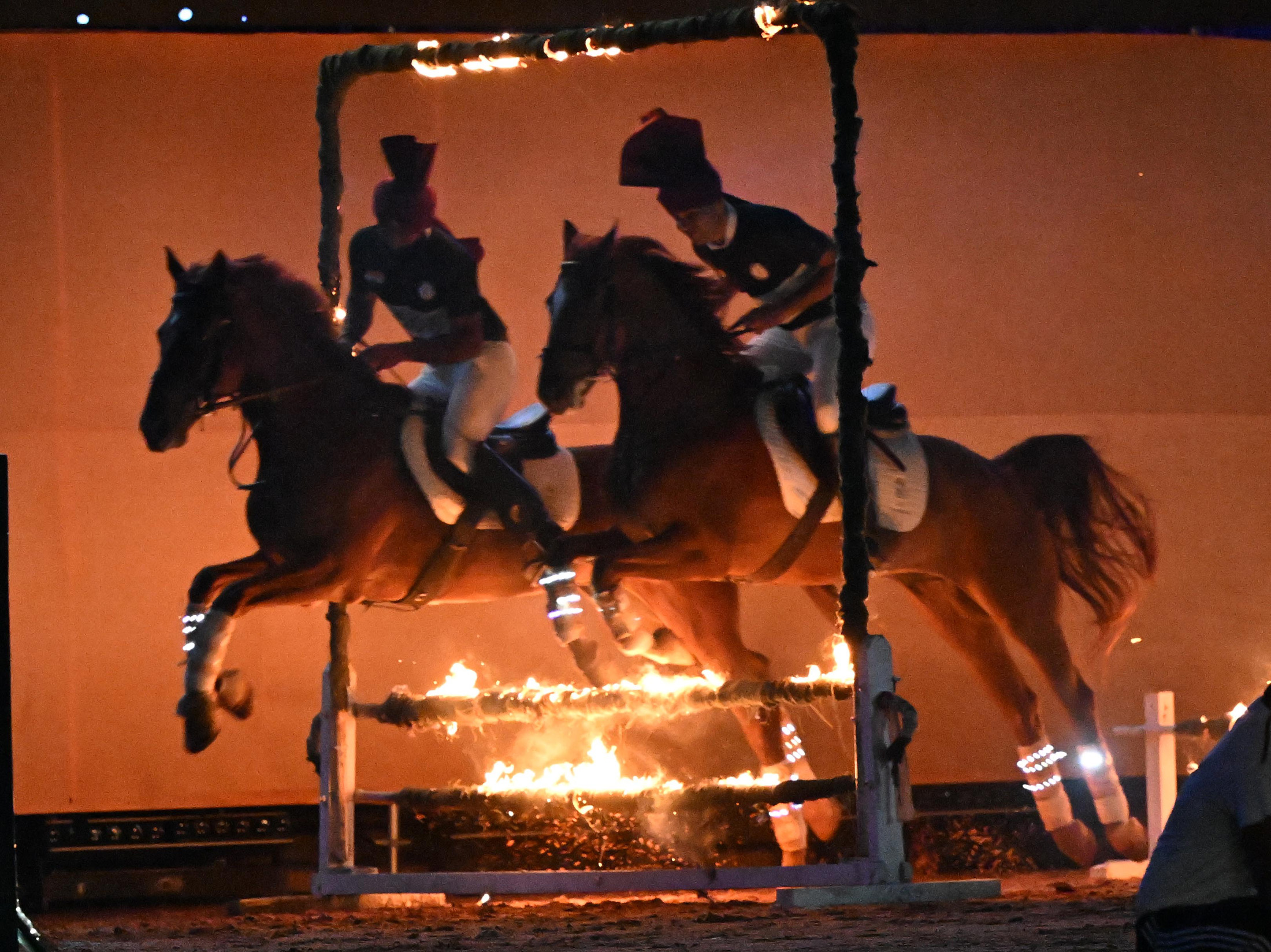
From the first moment, the spectacle was breathtaking. Rows of cavalry, each horse immaculate and each rider clad in ceremonial attire that shimmered with gold braiding, exuded precision honed over centuries.
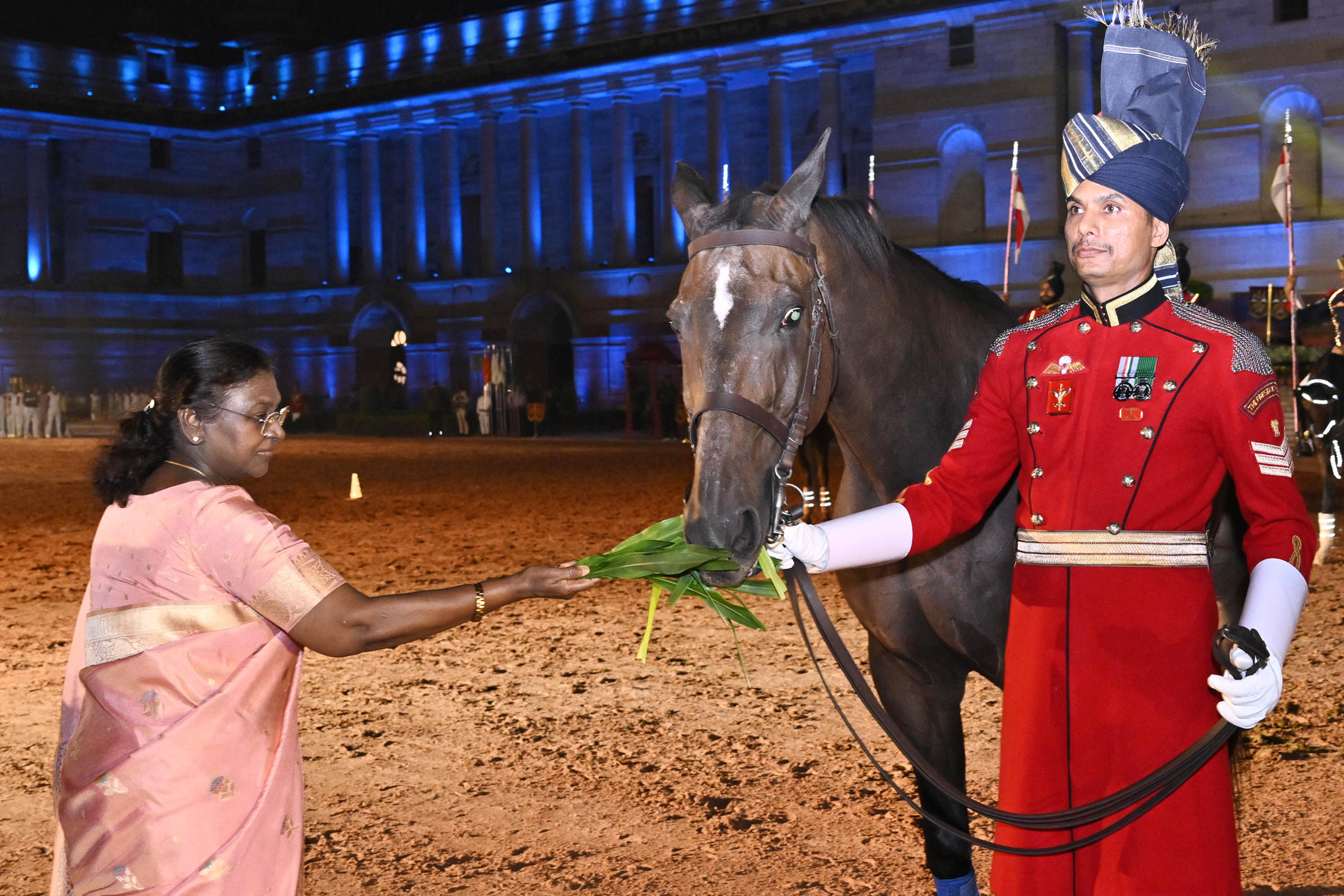
At the centre of it all was ‘Viraat’, the retired Commandant’s Charger, now adopted by the regiment. The horse, a living emblem of loyalty and tradition, had been patted by Prime Minister Narendra Modi during the Republic Day Parade in 2022, and today stood proudly, a silent witness to the unfolding history.

President Murmu, her gaze sweeping across the assembled troopers, praised the PBG for its professional excellence, discipline, and adherence to India’s finest military traditions. Her words reminded the officers and troopers that such ceremonial honours carry immense responsibility, reflecting the trust of the nation in the regiment that guards the office of the President.

The morning parade was a masterclass in equestrian skill. Horses galloped in synchronised patterns, their riders demonstrating flawless turns, sudden stops, and precise formations. The skill riding display left spectators gasping, highlighting the regiment’s rare horsemanship—a blend of instinct, training, and centuries-old tradition. The PBG’s competitive record is equally dazzling, boasting Asian Games gold medals, national equestrian records, and 170 medals in the current presidency at the National Equestrian Federation events.

Amid the fanfare, the regiment’s history resonated with each beat of the drum. Raised at Benaras, the President’s Bodyguard is the oldest regiment in the Indian Army, having been raised as the Governor-General’s Bodyguard in 1773, with 50 horses and sowars contributed additionally by Raja Chait Singh of Benaras. The regiment later became the Viceroy’s Bodyguard before being renamed the President’s Bodyguard on January 27, 1950.

The PBG is no ordinary regiment. It has escorted governors, heads of state, and Presidents, holding the ‘Right of Line’ over all other regiments. It has evolved from traditional cavalry to armoured and airborne operations, yet has never lost its ceremonial grandeur. Each trooper exemplifies a unique combination of warrior ethos, horsemanship, and modern military professionalism. It is the only airborne cavalry regiment in the world, where every soldier is trained as a cavalry horse rider, paratrooper, and armoured warrior. Their skill is legendary, and their operational record equally formidable: Chushul (1962), Gadra Road (1965), the 1971 war, Operation Vijay (1999), Operation Parakram (2000), and Operation Sindoor (2025). Troops have served at Siachen Glacier since 1993 and have participated in UN peacekeeping missions, seamlessly blending ceremonial brilliance with combat readiness.

The regiment’s ceremonial legacy is equally storied. It holds the singular distinction of being the oldest regiment in the Indian Army, and the only one permitted two Standards: the President’s Standard of Bodyguard and the Regimental Standard of the PBG, first presented by Dr Rajendra Prasad in 1957. The first President of India presented his Silver Trumpet and Trumpet Banner to the President’s Bodyguard on May 14, 1957.
The PBG is unique in its dual mandate. In war, its soldiers operate as cavalry horse riders, paratroopers, and armoured warriors, making it the only true airborne cavalry regiment in the world. In peace, it performs ceremonial duties at Rashtrapati Bhavan, blending time-honoured military traditions with modern professionalism. Over the decades, its troops have been deployed in operations at Chushul (1962), Gadra Road (1965), the 1971 war, Operation PARAKRAM (2000), Operation SINDOOR (2025), and high-altitude postings in Siachen since 1993, as well as contributing to UN peacekeeping missions.
The Diamond Jubilee Silver Trumpet and Banner now add a glittering new chapter, recognising 75 years of devoted service under the Republic of India.
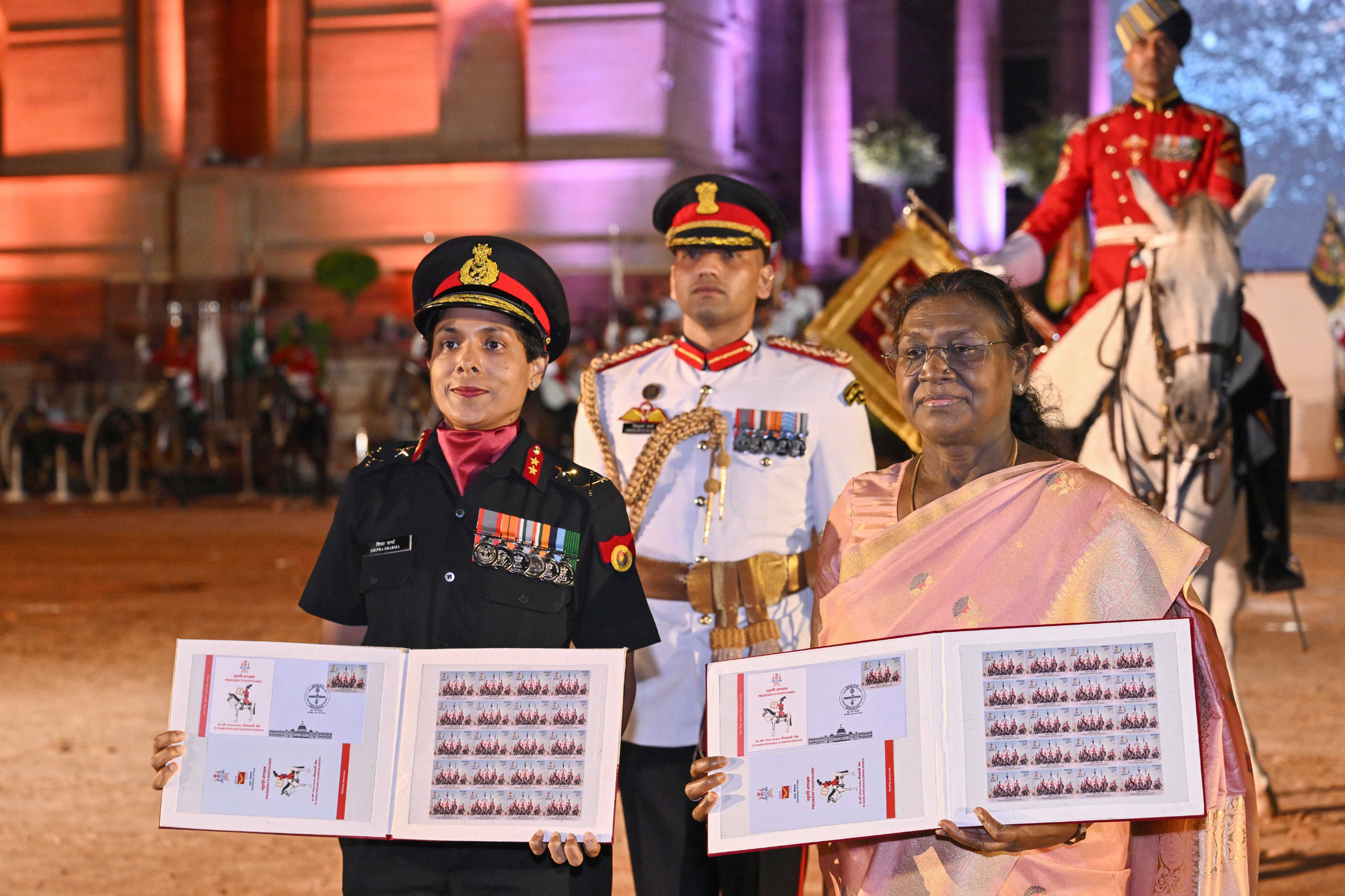
The presentation concluded with a ceremonial first-day postal cover release, as the Diamond Jubilee Trumpet and Banner were unfurled, gleaming in the sunlight. The parade, the music, the horses’ polished hooves, and the riders’ impeccable discipline created a spectacle that was both a visual feast and a testament to India’s living military heritage.
In that moment, Rashtrapati Bhavan was more than a presidential residence; it was a living museum of history, tradition, and service, where each horse, each trooper, and each note of the trumpet echoed India’s proud martial legacy. The PBG, through centuries of war and peace, ceremonial duty and battlefield valour, continues to embody the timeless spirit of the Indian cavalry.
– global bihari bureau