 By G. Krishna Mohan Rao*
Parliament Prepares for Historic Judge Ouster
New Delhi: As the monsoon session of Parliament approaches on July 21, a storm is brewing in New Delhi’s political and judicial corridors. The government and opposition are locked in a rare convergence of intent, preparing to initiate impeachment proceedings against two Allahabad High Court judges, Justice Yashwant Varma and Justice Shekar Kumar Yadav, for entirely different reasons. The process, steeped in constitutional gravity, is set to test the unity of India’s political spectrum and the sanctity of its judiciary.
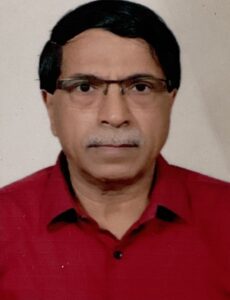
The impeachment of Justice Varma, proposed by the government, stems from a sensational discovery last year. A fire at his official residence revealed sacks stuffed with charred Rs 500 notes in the outhouse, raising eyebrows across the legal and political fraternity. Though Justice Varma denied any knowledge of the cash, a Supreme Court-appointed panel, after recording witness statements and his deposition, found evidence implicating him. The judge, who was serving in the Delhi High Court at the time, was transferred back to the Allahabad High Court, where he has since been stripped of judicial duties. Sources reveal that former Chief Justice of India, Justice Sanjiv Khanna, urged Varma to resign, but the judge’s refusal prompted the Chief Justice to escalate the matter, writing to the President and Prime Minister to recommend his removal—the first Constitutional step toward sacking a judge.
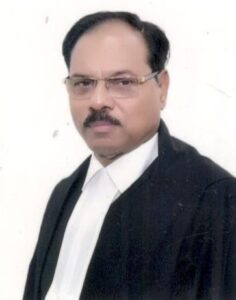
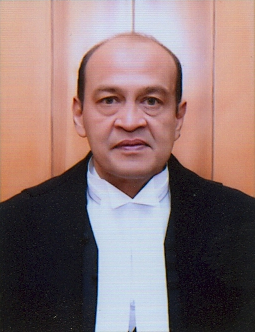
Meanwhile, the opposition, led by the Congress, is pushing for the impeachment of Justice Shekar Kumar Yadav, whose controversial remarks at a Vishwa Hindu Parishad event in Prayagraj on December 8, 2024, ignited a firestorm. Addressing the VHP’s legal cell, Justice Yadav made incendiary statements targeting the Muslim community and invoking majoritarian themes, triggering outrage among political circles, jurists, and civil society. The Supreme Court, responding to the uproar, sought a report from the Allahabad High Court Chief Justice on December 10, 2024, and summoned Yadav for a closed-door meeting a week later. Though he reportedly assured the collegium of a public apology, no such gesture followed. Instead, in a January 2025 letter to the Allahabad High Court Chief Justice, Yadav doubled down, claiming his remarks were misrepresented by vested interests and reflected societal concerns. Appointed in 2019, Justice Yadav is due to retire on April 15, 2026, but the opposition is determined to see him removed sooner.
The impeachment process, governed by the Judges (Inquiry) Act, 1968, is no simple affair. It requires a motion to be admitted in either the Lok Sabha, where at least 100 MPs must endorse the proposal, or the Rajya Sabha, where 50 MPs suffice. Once admitted, the presiding officer of the House constitutes a three-member committee—comprising the Chief Justice of India or a Supreme Court judge, a high court chief justice, and a distinguished jurist—to investigate the allegations. For the motion to succeed, it must secure the support of a majority of the House’s total membership and at least two-thirds of the members present and voting, necessitating bipartisan cooperation.
Parliamentary Affairs Minister Kiren Rijiju revealed last week that prominent opposition parties have agreed in principle to support the motion against Justice Varma. However, the government has yet to decide whether to table it in the Lok Sabha or the Rajya Sabha. The Congress, meanwhile, is strategising internally, shortlisting MPs to sign the notice for Varma’s removal while simultaneously pressing for action on their December 13, 2024, Rajya Sabha motion against Justice Yadav, led by Kapil Sibal and backed by 55 opposition MPs. The Supreme Court had initially planned an in-house inquiry into Yadav’s speech in June 2025 but abandoned it after the Rajya Sabha secretariat, in a March letter, asserted its exclusive jurisdiction over the matter following the opposition’s motion.
The government’s stance on Justice Yadav remains ambiguous. Sources indicate that, unlike Varma, who faces corruption allegations, Yadav is not accused of financial misappropriation. The judge reportedly apologised to the Supreme Court for his remarks, though the opposition argues this was insufficient. They question the government’s apparent reluctance to act against Yadav while aggressively pursuing Varma’s impeachment, accusing it of selective urgency. The opposition plans to finalise its floor strategy before the session begins, potentially pushing for impeachment notices against Yadav in both Houses.
This unprecedented move against two judges simultaneously underscores the delicate balance between judicial independence and accountability. As MPs prepare to gather signatures later this week, the nation watches closely, aware that the outcome could reshape public trust in both the judiciary and the political process. Will Parliament unite to uphold constitutional integrity, or will partisan divides stall this historic reckoning? The monsoon session promises to be a crucible for these questions.
*Senior journalist