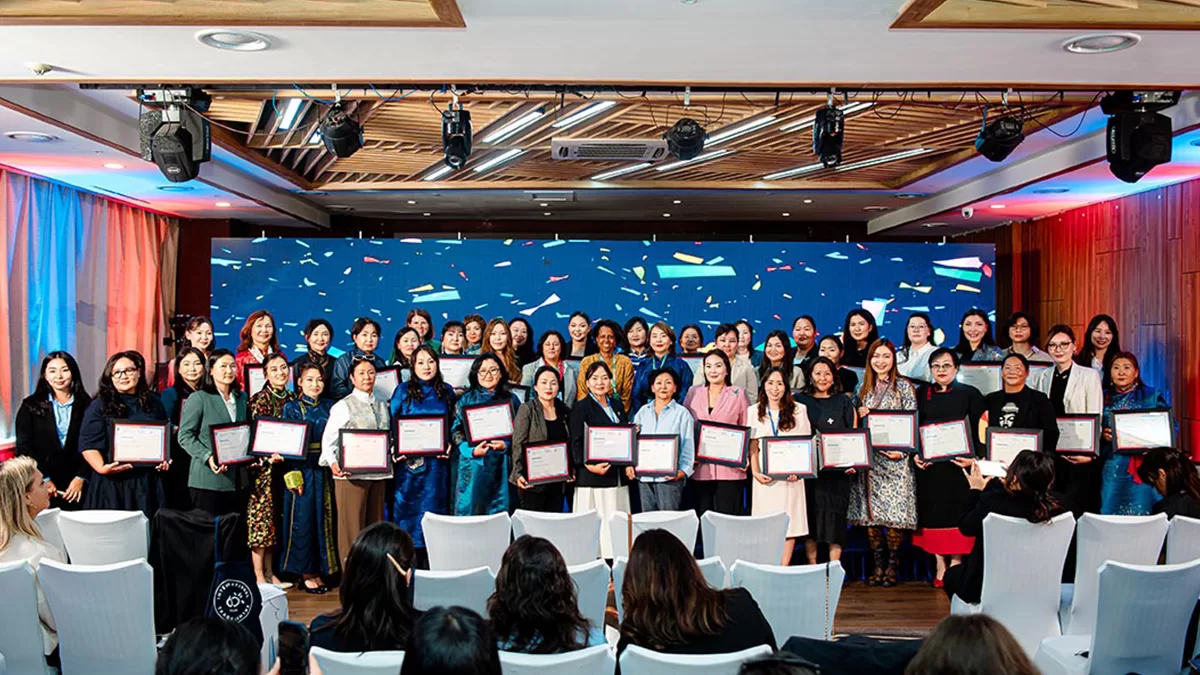
WEIDE Fund Targets Mongolian Leather, Cashmere Exports
Geneva: Forty-six women-led businesses in Mongolia have been selected to receive targeted support from the Women Exporters in the Digital Economy (WEIDE) Fund, enabling them to enhance their digital capabilities, secure better financing, and expand into international markets, the World Trade Organization (WTO) stated in Geneva today.
Announced on August 25, 2025, at a launch event in Ulaanbaatar during the World Women Entrepreneurs Forum, these micro, small, and medium-sized enterprises (MSMEs) will benefit from a 12-month programme that includes grants, technical training, and network connections, fostering growth in a landlocked economy where digital trade offers pathways to global opportunities. While the initiative marks progress in empowering women entrepreneurs, persistent challenges such as rural digital divides and gender-based financing barriers continue to limit broader impact across developing nations.
In Mongolia, a landlocked developing country, the 46 selected MSMEs—comprising 26 Booster and 20 Discovery grant recipients—were chosen from 307 applications through a competitive process led by the Mongolian National Chamber of Commerce and Industry (MNCCI). These businesses operate in priority export sectors, including leather and hides, wool and cashmere, textiles, agriculture, and artisanal goods. These businesses will participate in a 12-month programme featuring financial support, technical training in e-commerce and digital marketing, and connections to global market platforms.
The WEIDE Fund, launched by the WTO Secretariat and the International Trade Centre (ITC) in February 2024, aims to empower women entrepreneurs by helping them grow their businesses through international trade and digitalisation. The programme aims to help these women-led enterprises improve operational efficiency, access new online sales channels, and create or upgrade employment opportunities. For example, women-led enterprises in wool and cashmere, key to Mongolia’s export economy, will receive training in e-commerce platforms and digital marketing to upgrade their online presence, potentially increasing sales through international channels. The programme also aims to improve operational efficiency and create employment opportunities for Mongolian women.
In Mongolia, where women have historically shaped the economy, this initiative builds on a legacy of leadership, as noted by Ambassador Gerelmaa Davaasuren: “The WEIDE Fund empowers women to lead and our nation to thrive, strengthening grassroots initiatives and amplifying local voices.”
Past participants in similar ITC programmes have seen up to 30% export revenue growth, offering a benchmark for these beneficiaries.
The WEIDE Fund’s rollout in Nigeria, launched on August 14, 2025, has provided initial outcomes for its 146 selected women-led MSMEs, chosen from over 67,000 applications via the Nigerian Export Promotion Council (NEPC). Businesses in sectors like shea butter processing, handicrafts, food exports, and textiles have reported early benefits, including access to digital tools that have doubled sales volumes for some within months, according to ITC evaluations. For instance, beneficiaries have utilized training in hybrid digital payment systems and website development to expand market reach, with one entrepreneur, Jadesola, noting immediate impacts on her operations. These gains align with the Fund’s goals of boosting competitiveness and employment, though logistical hurdles like high shipping costs persist, as cited by participants. WTO Director-General Ngozi Okonjo-Iweala emphasised the transformative potential: “Today’s milestone ensures women are at the forefront of this journey.”
Upcoming plans for the Dominican Republic and Jordan reflect the Fund’s phased expansion. In the Dominican Republic, beneficiary selections are set to be announced shortly following the April 22 to May 18, 2025, call for applications managed by ProDominicana, with a launch event to be confirmed. Targeting women-led MSMEs in sectors such as coffee, cocoa, and other agricultural exports, the programme will offer tailored grants and training to enhance digital skills and export readiness, addressing barriers like limited market access in Latin America and the Caribbean. Jordan, preparing to launch its call for applications soon through the Jordan Enterprise Development Corporation (JEDCO), will focus on tech, artisanal, and service-oriented enterprises, with timelines expected to follow a similar 12-month structure. These efforts aim to connect women to global platforms, but challenges like incomplete digital infrastructure in rural areas remain, with only partial broadband coverage in both regions.
ITC Executive Director Pamela Coke-Hamilton praised the participants: “Your stories, commitment, and ingenuity will inspire more women to chase their business dreams and dare to go digital.” Supported by donors including the United Arab Emirates, the FIFA World Cup Qatar 2022 Legacy Fund, and the Kingdom of Bahrain, the $50 million Fund seeks to raise an initial $25 million through partnerships. MNCCI Secretary General Saruul Bulgan noted: “This initiative enhances women’s participation in the digital economy.”
Despite these strides, gaps endure. Globally, women-led MSMEs comprise just 15% of exporters, facing 20% higher loan rejections than male-led firms, per ITC studies. In Mongolia and Nigeria, rural internet access lags at around 40%, hindering digital adoption. For the Dominican Republic and Jordan, upcoming implementations must tackle similar issues, including gender-biased networks and climate-related supply chain disruptions. The Fund’s strategic approach, initiated with BSO calls on September 11, 2024, and selections by March 3, 2025, underscores the need for sustained efforts to bridge these divides and fully realise inclusive trade.
– global bihari bureau