New Delhi: The 71st National Film Awards brought a warm glow to Vigyan Bhawan as President Droupadi Murmu presented honours celebrating Indian cinema’s finest talents. The evening showcased the Dadasaheb Phalke Award for Mohanlal, the Best Feature Film win for 12th Fail, Sudipto Sen’s Best Director award for The Kerala Story, and the Best Actor and Best Actress accolades for Shah Rukh Khan, Vikrant Massey, and Rani Mukerji, reflecting the industry’s rich blend of legacy and fresh narratives.

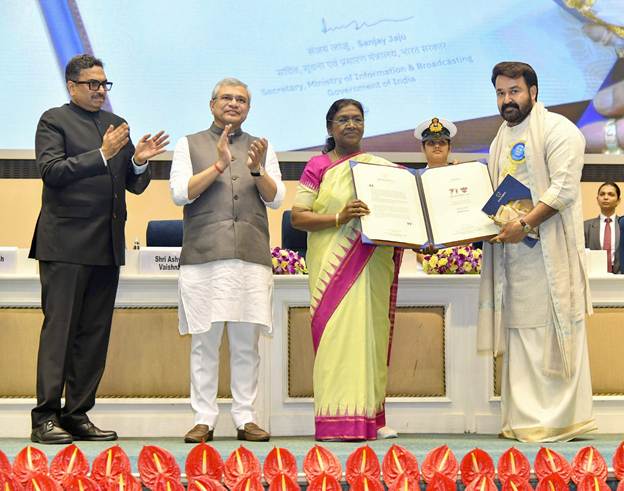
The Dadasaheb Phalke Award, India’s highest cinematic honour, was conferred on Mohanlal for his 40-year career spanning over 360 films. Accepting the Swarna Kamal, medallion, shawl, and Rs 10 lakh, the Malayalam icon was lauded by President Murmu as the “Complete Actor,” adept at portraying “the softest of the soft and the harshest of the harsh emotions,” from his theatre roots in Karnabharam to the acclaimed Vanaprastham. She noted his work holds “a special place in the hearts of audiences across generations.” Mohanlal, with quiet grace, called the award “magical and sacred,” dedicating it to the Malayalam film industry and the cinematic fraternity, saying, “Cinema is the heartbeat of my soul.” Fans online shared heartfelt tributes, posting clips of his iconic roles and celebrating his bridge between regional and national cinema.
12th Fail, directed by Vidhu Vinod Chopra, won Best Feature Film, earning a Swarna Kamal and Rs 3 lakh among 332 entries. The Hindi biopic, chronicling an aspiring IPS officer’s perseverance, was praised by President Murmu for reflecting “the quiet determination of millions,” embodying an “Indian sensibility” that ties local struggles to national dreams. Its victory, lauded on social media for its emotional depth, highlighted the power of relatable stories in a blockbuster-driven era.
Sudipto Sen secured the Best Director award, with a Swarna Kamal and Rs 3 lakh, for The Kerala Story, a film that sparked debate with its take on radicalisation. President Murmu emphasised cinema’s role as “a powerful medium for raising awareness and making citizens more sensitive,” urging filmmakers to prioritise “public interest, especially for the younger generation,” over popularity. Sen’s win, alongside a cinematography nod for Prasantanu Mohapatra, underscored the film’s bold narrative, with online posts noting its impactful, if divisive, presence.

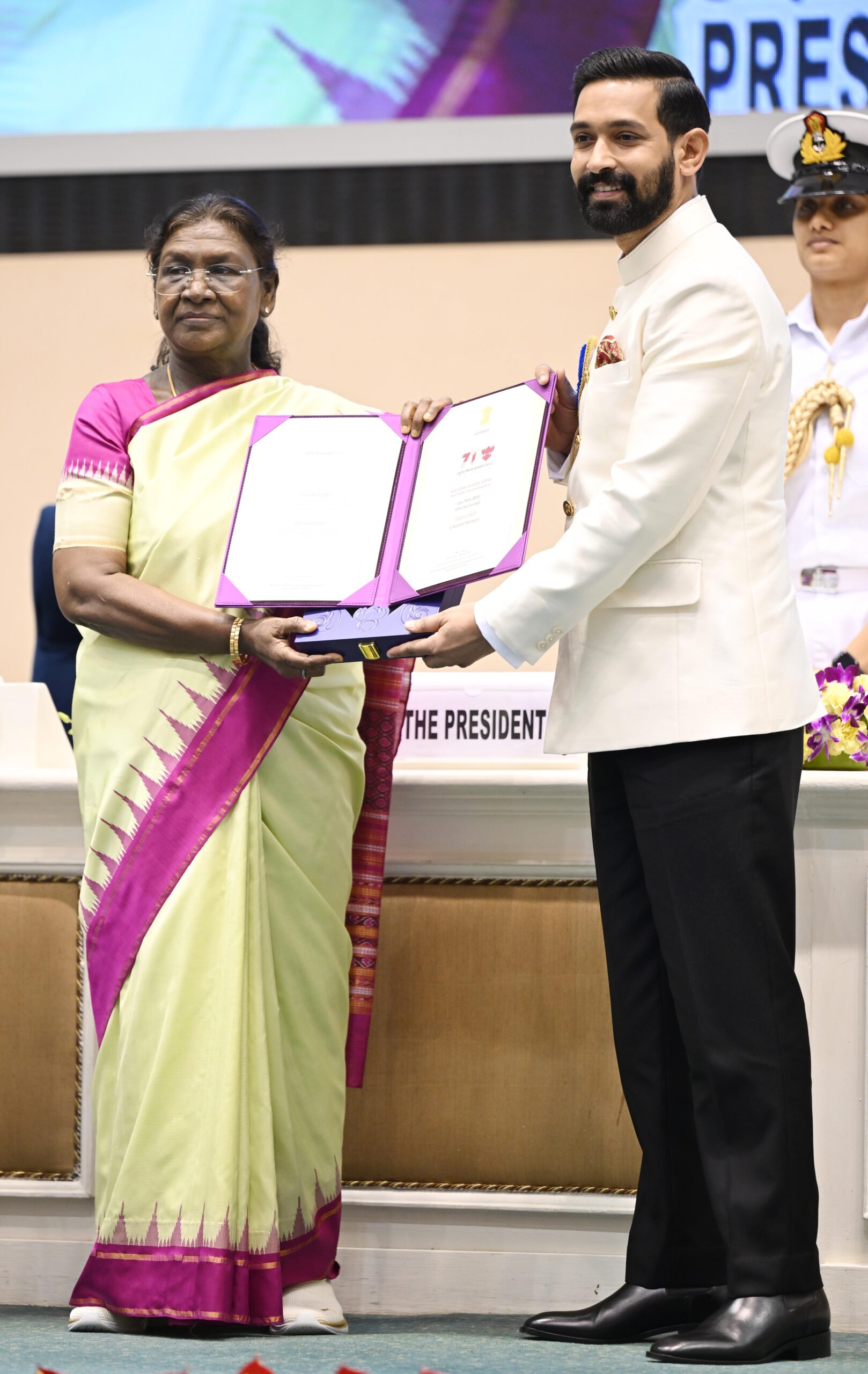
The Best Actor award was shared by Shah Rukh Khan for his dynamic role in Jawan and Vikrant Massey for his heartfelt performance in 12th Fail, each receiving a Rajat Kamal and Rs 2 lakh (shared). Khan’s first National Award came for Jawan’s mix of action and emotion, while Massey’s grounded portrayal resonated widely. President Murmu tied their work to cinema’s ability to “awaken society,” reflecting India’s diverse democracy.

Rani Mukerji won the Best Actress Rajat Kamal for her stirring role in Mrs. Chatterjee vs Norway, portraying a mother’s fight against systemic odds. The President praised such women-centric films for tackling “poverty, patriarchy, and prejudice,” advocating for more opportunities for women to achieve “extraordinary success.” Mukerji’s dedication to “every mother fighting unseen wars” moved fans, who shared clips of her acceptance speech online.
President Murmu’s address framed Indian cinema as a mirror of “the world’s largest democracy and most diverse society,” thriving in multiple languages like literature. She urged the industry to seek global recognition while prioritising meaningful stories, stating, “Popularity may be a good thing, but being in the public interest is even better.” She highlighted films like Gandhi Tatha Chettu and Shyamchi Aai for their enduring values, noting the latter’s win echoed a 1954 award.
Attended by filmmakers, actors, and dignitaries like Union Minister Ashwini Vaishnaw, who outlined initiatives like indigenous film equipment production, the ceremony celebrated Indian cinema’s spectrum—from Mohanlal’s regional mastery to 12th Fail’s universal appeal, Sen’s bold direction, and the acting triumphs of Khan, Massey, and Mukerji. The night affirmed cinema’s role as a unifying cultural force.
– global bihari bureau