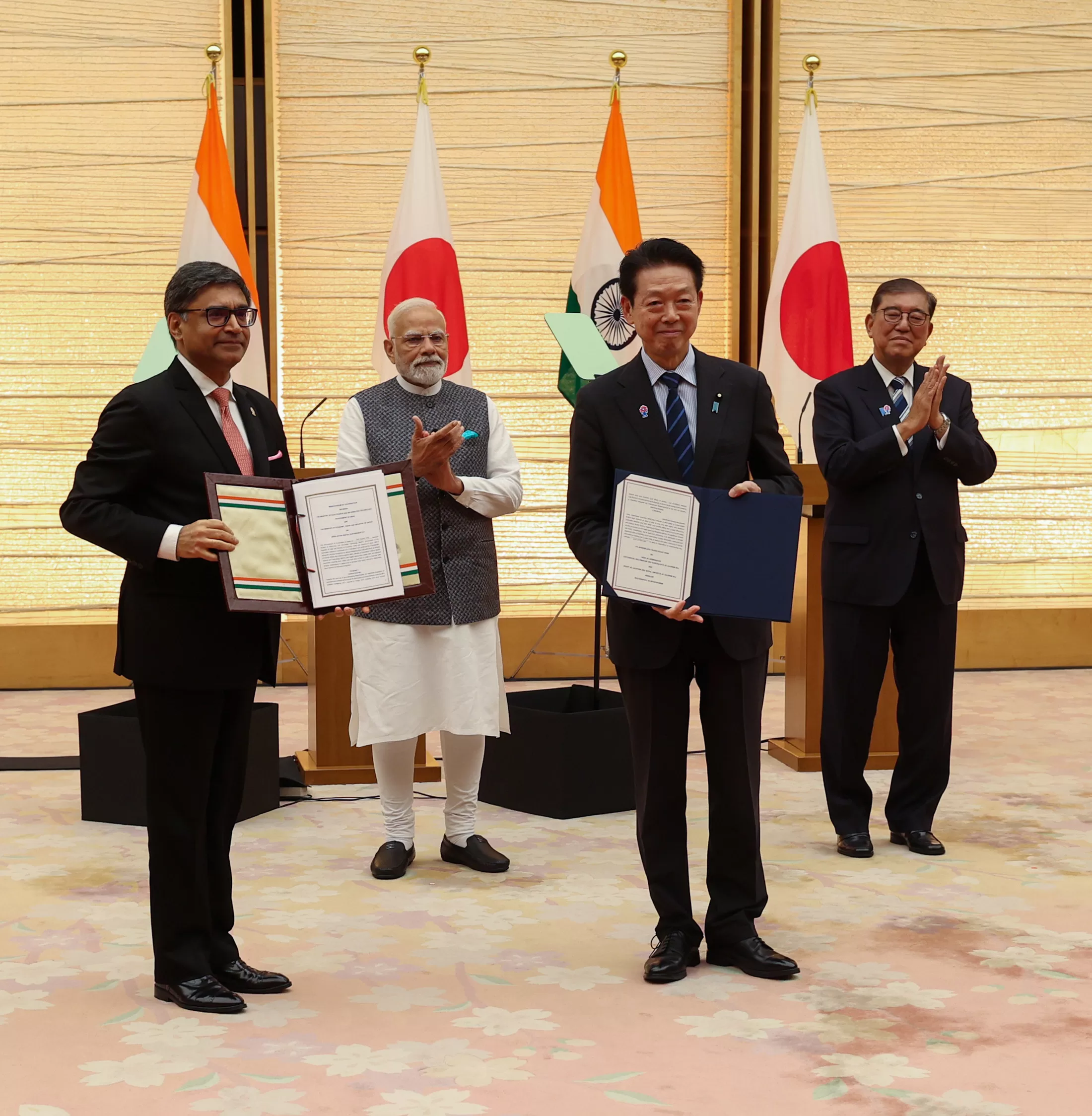
Prime Ministers Narendra Modi and Shigeru Ishiba witnessing the Exchange of MoUs between India and Japan in Tokyo, Japan on August 29, 2025.
India-Japan Forge Decade-Long Strategic Partnership
Tokyo: Amid escalating U.S. tariffs threatening nearly half of India’s $87 billion annual exports to the United States, Prime Minister Narendra Modi’s visit to Tokyo underscored a strategic pivot to bolster economic resilience through enhanced cooperation with Japan. Addressing the India–Japan Economic Forum, Modi emphasised, “Deepening economic partnerships between trusted friends is particularly relevant in the context of the present turbulent global economic scenario,” highlighting India’s political stability, policy predictability, and ongoing reforms that have bolstered investor confidence.
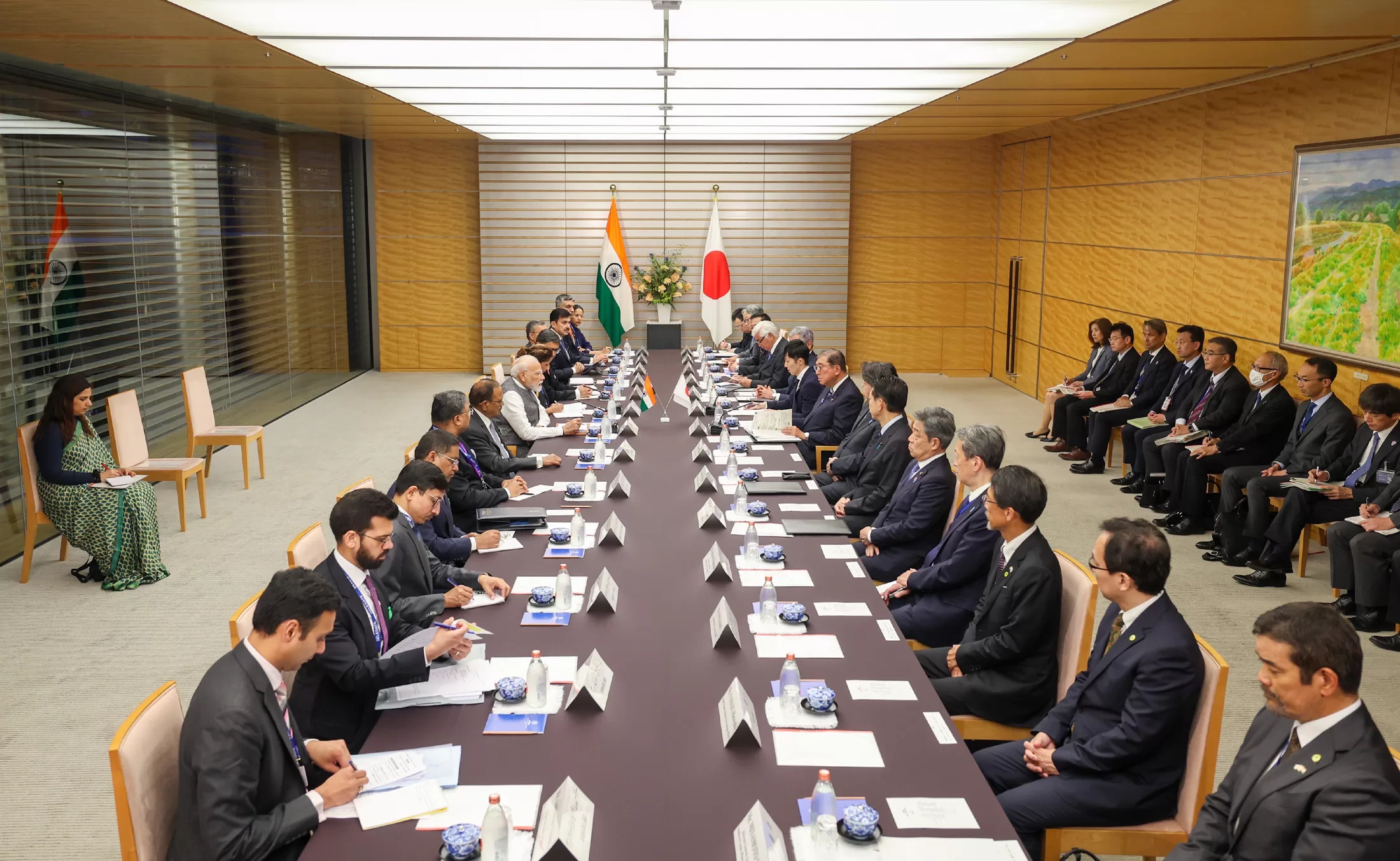
The 15th India–Japan Annual Summit brought into focus the comprehensive partnership between the two nations, spanning manufacturing, technology, green energy, infrastructure, and skill development. Japanese Prime Minister Shigeru Ishiba emphasised, “Japanese companies are keen to form partnerships between Indian talent and Japanese technology to build resilient supply chains,” reflecting a practical, hands-on commitment to bilateral collaboration. Ishiba underlined Japan’s commitment to India, stating, “We have set a target of 10 trillion yen investment in India from Japan in the next 10 years,” emphasising the long-term strategic vision of Japanese private-sector involvement. These projected investments up to approximately $68 billion (₹5.96 lakh crore) in India over the next decade aim to enhance India’s capacities in artificial intelligence, semiconductor manufacturing, clean energy, and next-generation infrastructure, creating avenues for high-value exports and reducing reliance on the U.S. market. They are expected to enhance India’s technological and industrial capacities, creating avenues for high-value exports and reducing dependence on the U.S. market.
At the Economic Forum, top industrialists from India and Japan engaged in a series of business-to-business MoUs across steel, AI, robotics, semiconductors, space, clean energy, and human resource development. These initiatives, while not immediate trade concessions, establish a foundation for long-term economic collaboration, offering Indian exporters alternative pathways to maintain competitiveness despite U.S. tariffs.
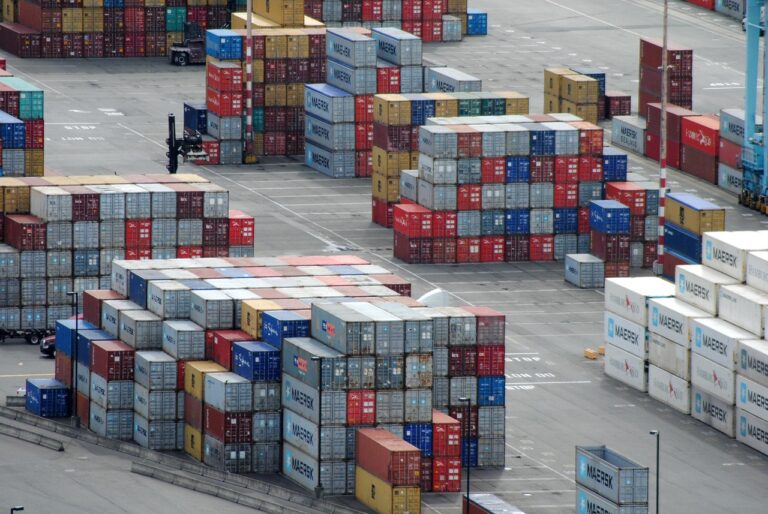
U.S. tariffs continue to weigh heavily on India’s export sectors, with steel and aluminium facing potential losses of around $2 billion, textiles and gems exposed to $5–6 billion, electronics threatened with nearly $900 million in revenue, and marine and agricultural products, including shrimp, rice, and spices, at risk of several hundred million dollars. Analysts suggest that Japanese investment, even as a projected figure, combined with technology and industrial partnerships, could help offset up to $6–7 billion of these potential losses over the next three to five years. Advanced manufacturing clusters and semiconductor projects could recover 10–20 per cent of at-risk electronics and industrial goods exports, while investments in AI, robotics, and next-generation infrastructure are expected to enhance productivity and supply-chain efficiency, indirectly mitigating an additional 5–10 per cent across textiles, gems, and marine products. Complementary measures, such as enhanced skill development and human-resource exchanges, support long-term competitiveness, enabling Indian firms to diversify into new markets and reduce dependence on the U.S., turning external trade pressures into strategic growth opportunities.
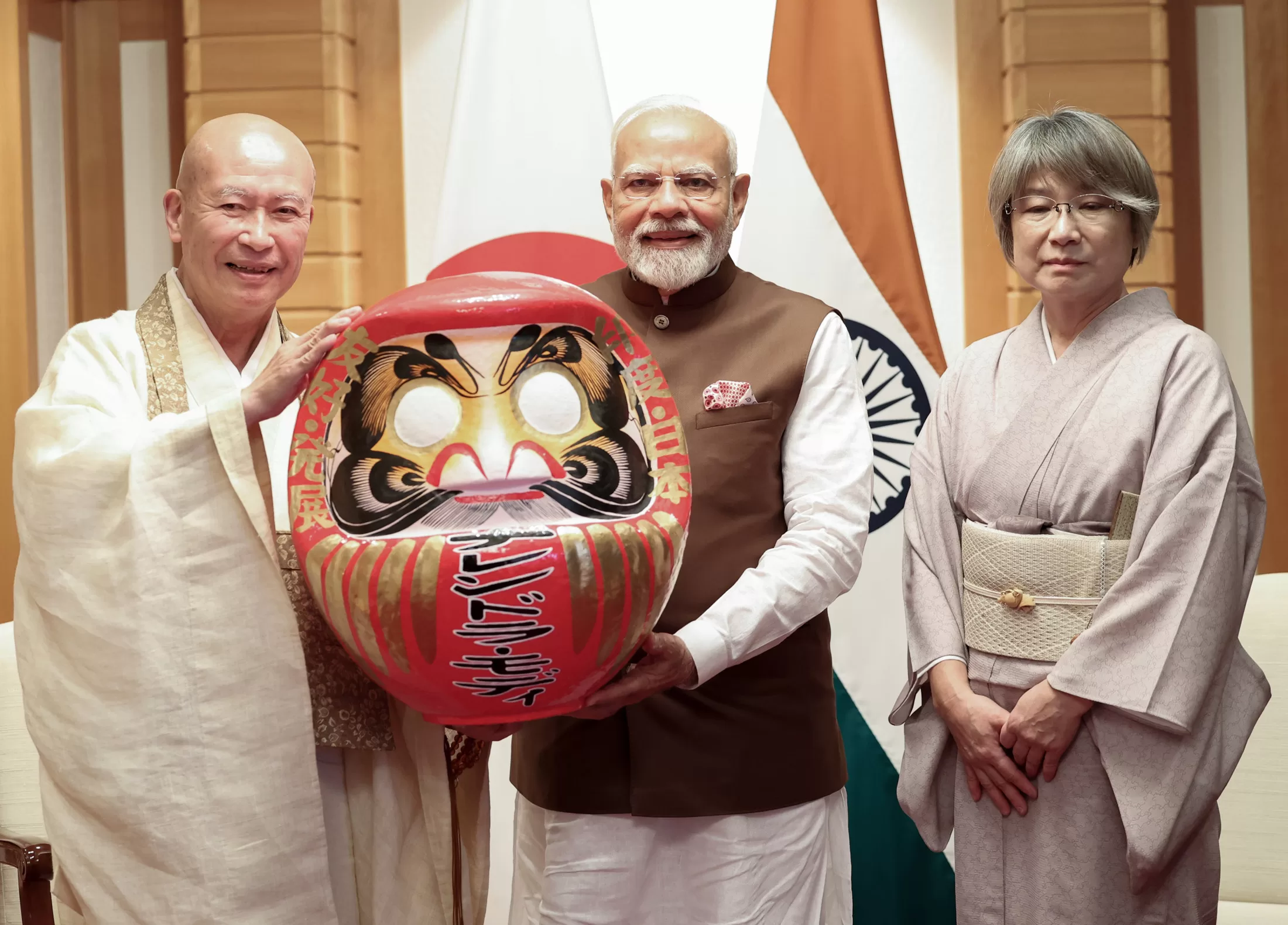
Beyond economic outcomes, the visit also reinforced cultural and people-to-people ties. Prime Minister Modi received a Daruma doll from the chief priest of the Shorinzan Daruma-Ji temple in Takasaki, a symbol of good fortune and perseverance rooted in the legacy of Bodhidharma, an Indian monk who travelled to Japan centuries ago. Modi remarked that the Daruma tradition “is a reminder of our enduring bonds and shared history,” highlighting the human dimension that underpins trust and facilitates long-term economic cooperation. The summit also launched initiatives to promote human-resource exchanges, targeting 500,000 personnel over five years, including 50,000 skilled Indian professionals entering Japanese industries, reinforcing the link between workforce development and trade resilience.
Taken together, the Tokyo summit’s outcomes suggest tangible medium-term relief for Indian exporters. Analysts estimate that advanced manufacturing and semiconductor investments could recover 10–20 per cent of threatened electronics and industrial goods exports, potentially offsetting $900 million of at-risk revenue. Steel and aluminium clusters supported by Japanese investment may mitigate $200–300 million of the $2 billion exposure, while AI, robotics, and infrastructure projects could help alleviate 5–10 per cent of losses in textiles, gems, and marine products. Combined with human-resource exchanges and supply-chain enhancements, these initiatives could collectively shield up to $6–7 billion of U.S.-tariff-affected exports over the next three to five years, providing a strategic buffer and a platform for sustained diversification into alternative markets.
While the Tokyo summit did not deliver immediate tariff relief, the cumulative impact of Japanese investment projections, technological collaboration, and industrial partnerships creates a strategic buffer for Indian exporters. By diversifying supply chains, fostering high-value sectors, and strengthening industrial capacity, India is positioning itself to mitigate the effects of external trade shocks while leveraging the India–Japan partnership to sustain long-term growth. As Modi noted, “The complementarities of our economies, anchored in trust and shared vision, can transform challenges into opportunities,” encapsulating the broader goal of turning external trade pressures into a platform for enhanced bilateral cooperation.
– global bihari bureau