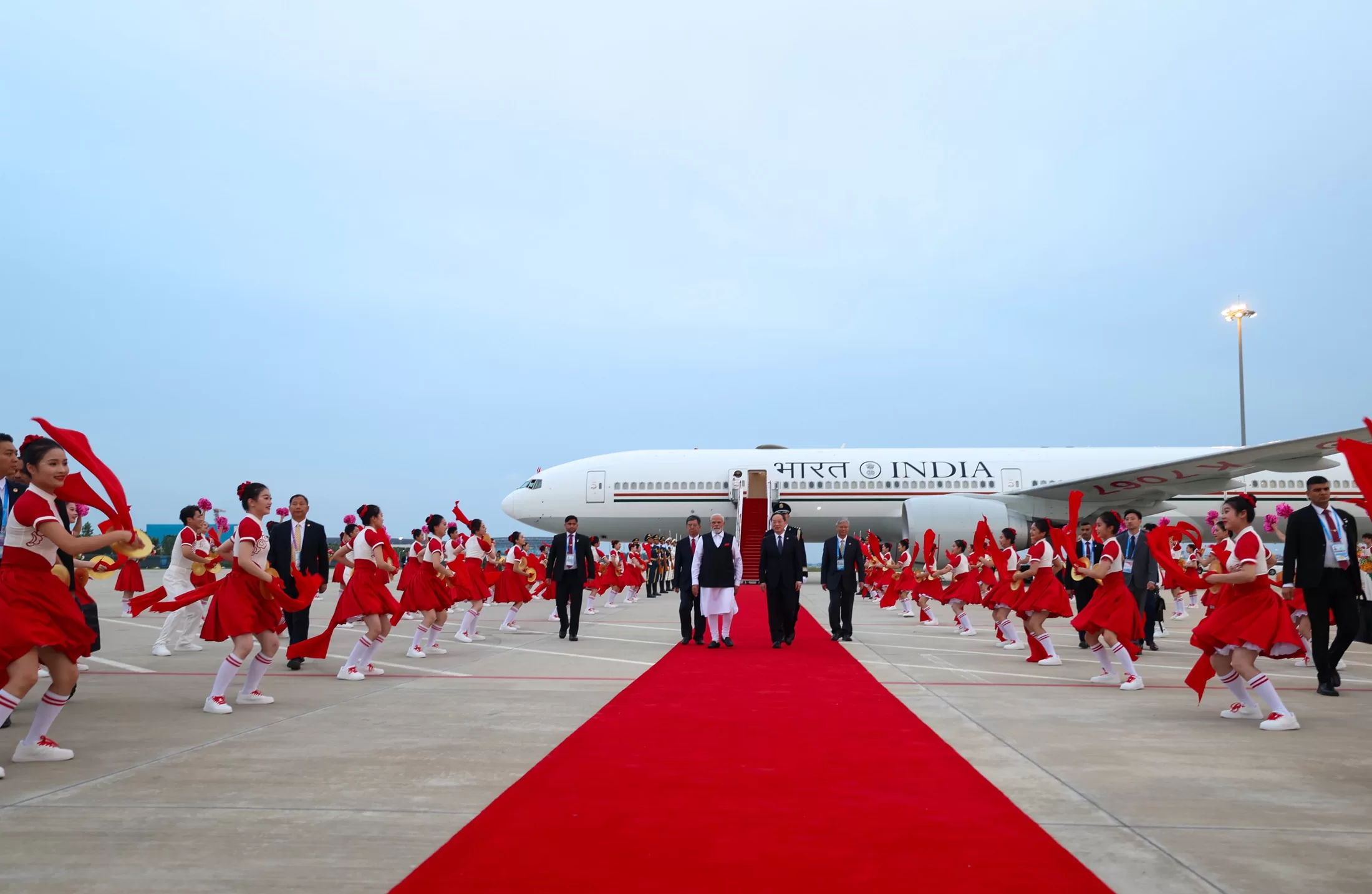
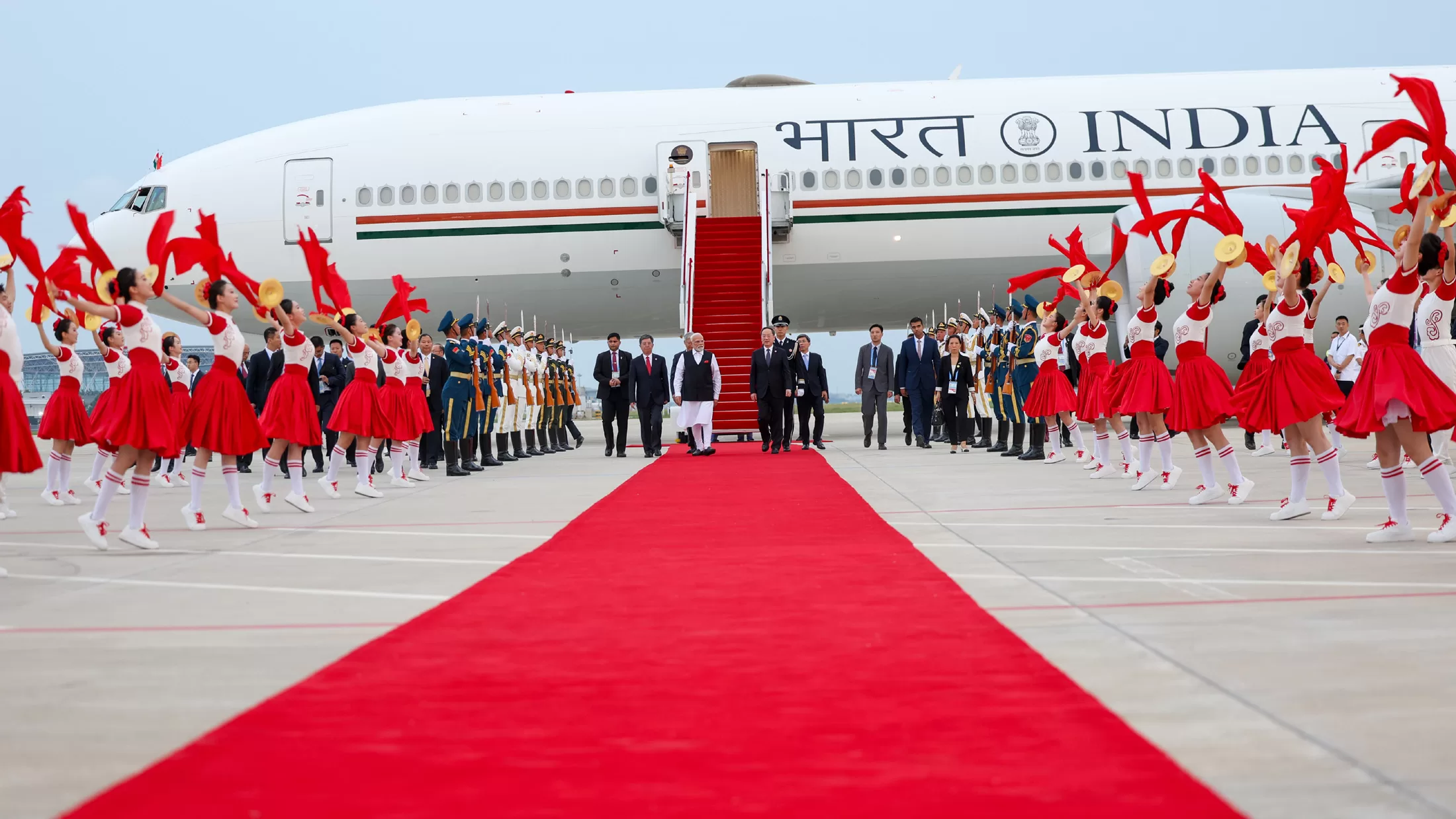
Prime Minister Narendra Modi arrives in Tianjin, China on August 30, 2025.
Tianjin SCO Summit Opens; Leaders Eye Trade, Security
Tianjin: Prime Minister Narendra Modi arrived in Tianjin on Saturday evening to a ceremonious reception that mixed diplomatic formality with visible popular enthusiasm. Stepping onto the scarlet carpet at Binhai International Airport, he was greeted by Li Lecheng, China’s minister of industry and information technology, and senior Indian officials; Chinese artists performed Indian classical music, and members of the Indian diaspora waved tricolour flags and chanted patriotic slogans as cameras recorded the scene. Modi posted on X that he had “landed in Tianjin” and looked forward to deliberations at the SCO summit, setting a tone of cautious engagement as he prepared for talks with multiple leaders.
China is hosting the 25th heads-of-state meeting of the Shanghai Cooperation Organisation in Tianjin from August 31 to September 1, with President Xi Jinping presiding. Officials describe it as the largest SCO gathering since the organisation’s founding, bringing together more than 20 leaders and the heads of a number of international organisations to discuss security, economic cooperation, connectivity and digital and energy issues. The summit format includes the formal Heads of State Council session and an expanded “SCO Plus” meeting.
Modi’s engagements in Tianjin were scheduled to include a bilateral meeting with President Xi on the summit’s margins to review steps taken since their last encounter in October 2024 and to discuss measures aimed at stabilising bilateral ties, including restoring direct passenger flights and facilitating trade and travel. Indian officials also expected a meeting with Russian President Vladimir Putin to cover energy cooperation, defence ties and arrangements for Putin’s planned visit to India in December. Kremlin officials confirmed that Putin would attend the summit and subsequently travel to Beijing to take part in China’s commemorative events.
Chinese state and diplomatic channels signalled that leaders would seek a joint outcome at the close of the meeting: a leaders’ statement intended to crystallise longer-term cooperation priorities. Chinese ministry briefings and summit materials framed Xi’s role as host and said Beijing would set out measures to promote deeper SCO cooperation across trade, the digital economy and infrastructure. While some outlets have used the informal label “Tianjin Declaration” for an expected joint statement, official communiqués released at the summit should be relied on for the precise name and content of any agreement.
The summit takes place against a backdrop of heightened economic tensions, notably recent U.S. trade measures affecting Indian exports and restrictions on Russian oil, which have been a prominent subtext in leaders’ preparatory remarks. Delegations and analysts say these external pressures have sharpened interest in multilateral forums such as the SCO as venues to discuss supply-chain resilience, energy security and alternatives for trade and investment.
For Modi, the Tianjin visit carries diplomatic and strategic weight. It is an occasion to manage a complex bilateral relationship with China after years of friction on the Line of Actual Control, to shore up relations with Russia, and to press India’s priorities—counter-terrorism cooperation, equitable economic growth and greater connectivity—within a regional bloc whose remit now extends beyond security into economic and technological domains. Observers note that ceremonial warmth at arrival events and state hospitality provide a backdrop for negotiations that remain cautious and tightly choreographed; the substantive outcomes will be measurable only after official summit communiqués and bilateral readouts appear.
– global bihari bureau