

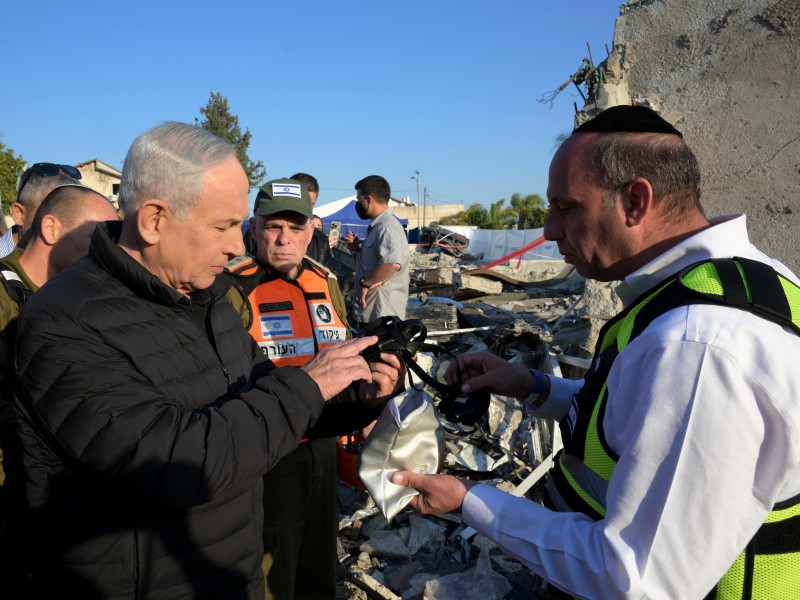
Israeli Prime Minister Benjamin Netanyahu at the site of the missile strike in Beit Shemesh today. © Photo by: Avi Ohayon, GPO
 By Deepak Parvatiyar*
Conflict Spreads from Battlefields to Airports and Economies
Strait of Hormuz at Risk in Widening Iran Conflict
The widening war involving Iran, Israel and the United States is no longer defined only by missiles and air strikes. It has become a global stress test for economic stability, energy security and diplomatic balance, with mounting evidence that the conflict is accelerating recession risks, reshaping great-power competition and inflicting heavy humanitarian and commercial disruption far beyond the battlefield.
The confrontation entered a deeper and more volatile phase today as Iranian missile and drone attacks expanded across Israel and several Gulf states, Israeli and American forces intensified strikes on Iranian military targets, and governments struggled to contain cascading humanitarian, economic and strategic consequences. Financial markets reacted nervously, airlines halted operations across large parts of West Asia, and oil prices surged as fears grew that a prolonged conflict could choke key supply routes and tip fragile economies into renewed slowdown.
The current escalation was triggered by the killing of Iran’s Supreme Leader Ayatollah Ali Khamenei in the opening U.S.-Israeli strikes late on February 28 and early March 1, which also claimed members of his family and senior commanders of the Islamic Revolutionary Guard Corps. Iran announced 40 days of national mourning as an interim leadership council assumed control of state affairs and began an urgent process to select a successor, creating a power vacuum that analysts say has sharpened both internal uncertainty and regional instability.
Also read:
- Israel-Iran War Deepens After Khamenei Killing, Region on Edge
- Missile War Erupts as Washington and Israel Hit Iran
Global equity markets fell sharply in Asia and Europe, while energy and defence stocks rose. Brent crude briefly surged toward the high-$70s per barrel—touching intraday levels near $82—before retreating on reports that shipping through the Persian Gulf had not yet been formally halted. Insurance premiums for vessels entering Gulf waters increased steeply after multiple commercial tankers were damaged by missile and drone strikes in the Strait of Hormuz and the Gulf of Oman.
Among the confirmed incidents were the MKD Vyom, a Marshall Islands-flagged tanker carrying Saudi crude, where one crew member was killed in an engine-room explosion blamed on a drone boat attack; and the ATHE NOVA, a Honduran-flagged vessel that caught fire after being struck by two drones, which Iran’s Islamic Revolutionary Guard Corps described as targeting a “U.S.-allied ship.” Additional attacks were reported on the Skylight, a Palau-flagged tanker north of Khasab in Oman whose 20-member crew—including 15 Indians and five Iranians—was evacuated amid fears of sinking, and the Hercules Star, a Gibraltar-flagged vessel hit by a projectile and briefly set ablaze before the fire was contained. Maritime security agencies also cited further alerts involving vessels near Jebel Ali and in the outer Gulf.
Maritime tracking services said more than 150 vessels were anchored or diverting away from the conflict zone as insurers temporarily withdrew cover. Freight companies began rerouting cargo around the Cape of Good Hope, adding weeks to delivery schedules. Shipping giants including Maersk, Hapag-Lloyd and CMA CGM announced the suspension of selected Red Sea and Bab el-Mandeb routes and halted Hormuz crossings on some services, citing GPS jamming, electronic interference and direct threats to crews.
At the centre of global concern is energy. Roughly one-fifth of the world’s daily oil consumption passes through the Strait of Hormuz, and the Middle East accounts for about one-third of global crude production. Even without a formal closure of shipping lanes, missile activity near Gulf waters has driven up war-risk insurance premiums for tankers, raised freight costs and triggered precautionary rerouting of vessels. Iran’s Islamic Revolutionary Guard Corps publicly warned that navigation through Hormuz could be halted if strikes on Iranian territory continued, with maritime radio channels carrying messages that “no ship is allowed to pass” in parts of the strait—amounting, analysts said, to a de facto partial blockade.
Economists cautioned that sustained increases of even 10 to 20 dollars a barrel could shave significant fractions off global growth, deepen inflationary pressure and destabilise energy-importing economies across Europe and Asia. European gas benchmarks spiked sharply amid fears that Middle Eastern instability could spill into liquefied natural gas supply chains.
Beyond the immediate price shock, the war is now intersecting with a longer-term strategic struggle between Washington and Beijing. China, the world’s largest crude importer, relies heavily on energy supplies from Iran and Venezuela—both under varying degrees of U.S. pressure and sanctions enforcement. Analysts note that U.S. efforts to constrain Iran militarily and economically, combined with tighter controls on Venezuelan exports, indirectly squeeze China’s energy security by narrowing its pool of discounted or politically aligned suppliers. China imports more than 11 million barrels of oil per day, and disruptions in Iranian flows force Beijing to turn to longer, more expensive routes from Africa and the Atlantic basin, increasing transport costs and exposure to maritime risk. This dynamic makes energy a quiet but potent instrument in the broader competition between the United States and its biggest strategic rival.
Military developments over the past 24 hours underscored the widening geographic scope of the conflict. Iranian projectiles were intercepted over Israeli territory and in Gulf airspace, while Israeli and U.S. aircraft struck sites inside Iran described as missile launchers, air-defence systems and command facilities. U.S. officials said the campaign—code-named “Operation Epic Fury”—followed a go-order issued on February 27, with a major daylight wave of strikes launched on February 28 that senior commanders said established air superiority over Tehran. More than 1,000 coordinated targets were hit in successive waves, according to Pentagon briefings.
US F-15 Fighter Jet Downed in Kuwait
According to local sources, a US F-15 fighter jet was shot down in the skies above Kuwait earlier on Monday morning. pic.twitter.com/UIyTkZllEX
— IRNA News Agency ☫ (@IrnaEnglish) March 2, 2026
The United States confirmed that its forces across the Gulf and eastern Mediterranean had moved to heightened alert, citing risks of spillover attacks on bases hosting American personnel. Officials said at least four U.S. service members had now been killed in retaliatory strikes on regional installations, with several others seriously wounded. In Kuwait, the General Staff of the Army reported the death of Sergeant Walid Majid Sulaiman, a member of the Naval Force in the Kuwaiti Army, in military operations.
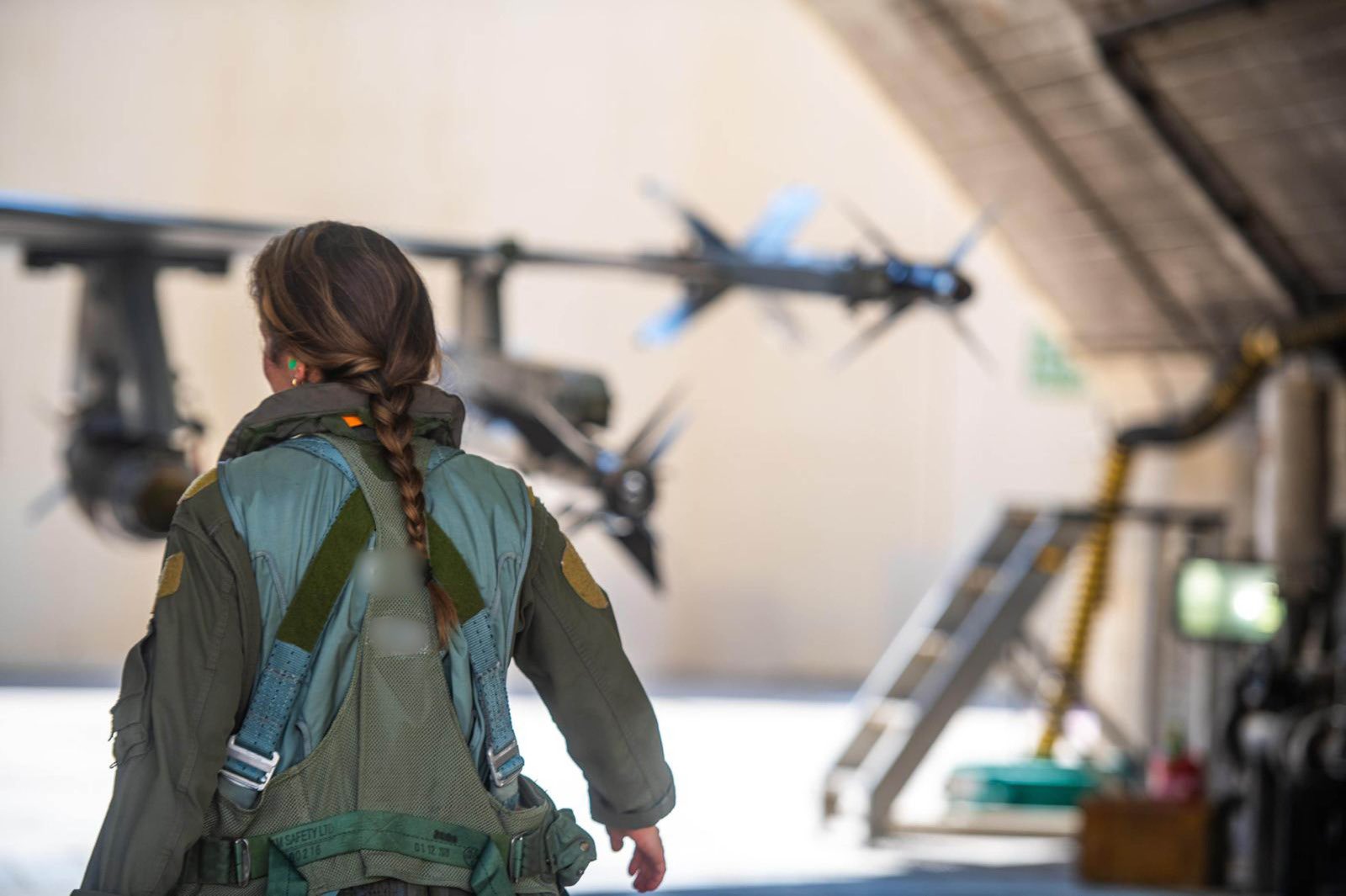
Israeli Prime Minister Benjamin Netanyahu said Israel was “striking at the heart of Tehran with increasing intensity” and thanked Washington for what he called unprecedented military and intelligence cooperation. The Israeli Defense Forces (IDF) stated that reserve formations, including women pilots and mixed-gender air-defence units, were actively engaged in intercepting Iranian missiles and conducting precision strikes against launch batteries and command nodes. Military footage released by the IDF showed aircraft taking off from multiple bases and claimed destruction of missile depots and radar systems inside Iran.
Iran’s Foreign Ministry rejected Israeli and American accounts, accusing both of indiscriminate attacks on civilian areas and of committing grave violations of international law. Iranian officials said schools, hospitals, Red Crescent facilities and cultural monuments had been damaged, including a girls’ school in Minab in southern Iran, where local media reported large numbers of child casualties.
Civilian suffering has mounted on multiple fronts. In Israel, hospitals treated victims of blast injuries and shock after falling debris from intercepted missiles struck residential neighbourhoods. In Iran, state media reported deaths and injuries in more than 20 cities, including Tehran, Isfahan, Qom, Shahriar and Tabriz. Communications restrictions and near-total internet blackouts have made independent verification difficult.
The Director-General of the World Health Organization (WHO), Tedros Adhanom Ghebreyesus, said reports that Tehran’s Gandhi Hospital had been damaged were “extremely worrying,” noting that its in-vitro fertilisation unit and critical equipment had been destroyed and embryos evacuated. He stressed that health facilities are protected under international humanitarian law and must not be caught up in the conflict.
Emergency diplomacy intensified at the United Nations, where Secretary-General António Guterres warned the Security Council that the conflict risked igniting a chain of events no one could control. He condemned both the U.S.-Israeli strikes on Iran and Iran’s subsequent attacks on Bahrain, Iraq, Jordan, Kuwait, Qatar, Saudi Arabia and the United Arab Emirates, calling for an immediate cessation of hostilities. Guterres cited reports of civilian casualties, including strikes on schools, and said large explosions had been reported near the district housing Tehran’s presidential palace and the Supreme Leader’s compound. He also noted that debris from intercepted missiles had fallen in Lebanon and Syria.
China’s position was articulated by foreign ministry spokesperson Mao Ning, who said the strikes lacked Security Council authorisation and violated international law. She warned that instability in the Strait of Hormuz threatened global energy security and confirmed that more than 3,000 Chinese citizens had been evacuated from Iran and neighbouring states, while one Chinese national had been killed in Tehran.
India stepped up diplomatic outreach while maintaining a carefully balanced stance. Prime Minister Narendra Modi held separate telephone conversations with the kings of Jordan and Bahrain, Saudi Arabia’s Crown Prince Mohammed bin Salman, and Israeli Prime Minister Netanyahu. In statements posted on X, Modi said he had conveyed “deep concern at the evolving situation,” reaffirmed India’s support for peace and civilian protection, and thanked regional leaders for assisting the Indian community. He stressed that escalation would harm not only West Asia but the wider global economy. The Indian Prime Minister today also held a telephone conversation with the Prime Minister of Israel, Benjamin Netanyahu, to discuss the current regional situation. He conveyed India’s concerns regarding recent developments and emphasised the safety of civilians as a priority. He reiterated India’s position on the need for an early cessation of hostilities.
A parallel humanitarian crisis unfolded in the skies and airports of the region. The closure of airspace over Iran, Israel and parts of the Gulf led to mass flight cancellations at major hubs in the United Arab Emirates, Qatar and Bahrain, stranding tens of thousands of travellers. Dubai and Abu Dhabi saw long queues of passengers unable to return home as airlines suspended most commercial services.
Families, students, migrant workers and pilgrims from South Asia, Africa and Europe reported being trapped for days in terminals or hotels. Indian authorities said special relief flights were being organised from Jeddah and other cities, while Gulf governments arranged emergency accommodation, meals and temporary visas. Airlines warned that disruptions could last weeks if airspace closures persisted.
In Washington, President Donald Trump said U.S. forces had destroyed multiple Iranian naval vessels and major command facilities and that the campaign could last for weeks, adding that he would not rule out deploying ground troops if necessary. He said the operation aimed to cripple Iran’s missile and command capabilities while denying that regime change was its formal objective.
The conflict widened on secondary fronts. Hezbollah said it would “confront” Israel in response to the killing of Iran’s Supreme Leader and intensified rocket exchanges across the Lebanon border, prompting Israeli strikes in southern Lebanon. Regional authorities confirmed debris from interceptions had fallen in parts of Syria and Jordan. Gulf states said their air defences had intercepted projectiles near critical infrastructure, including attempted strikes on Qatar’s gas facilities and a limited fire at Saudi Arabia’s Ras Tanura oil complex after drones were shot down nearby.
International nuclear watchdog, International Atomic Energy Agency, officials said there was no confirmed evidence that Iranian nuclear facilities had been directly struck, though Tehran claimed one site was affected by nearby explosions.
Maritime and logistics disruptions extended beyond Hormuz. Shipping companies reported GPS jamming and electronic interference in parts of the Gulf and Red Sea, while major operators halted selected routes as a precaution.
Markets remained on edge. Brent and West Texas Intermediate crude rose sharply before easing slightly on reports that shipping had not yet been formally halted, but traders warned volatility would persist as long as missiles fly near export routes. Manufacturing and aviation sectors warned of knock-on effects from fuel price rises and supply delays.
By nightfall, there was still no credible sign of de-escalation. Missiles and air defences continued to shape the skies over multiple countries, while diplomacy lagged behind fast-moving military realities. With civilian casualties rising, tens of thousands of travellers stranded, markets shaken, and the world’s most vital energy arteries under strain, the conflict has moved decisively beyond a regional confrontation. It now stands as a global crisis—testing economic resilience, exposing strategic rivalries and underscoring how closely modern warfare is tied to the fate of ordinary lives and the stability of the international system.
*Senior journalist
(This report is based on verified developments from multiple international sources, including CENTCOM updates, UKMTO and Windward maritime alerts, Maersk advisories, WHO statements, and official government releases. It integrates on-the-ground reporting, official statements, and open-source intelligence to provide a comprehensive, real-time account of the evolving conflict involving Iran, Israel, and the United States, with attention to humanitarian, economic, and strategic dimensions.)



Very detailed and exhaustive coverage. To get so many details in one place is quite credible. Thanks Deepak
Third World War-like consequences will have to be borne by the entire world. The scope of the war between the United States and Iran is likely to expand. Within three days, twelve countries have reportedly entered the conflict. This is alarming. India is heavily dependent on crude oil, and its adverse effects will soon begin to appear. The prices of diesel, petrol, CNG, cooking gas, and overall inflation are likely to rise. Even if we are not directly participating in the war, India will have to face its deep economic consequences.
International political diplomacy will have to be handled with extreme responsibility. This is where India’s true test lies. It is necessary to seriously identify who are our allies and who are hostile nations.
Sir, your article presents an in-depth and realistic analysis of the situation.
Thank you, Global Bihari News.
👌👌👍