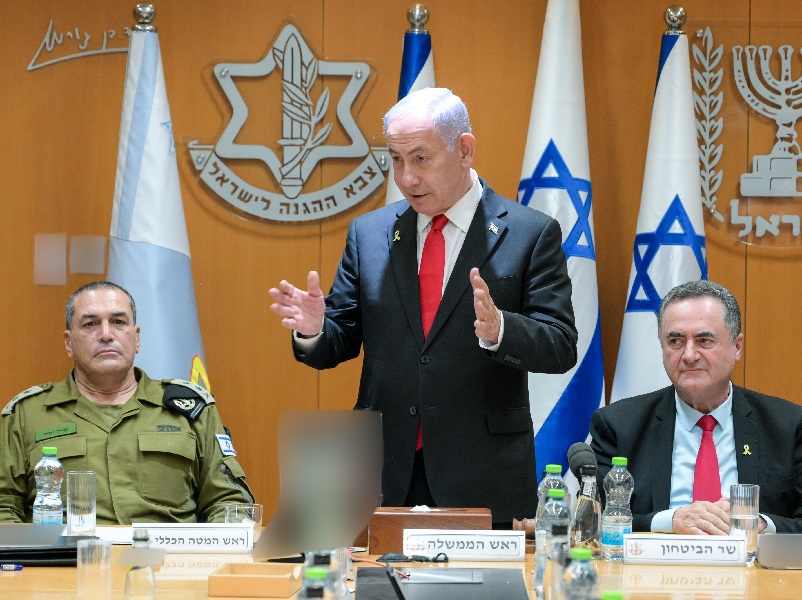
Israeli Prime Minister Benjamin Netanyahu at the Israeli Defense Forces General Staff Forum on June 30, 2025. ©Photo by Ma'ayan Toaf, GPO

The Middle East, a region etched with the scars of history, remains a crucible of conflict where the aspirations of peace collide with the realities of war. The Israeli-Palestinian conflict, a decades-long struggle rooted in competing claims to land and identity, continues to shape the region’s trajectory, with recent developments underscoring both the persistence of violence and the faint glimmers of diplomatic hope. The human toll, environmental devastation, and geopolitical complexities paint a sobering picture, yet the pursuit of stability persists, driven by global powers and regional actors alike.
On June 30, 2025, the United States (U.S.) State Department, through spokesperson Tammy Bruce, outlined a vision of “peace through strength,” a policy championed by President Donald John Trump and Secretary of State Marco Antonio Rubio. The administration’s recent lifting of U.S. sanctions on Syria, announced via an executive order, reflects a belief that easing economic pressures could foster stability for the Syrian people, while maintaining targeted sanctions on figures like former President Bashar Hafez al-Assad and those linked to human rights abuses or terrorism. This move, described as a commitment to a stable and united Syria, aligns with broader U.S. efforts to reshape the Middle East’s volatile landscape. The U.S. has also facilitated a landmark peace agreement between the Democratic Republic of the Congo and the Republic of Rwanda, signaling its diplomatic reach beyond the Middle East, while Secretary Rubio’s upcoming Quad ministerial with Australia, India, and Japan underscores a commitment to a free and open Indo-Pacific, reinforcing global alliances to counter regional instability. Simultaneously, the closure of the State Department’s Middle East Task Force on June 27, 2025, signals a shift toward normalised operations, with U.S. embassies resuming routine services and facilitating the evacuation of over 650 U.S. citizens from Israel via 16 flights, supported by regional partners like Greece, Italy, and Cyprus.
Yet, the situation in Gaza remains a stark counterpoint to these diplomatic strides. The United Nations Security Council (UNSC), in its 9950th meeting on June 30, 2025, heard from Assistant Secretary-General Khaled Khiari, who detailed a grim reality: since October 7, 2023, 56,500 Palestinians have been killed, with 1,068 fatalities since June 17, 2025, averaging 82 deaths per day. The Gaza Ministry of Health’s figures underscore the scale of loss, with over 18,000 children and 12,000 women among the dead, alongside 219 journalists and 11,000 missing, predominantly women and children. The Israeli military’s acknowledgement of civilian harm near Gaza Humanitarian Foundation (GHF) aid distribution sites, coupled with Haaretz’s report of an investigation into possible war crimes, has sparked international concern. The GHF, backed by Israel and the U.S., has delivered 46 million meals, yet its operations have been marred by violence, with 580 Palestinians killed since June 17 while seeking aid. Reports of Hamas targeting GHF staff and allegations of contaminated flour laced with oxycodone further complicate the aid landscape, prompting the UN to distance itself from GHF’s operations, citing safety risks and a failure to meet humanitarian principles of humanity, impartiality, neutrality, and independence. The UN, adhering to these principles, has refused to participate in GHF’s aid delivery, advocating for its established mechanisms, which have been hampered by restricted access and fuel shortages.
The Palestinian Central Bureau of Statistics (PCBS), led by Dr. Ola Awad, provides a harrowing statistical portrait of the crisis. Since the 1948 Nakba, over 156,000 Palestinians and Arabs have been killed, with 55,000 deaths in Gaza since October 7, 2023. The displacement of nearly 2 million Gazans, representing 66% of the Strip’s population, has created a humanitarian catastrophe, with families forced into overcrowded areas lacking shelter, water, or sanitation. In the West Bank, Operation Iron Wall has displaced over 42,000 refugees from camps like Jenin and Tulkarm, marking the largest displacement operation in eight decades.
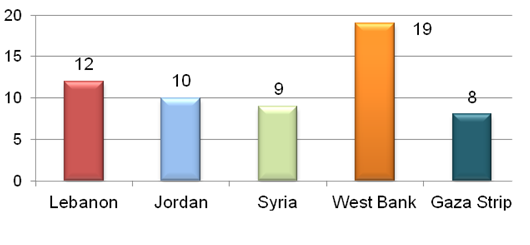
The PCBS notes that 15.2 million Palestinians exist worldwide by mid-2025, with 7.8 million outside historic Palestine, including 6.5 million in Arab countries. The environmental toll is equally dire. The PCBS and Environment Quality Authority report that 81% of Gaza’s agricultural lands have been destroyed, 85% of water and sanitation infrastructure is in ruins, and 50 million tons of rubble, mixed with hazardous waste, litter the Strip since October 7, 2023.
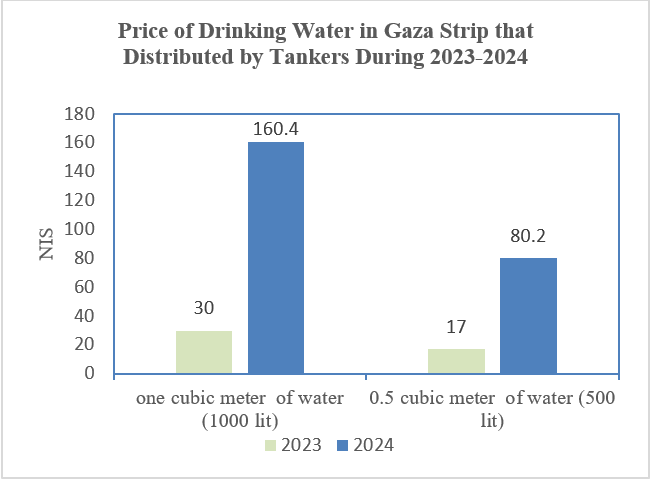
Water scarcity, with 65% of Gazans receiving less than 3-5 litres per day, and a 400% surge in water tanker prices, exacerbate the crisis. In the West Bank, Israel’s disposal of 60,000 tons of electronic waste annually and untreated wastewater from settlements further degrade the environment, threatening Palestinian health and livelihoods. The Consumer Price Index (CPI) in Gaza surged by 43.21% in May 2025, driven by shortages of basic commodities like flour, which spiked by 311.94%, and eggs, up by 121.20%, reflecting the economic strangulation caused by restricted commercial access.
Israel, under Prime Minister Benjamin “Bibi” Netanyahu, frames its actions as existential. On July 1, 2025, Netanyahu met with the Israeli Defense Forces (IDF) General Staff Forum, praising their “superb” execution of Operation Rising Lion in Iran, which targeted nuclear and missile capabilities. He described Iran’s regime as an existential threat, not only to Israel but to the broader Middle East, citing its “three axes of annihilation”—a noose, missile threat, and nuclear ambition. Netanyahu emphasised Israel’s transformation from a vulnerable diaspora to a state with formidable military power, crediting the IDF for ensuring the “eternity of Israel.” He highlighted the historical context of Jewish persecution, from pogroms to the Holocaust, arguing that the establishment of Israel and the IDF marks a turning point in Jewish self-defence. Yet, this narrative of security clashes with the Palestinian perspective, articulated by their Permanent Observer at the UN, who condemned the “genocide” in Gaza and the withholding of $2.3 billion in Palestinian revenue, arguing that Israel’s actions undermine the prospects of a viable Palestinian state. The Observer’s call for Palestinian rights to life, freedom, and statehood reflects a deep-seated demand for justice amid ongoing displacement and economic strangulation.
The lingering impact of Hamas as an ideology complicates the path to peace. Hamas, rooted in a blend of Palestinian nationalism and Islamist ideology, continues to resonate among segments of the population due to its narrative of resistance against occupation. Despite its military weakening, as noted by South Korea’s delegate at the UN, Hamas’s ideology persists through its ability to exploit despair and disenfranchisement in Gaza, where economic collapse and humanitarian crises fuel radicalisation. The group’s refusal to release hostages, including two Americans, and its disruption of aid deliveries, as reported by the U.S. State Department, sustain its influence as a symbol of defiance, even as its actions exacerbate civilian suffering. The torture and execution of GHF employees by Hamas, as cited by Israel’s UN representative, underscore its rejection of cooperative humanitarian efforts, reinforcing a cycle of violence that alienates potential partners in peace. This ideological resilience, thriving in the absence of viable political alternatives, poses a significant barrier to negotiations, as it perpetuates distrust and undermines ceasefire efforts.
Iran’s role in the conflict remains pivotal, in the face of claims of resilience from Supreme Leader Ali Hosseini Khamenei. On July 1, 2025, Khamenei declared victory over the U.S. and Israel, framing Iran’s survival of Operation Rising Lion as a testament to its strength. However, Israel’s targeted strikes on Iran’s nuclear and missile capabilities, as lauded by Netanyahu, have significantly curtailed its strategic capacity, according to a July 2, 2025, report from the Israeli Ministry of Defense. The International Atomic Energy Agency (IAEA), in a June 27, 2025, statement from Vienna, Austria, confirmed that radiation levels in the Gulf region remain normal post-conflict, with no significant radioactive release from Iran’s Bushehr Nuclear Power Plant or Tehran Research Reactor, averting a radiological crisis. However, Iranian President Masoud Pezeshkian, in a June 30, 2025, call with French President Emmanuel Jean-Michel Frédéric Macron, criticised the IAEA for biased reporting and failure to condemn attacks on Iran’s nuclear facilities, prompting Iran’s suspension of cooperation. He contrasted Iran’s IAEA-monitored nuclear program with Israel’s unregulated nuclear arsenal, a non-member of the Treaty on the Non-Proliferation of Nuclear Weapons (NPT), and questioned guarantees against future attacks, reaffirming Iran’s diplomatic approach to avoid war. Macron condemned Israel’s strikes, urged renewed IAEA engagement, and supported fair application of international law. Iran’s support for Hamas and other proxies, including weapons flows through Judea and Samaria, has been disrupted, though not eliminated, as evidenced by the United Nations Interim Force in Lebanon (UNIFIL)’s discoveries of rocket caches in Lebanon. Iran’s claim of victory masks a weakened position, as its economy faces strain and its regional influence is challenged by the U.S.-brokered Israel-Iran ceasefire. The Iranian Foreign Ministry’s statement on June 30, 2025, that conditions are unfavourable for negotiations with the U.S. suggests a stern posture, and its continued backing of Hamas indicates a commitment to proxy warfare, complicating regional de-escalation.
The international community remains divided. The United Nations Security Council’s discussions on June 30, 2025, guided by resolution 2334 (2016), highlight Israel’s ongoing settlement expansion in the West Bank, including plans for 10,000 new housing units from March to June 2025, which violates international law and fragments Palestinian territory. Delegates from France, Algeria, and Russia condemned these actions, with France imposing sanctions on 59 extremist settlers for violence against Palestinians. Calls for a two-state solution persist, with Sierra Leone, Denmark, and others urging adherence to international law. The UN’s Office for the Coordination of Humanitarian Affairs (OCHA) reports that 150,000 Gazans face new displacement orders, pushing them into areas without adequate infrastructure. The World Food Programme (WFP) warns of catastrophic hunger, with 130,000 metric tons of food ready but stalled by restricted access. The UN’s refusal to endorse GHF’s operations, coupled with allegations of contaminated aid, underscores the need for safe, impartial aid delivery. Reports of gender-based violence in Gaza, with women denied resources, and the lack of legal assistance further compound the humanitarian crisis.
Official statements from regional governments reflect the complexity of the conflict. The Kingdom of Saudi Arabia, through its Ministry of Foreign Affairs, has consistently demanded Palestinian statehood on 1967 borders with East Jerusalem as its capital as a prerequisite for normalizing ties with Israel, condemning Israel’s “extremism” for blocking a planned visit by Arab ministers to Ramallah, the administrative capital of the Palestinian Authority, on June 1, 2025, aimed at discussing peace initiatives (Saudi Foreign Ministry, www.mofa.gov.sa). Jordan’s Foreign Minister Ayman Hussein Safadi echoed this, criticising Israel’s actions as “killing any chance” for a just settlement, particularly after the blocked Ramallah visit (Jordanian Ministry of Foreign Affairs, www.fm.gov.jo). Qatar, a key mediator in Gaza ceasefire talks, condemned Israel’s strikes on Iran as a “dangerous escalation” and views its role in hostage negotiations as central to de-escalation, though public opinion in Qatar remains critical of Israel. Iran, adopting a hardline stance, has called for the destruction of the “Zionist entity” while supporting Hamas militarily, further complicating peace efforts. Egypt, balancing its peace treaty with Israel and its role in Gaza, has proposed a reconstruction plan that rejects Palestinian displacement and emphasises security training for Palestinian forces, as outlined at the March 4, 2025, Palestine Summit. These positions highlight a unified Arab stance against forced displacement and for Palestinian statehood, contrasted by Iran’s confrontational approach.
Beyond Gaza, regional dynamics add complexity. The U.S.-brokered ceasefire between Israel and Iran offers a rare pause, but its replication in Gaza remains elusive. Hamas’s refusal to release hostages and its violation of prior ceasefires fuel Israel’s military operations. In Syria, the UN’s Special Envoy Geir Otto Pedersen engages with the Syrian Interim President Ahmad Mohammad Al Sharaa and Interim Foreign Minister Assad Al Shaibani to address security challenges, including a recent terrorist attack on a church, while emphasising an inclusive political transition. In Lebanon, UNIFIL reports ongoing Israeli military activities and the discovery of unauthorised weapons, highlighting the region’s fragility. The U.S. revocation of visas for the United Kingdom (UK) band Bob Vylan, following their inflammatory performance at the Glastonbury Festival, a major cultural event held annually in Somerset, England, reflects a broader policy of restricting entry to those perceived as glorifying violence. The U.S. State Department’s decision to depart from its tradition and publicly name Bob Vylan in its June 2025 statement sparked debate over transparency versus privacy back home, with critics questioning whether publicising the band’s identity was necessary to justify the security-based visa ban, while supporters argued it reinforced accountability for actions deemed inflammatory. This stance underscores the administration’s focus on security, though it ignited discussions on free expression.
The Middle East conundrum persists because it is not merely a clash of arms but a collision of narratives, histories, and aspirations. Palestinians mourn a homeland fractured since 1948, with 15.2 million scattered worldwide, half outside historic Palestine. Israelis, shaped by centuries of persecution, see their state as a bulwark against annihilation. The U.S. seeks to project leadership, balancing support for Israel with humanitarian imperatives, while the UN grapples with enforcing international law in a region where power often overshadows principle. Regional powers like Saudi Arabia, Jordan, Qatar, and Egypt advocate for a two-state solution, while Iran’s support for proxies like Hamas fuels escalation, even as its strategic capacity wanes.
The question lingers: Is this an eternal war, or is a solution in sight? Despite the entrenched cycle of violence, a resolution is not impossible. The unified Arab stance, as seen in the Palestine Summit and statements from Saudi Arabia, Jordan, Qatar, and Egypt, coupled with international pressure for a two-state solution, suggests a pathway—albeit narrow—through sustained diplomacy, economic reconstruction, and mutual recognition of rights. However, Israel’s tough stance, backed by the United States, the enduring ideology of Hamas, thriving on despair, and Iran’s persistent, though diminished, proxy warfare pose significant obstacles. Without addressing the root causes—occupation, displacement, and mutual distrust—the conflict risks perpetuating its tragic eternity.