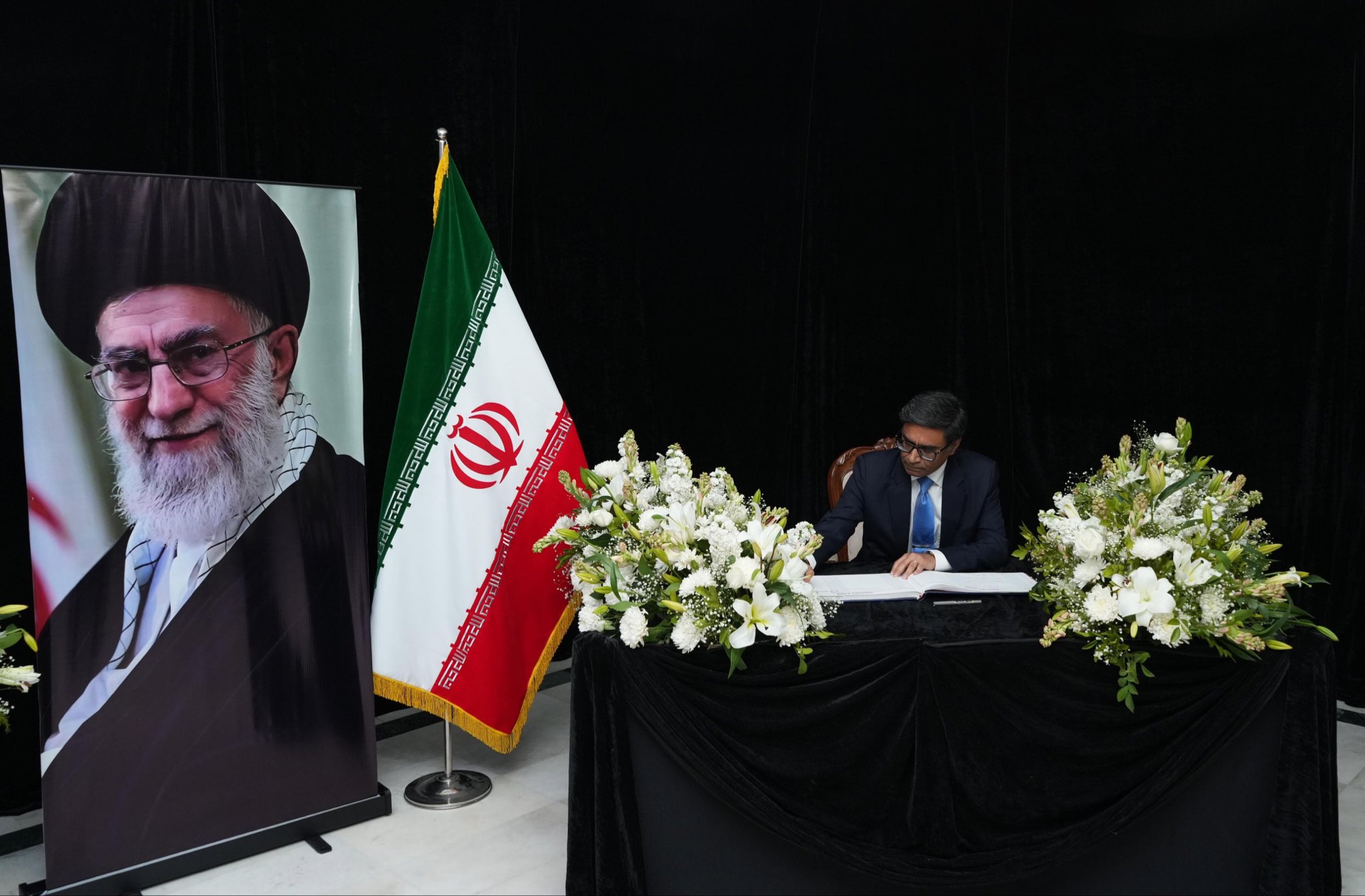
Indian Foreign Secretary Vikram Misri today visited the Embassy of the Islamic Republic of Iran and signed the condolence book, on behalf of the people and the Government of India, on the demise of Supreme Leader Ayatollah Syed Ali Khamenei.
US Conducts Largest Civilian Evacuation
Evacuates Nearly 20,000 Citizens as Iran Conflict Worsens
Washington/Tehran/Jerusalem/Muscat/New Delhi: The United States has evacuated nearly 20,000 of its citizens from the Middle East since the Iran conflict erupted on February 28, in what officials describe as one of the largest emergency civilian departure operations mounted by Washington in recent years. In a statement issued today, the United States Department of State said the figure reflects Americans who have already returned safely to the United States, while additional citizens have relocated to neighbouring countries or remain in transit.
Assistant Secretary Dylan Johnson said the evacuation effort continues to expand as the department increases charter flight capacity and ground transport operations across several regional hubs. The operation was initiated under the direction of Secretary of State Marco Rubio, who ordered the rapid mobilisation of diplomatic and logistical resources as security conditions deteriorated across parts of the Middle East. Officials said additional charter flights and land transport routes were being activated today as Washington works to assist Americans seeking to depart the region.
To streamline the process, the State Department introduced a crisis intake system for U.S. nationals located in Kuwait, Bahrain, the United Arab Emirates, Qatar, Saudi Arabia, and Israel. Citizens who register through the system receive direct information on available evacuation flights and overland transport options. The department’s round-the-clock crisis task force has already provided assistance to more than 10,000 Americans abroad, including travel coordination, safety guidance, and communication support as regional airspace closures and flight disruptions complicate commercial departures.
The expanding evacuation effort reflects the broader instability generated by the ongoing conflict and the growing disruption to civilian travel routes throughout West Asia. International airlines have altered flight paths or temporarily suspended services in several parts of the region, while maritime and aviation authorities continue to monitor security risks affecting commercial traffic. Multiple governments have also begun facilitating departures for their nationals as security concerns mount.
For India, home to nearly ten million citizens living or working across West Asia and heavily reliant on Gulf energy imports, New Delhi has heightened vigilance, with airlines including Air India and IndiGo rerouting flights and the Ministry of External Affairs actively monitoring maritime and aviation threats. Indian Foreign Secretary Vikram Misri today visited the Embassy of the Islamic Republic of Iran and signed the condolence book, on behalf of the people and the Government of India, on the demise of Supreme Leader Ayatollah Syed Ali Khamenei.
The conflict surrounding Iran widened sharply on Thursday as naval clashes, drone strikes, shipping paralysis, and mounting energy shocks signalled that the crisis was expanding beyond its initial battlefield, raising fears of a broader regional war with global economic repercussions. Military tensions escalated at sea with reports that a United States submarine sank an Iranian naval vessel during operations linked to the widening maritime confrontation. The incident, reported by multiple international media outlets, underscored the increasingly global nature of naval manoeuvres tied to the conflict, which had initially centred on the Persian Gulf but is now stretching across wider shipping routes.
At the same time, the strategic Strait of Hormuz—through which roughly a fifth of the world’s traded oil normally passes—remained effectively paralysed. Shipping data and industry estimates indicated that hundreds of tankers were now stranded outside the narrow waterway as insurance costs surged and shipowners avoided the corridor amid fears of missile or drone attacks. Iranian officials, including Seyed Abbas Araghchi, condemned the submarine attack, stating that the frigate Dena, carrying nearly 130 sailors in international waters, had been struck without warning and warned that the United States would “come to bitterly regret the precedent it has set.”
Military operations continue to intensify across multiple theatres. Israeli Prime Minister Benjamin Netanyahu described the campaign as a “quick and decisive” effort to dismantle Iran’s nuclear program and missile capabilities. United States Central Command reported the sinking or destruction of over twenty Iranian naval vessels in coordinated strikes under Operation Epic Fury, which included the combat debut of long-range Precision Strike Missiles and reportedly involved the U.S. submarine. Iran’s Islamic Revolutionary Guard Corps has asserted operational control over the Strait of Hormuz and warned that any transiting vessels risk missile or drone strikes. Shipping data indicates traffic has plummeted sharply, with hundreds of tankers stranded outside the chokepoint, forcing insurers to suspend coverage and further elevating global energy risks.
The conflict has expanded through proxies. Hezbollah launched rockets into northern Israel, Yemen’s Houthis intensified Red Sea drone and missile strikes, and Iranian forces have targeted U.S. bases and oil infrastructure in Saudi Arabia and Qatar. Spillover incidents were reported in Azerbaijan’s Nakhchivan exclave, where Iranian-linked drones struck an airport terminal and near a school on March 5, injuring civilians and prompting Baku to denounce the attacks as acts of aggression.
Global markets have reacted sharply. Brent crude futures climbed above $84 a barrel in recent sessions, with shipping insurance premiums for Gulf routes more than doubling, raising warnings of billions of dollars in added trade costs should the Strait of Hormuz remain blocked. Analysts have flagged that sustained disruption could push oil prices toward triple digits.
Amid the crisis, U.S. domestic and media scrutiny has intensified. Defense Secretary Pete Hegseth, during a Wednesday briefing, criticised coverage of the conflict, arguing that the press disproportionately highlights U.S. casualties to portray President Donald Trump negatively. Hegseth said, “When a few drones get through or tragic things happen, it’s front-page news. I get it — the press only wants to make the president look bad, but try for once to report the reality.” The remarks came alongside Pentagon briefings detailing the ongoing pace of operations, which Hegseth described as “accelerating” and part of a broader campaign to secure regional objectives. Meanwhile, criticism persists over initial evacuation planning, with lawmakers citing early hotline issues and frustrated citizens, while roughly 1,500 Americans remain actively seeking State Department assistance.
International diplomacy continues under strain. Russian Foreign Minister Sergey Lavrov has warned that U.S. and Israeli attacks risk triggering nuclear proliferation across the Middle East by undermining non-proliferation norms. United Nations Secretary-General António Guterres reiterated calls for a ceasefire and access for the International Atomic Energy Agency to affected nuclear sites. European capitals are assessing the implications for deterrence credibility, with France and the United Kingdom reaffirming their extended nuclear guarantees for allies. Chinese and Russian officials continue to decry U.S.-Israeli actions as destabilising, while Washington pursues multilateral coordination with regional partners.
Humanitarian consequences mount. Reports indicate that more than 1,000 fatalities may have occurred in Iran and the Gulf region, including civilians caught in missile and drone attacks. Thousands of non-American residents in the region are also seeking safe passage. U.S. evacuation operations remain ongoing, reflecting the unprecedented scale of displacement caused by a conflict involving a major global power.
As the war deepens, with fresh missile and drone barrages intercepted over Israel, continuing strikes against Iranian infrastructure, naval escalation, including the U.S. submarine sinking of an Iranian warship, and the paralysis of critical shipping lanes, the combination of humanitarian, military, economic, and diplomatic pressures has transformed a targeted campaign into a broader regional and global crisis. Whether intensified diplomacy, evacuation measures, and multilateral coordination can prevent further escalation and contain nuclear, energy, and regional spillover risks remains a pressing question for international security.