Major Naxal Surrenders Mark Turning Point in Red Corridor
LWE Footprint Shrinks Sharply; Only 11 Districts Affected
New Delhi: India’s decades-long confrontation with Left Wing Extremism (LWE) entered a decisive phase today as senior Maoist leader Mallojula Venugopal Rao—known by his aliases Bhupathi, Sonu and Abhay—formally surrendered with several dozen cadres in Gadchiroli, Maharashtra. The development coincided with a Ministry of Home Affairs statement released this afternoon that described “unprecedented operational success” in the national campaign against Naxal violence and confirmed the steepest reduction yet in the number of affected districts.
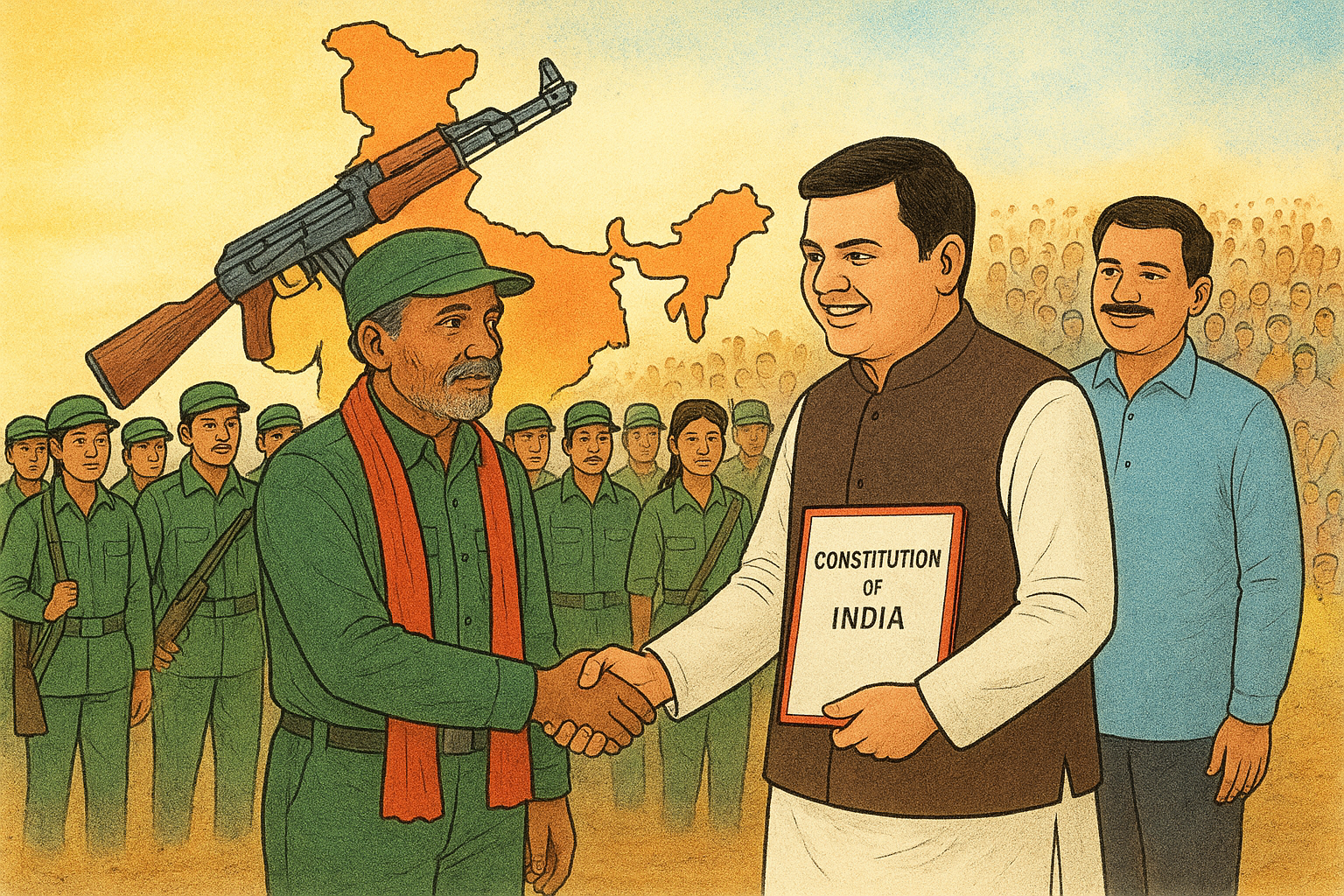
Rao, a long-time Politburo and Central Committee member of the banned Communist Party of India (Maoist), laid down arms before Maharashtra officials in a ceremony attended by Chief Minister Devendra Fadnavis. Accompanied by around 60 armed cadres, he handed over weapons, including AK-47 and INSAS rifles. The Chief Minister presented each surrendered cadre with a copy of the Indian Constitution, calling it a symbol of reintegration into democratic life. Security sources confirmed that the event followed coordinated outreach under the Union Home Ministry’s guidance.
The surrender in Gadchiroli was followed by similar actions in Chhattisgarh. In the Bastar division, 78 Maoist cadres, including 43 women, renounced violence and joined rehabilitation programmes, while 27 others, some carrying cash rewards totalling ₹50 lakh, surrendered in the Sukma district. Across Maharashtra and Chhattisgarh, officials reported that 139 cadres have surrendered within the past two days, most of them after Bhupathi’s initiative.
In its official statement released in Delhi today, the Ministry of Home Affairs reported that 312 LWE cadres have been eliminated, 836 arrested, and 1,639 have surrendered and joined the mainstream so far this year, including a Politburo and a Central Committee member. The Ministry said these results were achieved under the leadership of Prime Minister Narendra Modi and the guidance of Union Home Minister Amit Shah. It reaffirmed the government’s goal of eradicating the Naxal menace completely by March 31, 2026.
According to the statement, the number of “most affected districts” by Naxalism has been brought down from six to three—Bijapur, Sukma and Narayanpur in Chhattisgarh. Similarly, the number of LWE-affected districts has fallen from 18 to 11. The Ministry attributed this decline to the rigorous implementation of the National Action Plan and Policy, which combines intelligence-based counter-operations with developmental outreach. The strategy includes area domination in regions previously lacking security presence, targeting of senior leadership and overground operatives, disruption of financial channels, accelerated prosecution of Maoist-linked cases, and enhanced coordination between central and state agencies.
Analysts view Bhupathi’s surrender as a symbolic rupture in the Maoist hierarchy. His decades-long role as a strategist and spokesperson gave him insight into both the insurgency’s military and ideological structures. His decision to abandon the movement, observers say, may intensify existing divisions within the organisation and encourage further defections. Reports indicate that additional cadres in Chhattisgarh and Maharashtra are now preparing to surrender following his lead.
Once described by then Prime Minister Manmohan Singh in 2010 as India’s “biggest internal security challenge,” Naxalism is now visibly receding. A decade ago, 126 districts across multiple states reported Naxal-related violence. By March 2025, that number had dropped to 18, with six classified as “most affected.” The MHA’s figures released today show a further contraction—only 11 districts are now affected, and just three remain severely impacted.
Officials emphasise, however, that today’s success does not mean the end of the threat. Security agencies continue to monitor Maoist presence in parts of central and eastern India, where smaller armed groups remain active. Authorities stress that consolidating peace will depend on sustained vigilance, effective governance, and the expansion of welfare and development programmes across former strongholds of the so-called “Red Corridor,” once envisioned by Maoist ideologues to extend from Pashupati in Nepal to Tirupati in Andhra Pradesh.
Today’s combination of a high-profile surrender, coordinated state-level operations, and an official declaration of shrinking insurgent influence marks what observers describe as one of the most significant turning points yet in India’s five-decade campaign against Left Wing Extremism.
– global bihari bureau