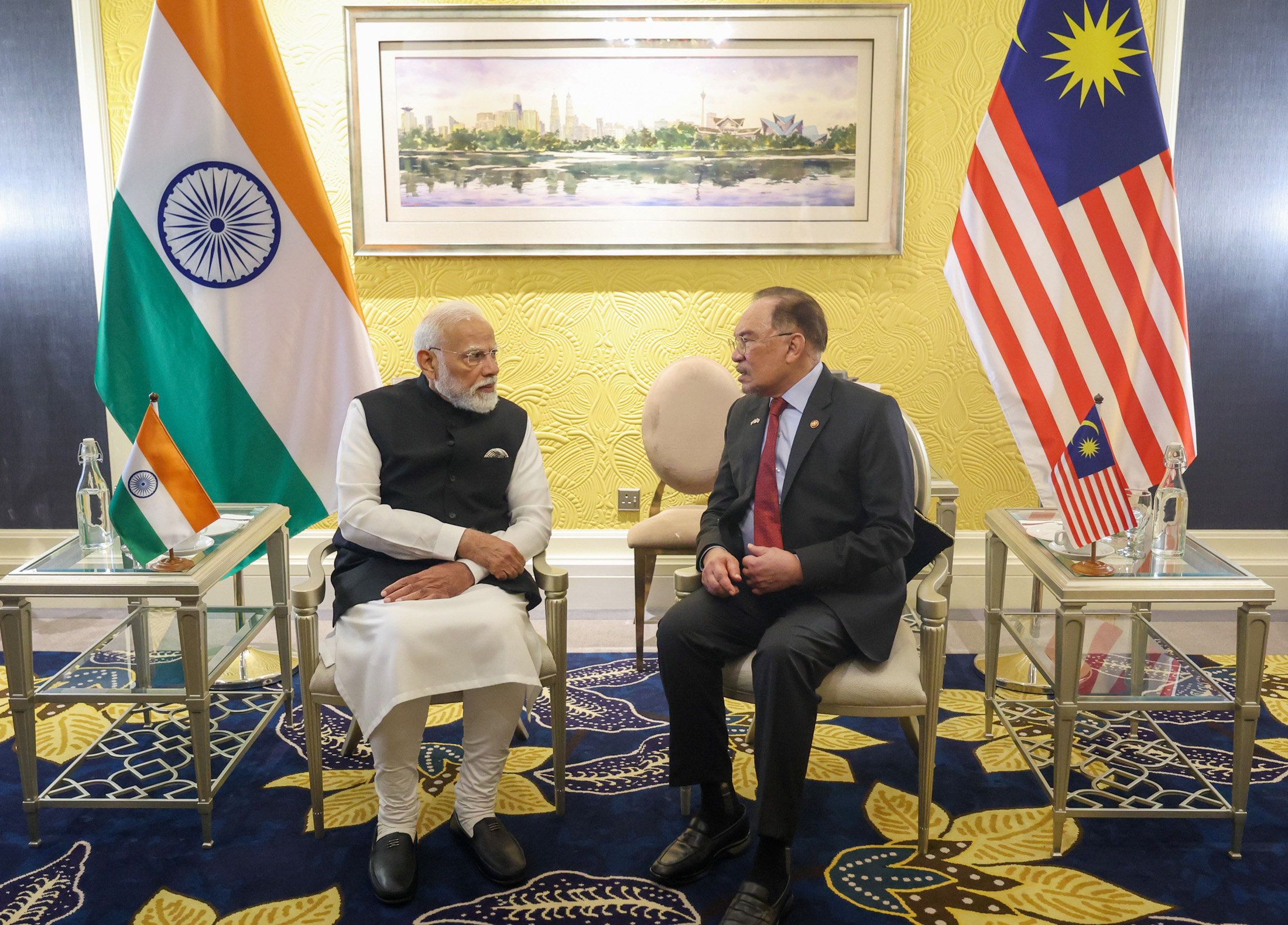
Prime Minister Narendra Modi meeting with the Prime Minister of Malaysia, Anwar Ibrahim in Kuala Lumpur on February 08, 2026.
India-Malaysia Deepen Ties Across Trade, Defence, and Tech
Counter-terrorism, Semiconductors, Fintech Feature in Talks
Kuala Lumpur: What is the future of Zakir Naik, the Indian preacher and founder of the Islamic Research Foundation, residing in Malaysia and wanted in India on charges including alleged incitement of terrorism and money laundering? He also faces investigations in India under the Unlawful Activities (Prevention) Act and other laws, including alleged promotion of religious hatred and links to the radicalisation of individuals involved in violent incidents. After leaving India in 2016, he obtained permanent residence in Malaysia, which provides him with legal protection under Malaysian domestic laws.
Despite broad cooperation on counter-terrorism and radicalisation between India and Malaysia during the visit of Indian Prime Minister Narendra Modi, the extradition of Naik remains unclear, as official statements and joint releases do not explicitly reference his case.
Before Modi’s visit, Secretary (East) in the Ministry of External Affairs, P. Kumaran, responded to questions on February 5, 2026: “As far as the question of Zakir Naik is concerned, I can assure you that all issues will be discussed during the visit. We have had opportunities to discuss the issue in past visits, also at various levels. And we will probably continue to take up the issue until all technical procedures are completed, and we hope to get the outcome that we desire.”
Malaysian Prime Minister Anwar Ibrahim had previously addressed the matter in August 2024 and explained that while India had made polite references to Zakir Naik, the issue was not a central focus of bilateral talks. Anwar had then told an interviewer that Zakir Naik had not been politically active, had not issued statements against India or Malaysia, and did not pose an immediate concern. Malaysia, he said, respects due legal process and any extradition decision would depend on new legal evidence and domestic judicial procedures.
While Prime Minister Narendra Modi’s current visit to Kuala Lumpur highlighted broad cooperation on counterterrorism, official statements and joint releases did not explicitly address Zakir Naik’s case. Ahead of the visit, Secretary (East) in the Ministry of External Affairs, P. Kumaran, told reporters on February 5, 2026: “As far as the question of Zakir Naik is concerned, I can assure you that all issues will be discussed during the visit. We have had opportunities to discuss the issue in past visits, also at various levels. And we will probably continue to take up the issue until all technical procedures are completed, and we hope to get the outcome that we desire.”
Observers note that Malaysia’s domestic legal processes govern any extradition decisions, and India and Malaysia continue to engage through diplomatic and law-enforcement channels on pending matters involving Indian nationals.
Prime Minister Modi concluded the two-day official visit to Malaysia today, during which multiple agreements were signed across trade, investment, defence, digital cooperation, healthcare, education, and cultural engagement. The visit strengthened the Comprehensive Strategic Partnership between India and Malaysia, established in 2024, while supporting India’s Act East Policy, the Indo-Pacific Oceans Initiative, and engagement with the Association of Southeast Asian Nations (ASEAN).
The visit addressed priorities outlined in Modi’s departure statement on February 7, in which he emphasised enhancing economic and innovation partnerships, deepening defence and security ties, expanding collaboration into new sectors, and engaging with the Indian diaspora, described as “one of the largest Indian diasporas in the world… a living bridge between our two nations.” Modi had also highlighted Malaysia’s role as a maritime neighbour and regional partner, stating: “The historic ties between India and Malaysia have seen steadfast progress in recent years. I look forward to my discussions with Prime Minister Anwar Ibrahim and further enhancing our Comprehensive Strategic Partnership.”
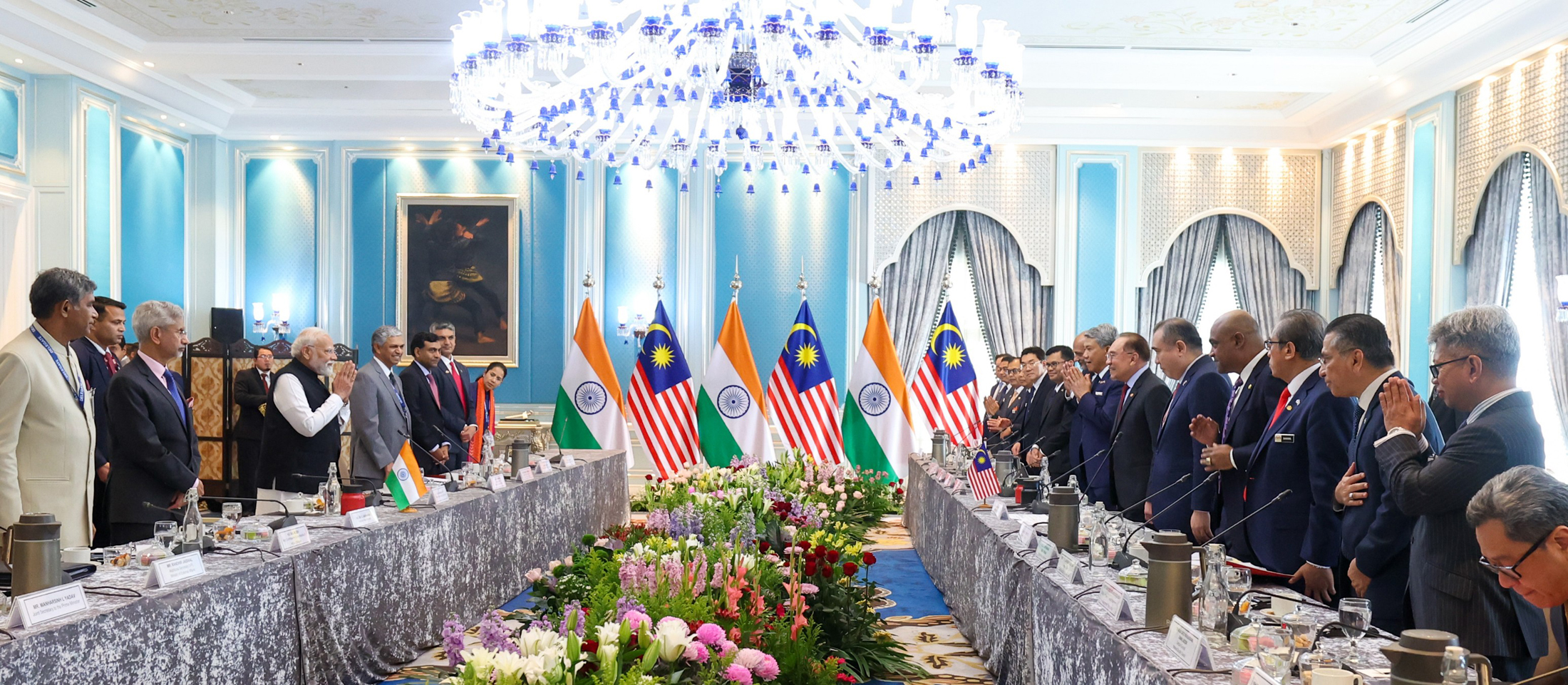
During delegation-level meetings at Seri Perdana, the official residence of Malaysian Prime Minister Anwar Ibrahim, the two leaders reviewed bilateral relations across trade, investment, defence, security, maritime cooperation, energy, infrastructure, artificial intelligence, semiconductors, healthcare, tourism, and cultural ties. Modi noted, “The relationship between India and Malaysia is truly special. We are maritime neighbours. For centuries, our peoples have shared deep and affectionate bonds.”
Economic engagement was highlighted through the 10th India-Malaysia Chief Executive Officer Forum, where leading Malaysian business figures—including Tengku Muhammad Taufik, President and Group Chief Executive Officer of PETRONAS; Vincent Tan Chee Yioun, Founder of Berjaya Corporation Berhad; Amirul Feisal Wan Zahir, Managing Director of Khazanah Nasional Berhad; and Pua Khein Seng, Founder of Phison Electronics—shared their interest in expanding investments in India and exploring joint ventures with Indian counterparts. Modi encouraged Malaysian companies to explore opportunities in infrastructure, renewable energy, digital technology, semiconductors, artificial intelligence, and healthcare, saying: “Today, we have resolved to bring unprecedented speed and depth to our partnership.”
Key agreements included the integration of India’s Unified Payments Interface (UPI) with Malaysia’s PayNet, enabling low-cost, seamless remittances and payments for businesses, students, and tourists. Collaboration between the Reserve Bank of India (RBI) and Bank Negara Malaysia to promote trade settlements in local currencies—Indian Rupee and Malaysian Ringgit—was highlighted. Both leaders reaffirmed the importance of the Malaysia-India Comprehensive Economic Cooperation Agreement (MICECA) and the ongoing review of the ASEAN–India Trade in Goods Agreement (AITIGA) to enhance trade facilitation and relevance to contemporary global trading practices.
Defence and security cooperation was strengthened through discussions of the Malaysia-India Defence Cooperation Committee, including the establishment of a Strategic Affairs Working Group and the Su-30 Forum. The leaders reviewed joint military exercises such as the fifth edition of Harimau Shakti, the Milan naval exercises, and the ASEAN-India Maritime Exercise (AIME). Joint naval deployments, including visits of INS Sahyadri to Kemaman and INS Sandhayak to Port Klang, were acknowledged. Modi noted: “Our message on terrorism is clear: No double standards. No compromise.” Both sides agreed to cooperate on counter-terrorism, radicalisation, transnational organised crime, financing of terrorism, and intelligence sharing, and to engage multilaterally through the United Nations and the Financial Action Task Force (FATF).
Diaspora engagement formed a central aspect of the visit. Modi met Indian-origin leaders in Malaysia, including Ministers Gobind Singh Deo (Digital), Ramanan Ramakrishnan (Human Resources), M. Kulasegaran (Deputy Minister in Prime Minister’s Department), R. Yuneswaran (Deputy Minister of National Unity), and veterans of the Indian National Army (Azad Hind Fauj), including Jeyaraj Raja Rao and Rathakrishnan. Modi said: “The three million-strong diaspora is a living bridge between our nations and a great source of strength.” Initiatives for the diaspora included India’s first Consulate General in Malaysia, the establishment of a Thiruvalluvar Centre at Universiti Malaya, the institution of Thiruvalluvar Scholarships, the extension of Overseas Citizen of India (OCI) card eligibility up to the sixth generation, and the replenishment of the Indian Scholarships Trust Fund with RM 3 million for Malaysian Indian students.
Education, skill development, and healthcare cooperation were reinforced through partnerships between IIT Madras and the Advanced Semiconductor Academy of Malaysia, University of Cyberjaya and India’s Institute of Training and Research in Ayurveda, and continued deployment of Traditional Indian Medicine (TIM) experts under the Indian Technical and Economic Cooperation (ITEC) Programme. Cooperation also extended to affordable healthcare, pharmacopoeia recognition, nursing services, and homoeopathy research exchanges.
Cultural, linguistic, and tourism initiatives were also advanced. Modi stated, “India and Malaysia are also united by a shared love for the Tamil language. The strong and vibrant presence of Tamil in Malaysia is visible in education, media, and cultural life.” Both countries are committed to sustainable tourism through India’s “Incredible India” campaign and Malaysia’s “Visit Malaysia 2026”, while agreeing to strengthen civil aviation connectivity and facilitate visa liberalisation to support people-to-people exchanges.
Sustainable development and disaster management cooperation were addressed, including Malaysia’s ratification of the International Big Cat Alliance (IBCA) and collaboration on disaster preparedness, joint exercises, and training under the Coalition for Disaster Resilient Infrastructure (CDRI).
On regional and multilateral matters, both leaders reaffirmed ASEAN centrality, a free and rules-based Indo-Pacific, and the United Nations Convention on the Law of the Sea (UNCLOS 1982) principles. They discussed reforms in global governance, support for India’s permanent membership in a reformed United Nations Security Council (UNSC), and cooperation under BRICS (Brazil, Russia, India, China, South Africa).
The visit concluded with the signing and exchange of multiple agreements and memoranda of understanding across trade, digital payments, defence, healthcare, vocational education, diaspora welfare, disaster management, and cultural cooperation, alongside public announcements of the Indian Consulate, Thiruvalluvar scholarships, and expanded fintech and digital collaboration.
– global bihari bureau