Venezuela, Trump, and Impeachment: Talk vs. Reality
Washington: In Washington, impeachment has become both omnipresent and oddly weightless. It is invoked with ritual regularity, debated with intensity, and yet rarely advances beyond rhetoric. The latest revival of impeachment talk surrounding President Donald Trump follows a genuinely consequential event: a United States military operation in Venezuela that culminated in the capture of Nicolás Maduro, a sitting foreign head of state, without prior authorisation from Congress. Unlike many previous controversies, this one does not rely on inference or interpretation. It is anchored in a discrete act of Presidential power that has forced lawmakers, lawyers and allies abroad to confront the uneasy question of where executive authority ends and constitutional restraint begins.
The Venezuela operation altered the texture of the impeachment debate. For critics of the President, it provided something long missing from earlier efforts: a concrete action that can be framed as a potential violation of war-powers norms rather than a matter of tone, conduct, or accumulated grievance. The Constitution assigns Congress the authority to declare war, while successive Presidents have stretched the boundaries of unilateral action through precedent and ambiguity. Trump’s defenders argue the strike was a limited national-security operation tied to criminal accountability and regional stability. His critics counter that forcibly removing or seizing a foreign leader crosses a threshold that cannot credibly be described as limited. That dispute is serious, unresolved, and rooted in constitutional structure rather than partisan taste.
Yet seriousness alone does not move impeachment forward. Power does. And at present, power rests—narrowly but decisively—with Republicans in the House of Representatives. As of mid-January 2026, the House stands at 218 Republicans, 213 Democrats, with four vacancies. Because vacancies lower the voting threshold, Republicans require 216 votes to command a majority and currently hold a margin of just two. It is the thinnest of governing edges, but it is still control. Speaker Mike Johnson remains firmly in command of the chamber’s machinery, determining what reaches committee, what reaches the floor, and what never sees daylight. Impeachment cannot materialise without passing through that gate.
Also read: Trump Faces Impeachment Threat After Venezuela Raid
This arithmetic is the central, often ignored fact beneath the noise. Democrats can denounce the Venezuela operation, demand accountability, and even introduce impeachment resolutions, but without control of the House, none of it compels action. Vacancies do not weaken Republican control; they temporarily reinforce it by lowering the bar. Until special elections are held and seats actually change hands, the majority is not theoretical—it is operational. And impeachment is not a spontaneous vote. It is a leadership-driven process that requires coordination, time, and political will. None of those conditions exists today.
The narrowness of the majority does, however, introduce volatility. With only two votes to spare, Republicans can afford few defections on party-line matters. That reality has emboldened critics to argue that a single, sufficiently grave controversy could fracture discipline. But impeachment is not a budget standoff or a procedural revolt. It is a declaration of war within a party, and there is no evidence that Republican lawmakers—however uneasy some may be about executive overreach—are prepared to cross that line against a President who still dominates their electoral base.
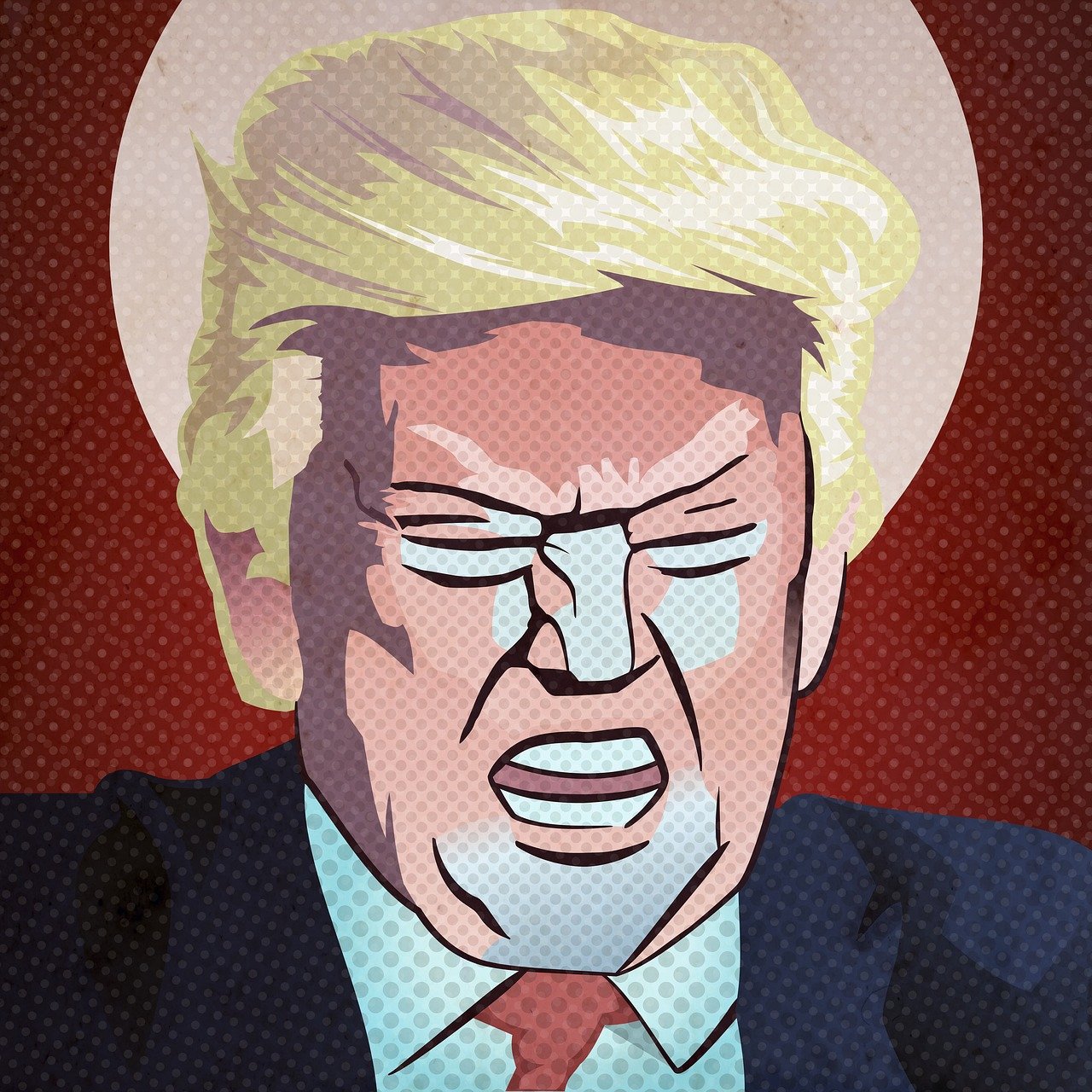
Trump himself has seized on impeachment talk not as a threat but as a tool. He warns supporters that Democrats will impeach him the moment they regain control of the House, transforming constitutional scrutiny into campaign messaging. It is a familiar manoeuvre: recast institutional accountability as a partisan obsession and use the prospect of impeachment to mobilise turnout. In doing so, Trump simultaneously inflates and neutralises the threat. Impeachment becomes inevitable in rhetoric and impossible in practice.
Even looking ahead, the path remains steep. If Democrats were to flip the House after the midterm elections, impeachment would become procedurally possible, not inevitable. Party leaders would still face a strategic choice: whether to pursue impeachment over Venezuela, knowing that removal would almost certainly fail in the Senate, where a two-thirds vote is required and partisan alignments remain entrenched. History looms heavily here. Trump has already been impeached twice and acquitted twice. Those episodes hardened divisions rather than resolving them, leaving many lawmakers wary of repeating a process that consumes political oxygen without delivering institutional closure.
What Venezuela has done, then, is not to unlock impeachment but to sharpen its logic. It has transformed impeachment talk from abstract dissatisfaction into a focused constitutional dispute. It has given critics a specific act to interrogate rather than a generalised pattern to condemn. Democratic lawmakers and commentators have capitalised on this momentum, with some in the House publicly stating that impeachment proceedings should be seriously considered in direct response to the operation. Figures such as Representative April McClain Delaney have explicitly called for careful evaluation of impeachment, confirming that the issue has returned to the centre of political discourse, even if it remains procedurally constrained.
Yet even with lawmakers openly calling for impeachment and commentators pressing the issue, it has also exposed the limits of accountability in a system where constitutional gravity collides with political reality and loses.
The result is an uncomfortable stalemate. A President takes an action that alarms allies, unsettles legal norms, and ignites international controversy. Lawmakers debate its implications, experts argue over its legality, and impeachment rhetoric surges. And yet the mechanism designed to check such power remains inert, constrained not by lack of argument but by lack of votes.
For now, the impeachment threat facing President Trump is real in theory, sharpened by Venezuela, but stalled by arithmetic. It is a serious case without a viable trigger, a constitutional storm trapped inside a frozen Congress. In modern Washington, that paradox is no longer exceptional. It is the system working exactly as designed—whether anyone still calls that accountability is another question entirely.
– global bihari bureau