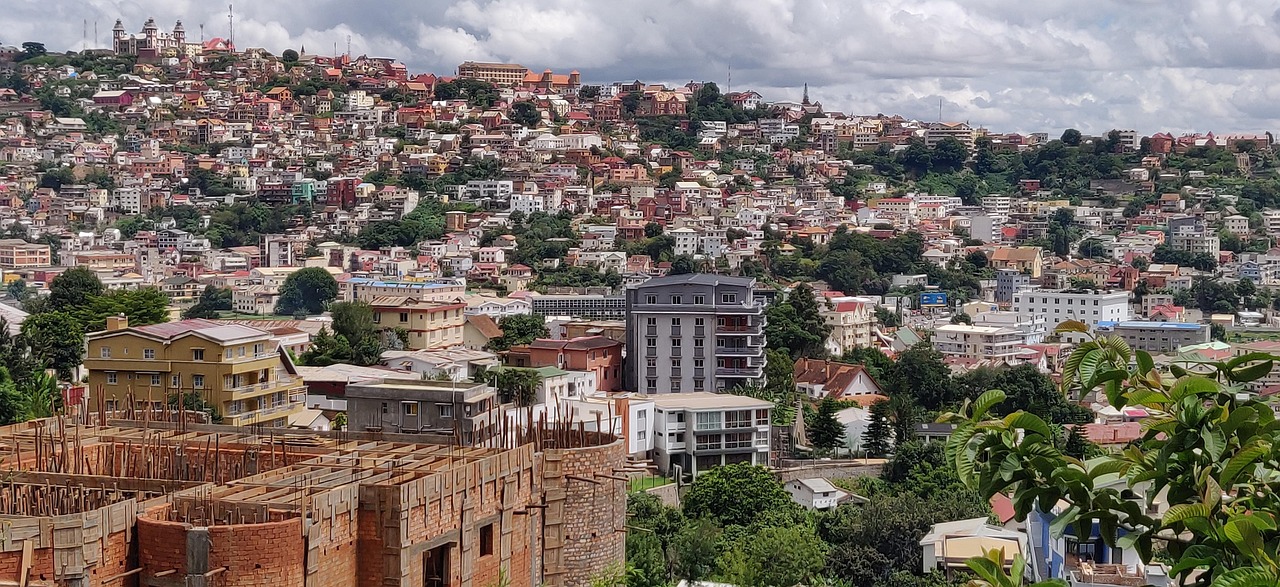
A view of Antananarivo
Youth Fury Topples Rajoelina
India’s Quiet Watch on Madagascar Coup: Ties Tested
Antananarivo: Colonel Michael Randrianirina’s voice cut through the humid air on October 14, 2025, as he addressed the throng from the presidential palace steps. The CAPSAT commander, whose unit had engineered Andry Rajoelina’s ascent in the 2009 coup, now declared the military’s intervention. “We heed the people’s summons,” he stated. Tens of thousands erupted in cheers. They brandished flags bearing a skull topped with a Betsileo satroka hat, borrowed from the Japanese manga “One Piece.” This emblem united the Gen Z Madagascar movement. The takeover proceeded without bloodshed. It marked the fourth military pivot since France’s 1960 handover.
CAPSAT expands to Corps d’Administration des Personnels et des Services Administratifs et Techniques. It oversees military logistics, from payrolls to provisions. Headquartered in Soanierana camp south of the capital, it numbers around 200 specialists. These are administrators, not assault forces. Yet in upheavals, CAPSAT tips the scales. The 2009 crisis exemplified this. Protests ignited in January over soaring rice prices and election fraud. Antananarivo’s mayor, Andry Rajoelina, then 34, rallied opposition. He branded President Marc Ravalomanana a dictator. Accusations flew of fund embezzlement for private jets. Clashes claimed dozens of lives by March. On March 17, the army aligned with Rajoelina. Ravalomanana ceded authority to a military council on March 21. The council elevated Rajoelina to head the High Transitional Authority. He vowed to hold polls in two years. The world decried it as a coup. The African Union (AU) and Southern African Development Community (SADC) suspended ties. Elections were dragged into 2013. Rajoelina exited in 2014, only to reclaim office via 2018 and 2023 ballots, both shadowed by boycotts and fraud claims.
Now, CAPSAT reversed course. Troops spurned dispersal commands. They shielded demonstrators. Officers decried their role as “boot lickers” in viral clips. The Gen Z Madagascar movement ignited this turn. It coalesced in mid-September. Politicians Clémence Raharinirina and Baba Faniry Rakotoarisoa sparked Senate vigils against outages and graft. The banner Tsy Manaiky Lembenana – “We Refuse to Be Trampled” – arose. Leo Delestage, or “Fed Up with Load Shedding,” amplified it. A Facebook page, Gen Z Madagascar, exploded to 100,000 followers in days. Protests launched on September 25. Blackouts stretched 18 hours. Water is rationed to drips. Seventy-five per cent of 32 million Malagasy endure poverty. Per capita GDP lingers at $545. Youth joblessness tops 60 per cent. The drive remained headless. TikTok and Facebook steered it. Students and teens led in six cities. They sought to study equity, matching elite offspring’s overseas perks. By October 6, 10,000 packed Antananarivo. Signs proclaim, “We Want to Live, Not Survive.” The UN tallied 22 deaths from clashes and gas. Officials countered with five. Over 100 wounded. Police wielded rubber bullets and AK-47s. Gangs looted amid the fray. The “One Piece” flag fluttered, a global Gen Z talisman.
This surge mirrored Nepal’s Gen Z protests in September 2025. There, a September 4 ban on 26 platforms – Facebook, X, YouTube, LinkedIn, Reddit, Signal, Snapchat – for registration lapses lit the fuse. Youth aged 13-28 decried corruption and “Nepo Kids” flaunting luxuries. Officials’ heirs flashed designer bags abroad. Ages 15-24, unemployment hit 20.8 per cent. Kathmandu boiled on September 8. Crowds breached Parliament. Police unleashed live rounds. At least 34 perished from gunshots. Over 200 injured. Tear gas, cannons, and bullets rained. Protesters torched Parliament, Nepali Congress offices, and ex-PM Sher Bahadur Deuba’s home. Banks and shops fell to looters. Curfews crumbled. Prime Minister K.P. Sharma Oli resigned on September 9. Sushila Karki, ex-chief justice, ascended as interim PM on September 12 – Nepal’s first woman leader. She pledged graft probes. The ban was lifted. Discord polls swayed her pick. No formal chiefs guided it. Volunteers swelled ranks. Distrust of elites bound it. Ex-King Gyanendra decried the crackdown. He called for calm.
Parallels abound. Both sprang from youth’s ire. Digital tools ignited them. Madagascar borrowed Nepal’s flag and Discord servers. Nepal’s toll mounted higher – 34 shot dead versus Madagascar’s 22 from gas and brawls. Nepal scorched edifices. Madagascar spared them. CAPSAT’s switch eased Madagascar’s path. Nepal faced institutional rout. Both assailed graft and disparity. Madagascar zeroed in on utilities. Nepal struck media curbs and nepotism. Headless forms linked them. Global threads wove in. Madagascar youths tuned into Nepal’s feeds. Outcomes varied. Nepal felled Oli in days. Madagascar hounded Rajoelina for weeks. Both birthed stopgaps – Karki in Nepal, the council in Madagascar. Youths in both pledge oversight. Nepal’s month yields partial gains. Madagascar’s arc extends.
Rajoelina’s bids faltered. He ousted his cabinet on September 29. Prime Minister Christian Ntsay quit. General Ruphin Zafisambo assumed October 6. Protesters scorned it as feigned. Gen Z Madagascar spurned dialogue. October 11 drew 50,000 to Independence Avenue. CAPSAT formed barriers. Rajoelina alleged a coup. He freed the 2021 plotters on October 12. French nationals like Paul Maillot Rafanoharana walked. The ploy missed.
October 13 sealed flight. Rajoelina quit Antananarivo. Parliament was impeached by 80 per cent. From abroad, he disbanded the assembly. Lawmakers nullified it. October 14 saw suspensions. The Senate, the electoral body, and the court paused. A council blended army and gendarmerie. Police synced patrols. Chaos eluded. The court beckoned Randrianirina interim. Civilian handover loomed soon. Two years to vote.
Shadows lengthen from history. Seventies coups reshaped the rule. Rajoelina’s 2009 echo rings. Then, deaths topped dozens. The Army chose him over Ravalomanana. Sanctions bit. Now, Gen Z insists on candour. Unions fueled strikes. Markets froze. Foes assailed aid squander.
Waves lap outward. Flights cease on October 17. Air France and Emirates are idle. Tourism sinks 80 per cent. Vanilla festers in holds. It sustains 500,000 kin. AU mandates votes in 90 days. Ban threatens. Macron frets over youth pawnage. US and UK counsel shelter. SADC hushes.
India observes warily. The Ministry of External Affairs (MEA) stays mum officially. The embassy in Antananarivo advised 3,000 nationals – traders in pharma and textiles – to shun unrest on October 14. Ties run deep: $500 million trade in 2024, vanilla and gems to India. New Delhi reportedly views the flux as “domestic transition.” Hope runs for peace. This fits Indian Prime Minister Narendra Modi’s non-meddle line, as in Myanmar 2021 or Niger 2023.
Madagascar has experienced Nepal and Bangladesh ousters. It may cause India supply risks for pharma ingredients (20 per cent from Madagascar). The coup increases concerns for India. Historical aid – $50 million post-2024 Cyclone Gamane – and SAGAR naval drills underscore the stakes. A team liaises with the council, guarding $200 million solar ventures.
Post-coup coup Madagascar is patrolled and pensive. Vigils glowed for 22 fallen. Andry, a 20-year-old student, told Al Jazeera: “Troops allied today. Vigilance tomorrow.” Rakotovao’s opposition mulls shunning. Vanessa clings to a promise: “No more empty plates for my young.” Cycles grind on. Streets’ birth barracks rule. Gen Z probes the breach. As in Nepal, it craves endurance past revolt. The isle ponders: Does youth spark endure? Or coils the snare? Worry mounts for the next dawn held tentatively.
– global bihari bureau