India’s LVM3 Shifts Global Launch Market Dynamics
U.S. Firms Choose Indian Launchers Amid Market Shift
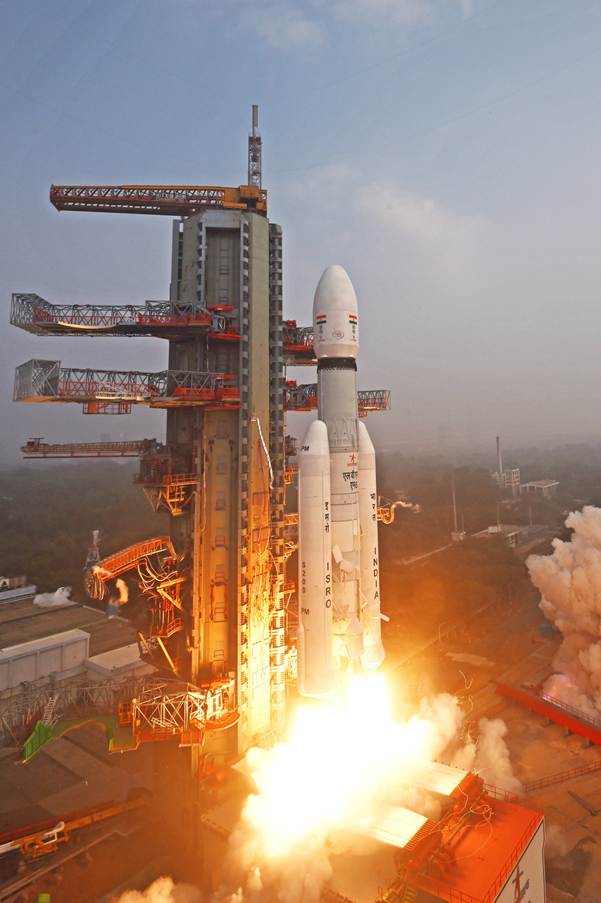
New Delhi: In 2025, when a single commercial launch can determine the financial viability of a satellite operator and the credibility of a national space programme, India crossed a consequential threshold with the successful Launch Vehicle Mark-3 Mission-6 (LMV3-M6). By placing the BlueBird Block-2 communications satellite into its intended orbit, the Launch Vehicle Mark-3 (LVM3) carried the heaviest payload ever launched from Indian soil, operating close to the upper limits of its low Earth orbit lifting capability. In commercial spaceflight, that distinction is not symbolic. Payload mass at this scale directly tests propulsion margins, structural resilience and guidance precision, and leaves little room for error.
Reflecting on the achievement, Prime Minister Narendra Modi said that the mission marked “a significant stride in India’s space sector.” He stated: “The successful LVM3-M6 launch, placing the heaviest satellite ever launched from Indian soil, the spacecraft of the USA, BlueBird Block-2, into its intended orbit, marks a proud milestone in India’s space journey. It strengthens India’s heavy-lift launch capability and reinforces our growing role in the global commercial launch market. This is also reflective of our efforts towards an Aatmanirbhar Bharat. Congratulations to our hardworking space scientists and engineers. India continues to soar higher in the world of space.”
The LVM3 is designed to place roughly eight tonnes into low Earth orbit, and missions approaching that ceiling are closely scrutinised by insurers and satellite operators alike. The flawless performance of the Mission-6 flight, including precise orbital injection, therefore served as a real-world validation of India’s indigenous heavy-lift system under commercial conditions. This explains why the Indian Space Research Organisation (ISRO) leadership emphasised execution and reliability rather than ambition. In the launch market, credibility is earned not through bold claims, but through consistent delivery when margins are tight.
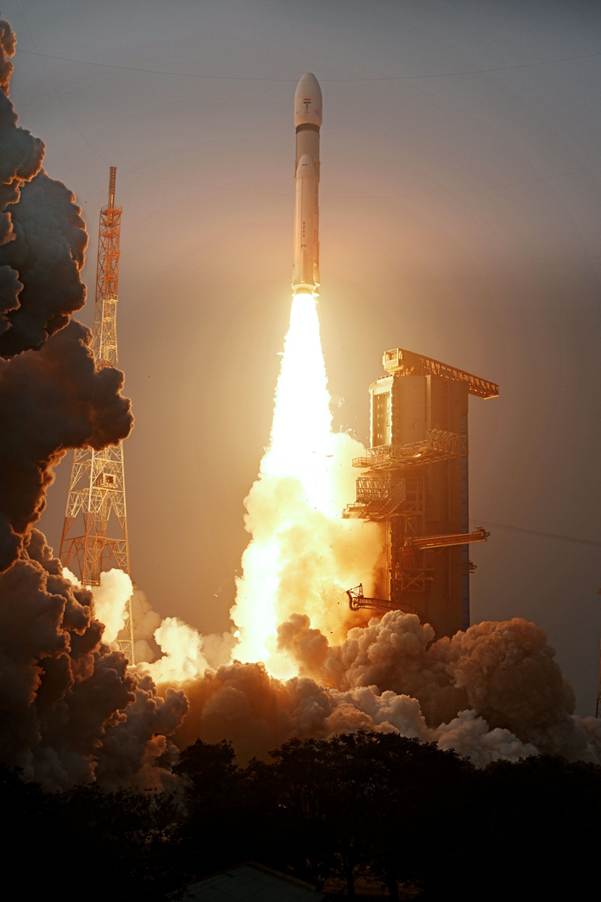
Secretary, Department of Space and Chairman of the Indian Space Research Organisation, Dr V Narayanan, described the flight as a world-class demonstration of reliability, noting that the launch vehicle performed exactly as intended and injected the satellite with precision into its designated orbit. He emphasised that this was the heaviest satellite ever launched from Indian soil using an indigenous launcher and the third fully commercial mission of the Launch Vehicle Mark-3, placing it firmly among the most dependable heavy-lift systems in active service.
The satellite itself heightened the stakes. BlueBird Block-2 is part of a next-generation constellation developed by United States-based AST SpaceMobile to provide space-based cellular broadband connectivity directly to standard mobile smartphones, without specialised user equipment. This business model is highly sensitive to deployment schedules and orbital accuracy. Any delay or failure can ripple through regulatory approvals, customer contracts and financing structures, sharply increasing insurance exposure and operational risk.
That sensitivity sheds light on why a United States commercial operator selected an Indian launcher in an increasingly competitive global market. Industry estimates suggest the cost of an LVM3 launch can fall in the range of approximately forty-eight to sixty-two million dollars per mission, depending on payload characteristics and orbital requirements. While precise contract terms vary, this positions the LVM3 below many traditional heavy-lift vehicles and competitively against mid-range alternatives worldwide. More critically, each successful LVM3 mission strengthens a reliability record that directly influences launch-insurance premiums, which can account for a substantial share of total mission cost for high-value commercial satellites.
India’s positioning becomes clearer when viewed against the broader launch landscape. SpaceX’s Falcon 9 dominates global launch cadence and benefits from reusability economics, but operates within a tightly regulated United States strategic framework. Europe’s Ariane programme remains in a transition phase as it stabilises its next-generation heavy-lift systems. China’s Long March family offers competitive pricing but is inaccessible to many Western firms due to geopolitical and regulatory constraints. India occupies a narrower but increasingly valuable niche: a cost-competitive, geopolitically non-aligned launcher with sovereign control, demonstrated orbital precision and a growing commercial track record.
That niche comes with pressure. India does not yet match the launch frequency of the most prolific global providers, meaning each commercial mission carries disproportionate reputational weight. A single failure would resonate far more sharply than it would for a high-cadence operator with dozens of launches annually. This asymmetry explains why the LVM3 Mission-6 flight was watched closely by insurers, satellite operators and rival launch providers. Its success reinforced confidence that India can manage high-stakes missions under market conditions where predictability matters as much as price.
Congratulating the Indian Space Research Organisation (ISRO) team, Union Minister of State for Space, Dr Jitendra Singh, said the mission reaffirmed India’s growing strength and credibility in advanced space technologies. He noted that the organisation has continued to achieve milestone after milestone, strengthening India’s global standing as a trusted spacefaring nation.
For India’s space programme, the implications extend beyond this single satellite. This was the third fully commercial mission flown by the Launch Vehicle Mark-3, underscoring a deliberate shift from treating the vehicle primarily as a national prestige platform to positioning it as a market-facing asset. Demonstrated heavy-lift reliability under commercial contracts also strengthens confidence in future strategic missions, including the Gaganyaan human spaceflight programme, where tolerances for risk are even narrower.
There is also a geopolitical subtext. For United States firms, selecting Indian launchers increasingly reflects diversification rather than symbolism. Spreading launch risk across jurisdictions helps mitigate exposure to regulatory bottlenecks, capacity constraints and geopolitical shocks. India’s ability to deliver a near-limit payload on schedule and without incident reinforces its appeal as a credible alternative in a market where reliability has become as valuable as raw lifting power.
Seen through this lens, the LVM3 Mission-6 flight was less a ceremonial milestone and more a signal to the global space economy. It demonstrated that India can shoulder demanding commercial payloads, absorb scrutiny, and deliver consistently under pressure. In a launch market shaped by cost discipline, insurance risk and strategic alignment, that capability places India firmly within the competitive core rather than at its margins.
– global bihari bureau