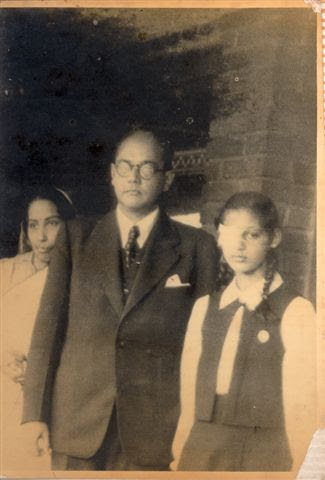
A young Asha Bharati and her mother with Netaji Subhash Chandra Bose. Photo courtesy Debi Mohanty
From Kobe to Freedom’s Frontline:
Lt. Asha Sahay was a Fearless Daughter of India
Patna: On the still night of August 12, 2025, at precisely 11:55 PM, the gentle flame of one of India’s oldest living freedom fighters flickered out. Lieutenant Asha Bharti Sahay — “Asako-san” to her Japanese friends, “Lt. Asha Sahay” to her comrades in arms — passed away peacefully at her home at Shri Krishna Puri in Patna, surrounded by her family, after a brief illness. She was 97.
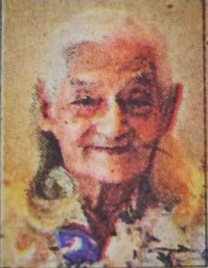
Her life spanned almost a century, but it was the teenage years of this Kobe-born daughter of revolutionaries that placed her in the pages of history. Born on February 2, 1928, in Japan, she was the child of Anand Mohan Sahay and Sati Sen Sahay — pillars of the Indian freedom struggle in exile. Her father, the founding secretary of the Indian Independence League, helped forge the alliance with Japan that birthed the Indian National Army (INA) and invited Netaji Subhas Chandra Bose to command it.
The war years shaped her youth. She first saw Netaji at 15, when her mother took her to the Imperial Hotel in Tokyo. With a schoolgirl’s earnest courage, she asked to join the INA. Netaji, recognising her zeal but mindful of her age, told her to wait. Two years later, in May 1945, she made her way to Bangkok, enlisted in the Rani of Jhansi Regiment, and was commissioned a lieutenant — the name “Asha Sahay” becoming her identity in battle. She met Netaji for the second and last time that year, when he disbanded the INA before embarking on his fateful final journey to Taipei.
Under the fearless leadership of Capt. Lakshmi Sahgal, the Rani of Jhansi Regiment, shattered the limits imposed on women in war, proving that patriotism knew no gender, caste, or creed. They trained, marched, and readied for combat alongside their male counterparts, united in defiance of the British Empire. Though the INA’s campaigns were cut short by the tides of war, their courage shook the colonial order. The Red Fort trials of 1945 and the naval mutinies of 1946 revealed an undeniable truth — the British could no longer rely on Indian soldiers to keep India subjugated. Lt. Sahay had stood firmly in that turning tide.
When the war ended, she returned to India in 1946 with her father and uncle Satyadev — head of the INA’s intelligence wing — after their release from Pearl Hill Prison in Singapore. She then accompanied her father on a tour of the nation, telling the story of the INA’s sacrifices to packed halls and open grounds. Those accounts of courage and loss became part of the moral drumbeat that carried India to independence the following year.
Educated entirely in Japan, she completed her schooling in Japanese and graduated from Showa Women’s University in Setagaya-ku, Tokyo. Her affinity for Japan endured; she was affectionately called “Asako-san” by those who knew her there.
In April this year, just four months before her passing, Japan’s Ambassador to India, Keiichi Ono, recalled his meeting with Asako-san this year in April and wrote in his condolence letter to her son, Sanjay Choudhry: “With her warm smile and remarkably fluent Japanese, she shared fond memories of her student days in Japan and of Netaji Subhas Chandra Bose and Mahatma Gandhi. These moments will remain in my heart. In honour of Asako-san’s legacy, I will dedicate myself to strengthening the ties between the countries she so dearly loved — Japan and India.”
Her personal life was marked by love, service, and loss. She was married to Dr. L.P. Choudhry, Chief Medical Officer at Tata Steel, until his passing. She is survived by her younger son, Sanjay, 68, a former head of public relations at Tata Steel and Coca-Cola. Her other son, an officer in the armed forces, died tragically in a road accident.
In every chapter of her life, Lt. Asha Bharti Sahay embodied the immortal motto of the Azad Hind Fauj — Ittehad, Itmad aur Qurbani — Unity, Faith, and Sacrifice. She was not merely a witness to history but one of its makers, her life a bridge between the battlefields of the 1940s and the freedoms of today.
As India salutes her, the story of the young girl from Kobe who became a lieutenant in the INA will endure — a reminder that liberty is never gifted, only earned.
Rest well, brave daughter of India. Your watch is over, but your light will never fade. Jai Hind!
– global bihari bureau