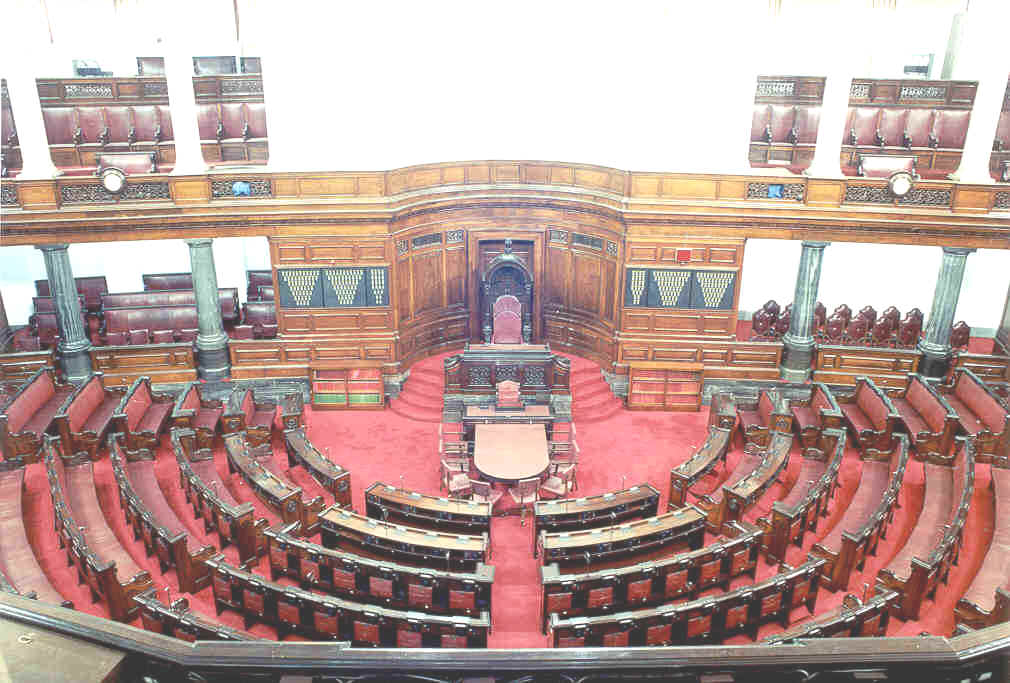
Rajya Sabha. Image source: Digital Sansad.
China Memoir Row Sparks Chaos During Motion of Thanks
PM Targets Opposition as Houses Rocked by Protests
New Delhi: Prime Minister Narendra Modi today delivered an expansive and combative reply to the Motion of Thanks on the President’s Address in the Rajya Sabha, projecting India as a rising global power while sharply criticising the Opposition for what he described as repeated disruptions, policy failures of past governments and disrespect to constitutional offices. His speech came against the backdrop of a turbulent day in Parliament, with both Houses witnessing frequent interruptions, adjournments and protests by Opposition members.
Proceedings in the Lok Sabha earlier in the day had been repeatedly stalled due to sloganeering and objections during the debate on the Motion of Thanks to the President’s Address. The Rajya Sabha too saw protests and a walkout by Opposition members over procedural and political issues. It was in this charged atmosphere that the Prime Minister rose in the Upper House to respond to the President’s Address.
The immediate trigger for disruptions was the Opposition’s demand that the Leader of the Opposition (LoP), Rahul Gandhi, be allowed to complete his speech in the Lok Sabha and that the rights of the Leader of the Opposition be respected under parliamentary convention. Members of the INDIA bloc raised slogans such as “Let the LoP speak” and accused the Chair of denying them the opportunity to place their views on record. They also protested against the suspension of some Opposition MPs following earlier confrontations in the House and sought their reinstatement.
At the centre of the controversy was Rahul Gandhi’s attempt to raise issues related to national security and the 2020 India–China standoff during his speech on the Motion of Thanks. He sought to quote from an article based on an unpublished or not-yet-formally-released memoir of former Army Chief General M. M. Naravane, which reportedly contained references to the handling of the border situation with China.
Addressing the media a day earlier, Gandhi had publicly displayed the book and said, “The Speaker says this book does not exist. The government says this book does not exist. Rajnath Singh says this book does not exist. Every youngster in India should see that this book exists. This is General Naravane’s book, and it contains the full account of Ladakh.”
He further claimed that the book recorded how the Army Chief had been left without political direction during the crisis, quoting from it: “I felt really alone. I was abandoned by the entire establishment.”
The Treasury Benches objected to Gandhi’s reference on procedural grounds, stating that parliamentary rules do not permit the use of unauthenticated or unpublished documents that have not been formally tabled in the House, particularly on sensitive national security matters. Defence Minister Rajnath Singh and other members questioned the propriety of quoting from an unpublished memoir dealing with the China border issue. The Chair repeatedly asked LoP Gandhi not to persist with those references, leading to loud protests from Opposition MPs who maintained that he was being prevented from speaking on issues of national importance and that parliamentary norms were being selectively applied.
These disagreements escalated into sloganeering and disruptions, forcing multiple adjournments of the Lok Sabha. The Motion of Thanks was eventually passed amid the disorder, without the customary reply by the Prime Minister.
Before adjourning the day’s session, Lok Sabha Speaker Om Birla spoke to the members, revealing that he had personally urged Prime Minister Narendra Modi to stay away from the House on February 4, 2026. This advice stemmed from reliable intelligence indicating that certain Opposition lawmakers were gearing up for an exceptionally disruptive form of protest, unlike anything seen before.
Expressing regret, the Speaker noted: “It pains me to report that on February 4, some members engaged in conduct that has no precedent in the history of this House.”
This statement came amid ongoing fallout from the previous day’s chaotic proceedings, where the Motion of Thanks to the President’s Address was adopted without the Prime Minister’s planned response due to sustained interruptions and protests.
In the Rajya Sabha, Opposition members again raised the same issue while the Prime Minister was replying, demanding that both Rahul Gandhi in the Lok Sabha and Mallikarjun Kharge, Leader of the Opposition in the Upper House, be allowed to speak. Several Opposition parties staged a walkout, alleging that democratic norms and parliamentary rights were being undermined.
Explaining the walkout later, Congress President Mallikarjun Kharge told reporters, “For four days, we have seen that our Leader of the Opposition, Rahul Gandhi, is not being allowed to speak in the Lok Sabha. We wanted to place some points in the interest of democracy and in the interest of the country. If they had listened to me for just two minutes, this entire issue would have been resolved.”
Kharge added that the Opposition had repeatedly sought time during Question Hour and Zero Hour but was denied the opportunity. “We were not creating disorder. We were only trying to speak according to the rules and regulations. But they have decided that neither of the Opposition leaders should be allowed to speak — neither in the Lok Sabha nor in the Rajya Sabha. That is why we were forced to walk out and protest,” he said.
Beginning his reply by expressing gratitude for the opportunity to support the Motion of Thanks, the Prime Minister said the President’s Address had comprehensively captured India’s progress across sectors and social groups, from farmers and women to youth, science and technology. He described the past year as one of accelerated development in the journey towards what he termed a “Viksit Bharat”, or developed India, and argued that the country was now entering a decisive phase comparable to critical moments in its freedom struggle.
The Prime Minister said India was benefiting from what he called a rare convergence of favourable conditions: a young population at a time when many developed nations were ageing, a growing global demand for Indian talent, and high economic growth combined with relatively low inflation. He asserted that India, once grouped among the so-called “Fragile Five” economies, was now moving rapidly towards becoming the world’s third-largest economy.
Referring to global developments, he said the post-Second World War world order was giving way to a new global order in which India was emerging as a trusted partner and a voice of the Global South. He highlighted what he described as future-ready trade agreements with major economies, including the European Union and the United States. He argued that such deals reflected international confidence in India’s economic strength and manufacturing ecosystem.
At several points, the Prime Minister departed from policy exposition to directly attack the Opposition, particularly the Congress and other INDIA bloc parties. He accused them of lacking vision and willpower during decades in power and of presiding over economic mismanagement, corruption and institutional decay. He said his government had focused on reform, performance and transformation, replacing what he termed ad hoc decision-making with policy-driven governance.
Citing the banking sector as an example, he said non-performing assets had once reached alarming levels due to politically influenced lending, but structural and process reforms had restored financial health, brought down NPAs to historically low levels and led to record bank profits. He pointed to the Mudra scheme and other credit initiatives as instruments that had expanded access to finance for small entrepreneurs and women’s self-help groups.
The Prime Minister also defended reforms in public sector undertakings, saying entities such as Life Insurance Corporation and other PSUs were now recording strong performance and contributing to employment and the Make in India initiative. He said many PSUs were securing international orders and participating in development projects abroad, a sign of growing confidence in Indian capabilities.
On agriculture, he criticised earlier governments for neglecting small and marginal farmers and said the PM-Kisan Samman Nidhi scheme had transferred nearly Rs 4 lakh crore directly to farmers’ accounts, giving them financial security and the ability to plan for the future.
A significant portion of the speech was devoted to the theme of implementation. The Prime Minister contrasted what he called the ineffective planning culture of the erstwhile Planning Commission with the functioning of the NITI Aayog and initiatives such as the Aspirational Districts Programme. He cited examples from Bastar in Chhattisgarh and infrastructure projects like the Jammu–Udhampur–Srinagar–Baramulla railway line and the Bogibeel bridge in Assam to argue that long-pending works were now being completed through systematic monitoring under the PRAGATI platform.
He said projects worth several lakh crore rupees had been unlocked through this mechanism and that India was now achieving targets ahead of schedule in areas such as renewable energy and ethanol blending.
The Prime Minister’s address also turned sharply political when he accused Opposition parties of disrespecting the President and undermining parliamentary dignity. Referring to disruptions in the Lok Sabha, he said the conduct amounted to an insult to the constitutional office of the President and to Members from the North-East and Dalit communities who were presiding over the House. He criticised what he described as abusive language and personal attacks directed at Members who had changed political affiliations, calling such remarks divisive and dangerous for democracy.
He also spoke emotionally about a newly elected Member who had lost both legs in a violent attack but had still chosen to serve in Parliament, contrasting this with what he termed the Opposition’s culture of hatred and confrontation.
Throughout the speech, the Prime Minister defended his government’s record since 2014, citing the electrification of villages, elimination of unmanned railway crossings, expansion of healthcare interventions against diseases such as encephalitis and trachoma, and improved facilities for the armed forces. He argued that these achievements explained why his political opponents, in his words, were unable to reconcile themselves to his continued presence in office.
The Prime Minister concluded by thanking the Chair for allowing him additional time and reiterated his belief that India’s 140 crore citizens were not a burden but the country’s greatest strength. He said his government viewed every Indian as a partner in nation-building and insisted that the coming years would be decisive in laying the foundation of a developed India.
The debate on the Motion of Thanks thus ended in the Rajya Sabha with a forceful reply from the Prime Minister, even as the wider Budget Session remained marked by sharp political confrontation and repeated disruptions in both Houses of Parliament.
– global bihari bureau