Literary Speaking: Imagining After Capitalism
 By Ranjit Monga*
Capitalism is No Longer in Sync with Society
The relentless pursuit of growth under Capitalism has fueled environmental damage and increased inequality among people, raising questions about its relevance in today’s world, says futurist and author Andy Hines.
“Capitalism has been the world’s adopted economic system for the past 250 years, and now we have to say, thank you, it’s a job well done, but what’s next?” He elaborates.
Hines has been pointing out that there have been no positive guiding images of the future. “We are kind of trapped in this almost depression, right? There is a fear of collapse and a sense of anxiety about the future. So, one of the things I hope to do is to put some ideas out there in terms of what might be positive guiding images of the future,” Hines explains.
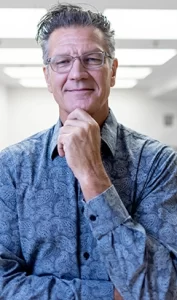
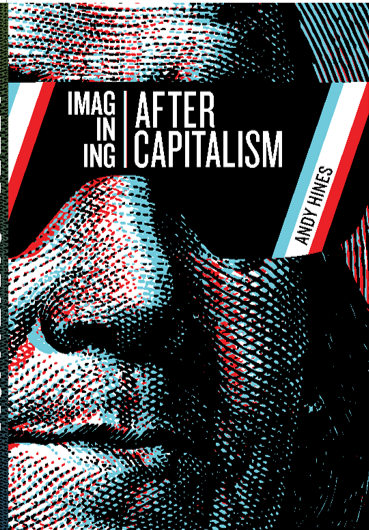
Hines is the author of the landmark work Imagining After Capitalism. He is an Associate Professor and programme coordinator at the University of Houston’s ‘Foresight Program’ and has vast experience in organisational consulting and as an academic futurist. He has helped many companies with his work as a futurist, among them Kellogg, Dow Chemical, Social Technologies, and many others. Prof. Hines is motivated by a professional hunger to make foresight practical and useful.
Hines recollects being impacted by a book about the future he read in the 1970s titled The Image of the Future by Dr Fred Pollock, who did a study of the great civilisations of the past. According to Hines, Dr Pollock had said that there seemed to be a common element uniting the great civilisations of the past, and that is that all had positive guiding images of the future. “But while writing his book in the 70’s, he (Dr Pollock) was saying, as I look around, I don’t see that”, Prof. Hines recalls.
“I am not one of those folks who will demonise capitalism. I don’t think it is evil or bad or wrong. Capitalism is a system that enabled us to grow the world economy. And as we move into a different future, what capitalism is producing is no longer in sync with what we need,” he explains.
“Capitalism has been supported by what we would call modern values. Let us say, the route to happiness is economic growth, it’s competition, it is winners and losers, it’s achievement and victory. And again, that served us well in terms of producing the growth that enabled us to raise standards of living. However, what has been happening underneath those modern values is something called postmodern and integral values,” he reveals.
According to Hines, these are another set of values and priorities that say what is important is not winners and losers, but sharing, equality, participation, community, and networking.
Hines proposes that these new sets of priorities are much more about how we benefit the collective as opposed to a few winners. “So, what capitalism has been producing is no longer in sync with where our values and our priorities have been shifting. There is a mismatch, a misalignment, and that is another key reason people are starting to ask questions,” he points out.
“The problem is we do not have a good sense of what’s next. And that’s where I hope to step into the gap a little bit with my book and maybe stimulate some discussion about the possibilities,” he states.
In the book, Hines has proposed three guiding images for the future. Elaborating on how he arrived at these images, he recalls spending several years pulling scattered thoughts together. “These were not just somebody’s imagination, but these are ideas that are actually floating around that most people who aren’t paying attention to this kind of stuff aren’t really aware of,” he clarifies.
‘Circular Commons’ is one of the images, which is a reaction to the environmental problems the world is facing.
“It is the environmentally driven image of the future. I have been in the futures game now for 35 years. And one of the most exciting ideas that I have seen emerge is this idea of the ‘circular economy’ and the basic premise there being that we need to use less and reuse what we do make. Recycling is in there,” he reveals, but maintains that futurists do not think that recycling is the key aspect or sustainable in the long run.
According to him, recycling is difficult to do in an economic sense. And the key aspect for the future is really how do we use less? And how do we reuse? This marks the circular aspect of this image.
Elaborating on the ‘commons’ aspect of this image, Hines discloses that it relates to how we manage those resources that are in common. And that, he feels, has some political overtones. “How do we reinvent how we make our decisions as a society? So, is that plausible? It might look a little fantastical, no doubt, but the signals are there,” he explains.
Hines clarifies that there are signals that we may be moving in this direction. And that it would be a 20 to 30-year journey till we reach there.
The common aspect is a powerful signal and seems to be present in all three images. It relates to the common management of resources, the common decision-making at the local level and also publicly owned resources. Whereas in capitalism, there are privately owned resources, so this shift is going to be a landmark shift, according to Prof. Hines.
The second image is that of a non-worker’s paradise. Hines also attempts to describe what a society would look like in the future. “If you look at the long-term trends in terms of the average work week, it has been going down, very quietly, very slowly, almost unnoticeably. And what I would say is that we have a post-work society in the future, in which we do not have to do things, not that we do not have to do work-like activities. But what that future would be is that you do not need a full-time job to access resources to make a living. And that we will still need to do things, but we will not need to do them to survive,” he discloses.
According to Hines, that will be the really big shift. He links it to the advent of artificial intelligence and automation technologies of the day. “Could we use technology to do some of that work that people are doing in full-time jobs?” he asks.
The third guiding image is that of tech-led abundance, and it talks about a world where work is taken over by machines or artificial intelligence, and people are free to do other things. And that there is so much abundance produced by tech that humanity will not have to work.
“Right now, the big problem is that most of that wealth goes to a small fraction at the top. And so, in the tech-led abundance image that redistribution takes place so that it is not just for the benefit of the few winners, but in it everybody wins,” he remarks.
Hines feels that a big political shift would be required to enable this image to fructify. He also cautions about relying on technology as the saviour. “I think it would be a combination of wise use of technology by people,” he suggests.
To listen to his full interview, click the podcast link below.
On Spotify
https://open.spotify.com/episode/661pecET4ODD1bDSbIlZf7?si=ctPsBVWDSmmX3WSQNuXBfQ
On Apple
https://podcasts.apple.com/in/podcast/books-and-us/id1688845897?i=1000701542487
*Senior journalist