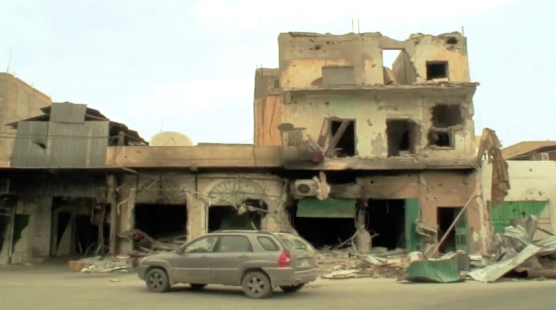
The Hague/Tripoli: Imagine living in a country where peaceful protests turn into a nightmare of violence, with people killed, tortured, and locked up for speaking out. That’s what happened in Libya, a country torn by over a decade of violence, where ordinary people have faced murder, torture, and imprisonment simply for demanding freedom.
Now the International Criminal Court (ICC) is stepping in to bring justice to those hurt by these crimes. On August 8, 2025, the ICC made public a secret arrest warrant from 2020 for Saif Suleiman Sneidel, a Libyan accused of murdering and torturing people in Benghazi. This move is part of a bigger effort to hold powerful figures accountable for horrors that began in 2011, when Libya’s government cracked down on its own people, sparking a war that still leaves the country broken and unable to fully punish those responsible.
The ICC’s Office of the Prosecutor (OTP) has achieved a significant milestone in its Libya investigation with the arrest of Khaled Mohamed Ali El Hishri. The OTP welcomed the decision by Pre-Trial Chamber I to unseal an arrest warrant for Saif Suleiman Sneidel, intensifying efforts to address atrocities in Libya. El Hishri, a Libyan national, was apprehended by authorities of the Federal Republic of Germany on July 16, 2025, pursuant to an ICC arrest warrant for crimes against humanity committed in detention facilities.
Sneidel, an officer in Group 50 of the Al-Saiqa Brigade and also a Libyan national, is accused of war crimes including murder, outrages upon personal dignity, and torture in eastern Libya during a non-international armed conflict. He participated in Operation Dignity, a Libyan National Army campaign launched in Benghazi in May 2014. His case is closely connected to that of deceased ICC suspect Mahmoud Mustafa Busayf Al-Werfalli, a former Al-Saiqa Brigade commander subject to two ICC arrest warrants for eight executions in Benghazi, three of which Sneidel allegedly participated in as a close associate. The OTP calls on Libyan authorities to execute Sneidel’s arrest warrant, pursuant to United Nations Security Council Resolution 1970 (2011), which referred the Situation in Libya to the ICC, and seeks to work closely with the Registry and the Court’s partners to secure his arrest.
The ICC’s warrant, issued in November 2020 but sealed until July 2025, found reasonable grounds to believe Sneidel participated in three executions, resulting in 23 murders, on or before June 3, 2016, June 19, 2017, and July 17, 2017, in Benghazi or surrounding areas.
“These executions appear exceptionally cruel, humiliating, dehumanising, and degrading,” the ICC’s 2020 warrant stated, describing how Sneidel drove a vehicle during one killing, posed with a victim’s body for photos, and carried out executions, some filmed and shared online.
The Chamber also concluded he is criminally responsible for torture. The warrant was sealed following the OTP’s May 2020 application to maximise arrest opportunities and protect ongoing investigations. The OTP requested unsealing in July 2025 due to changed circumstances, aiming to enhance arrest prospects. “The judges’ decision to unseal the warrant improves chances of arrest,” said Deputy Prosecutor Nazhat Shameem Khan. “The Court can now discuss issues related to possible arrest with States, the UN Security Council, and the international community at large, fostering support and cooperation. We hope to create the momentum for Mr Sneidel’s arrest and surrender.”
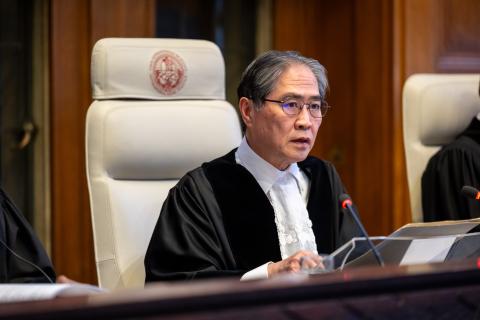
The International Criminal Court’s (ICC) Office of the Prosecutor (OTP) welcomed a decision by Pre-Trial Chamber I to unseal the arrest warrant for Saif Suleiman Sneidel, intensifying efforts to address atrocities in Libya.
Libya’s troubles started in 2011 when citizens protested against their leader, Muammar Gaddafi, demanding freedom and better lives. Instead, Gaddafi’s forces attacked them, killing civilians and crushing peaceful demonstrations. The United Nations Security Council, alarmed by this “gross and systematic violation of human rights,” asked the ICC on February 26, 2011, to investigate through Resolution 1970. The ICC, a court in The Hague that punishes serious crimes like murder and torture when countries can’t or won’t, began looking into Libya’s violence in March 2011. Libya isn’t part of the ICC’s agreement (called the Rome Statute), but the UN’s request and Libya’s agreement in May 2025 to let the ICC work there until 2027 gave the court power to act.
Saif Suleiman Sneidel, a member of the Al-Saiqa Brigade—a group fighting in Libya’s conflict—is accused of war crimes in Benghazi from June 2016 to July 2017. The ICC says there’s evidence Sneidel helped kill 23 people in three executions and tortured a detained person. The court believes Sneidel, a “field commander” in the Al-Saiqa Brigade’s “Group 50” under Mahmoud Mustafa Busayf Al-Werfalli, targeted people for opposing General Khalifa Haftar, a military leader, or supporting the 2011 revolution.
The ICC kept Sneidel’s warrant secret until now to protect victims and ensure investigations could continue safely. The court’s decision to unseal it on August 8, 2025, came after the prosecution argued that “publicity improves the chances of arrest by informing all States and the United Nations Security Council,” rallying global support to catch Sneidel. The ICC’s Victims and Witnesses Unit agreed, saying the risks to victims are now lower than the need to push for justice. The court warned that Sneidel might commit more crimes if not stopped, noting, “Considering the pattern of executions and the recent escalation of Saif Suleiman Sneidel’s conduct, he is likely to continue to carry out crimes of similar gravity unless prevented.”
Libya’s conflict, which the ICC calls a “non-international armed conflict” since March 2011, involves groups like the Al-Saiqa Brigade fighting each other or the government. After Gaddafi was killed in 2011, Libya split into rival factions, with cities like Tripoli, Benghazi, and Misrata seeing heavy violence. The Al-Saiqa Brigade joined “Operation Dignity” in 2014 under Haftar, targeting opponents, often civilians or captured fighters. The ICC says these attacks included murder, torture, and other cruel acts, especially in Tarhunah during the 2019–2020 “Flood of Dignity” operation, where the Al Shaqaqiat (Kani family) controlled local forces.
The ICC has issued 13 arrest warrants for Libya, with nine still active. Besides Sneidel, suspects include Saif Al-Islam Gaddafi, wanted since 2011 for crimes against humanity, and six others—Abdelbari Ayyad Ramadan Al Shaqaqi, Fathi Faraj Mohamed Salim Al Zinkal, Nasser Muhammad Muftah Daou, Makhlouf Makhlouf Arhoumah Doumah, Abdurahem Khalefa Abdurahem Elshgagi, and Mohamed Mohamed Al Salheen Salmi—accused of war crimes like murder, torture, rape, and sexual violence in Tarhunah. Osama Elmasry Njeem and Khaled Mohamed Ali El Hishri face charges for similar crimes at Mitiga Prison in Tripoli. El Hishri was arrested in Germany on July 16, 2025, and awaits transfer to the ICC. Two cases—against Muammar Gaddafi (ended due to his death in 2011) and Abdullah Al-Senussi (declared inadmissible in 2014)—are closed.
The Sneidel and El Hishri cases reflect the OTP’s focus on the 2014–2020 operations and detention facility abuses, respectively. They also demonstrate the ICC’s ongoing efforts to address impunity in Libya, urging international cooperation to ensure justice for victims of the country’s protracted conflicts.
Libya’s government, divided and weakened, struggles to prosecute these crimes, as hinted in the ICC’s documents. The court noted challenges in moving Sneidel’s case forward locally, though some details are hidden for security reasons. This makes the ICC’s role vital, as Libya’s instability—marked by rival militias and a lack of unified law enforcement—hampers justice efforts. The ICC is urging Libya and other countries to help catch Sneidel and others, emphasising that “visibility of the Court’s work in Libya is essential for maintaining trust and securing continued cooperation.”
This case isn’t just about one man but about a country torn apart since 2011, where civilians have suffered immensely. The ICC’s actions aim to give victims a voice and ensure those who committed horrific acts face consequences, even as Libya’s chaos makes justice hard to achieve.
– global bihari bureau