Lucknow: In a remarkable scientific breakthrough, Indian researchers have uncovered a previously hidden chapter of the Kashmir Valley’s climatic past, revealing that the region, now renowned for its cool, Mediterranean-type climate, was once a warm, humid subtropical paradise approximately four million years ago. This ancient climate, long buried in the sands of time, has been brought to life through the meticulous study of fossilized leaves and the tectonic forces that reshaped the Himalayas, as detailed in a groundbreaking study by scientists from the Birbal Sahni Institute of Palaeosciences (BSIP) in Lucknow, an autonomous institute under the Department of Science and Technology (DST). The findings, published in the journal Palaeogeography, Palaeoclimatology, Palaeoecology, provide a vivid glimpse into the valley’s ancient environment and offer critical insights into understanding modern climate change.
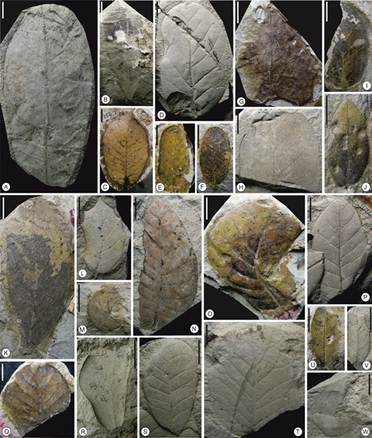
The study draws on a rich collection of fossil leaves, curated by the late Prof. Birbal Sahni and Dr. G.S. Puri, housed at BSIP. These fossils, recovered from the Karewa sediments of the Kashmir Valley, exhibit remarkable diversity and preservation, with many specimens resembling subtropical taxa that no longer thrive in the region’s current temperate climate. Intrigued by this striking mismatch between past and present vegetation, a team of BSIP researchers, including Dr. Harshita Bhatia, Dr. Reyaz Ahmad Dar, and Dr. Gaurav Srivastava, embarked on a scientific investigation to unravel the climatic and tectonic history of the Kashmir Valley using advanced palaeobotanical methodologies. Their research pinpointed the tectonic uplift of the Pir Panjal Range, a sub-Himalayan mountain range, as the pivotal force behind the region’s dramatic climatic transformation.
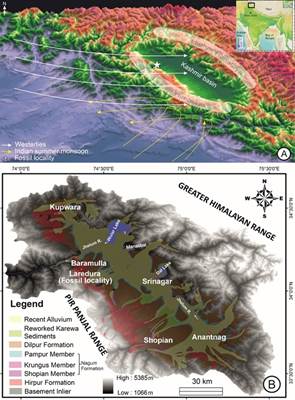
The researchers found that the gradual rise of the Pir Panjal Range blocked the Indian summer monsoon, cutting off the vital water supply that once sustained lush subtropical forests in the Kashmir Valley. This tectonic upheaval, occurring over millennia, transformed the region from a warm, humid subtropical paradise into the cooler, drier Mediterranean climate it is known for today. To reconstruct this ancient environment, the scientists employed the Climate Leaf Analysis Multivariate Program (CLAMP), analysing the shape, size, and margins of fossil leaves to estimate temperature and rainfall patterns. They cross-checked these findings with the coexistence approach, comparing fossil plants with their modern relatives to determine precise climate ranges. This dual methodology enabled the team to create a detailed snapshot of the Kashmir Valley’s ancient climate, rich with warmth and abundant rainfall, until the rising mountains altered its course.
This study is not merely a journey into the past but a critical lens for understanding the future. By decoding how tectonic forces shaped the Kashmir Valley’s climate millions of years ago, the research provides valuable insights into how Earth’s systems respond to environmental shifts. As modern climate change disrupts rainfall and temperature patterns globally, such findings are instrumental in building robust models to predict how ecosystems might adapt or falter under these pressures. The study also underscores the fragility of mountain regions like the Himalayas, which are highly sensitive to environmental changes, emphasising the need for conservation efforts to protect these ecologically vital areas. The fossil leaves from the Karewa sediments, dating back approximately four million years, serve as both a testament to the region’s dynamic history and a warning of the profound impacts of climatic shifts, offering lessons for safeguarding ecosystems in an era of rapid environmental change.
– global bihari bureau