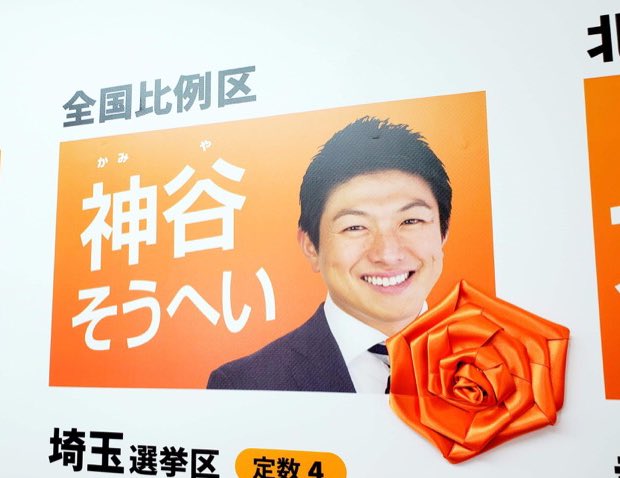
Japan's Sanseito party leader Sohei Kamiya
Ishiba’s Minority Rule, Resignation Calls, Hurts Japan’s World Stage

Tokyo: Japan’s deepening political gridlock, triggered by the Liberal Democratic Party (LDP) and its coalition partner Komeito, the Clean Government Party, losing their majority in both houses of the Diet after the July 20, 2025, House of Councillors election, coupled with calls for Prime Minister Shigeru Ishiba’s resignation, is severely hampering Japan’s ability to act decisively as a U.S. ally, a counterweight to China in the Indo-Pacific, and a leader in global trade. Ishiba, who took office in September 2024 after winning the LDP leadership race, leads a minority government reliant on fragmented opposition support, exacerbating legislative paralysis that threatens Japan’s credibility in tariff negotiations and regional security commitments following the LDP’s October 2024 lower house defeat.
The LDP, which has governed Japan for all but five years since 1955, lost its House of Representatives majority in October 2024, securing 191 seats with Komeito’s 24, totalling 215—18 short of the 233 needed for a majority, marking its second-worst electoral result. In the July 2025 upper house election, the LDP-Komeito coalition lost 19 of their 66 seats up for re-election, winning 47 seats and falling three short of the 50 needed to maintain their 125-seat majority in the 248-seat chamber, leaving them a minority in both houses for the first time since 2009. This followed former Prime Minister Fumio Kishida’s resignation amid a fundraising scandal involving unreported donations, compounded by public outrage over LDP ties to the Unification Church, exposed after Shinzo Abe’s 2022 assassination. These scandals have eroded trust, fueling voter discontent and deepening gridlock as opposition parties gain ground but lack unity to form an alternative government.
Economic challenges intensify the gridlock, with inflation—particularly a 99.2% year-on-year rice price increase in June 2025—lagging wages, and rising social security costs straining voters. A survey found 28% of voters cited food prices as their top concern, outranking security and immigration. The threat of a 25% U.S. tariff, proposed by President Donald Trump for August 2025, looms over Japan’s auto industry, with ongoing trade talks stalled due to Ishiba’s need for opposition support to pass concessions. Japan’s debt, exceeding 2.5 times GDP, further constrains economic policy, limiting resources for global initiatives.
The rise of populist parties, notably Sanseito and the Democratic Party for the People (DPP), has deepened the gridlock by splitting the conservative vote and overturning the LDP’s long-held dominance. Sanseito, founded on YouTube in 2020 during the COVID-19 pandemic by Sohei Kamiya, a former supermarket manager and English teacher, surged to prominence with its “Japanese First” platform, inspired by global populist movements. Kamiya’s online videos, railing against immigration, economic stagnation, and globalism, amassed a following of 400,000 subscribers, surpassing the LDP’s digital reach and resonating with younger voters frustrated by rising prices and a record 3.8 million foreign residents (3% of the population). Sanseito won 13 seats in the July 2025 upper house election, bringing its total to 15 from just one in 2022, significantly eroding the LDP-Komeito coalition’s majority. Its policies, including immigration caps, tax cuts, and stronger defence measures, tapped into public discontent with the LDP’s handling of economic woes and cultural shifts. The DPP, led by Yuichiro Tamaki, gained seats with a moderate populist appeal, proposing tax cuts to ease retiree pension costs, positioning it as a potential coalition partner. The Constitutional Democratic Party (CDP), led by Yoshihiko Noda, secured 148 lower house seats, but the opposition’s fragmentation across eight major groups perpetuates legislative stalemate.
Internal LDP dissent exacerbates the gridlock, with powerful figures like former Prime Minister Taro Aso calling for Ishiba’s resignation following the July 2025 defeat, citing his failure to address voter concerns like rising prices and immigration backlash. In a television interview, Ishiba vowed to remain in office to oversee critical U.S. tariff talks and counter China’s regional assertiveness, but his minority government’s reliance on opposition votes risks prolonging paralysis. Potential successors like Sanae Takaichi, a nationalist who challenged Ishiba in 2024, and Shinjiro Koizumi, a reformist and son of former Prime Minister Junichiro Koizumi, underscore factional divides between Ishiba’s moderate stance and the LDP’s conservative wing, complicating efforts to unify the party for legislative action. Passing the fiscal 2025 budget, vital for defence and economic policies, hinges on securing support from parties like the DPP or Ishin, a challenging task amid ongoing dissent.
This gridlock severely undermines Japan’s international posturing. As a Quad member with the U.S., India, and Australia, the government struggles to advance its 2022 National Security Strategy goal of 2% GDP defence spending by 2027, delayed by budget gridlock, weakening its stance against China’s assertiveness in the Senkaku Islands dispute. Stalled U.S.-Japan trade talks risk straining Washington ties, as Ishiba’s limited authority hinders concessions needed to avoid tariffs. Sanseito’s anti-immigration rhetoric, amplified by its electoral success and the gridlock empowering smaller parties, could push Japan toward isolationism, straining its leadership in the Comprehensive and Progressive Agreement for Trans-Pacific Partnership (CPTPP), a key trade framework. This risks diminishing Japan’s soft power, built on cultural exports and diplomacy, and its ability to fund Southeast Asian infrastructure to counter China’s Belt and Road Initiative, constrained by a weakened yen and high debt. Japan’s credibility in international organisations is also at risk, as allies question its reliability amid legislative paralysis.
Ishiba faces a critical challenge in breaking this gridlock to restore Japan’s international posturing. He must navigate trade talks, address economic concerns, and unify the LDP while governing without a majority. The rise of Sanseito, born on YouTube and fueled by voter frustration, alongside the DPP, signals a shifting political landscape. Senseito’s catchwords – “Do you have no party to vote for? Then we were born for you.”
Whether Ishiba can overcome this paralysis to maintain Japan’s global influence remains uncertain, with his leadership under intense scrutiny.
– global bihari bureau