Kashmir’s Purple Wave Fuels Startup Dreams
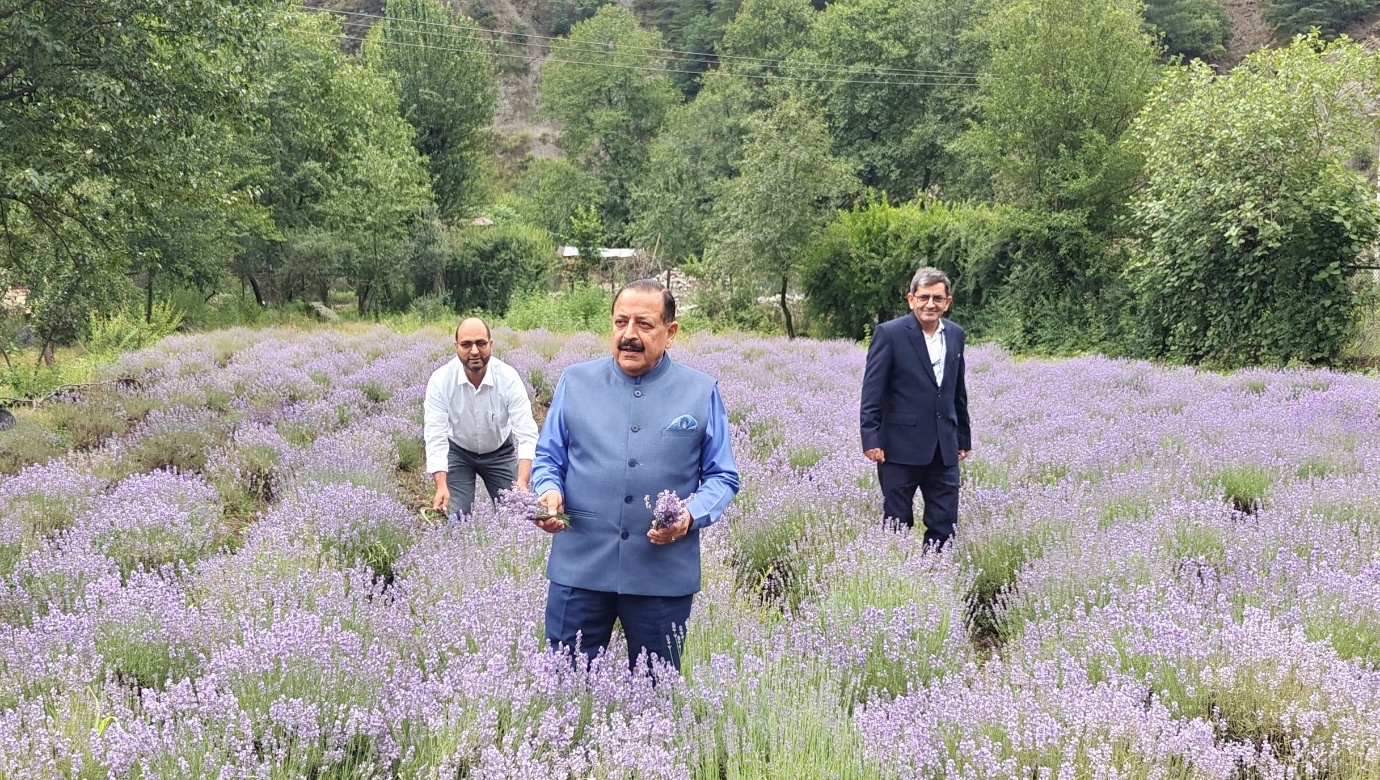
Bhaderwah: In Bhaderwah, where Himalayan peaks wear winter’s snow like a whispered promise, lavender fields unfurl their purple song across Doda’s slopes. Once tethered to maize, which yielded a scant 40,000 rupees per hectare, farmers now weave a richer tale, earning up to 6 lakh rupees yearly from lavender’s oils, dried blooms, and crafted wares. Born of the Council of Scientific and Industrial Research’s Indian Institute of Integrative Medicine Aroma Mission in 2016, this quiet revolution has turned rocky earth into fragrant hope, lifting thousands in Jammu and Kashmir’s hill country.
The transformation took root in 2010, when the Council of Scientific and Industrial Research’s Indian Institute of Integrative Medicine sowed lavender in villages like Lehrote. By 2013–14, the Department of Floriculture delivered 1.75 lakh plants from Pulwama to 36 Doda farmers. Today, 2,500 farmers tend 500 acres, their fields yielding 1,500 litres of oil in 2022, fueling 5 crore rupees in earnings from 2018 to 2022. In Tipri, a farmer recalls maize’s lean winters; now, lavender’s steady work sustains his family, their new pucca home a testament to change. Across Gutasa, women gather under open skies, their hands shaping incense sticks and room fresheners, their labour among 100 others, weaving economic strength. “This crop never sleeps,” one says, her smile reflecting a village’s pride.
The Aroma Mission’s support runs deep. Over 30 lakh lavender plants have reached farmers in Doda, Kishtwar, Rajouri, and Kathua, free of charge. Fifty distillation units, five mobile, hum across Bhaderwah, turning blooms into oil. The Jammu and Kashmir government fuels this growth, funding poly greenhouses for saplings, as noted by the Department of Agriculture Production and Farmers’ Welfare. The National Bank for Agriculture and Rural Development backs Himalayan Essential Oils, a 120-member Farmer Producer Organisation, while the One District, One Product initiative crowns lavender Doda’s emblem, sending products to Maharashtra and eyeing Uttarakhand and the North-Eastern states.
On June 1–2, 2025, Bhaderwah’s Government Degree College pulsed with the Lavender Festival 2025, where purple banners fluttered like petals in the breeze. Stalls brimmed with oils, soaps, and bouquets, drawing scientists, policymakers, and farmers from India, including delegates from Himachal Pradesh and Uttarakhand seeking to mirror Bhaderwah’s path. Visitors savoured lavender teas, marvelled at distillation demos, and moved to folk songs under the Himalayan gaze. A young farmer from Gutasa, his first harvest yielding 15,000 rupees from two kanals, shared his story with tourists, their cameras capturing Chhota Kashmir’s charm. Union Minister of State for Science and Technology, Dr. Jitendra Singh, opened the event, proclaiming, “Lavender has given the small Jammu and Kashmir town of Bhaderwah a national identity and also a national role in India’s economic growth.” He hailed the 2,500 farmers, with young entrepreneurs earning 65 lakh rupees annually.
The festival unveiled a portal and brochure, heralding Bhaderwah’s ascent, with plans for a 2026 showcase of farmers over 60, proving innovation knows no age. Lauding the Agri-Startup model of Lavender farming as a transformative force that has rewritten the narrative of entrepreneurship in remote and hilly terrains, Singh debunked notions that startups demand information technology skills or foreign degrees. He praised Bhaderwah’s youth for building sustainable ventures with the Council of Scientific and Industrial Research’s Indian Institute of Integrative Medicine guidance. The Minister praised Dr. Zabeer and the CSIR-IIIM team for organising an unprecedented event in Bhaderwah that drew visitors from all over India. He invited everyone to visit the lavender fields over the next 10–15 days during peak bloom and hear directly from the entrepreneurs themselves.
SIngh also credited Prime Minister Narendra Modi’s vision: “When the Prime Minister dedicated nearly ten minutes in his ‘Mann Ki Baat’ to talk about this Lavender mission in detail, it gave the best possible global introduction to Bhaderwah—one that we couldn’t have imagined.”
In Tipri, Lehrote, and Gutasa, prosperity takes root. Families, once in kutcha homes, now own vehicles, with half of Tipri’s households joining this trend since 2017. Yet, challenges linger: lavender oil prices have fallen from 12,000 rupees per litre to 2,500–3,000 rupees due to imports, nudging farmers toward dried flowers. Lavender’s resilience suits Bhaderwah’s rain-fed slopes, thriving where maize faltered against climate and wildlife. Singh tied this to India’s rise from the fifth to the fourth largest economy, noting that such initiatives will drive growth through untapped sectors.
The Purple Revolution, alive in the festival’s hum and fragrant in the fields, proves one crop can reshape a region’s fate, a beacon for rural India.
– global bihari bureau