Kutch to Assam: Railways’ ₹12,328 Cr Leap
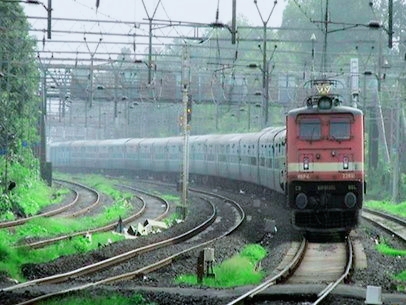
New Delhi: From the vast salt flats of Kutch to the bustling trade routes of Assam, India’s railway network is eyeing a leap forward with four new projects approved by the Union Cabinet here today.
Costing ₹12,328 crore, these projects will add 565 route kilometres to Indian Railways, easing travel for passengers and boosting the transport of goods like coal, cement, and farm produce. Spanning Gujarat, Karnataka, Telangana, Bihar, and Assam, they will connect 3,108 villages and 47.34 lakh people, including the aspirational district of Kalaburagi.
The first project, the Deshalpar–Hajipir–Luna and Vayor–Lakhpat New Line in Gujarat, will add 145 route km and 164 track km at a cost of ₹2,526 crore, with completion expected in three years. This line will connect remote areas of Kutch, linking the Rann of Kutch, the Harappan site of Dholavira, Koteshwar temple, Narayan Sarovar, and Lakhpat fort to the railway network. With 13 new stations, it will serve 866 villages and 16 lakh people, boosting tourism and enabling the transport of salt, cement, coal, clinker, and bentonite.
The other three projects focus on multi-tracking to ease congestion and improve efficiency. The Secunderabad (Sanathnagar)–Wadi 3rd and 4th Line, spanning 173 km across Karnataka and Telangana, costs ₹5,012 crore and will take five years to complete. The Bhagalpur–Jamalpur 3rd Line in Bihar, covering 53 km, is budgeted at ₹1,156 crore with a three-year timeline. The Furkating–New Tinsukia Doubling in Assam, stretching 194 km, costs ₹3,634 crore and is set for completion in four years. These projects will enhance connectivity across 13 districts, supporting the movement of coal, cement, clinker, fly-ash, steel, containers, fertilisers, agricultural commodities, and petroleum products.
These railway projects are expected to handle an additional 68 million tonnes of freight per year, streamlining supply chains for goods like coal, cement, and agricultural products. They will create around 251 lakh human-days of employment during construction. Designed under the PM-Gati Shakti National Master Plan, the projects aim to improve multi-modal connectivity and logistics through coordinated planning. Indian Railways, being energy-efficient, will help reduce oil imports by 56 crore litres and cut CO2 emissions by 360 crore kg, equivalent to planting 14 crore trees, supporting eco-friendly transport.
The projects are expected to improve train speeds and reliability for passengers while reducing transport costs for goods, benefiting farmers, traders, and industries. By connecting remote areas like Kutch and busy routes in Karnataka, Telangana, Bihar, and Assam, these initiatives are targeting to make travel and trade easier, supporting economic growth across these regions.
– global bihari bureau