 By Nava Thakuria*
Heritage pride: CNFF-25 ends on high note
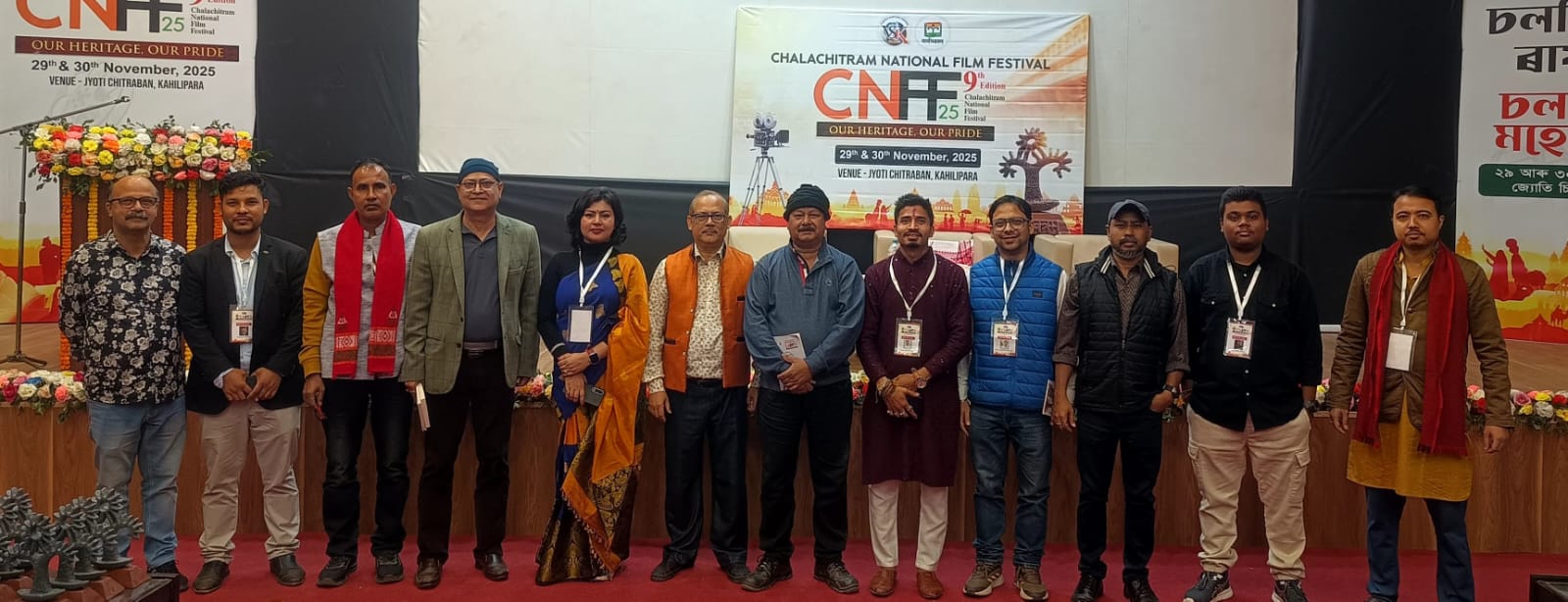
Guwahati: When the lights dimmed for the final time at Jyoti Chitraban on the evening of November 30, 2025, two small yet deeply resonant films had already stolen the heart of the ninth Chalachitram National Film Festival (CNFF-25).
Koli, Jyotirmoy Mazumder’s tender, almost aching portrait of a fifth-grade boy named Niyor who drowns himself in a tangle of innocent lies to hide a poor report card, walked away with the Best Short Feature (Northeast India) award. What begins as a child’s desperate bid to protect his family’s pride spirals into a quiet domestic storm—awkward silences at the dinner table, evasive glances, and finally a tear-soaked reckoning that reaffirms honesty as the only glue strong enough to hold love together.
Equally luminous on the national stage was Indira Baikerikar’s Joba, crowned Best Short Feature (Rest of India). Set in a modest Maharashtrian home, it traces the slow fracture of Priya and Arjun’s marriage under the relentless weight of five childless years. Societal whispers, a mother-in-law’s veiled barbs, and Arjun’s buried shame over his own medical condition build to a shattering confrontation during a traditional fertility ritual. In the film’s closing moments, the couple gently rock an empty wooden cradle together—an act of defiance, acceptance, and renewed partnership that left the audience in hushed reverence. The title itself, Marathi for cradle, became the festival’s most poignant symbol of unfulfilled yet enduring dreams.
In a ceremony thick with emotion, trophies, certificates and cash prizes were handed to the winners by distinguished guests while veteran filmmakers, wide-eyed newcomers and hundreds of cine-lovers looked on, many wiping away tears.
The festival closed, fittingly, with Piyush Thakur’s contemplative The First Film, mirroring the reflective mood that had settled over Kahilipara. Two days earlier, on 29 November, Bharat Bala’s rousing Aham Bhartam had thrown open the doors to a weekend dedicated to the theme ‘Our Heritage Our Pride’.
Other honours followed in quick succession: Biswajit Das took Best Documentary for The String Master; Bismita Borah was named Best Director for the haunting Who Will Call Out Father Father; the cinematography prize went to the Expectation trio—Ramjyoti Krincharan, Ajijul Islam and Elvachisa Sangma—while Samujjal Kashyap won Best Editing for Muga and Irungbam Manisana claimed Best Screenplay for The Silent Performer. The jury—comprising critic-filmmaker Vijayakrishnan, National Award winner Maipaksana Haorongbam and sound designer Debajit Gayan—reserved a special mention for Shreyas S Gautam’s understated Just Breath.
Addressing the valedictory session, Assam Legislative Assembly Speaker Biswajit Daimary lauded the platform for nurturing young voices and urged filmmakers to unearth the untold legends of India’s far east. Jyoti Chitraban Film Society chairman Bidyasagar Bora and festival president Nava Thakuria echoed the call, describing cinema as the strongest bridge between ancient heritage and tomorrow’s dreams.
From over a hundred entries produced between November 2024 and September 2025, each no longer than 25 minutes, a meticulous preview committee—veteran filmmaker Bibhu Dutta, award-winning director Jhulan Krishna Mahanta and senior cinematographer Hiten Thakuria—had curated more than thirty gems for the screen. The festival itself was inaugurated by Dr Sunil Mohanty, Asom Khetra Prachar Pramukh of the Rashtriya Swayamsevak Sangh, who lit lamps before Bharat Mata and paid homage to Dr Bhupen Hazarika, Zubeen Garg and Deepak Sarma.
An open-air conversation moderated by poet-critic Aparajita Pujari, featuring actors Jatin Bora, Kapil Bora, Poonam Gurung and Kamal Lochan, kept young filmmakers spellbound late into the evening. The release of the souvenir ‘Chalachitram’ and a special tribute screening of Mon Jai for Zubeen Garg lent the perfect festive flourish.
As the organising team—Kishor Shivam, Bhagawat Pritam, Riju Dutta, Sanjib Parasar, Deepak Dutta, Pranjit Deka, Buddha Boro and others—watched the final credits roll, they spoke with quiet conviction: the Chalachitram National Film Festival will keep inspiring a new generation to wield the camera as a torchbearer of culture, conscience and change across the country.
*Senior journalist