 By Dr Samar Verma*
Artisans Cry Foul Over Prada’s Chappal Copy
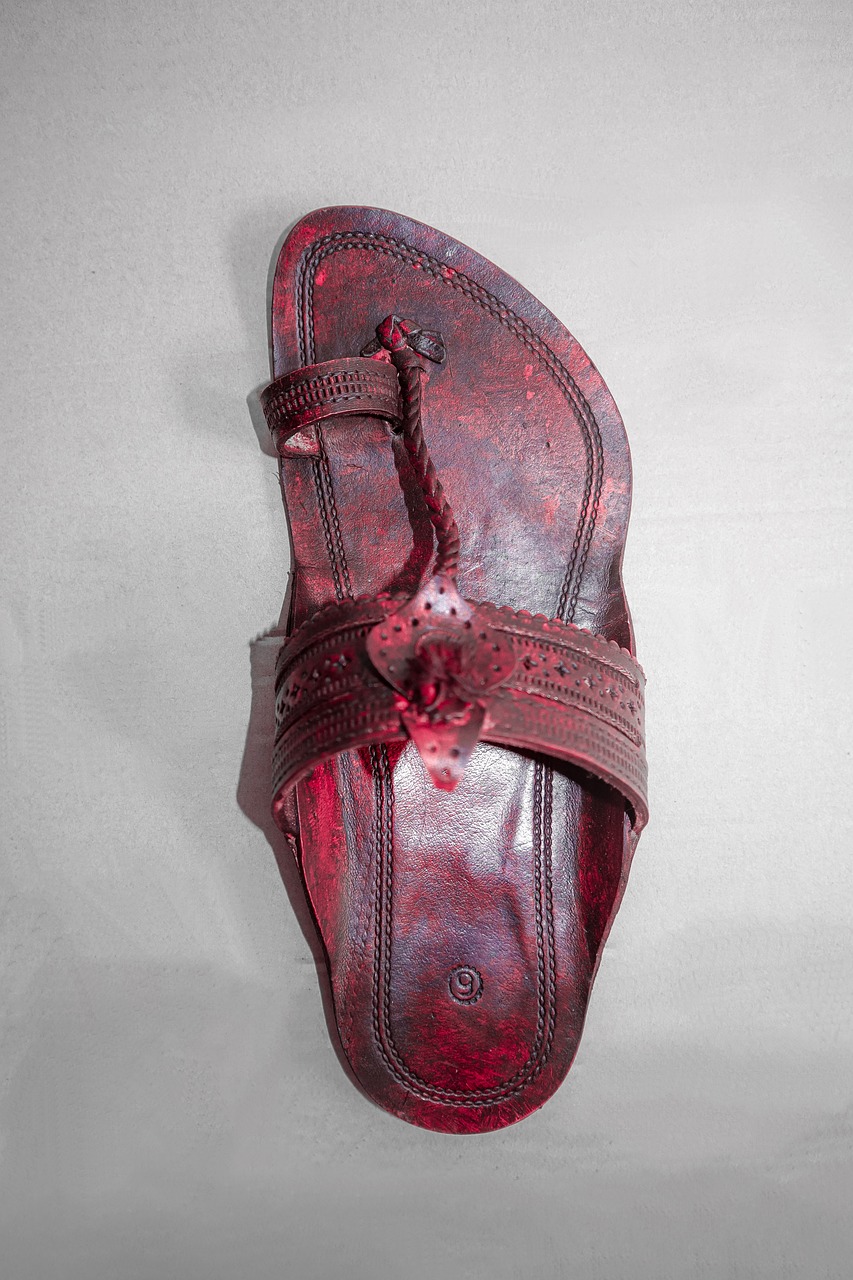
“They’ve walked the world for centuries- even Prada can’t claim their sole.” That was the essence of enraged yet dignified responses from artisans in Kolhapur to the controversy sparked by Prada’s ₹1.2 lakh sandal launched at Milan Fashion Week recently. The luxury label’s minimalist “toe-ring sandal,” unmistakably reminiscent of the Kolhapuri chappal, ignited more than just fashion chatter—it touched off a debate about recognition, intellectual property, and the quiet resilience of India’s craft heritage.
The human stories behind these developments remain the most powerful reminders of what’s at stake. Ashok Doiphode, a 50-year-old artisan from Kolhapur, still works nine hours a day crafting chappals, earning barely ₹400 per pair. “If global brands want our designs,” he says, “they should also want our hands.” In the 1990s, Kolhapur had over 100 bustling artisan workshops. Today, fewer than 5,000 craftspeople remain active, their future threatened by synthetic substitutes, mechanised production, and now, design piracy.
For over 800 years, the Kolhapuri chappal has adorned feet across South Asia—stitched meticulously by hand, using traditional vegetable-tanned leather, often by families in the Scheduled Castes who pass the technique from one generation to the next. In 2019, India granted a Geographical Indication (GI) tag to chappals crafted in eight districts across Maharashtra and Karnataka: Kolhapur, Sangli, Satara, and Solapur in the west, and Belgaum, Bagalkot, Dharwad, and Bijapur in the south.
From Kolhapur to Milan: The chappal walks into prosperity, for a few
The GI was intended to protect reputation and origin, helping over 10,000 artisan households producing around 600,000 pairs annually. Many work under fragile economic conditions—earning less than ₹400 per pair, despite retail prices ranging between ₹1,000 and ₹4,000. Some families spend upwards of six to nine hours handcrafting each sandal, maintaining not just a livelihood but a cultural identity stitched into every seam.
Hence, when Prada released its version of the chappal, designed without attribution (initially) and priced at ₹1.2 lakh, local outrage was swift. A public interest litigation was filed in the Bombay High Court by intellectual property advocate Ganesh S. Hingmire, seeking a formal apology and damages, as well as a court-supervised collaboration between Prada and the artisan community. Political leaders like Sharad Pawar and Priyank Kharge condemned the act as “daylight robbery.” Yet amidst this anger was a quieter question: does the GI tag really offer protection, or merely the illusion of it?
The Limits of Protection: What the Law Shields—and What It Doesn’t
Under the Indian Geographical Indications (GI) Act, a registered GI gives its owners or authorised users the exclusive right to use the specific name- “Kolhapuri chappal”- and to initiate legal action if that name is falsely applied or the product’s origin misrepresented. However, since Prada described their design simply as “leather sandals,” never invoking the protected GI name or misleading customers about its provenance, their action seems to fall outside the scope of infringement under Section 21 of the Act. The law, in its current form, seems can protect a name- but not a design. And that distinction, subtle but consequential, leaves artisans vulnerable to appropriation with no straightforward legal recourse.
In fact, of the thousands of Kolhapuri chappal makers across the two states, only 93 have registered as authorised GI users, reflecting significant gaps in legal awareness and access. Even where GI rights are enforced within India, they hold no legal power abroad unless bilateral treaties are in place. When heritage travels—from Kolhapur to Milan—it often does so without its rightful custodians.
Beyond Outrage: From Appropriation to Recognition and Reform
Yet in this controversy lies a paradoxical opportunity.
Within days of the Prada scandal breaking, online interest in Kolhapuri chappals surged. E-commerce brands like Ira Soles reported fivefold increases in orders. At exhibitions, demand soared. Young consumers rediscovered the elegance of what they now viewed as “heritage luxury.” Mumbai’s streets, usually fashion-forward, started seeing a quiet revival of the traditional sandal—not as a protest, but as pride.
Meanwhile, the Maharashtra Chamber of Commerce and Industry has called for the creation of artisan-owned export platforms, technical upskilling, and centres of excellence. Prada, faced with reputational scrutiny, expressed openness to collaborating with Indian artisans in future collections. This response—while still tentative—suggests a growing recognition that heritage cannot be mined without responsibility.
To build a more just and future-facing framework for heritage protection, India should act on multiple fronts. First, legal reinforcement is essential. GI laws must be complemented by stronger protection of designs, possibly through design patents, and expanded through bilateral trade agreements. Maharashtra’s leadership has rightly proposed patenting iconic cultural designs to prevent global misuse. Simultaneously, an awareness campaign to persuade a higher number of registrations and authorised users under the law is required. Second, there must be mandatory attribution and equitable compensation. Brands drawing on Indian aesthetics—whether in fashion, décor, or cuisine—should credit and share profits with the communities whose intellectual labour they commodity. Third, artisan clusters need infrastructure: skill hubs, design labs, and digital traceability mechanisms such as QR coding or blockchain to verify authenticity. Such measures would allow consumers to trace the journey of each chappal—from the village tannery to their doorstep. Fourth, artisans must be integrated into global markets, not just showcased on social media. Public-private partnerships, e-commerce platforms, and export support can bring their work to the world on their terms. As a global leader of Digital Public Infrastructure, fintech solutions could easily be tailored to the needs, aspirations and global market opportunities for artisans and producers for an equitable share in revenues. Finally, cultural diplomacy must be seen as a pillar of trade strategy. India’s soft power lies in its craftsmanship. Protecting it is not nostalgia; it’s national interest.
In a just world, a Kolhapuri chappal would not have to fight for its name or lineage. It would be celebrated for what it is: the labour of intergenerational hands, the resilience of artisan communities, and a symbol of democratic dignity. When luxury borrows from tradition, it must also share its rewards.
This is not merely a story about footwear. It is about authorship, equity, and recognition. It is about whether the global marketplace can become more ethical, and whether India will fight not only to preserve its cultural soul but to ensure that those who guard it are no longer invisible.
Based on the author’s ongoing engagement with artisans and small-scale textile handicraft producers in Nepal on similar issues- being conducted in collaboration with the United Nations WIPO and the Government of Nepal-, there is a strong conviction that India’s leadership in this domain holds the potential to generate invaluable benefits for producer communities beyond its national boundaries.
Let the Kolhapuri chappal walk proudly- not as an orphaned idea, but as a recognised heir to its own legacy.
*The writer is an economist, public policy and development professional with three decades of global experience in driving systems change, institution-building, and cross-sector collaboration working for corporate, research and international development agencies. Views are personal.