Imdadul Haque Milon
Special Report
 By
By Bangladesh in Turmoil: Extremism Risks in Fragmented Poll Race
Assault on Press Freedom Ahead of February 2026 Polls
Twin Killings Ignite Pre-Election Violence
Pre-Poll Unrest Tests Democratic Hopes
Extremism Risks in Fragmented Poll Race
Bangladesh grapples with a surge in political and communal violence, weeks before parliamentary elections scheduled for February 12, 2026—the first since the events of 2024 that led to the ouster of longtime Prime Minister Sheikh Hasina. The assassinations of youth leader Sharif Osman Hadi and journalist Imdadul Haque Milon have triggered widespread unrest, including attacks on major media outlets, reported vandalism of cultural institutions, and incidents targeting minorities. Rights groups express concern that such violence could further complicate the country’s democratic transition and exacerbate threats to press freedom. These incidents underscore a broader perception of lawlessness that has persisted under the interim administration, raising questions about the government’s ability to maintain order and ensure a fair electoral process amid escalating tensions. Analytically, this recurring cycle of targeted killings and mob actions exposes gaps in state authority. It also risks entrenching a culture of impunity, where political scores are settled through violence rather than institutions; analysts warn this could deter moderate participation and amplify extremist voices in the run-up to the vote.
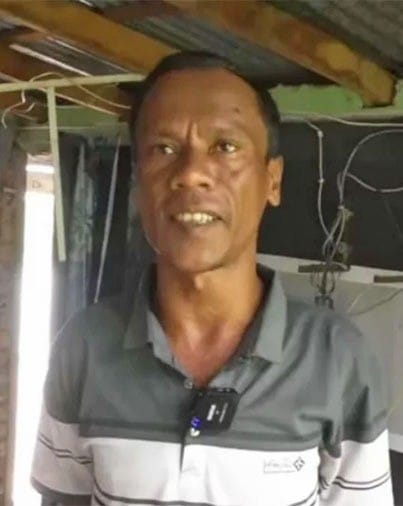
The unrest intensified after both men died on December 18. Hadi, a 32-year-old co-founder and spokesperson for the youth-led Inqilab Mancha (Platform for Revolution) and prospective independent candidate, succumbed in Singapore to injuries from a December 12 shooting in Dhaka. Widely regarded as a key figure in the 2024 protests—often described as a student-led uprising that contributed to Hasina’s departure—he had been vocal on various issues, including relations with India, where Hasina now resides in exile. While Hadi had earlier been associated with the Jatiya Nagorik Committee, a precursor to newer political formations, he did not join the Jatiya Nagorik Party (National Citizens’ Party, or NCP) itself and instead established Inqilab Mancha as a distinct platform, even publicly criticising efforts by some groups to monopolise the legacy of the uprising. That same day, journalist Imdadul Haque Milon, 45, editor of Bartaman Somoy and a Shalua Press Club member, was shot dead in Khulna by armed assailants. Monitoring groups like the Press Emblem Campaign (PEC) describe him as the fifth journalist killed in Bangladesh in 2025 and among over 160 globally this year. In the context of the upcoming elections, these targeted killings highlight vulnerabilities in personal security for political figures and media personnel. They also amplify fears that such acts could intimidate potential candidates and suppress critical voices, potentially skewing the democratic playing field before nominations even fully open on December 29, 2025. Moreover, analysts note the timing appears to exploit anti-India sentiments and unresolved grievances from the uprising, further polarising an already divided electorate.
Hadi’s death prompted large-scale protests demanding justice and Hasina’s extradition. Demonstrations turned violent in Dhaka’s Karwan Bazar on December 18-19, with mobs storming and setting fire to the offices of Prothom Alo and The Daily Star, halting operations at both—unprecedented suspensions in their decades-long histories. Some protesters voiced accusations of perceived pro-India bias in the outlets. On December 19, New Age editor Nurul Kabir reportedly faced assault while attempting to intervene. These incidents drew strong condemnation from press freedom organisations, including the PEC, Committee to Protect Journalists (CPJ), and International Press Institute (IPI). The attacks on media, coming so close to the polls, appear, according to press freedom groups, to reflect a deliberate effort to curtail information flow. This could erode public trust in the electoral process and hinder voters’ access to balanced reporting on candidates and issues, thereby contributing to an atmosphere where lawlessness appears to thrive unchecked; analytically, this selective targeting of outlets perceived as aligned with the old regime indicates a broader campaign to reshape the narrative landscape, potentially allowing unchecked misinformation to dominate campaign discourse and influence voter perceptions in favor of more hardline positions.
Violence extended to cultural sites, with reports of vandalism and arson at institutions like Chhayanaut in Dhanmondi and the Udichi Shilpigoshthi office, as noted by the organisations themselves and local accounts. Protesters also targeted the Indian Assistant High Commission in Chittagong amid anti-India slogans. Communal incidents included the lynching of a Hindu individual in Mymensingh, labelled a hate crime by rights monitors, with arrests following. According to Ain o Salish Kendra, there were over 100 political killings and 130 mob lynchings in the first nine months of 2025, while Transparency International Bangladesh documented assaults and threats affecting over 1,000 journalists and media workers from August 2024 to November 2025. This pattern of mob-driven violence and targeted assaults reflects a verified escalation in perceived lawlessness, as evidenced by multiple reports from international and local observers. The escalation has intensified in the lead-up to the elections; such disorder risks alienating minority communities whose participation is crucial for credible polls. It could also lead to calls for delays or international oversight if stability cannot be restored swiftly, ultimately testing whether the interim regime can project sufficient authority to prevent a spiral into pre-election chaos that favours organised extremist groups over fragmented moderates.
Bangladesh’s press freedom situation remains challenging, despite a rise to 149th in the 2025 Reporters Without Borders (RSF) World Press Freedom Index—attributed partly to reduced direct interference under the interim government compared to prior years. However, ongoing violence has undercut these gains, with at least five journalists killed in 2025 per monitoring bodies. Analytically, this erosion of press safeguards at a pivotal pre-election juncture could foster an environment where misinformation proliferates, polarising the electorate further and complicating efforts to hold a transparent vote. The simultaneous referendum on constitutional reforms aims to address long-standing power imbalances but may now face heightened scrutiny amid the chaos; the result could be a fragmented media ecosystem that amplifies echo chambers, making it harder for voters to discern credible policy debates from inflammatory rhetoric.
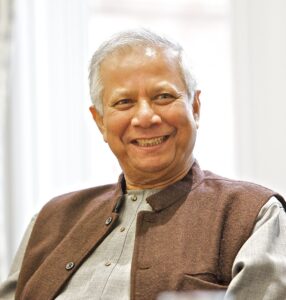
The interim government under Nobel laureate Professor Muhammad Yunus deployed security forces on December 19, declared national mourning on December 20, and organised a state funeral for Hadi after his body’s repatriation. Authorities offered a reward for information on his killers and assured support to affected media editors. Yunus condemned mob actions and pledged investigations. Opposition figures, including from the Bangladesh Nationalist Party (BNP), have described the unrest as potentially aimed at disrupting the polls. With Awami League activities restricted and Hasina found guilty in absentia by Bangladesh’s International Crimes Tribunal—a verdict her supporters reject—in November 2025 on charges of crimes against humanity related to the 2024 crackdown, where UN-linked assessments have estimated up to 1,400 deaths, the Election Commission advances preparations, including nominations from December 29. The BNP, in an official press conference on December 19, strongly condemned Hadi’s murder as a cowardly act demanding immediate arrests and prosecution, while denouncing the arson on media offices and cultural institutions as proof of a vested group’s conspiracy to create anarchy, nullify hard-won democratic rights, and render the upcoming national election uncertain; the party warned that these heinous incidents, occurring under the government’s unsatisfactory oversight, damage the nation’s image and called for unified resistance from all anti-anarchy forces to safeguard the democratic transition. Meanwhile, the Awami League, through publications on its platform, has portrayed the violence following Hadi’s death as neither accidental nor uncontrolled but rather structured and targeted by extremists on the streets, while criticising the interim government’s silence and apparent inaction, framing the unrest as part of a broader siege that exploits political voids to undermine stability ahead of the polls.
Analytically, the major parties are positioning themselves in distinct ways as the February polls approach, with strategies shaped by the post-uprising landscape and ongoing instability. The BNP has been actively engaging in strategic dialogues and public outreach to build voter confidence, as outlined in official statements from its leadership. For instance, acting chairman Tarique Rahman emphasised in a September 2025 address the need to ensure voter trust nationwide through transparent electoral mechanisms, signalling the party’s focus on grassroots mobilisation and policy platforms centred on economic recovery, anti-corruption measures, and democratic reforms. BNP leaders have also held meetings with the interim chief adviser, Yunus, to discuss government readiness for the elections, advocating for a level playing field and reforms to prevent past irregularities. The party has welcomed the election date announcement, positioning itself as a frontrunner by announcing candidate selections in key constituencies and launching campaigns that highlight its historical role in opposing authoritarianism, all while coordinating with allied groups to maximise turnout in a potentially fragmented political landscape. Reports indicate the BNP has advanced its nomination process, covering most constituencies and reserving seats for smaller democratic allies. This approach appears aimed at capitalising on public discontent with the interim regime’s handling of lawlessness, promising stability and inclusive governance. Rooted in a centre-right, nationalist ideology established by its founder Ziaur Rahman in 1978, the BNP promotes Bangladeshi nationalism, free-market policies, and conservative values, though it has historically formed alliances with Islamist groups like Jamaat-e-Islami during past coalitions to broaden its base. The most prominent of these was the 2001–2006 Four-Party Alliance, where Jamaat-e-Islami held cabinet positions after the coalition’s landslide victory and contributed to governance amid accusations from human rights organizations and international observers of tolerating or failing to curb rising Islamist militancy, including the growth of groups like Jamaat-ul-Mujahideen Bangladesh (JMB) and Harkat-ul-Jihad-al-Islami Bangladesh (HuJI-B), as well as attacks on minorities and secular figures. The later 20-Party Alliance from 2012 onward coordinated major street agitations against the Awami League government, often marked by violent confrontations involving petrol bombs and blockades that resulted in significant civilian casualties. Verified reports from sources such as Human Rights Watch and the International Crisis Group indicate that these alliances contributed to an environment where hardline politics gained traction, with post-election violence against minorities in 2001 and widespread unrest in 2013-2015 highlighting how such partnerships enabled extremist elements to influence mainstream discourse and actions, though BNP leadership has consistently denied direct responsibility. While the party’s core leadership maintains a focus on secular nationalism and democratic restoration, these pragmatic partnerships have drawn criticism for indirectly empowering radical elements, even as BNP publicly distances itself from extremism; in the current cycle, the party has avoided formal revival of such alliances to appeal to moderate and youth voters influenced by the 2024 uprising’s anti-extremist tone, though informal local coordination persists in some areas, reflecting a calculated balance between ideological purity and electoral necessity that could shape post-poll coalition dynamics.
Regarding the position of Jamaat-e-Islami in the ensuing elections, the party appears to be strengthening its foothold amid the political vacuum left by the Awami League’s restrictions, with verified media reports indicating a resurgence in influence that could position it as a significant player if the polls proceed without broader participation. During the 2024 quota reform protests that escalated into the mass uprising leading to Hasina’s ouster, Jamaat-e-Islami and its student wing Islami Chhatra Shibir publicly supported the movement, with party claims of dozens of affiliates killed in clashes; the then-Awami League government accused them of inciting violence and imposed a full ban on the party on August 1, 2024, under anti-terrorism laws, only for the interim administration to lift it on August 28 after finding no evidence of militant activities. This sequence allowed Jamaat to re-emerge stronger in the post-uprising landscape, capitalising on the changed political dynamics. Reports suggest the party has prepared candidates for all 300 seats and is exploring unified fronts with other Islamist groups to avoid vote splitting, while pushing for pre-election reforms. Official statements from Jamaat’s secretary general, Mia Golam Parwar, have highlighted concerns over the lack of a level playing field, warning that without equitable conditions, the integrity of the vote could be compromised. The party has been vocal in demanding reforms from the interim government, including threats of action if unmet by deadlines, underscoring its organisational mobilisation capabilities. Recent campus election victories by Jamaat-aligned candidates suggest growing appeal among younger demographics, though analysts caution this may reflect desires for autonomy rather than a full ideological shift. In the context of perceived lawlessness, Jamaat’s emphasis on moral governance and anti-corruption could resonate, potentially leading to coalition formations with other Islamists or even influencing BNP strategies, as pre-election assessments note its support for the interim setup while pushing for electoral fairness; analytically, this resurgence exploits the power vacuum and youth disillusionment, positioning Jamaat as a disciplined alternative in rural and conservative strongholds, though its deregistered status could potentially require leaders to contest as independents, indirectly bolstering allies like BNP in a fragmented field. Jamaat-e-Islami’s political moorings are firmly anchored in conservative Islamist principles, originating from its establishment as the East Pakistani wing of the broader Jamaat-e-Islami movement, with a platform advocating for an Islamic state governed by Sharia principles and emphasising moral and social reforms, according to historical accounts and academic studies. The party’s history, including opposition during the 1971 liberation war, has been marked by high levels of influence from radical hardliners, as evidenced by its involvement in promoting fundamentalist ideologies and associations with militant groups, though official narratives stress peaceful political engagement and community welfare initiatives to counter accusations of extremism.
As for how Awami League party members are coping with the ban imposed in May 2025, official statements and platforms reveal a strategy of defiance and calls for resistance, with leaders operating from exile or discreetly within the country to denounce the restrictions as undemocratic and divisive. The party has issued formal rejections of the election schedule, accusing the interim government of stoking societal divisions and trampling on norms, while urging supporters to prepare for a mass voter boycott to highlight disenfranchisement. Hasina, from her base in India, has publicly warned of widespread abstention, framing the ban as an exclusion of millions and a threat to pluralism. In remarks reflecting her perspective, Hasina has described the interim government as unelected and unaccountable, alleging that it allows extremists to operate and that it conducts politically motivated investigations; these claims are contested by the interim authorities and critics. Members have organised protests against the prohibition, viewing it as part of a broader crackdown pending trials for past abuses, and have used social media groups to maintain cohesion, criticising the government’s inaction on unrest as exploitative. This coping mechanism involves legal challenges, such as demands against allied bans, and a narrative that positions the League as victims of political vendetta, all while navigating arrests and restrictions to preserve organisational structure for potential future reinstatement. Analytically, in an environment of perceived lawlessness, this approach risks further isolation but aims to delegitimise the polls, potentially influencing turnout and international perceptions of the electoral process; by framing the elections as exclusionary, the League seeks to rally its base for long-term revival while sowing doubts about the legitimacy of any post-February government.
The newly formed Jatiya Nagorik Party (NCP), also known as the National Citizens’ Party (NCP), has emerged as a notable entrant in the pre-election landscape, having been officially launched on February 28, 2025, by leaders from the Students Against Discrimination movement and the Jatiya Nagorik Committee, with interim chief adviser Muhammad Yunus attending the inaugural event and offering his support, which some observers interpret as tacit endorsement from the caretaker government to foster new political alternatives. Positioned as a youth-led, centrist force aiming to transcend traditional partisan divides, the party draws from the momentum of the 2024 uprising, advocating for anti-corruption measures, inclusive governance, and social justice reforms to address the grievances that fueled the protests against the previous regime. As of December 2025, the NCP remains in an active organisational phase, focusing on building grassroots networks and candidate lists for the February polls, though it faces challenges in establishing a nationwide presence amid the ongoing unrest and competition from established players like the BNP and Jamaat-e-Islami. Official statements from party coordinators emphasise a commitment to neutrality and youth empowerment, positioning it as a fresh alternative in a polarised environment, but critics question its long-term viability given its recent formation and reliance on the interim government’s support. In the broader electoral context, the party’s entry could fragment votes among reform-minded constituencies, potentially influencing alliances or outcomes in a contest already strained by perceptions of lawlessness and calls for stability; analytically, while intended as a moderating force, the NCP’s proximity to the interim regime may paradoxically fuel accusations of bias, limiting its appeal among skeptics of the current transition.
As troops maintain presence amid lingering tensions, international calls for restraint from the United Nations (UN) and others underscore anxieties over stability. With millions of voters set to participate, the path to credible elections remains under close watch, especially as the current wave of unrest amplifies perceptions of lawlessness that could deter voter turnout, embolden fringe elements, and test the interim regime’s capacity to deliver a peaceful and inclusive ballot. This will ultimately determine whether Bangladesh can emerge from this turbulent phase with strengthened democratic institutions or face prolonged instability. The BNP’s return to the electoral fray in February 2026 marks its first competitive participation after years of marginalisation, having contested the disputed 2018 polls amid widespread irregularities before boycotting the 2024 elections to protest the lack of fairness under the previous Awami League government.
*Senior journalist