 By Shankar Raj*
Chaver to Dips: Mamankam Reborn
Jan 18–Feb 3: Kumbh in Malappuram
Thiruvananthapuram: In the lush green heart of Kerala, where backwaters weave through coconut groves like silver threads in emerald silk and the Bharathapuzha River—Kerala’s sacred lifeline, revered much like the Ganges in local rites for its purifying flow—murmurs ancient secrets along its ochre-tinted sandy banks that stretch wide during the dry season, exposing the very palakuri where warriors once fell and merchants haggled under monsoon-starved skies, a remarkable spiritual bridge is forming between north and south India.
For the first time in recorded history, the state known as ‘God’s Own Country’ is preparing its own version of the iconic Kumbh Mela, drawing inspiration from the ancient gatherings that draw tens of millions to the Ganges plains every dozen years under the celestial dictates of Jupiter’s cycles. This southern rendition, infused with Kerala’s own storied past of democratic assemblies, martial grandeur, and syncretic village life, aims to revive a tradition long dormant since the last blood-soaked edition in 1755, blending the ascetic rigor of northern akharas with the devotional and warrior fervor that once defined the region’s grand riverine conclaves—now reimagined not with chaver blades but with the gentle clink of temple bells, the rhythmic thunder of Theyyam drums echoing from nearby tharavadus, and the swirling possession dances that turn mortal men into walking gods.
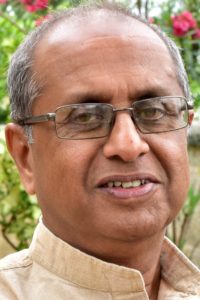
Swami Anandavanam Bharathi, a Mahamandaleshwar with the Juna Akhara—India’s largest monastic order, with media estimates of around 400,000 sannyasis and the driving force behind the grand Kumbhs of Haridwar, Ujjain, Nashik, and Prayagraj—leads this historic revival. Born P. Salil in Chalakudy, Thrissur, to a factory worker and schoolteacher, he rose as a fiery left-wing Students’ Federation of India (SFI) student leader at Sree Kerala Varma College, forging ties with future ministers like P. Rajeev and M.B. Rajesh amid campus protests. A top-ranked journalism graduate from Kerala Press Academy, he once critiqued religious hypocrisy in the press—views he later abandoned after a transformative 2001 Kumbh visit, trading red flags for rudraksha beads.
But a chance detour in 2001, fleeing minor police cases tied to his activist zeal during a heated SFI rally that disrupted even the local Vishu markets, led him to the swirling chaos of the Haridwar Kumbh Mela. Amid the sea of saffron robes, ritual dips in icy waters, and the resonant chants of thousands, something stirred—a quiet unravelling of his Marxist certainties as he witnessed the raw devotion unmarred by class divisions, much like the egalitarian spirit of Kerala’s village poorams where Ezhava drummers and Namboodiri priests share the same caparisoned elephants. By the 2013 Kumbh in Allahabad (now Prayagraj), under the guidance of a wandering sadhu from the Himalayas, he committed deeper, enduring the bone-chilling rigours of Himalayan sadhanas: standing motionless in subzero winds atop snow-clad peaks for hours in tapasya, retreating into dense forests like those around Badrinath for silent contemplation and japa, and embarking on exhaustive pilgrimages across India’s sacred circuits from Kedarnath to Rameshwaram, subsisting on alms and minimal sustenance—practices that resonate with Kerala’s own tantric sadhus in remote Malabar kavus who perform midnight pujas under banyan trees. In 2018, he took the Naga Deeksha at a Kumbh, the austere vow of the warrior-ascetic involving complete renunciation, including shedding clothes in symbolic detachment, pledging to shield Sanatana Dharma with the same passion he’d once reserved for revolutionary pamphlets and anti-capitalist slogans shouted during hartals that still paralyse Kerala’s tea estates. The pinnacle came on January 26, 2025—India’s Republic Day, fittingly symbolic of national unity—at the Prayagraj Maha Kumbh, where Juna Akhara head Swami Avdheshanand Giri anointed him Mahamandaleshwar in a ceremony of Vedic chants, gangajal ablutions, and the bestowal of the danda staff, marking him as the third Keralite to claim the title and the first in Juna Akhara, after two revered Malayali seers from around half a century prior.
“As Naga Sannyasis, we see everyone as equal—be it a former comrade or a king,” he reflects now, his voice steady with the detachment of one who traded red banners for rudraksha beads and protest placards for the trishul, embracing a worldview where former foes in debate halls are met with equanimous grace—a transformation that whispers of ancient tales like Valmiki’s from bandit to bard or the Buddha’s from prince to ascetic, and mirrors the quiet revolutions in Kerala’s coastal hamams where Muslim and Hindu fishermen share the same boat songs.
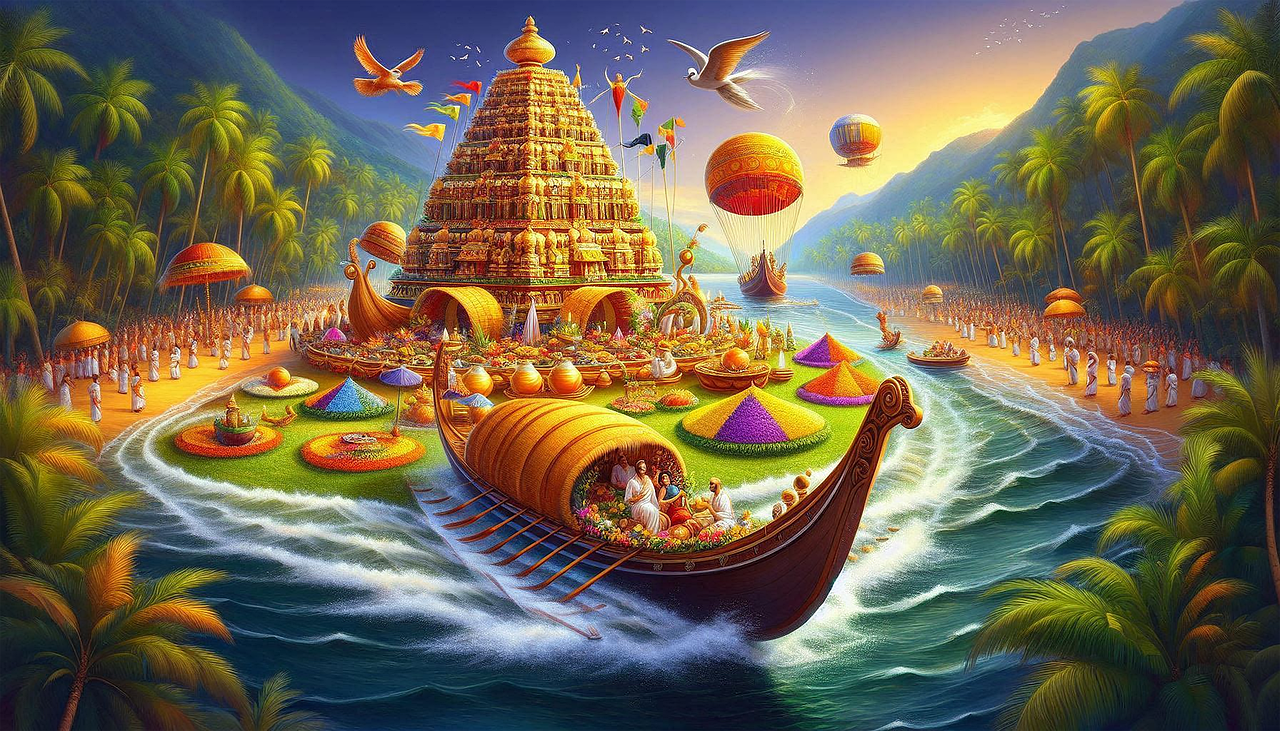
This Kerala Kumbh, he insists, is no mere imitation but a homecoming for a heritage as deep as the north’s, rooted in the Maha Makham festival at Thirunavaya, a southern counterpart to the Kumbh that echoed its riverine grandeur under rulers like Cheraman Perumal around A.D. 825 during the Kulasekhara Chera era, per local chronicles, when Malappuram’s mosques and temples stood side by side as they do today. Aligned with the Makam star’s celestial dance in the lunar month of Magha—mirroring the Jupiter-Brihaspati cycles that dictate northern Kumbhs—this 12-yearly rite once summoned seers, scholars, kings, and warriors to the Bharathapuzha’s ochre shores for elaborate yajnas involving homa kundas fed with ghee and sacred woods, philosophical discourses on Sanatana Dharma under temporary mandapams decorated with plantain stalks and mango leaves, and rituals of renewal, including the solemn selection of new leaders from among the 21 Perumals or poignant abdications, as legend holds Perumal himself enacted before mysteriously vanishing, some say converting to Islam and sailing to Arabia—a tale from Keralolpatti tradition that fuels Malappuram’s unique Hindu-Muslim harmony where Mappila lahala ballads coexist with Vedic recitations. By medieval times, under the fragmented feudal nadus post-Chola invasions, it had morphed into the fabled Mamankam, a 28-day extravaganza commencing from the Pooyam star in Makaram (mid-January) to the Makam star in Kumbham, blending spiritual pomp with martial thunder, trade fairs, and cultural symphonies that drew from Kerala’s rich performative tapestry—analogous in its riverine grandeur to the northern Kumbhs.
The origins of Mamankam stretch back to the Chera dynasty’s democratic traditions, as chronicled in the Keralolpatti and Kerala Mahatmya, where the festival served as an electoral assembly for installing Perumals for 12-year terms, inspired perhaps by Cheran Chenguttuvan’s northern campaigns or even Parasurama’s mythical creation of Kerala and its Brahmin gramams with their joint-family tharavadus still dominating Malappuram’s landscape. As power shifted to Valluvakonathiri of Valluvanad, they held the Maharakshapurusha role until the Zamorins of Kozhikode seized Thirunavaya in the 14th-century Thirunavaya Wars, with the decisive 1486 battle cementing Calicut’s dominance and integrating Arab trade routes that brought biryani spices to local sadhyas. The Zamorins transformed it into an imperial showcase, compelling subordinate rulers from Cochin to Travancore to send submission flags, while invoking Goddess Ganga to sanctify the Perar—much like how modern Malappuram weddings blend Hindu rituals with Mappila nikah under shared pandals. The spectacle unfolded on Thirunavaya’s vast palakuri sands opposite the ancient Nava Mukunda Temple—with its soaring gopuram and murals depicting Vishnu’s avatars, revered in local tradition for its long antiquity dating to early medieval renovations around 1,300 years ago: dawn conch shells heralded akhara processions, sadhus led shahi snans amid the acrid smoke of ghee-fed fires, Brahmin sabhas debated Vedanta amid the scent of jasmine garlands and toddy-scented air, kalaripayattu arenas showcased angam techniques with urumi whips and marma strikes that still thrill at local poorams, tholpavakoothu puppets enacted Ramayana scenes under torchlight to the beat of chenda melams, and global merchants at Ponnani port bartered pepper, ivory, teak, and Chinese porcelain amid silk-draped scaffolds and elephant parades documented by Duarte Barbosa, enriching Kerala’s cuisine with influences seen in pathiri and puttu.
Yet shadows loomed with kutippaka feuds that mirrored the fierce loyalty of Kerala’s joint-family vendettas. Dispossessed Valluvakonathiri dispatched chaver squads from Thirumandhamkunnu Bhagavathi Temple—youths aged 18-20, anointed with vibhuti, oiled for agility, marching 50 kilometres, fueled by vengeance for prior slaughters and sustained by toddy from local tappers. Trained at Changampally Kalari in Mey Payattu and vital-point strikes, they charged from Nilapadu Thara‘s laterite heights against the Zamorin’s Pazhukkamandapam guards, amid Marunnara explosions and spear volleys, their bodies tumbling into Manikkinar well for elephant trampling—a cycle of defiance ending in 1755 when Putumanna Kandaru Menon nearly assassinated the Zamorin amid Hyder Ali’s looming invasions, leaving scars that still fuel local folklore sung during Onam boat races.
The site’s sanctity endures in Malappuram’s syncretic weave—a district where Muslims form the clear majority, comprising over 70% of the population—yet Hindu rites like Tulam-Kumbham-Karkkidakam Bali Tharpanam equate Bharathapuzha to Varanasi, and Kondotty Nercha processions share space with temple utsavams. Here, the wild pulse of Theyyam—Kerala’s “Dance of the Gods”—thrives in nearby kavus and tharavadus, a ritual older than Hinduism itself, born from Dravidian animism in sacred groves where nature spirits once reigned. In villages like Chamravattom and Vettom, just kilometres from Thirunavaya, hereditary performers from Vannan, Malayan, and Thiyya clans fast for days, bathing in herbal infusions before an 8-to-10-hour alchemy: faces smeared with rice-paste whites, turmeric golds, and hibiscus crimsons in swirling chitta mandalas; bodies draped in red thala skirts, shell necklaces, and thorny crowns soaring ten feet high with peacock plumes and mirrors that catch torchlight like divine eyes. As chenda drums thunder like monsoon clouds, elathalam cymbals clash as lightning, and kurumkuzhal flutes wail through palm fronds, the kolam enters vellattam—a raw prelude chanting thottam verses of betrayed heroes and furious goddesses—before full trance erupts in the open kaliyattam arena. Eyes rolling white, the man vanishes: a low-born oracle now strides as Muchilot Bhagavathy, cradling prophecies for barren wombs; as Rakta Chamundi, slashing fronds in bloodlust purgation; or as Pottan Theyyam, the untouchable sage who once scorched a Brahmin’s pride in philosophical fire, his barbs still levelling castes in post-ritual feasts where all share rice from the same leaf. For 12-to-24 hours, the god roams Malappuram’s betel fields, blessing infants, quelling feuds with binding oracles, or treading embers barefoot—subverting hierarchies as the kolam, once “untouchable,” commands Namboodiri bows. Over 400 forms pulse here, from Muthappan’s toddy-sipping duality to Gulikan’s skeletal march, absorbing Shaiva fury and Vaishnava grace while Muslim neighbours offer cocks at shared shrines, their Oppana claps mingling with chenda beats in a syncretism that mocks puritan divides.
This living defiance, where a Vannan painter becomes supreme judge under starlit kavus, will infuse the 2026 Kumbh as a bold contemporary flourish: Naga sadhus processing alongside Theyyam oracles in joint shahi snans, their trance prophecies echoing Mamankam discourses, drummers blending damaru thuds with chenda rolls as yajnas crackle beside ember-walks. The modern revival began in 2016 with the temple priest’s river pujas—offered with coconut water and areca nuts—paused for Covid, under Juna Akhara‘s southern expansion that now trains local youth in yoga asanas amid Theyyam‘s breath-control rigours.
The 2026 event, January 18 to February 3, will feature temporary ghats lined with banana trunks, yajnas with appam offerings, discourses in Malayalam, and Naga processions weaving through betel vine fields where kolams divine harvest fates, seeking Devaswom aid despite the March 2025 Cochin Board snub over Swami’s past—a decision that sparked debates in local tea shops over filter kaapi, with elders invoking Pottan Theyyam‘s anti-caste fire. The tradition’s architect remains Adi Shankaracharya, Kerala’s eighth-century prodigy born in Kalady, traditionally credited with founding the akhara system—who in a whirlwind 32 years mastered Vedanta under Govinda Bhagavatpada, championed Advaita—”Brahman alone is real, the world illusion, the soul none other than Brahman”—defeating rivals in shastrarthas from Kashi to Kanyakumari, unifying warring sects through Panchayatana worship of five deities, reforming sannyasa into the ten-order Dasanami, and establishing four mathas at Sringeri, Dwarka, Puri, and Jyotirmath to guard Vedic flames against Buddhist tides, his hymns like Soundarya Lahari and commentaries on Upanishads, Gita, and Brahma Sutras still sung in Malappuram’s madoms, his warrior-monk akharas the very seed of Juna’s southward march. With 2028’s fuller Maha Makham and annual sangams planned amid whispers of integrating Theyyam artists and Oppana dancers in grand kaliyattams, relics like protected Nilapadu Thara and the crumbling Cheerpumkundu bridge—Mahatma Gandhi’s 1948 ash site near where Sabarimala pilgrims still rest—whisper on, as this reunion knits India’s threads where a comrade chants eternal hymns to the rhythm of Kerala’s monsoon heart, gods descending in trance amid the river’s sacred flow.
*Senior journalist (with additional inputs from the global bihari bureau)