Kalughat IMT in Bihar
India’s Inland Waterways Gain Momentum with PPP Handovers
PPP Model Activates Two Key Terminals on NW-1
Haldia: The Ganga-Bhagirathi-Hooghly river system, spanning 1,620 kilometres from Prayagraj in Uttar Pradesh to Haldia in West Bengal, now hosts two freshly privatised nodes under the Jal Marg Vikas Project (JMVP)—a capacity augmentation initiative focused on the 1,390-kilometre stretch from Varanasi to Haldia. Kalughat Intermodal Terminal (IMT) sits approximately 650 kilometres upstream by river distance from Haldia in Saran district of Bihar; Haldia Multi-Modal Terminal (MMT) anchors the river’s mouth in West Bengal, tethered to National Highway 41 (NH-41) with dedicated rail connectivity still under construction. Between them lie extensive dredging zones, modern navigational locks at Farakka and Jangipur, river information systems with automated identification transponders, and over sixty community jetties—engineered interventions along National Waterway-1 (NW-1) that winds through Uttar Pradesh, Bihar, Jharkhand, and West Bengal.
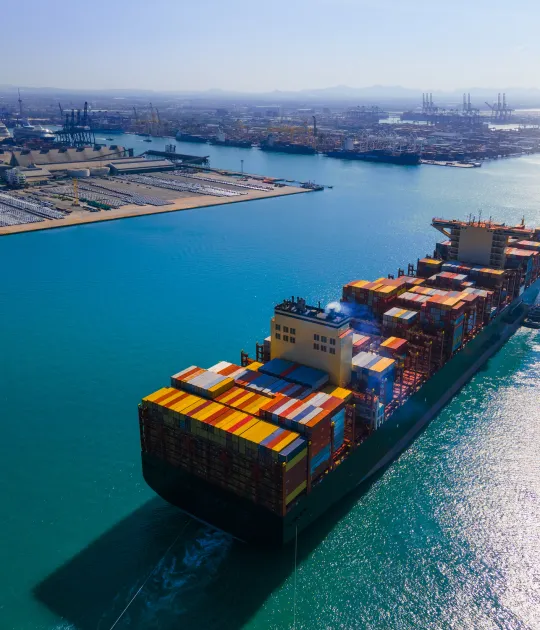
The Inland Waterways Authority of India (IWAI), a statutory body under the Ministry of Ports, Shipping and Waterways, today formally transferred Kalughat IMT to Summit Alliance Port East Gateway (India) Private Limited (SAPL), a joint venture with Bangladeshi and Indian equity that already operates river terminals in Bangladesh, for operation and maintenance under a revenue-sharing public-private partnership (PPP) model that grants IWAI 38.3 per cent of gross terminal earnings. That same day, at Haldia MMT, IRC Natural Resources Private Limited loaded the inaugural consignment: a barge heaped with granulated blast furnace slag (GBFS) sourced from Tata Steel’s Jamshedpur plant, bound for Pandu near Guwahati in Assam. A heavy-lift gantry crane swings above the 550-metre riverfront berth; workers in orange safety vests secure heavy-duty tarpaulins; a digital weighbridge records the load. These twin handovers under JMVP mark a decisive pivot to PPP frameworks on NW-1, shifting operational risk from the public exchequer to private concessionaires.
The World Bank anchors the entire JMVP effort. Its $375 million loan, approved in February 2017 under Loan Agreement No. 8631-IN and effective from 2018, was later restructured and trimmed to $317.22 million by 2023 after partial cancellations totalling $57.78 million due to cost savings, scope reductions, and delays in civil works. This is matched by Indian counterpart funding from budgetary allocations and taxable bond proceeds issued by IWAI, bringing the total project outlay to Rs 5,369.18 crore. Beyond capital, the World Bank enforces rigorous procurement standards under its Guidelines for Procurement of Goods, Works and Non-Consulting Services, environmental and social safeguards compliant with Operational Policy 4.01, and resettlement action plans for over 1,200 project-affected families along the corridor.
The World Bank’s insistence on international competitive bidding and performance-based concessions directly shaped the PPP structures now operational at both Kalughat and Haldia. Yet disbursements remain tightly linked to verifiable results-based indicators: achieving the least available depth (LAD) of 3 metres in the Haldia–Farakka stretch, 2.5 metres from Farakka to Varanasi, terminal completion certificates, and cargo throughput benchmarks. Recurrent siltation—up to 1.5 metres annually in certain access channels and hotspots like the Hathidah–Azmabad and near-Barh stretches—and persistently low traffic volumes keep these targets in doubt, prompting a project closure extension to December 31, 2025.
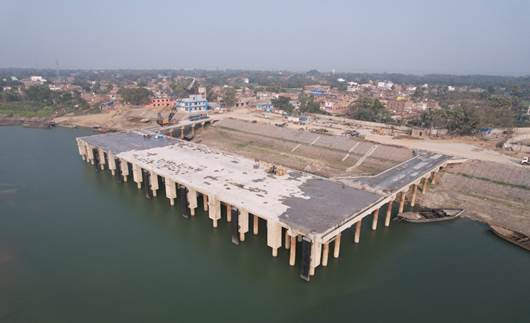
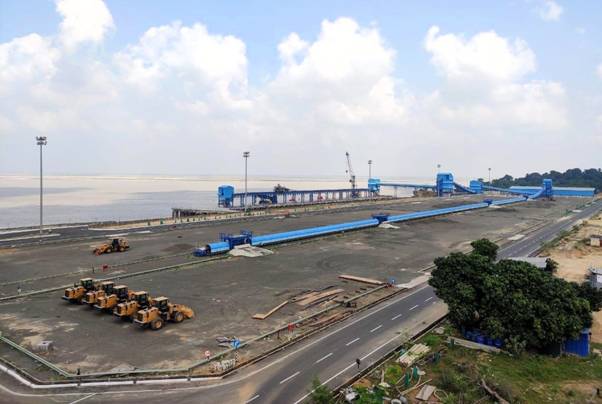
Kalughat IMT spans approximately 7 hectares and features two berths capable of handling vessels up to 1,500 deadweight tonnes (DWT), a 125-metre by 30-metre approach jetty, a 5,000-square-metre container stacking yard, a 3,000-square-metre covered warehouse, and an administrative block, all connected to National Highway 19 (NH-19) via an all-weather road. From the air, the surrounding floodplain—prone to annual inundation during the July–September monsoon—hints at operational risks from silt traps and access disruptions. The revenue-share model ties SAPL’s earnings directly to cargo volume and terminal charges, but the concession agreement includes no minimum annual throughput guarantee. If local industries in Saran, Vaishali, and Patna continue routing coal, cement, food grains, and fertilisers via road and rail, IWAI’s 38.3 per cent share could shrink to negligible levels, undermining the financial viability of the PPP.
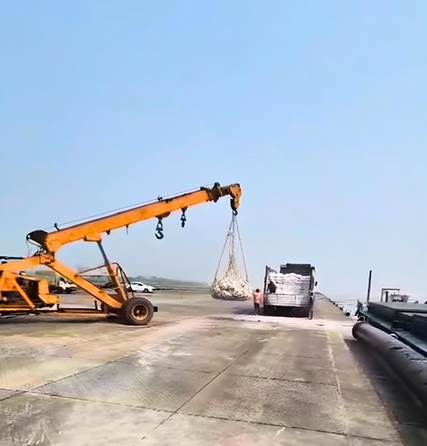
Downstream, IRC Natural Resources Private Limited tests Haldia MMT’s full design capacity of 3.08 million metric tonnes per annum (MMTPA) after securing the concession in October 2025 through open bidding. The firm offered a royalty of ₹105.03 per metric tonne of cargo handled—nearly double the second-highest bid—under an equip, operate, and transfer (EOT) model with an initial 10-year term, extendable by five years based on performance. The terminal, inaugurated by Prime Minister Narendra Modi on January 13, 2023, includes a 550-metre riverfront with two berths, mechanised material handling systems with conveyors and stacker-reclaimers, a 30,000-square-metre stockyard, and road connectivity to NH-41. The first GBFS-laden barge proves technical readiness, yet full multimodal integration awaits the completion of a 5-kilometre rail siding to Haldia Railway Station and consistent inland vessel scheduling. Environmental claims of lower carbon emissions—approximately 35 grams of CO₂ per tonne-kilometre versus 105 grams by road—falter if barges operate at partial loads or return empty in ballast, a common issue given the lack of balanced backhaul cargo from Assam to West Bengal.
A line chart tells the broader performance story: NW-1 cargo volume rose from 5.5 million metric tonnes in fiscal year 2015–16 to 13 million metric tonnes in 2022–23, with a projected 15.6 million metric tonnes in 2023–24—still a mere sliver against the dashed 200 million metric tonne target once set for 2025 under the original JMVP feasibility study. By contrast, aggregate traffic across all 111 declared national waterways reached 145.5 million metric tonnes in fiscal 2024–25, a ninefold increase from 18.1 million metric tonnes a decade earlier, buoyed by the Jalvahak scheme offering a 35 per cent reimbursement of operating costs to vessel operators on select routes. Yet NW-1 lags significantly; inland water transport (IWT) overall claims under two per cent of India’s total freight modal share, far from the five per cent target under Maritime India Vision 2030. Bottlenecks persist: seasonal low drafts dropping below 2 metres in the Patna–Varanasi stretch during March–May, a modest and still-growing barge fleet nationwide, and limited night navigation infrastructure.
Revenue models diverge sharply. Kalughat’s percentage-based share incentivises volume growth across diverse cargoes—containers, break-bulk, and liquid bulk. Haldia’s per-tonne royalty rewards high-density throughput, particularly suited to bulk commodities like slag, fly ash, and coal. Sustained capital investment in mobile harbour cranes, berth extensions, or silo storage depends on traffic consistently undercutting road and rail rates. Shippers in eastern India have long cited erratic transit times—typically 15 to 20 days from Haldia to Pandu versus 5 to 7 days by rail—as a deterrent, as reported in industry commentary; the new operators must now deliver predictable schedules and real-time tracking to justify the modal switch.
Public balance sheets bear deep scars from the upfront investment. World Bank loans funded civil works, dredging, and navigational aids, but recurring maintenance dredging (estimated at Rs 150–200 crore annually), river training structures, and aggressive marketing to attract shippers now fall entirely to concessionaires. These private entities must recover all operational and capital expenditure from user fees before any surplus flows back to IWAI under the revenue-sharing or royalty terms. The project’s closure, extended to December 31, 2025, underscores persistent milestone pressures. If cargo volumes stall, terminals worth hundreds of crores risk becoming stranded assets—high-value infrastructure depreciating without commensurate utilisation. Private partners shoulder operational shortfalls during their 10-to-15-year concession terms, but upon handback, IWAI inherits facilities potentially in degraded condition if traffic disappoints, saddling the public entity with refurbishment burdens or write-offs. This pattern echoes idle berths at Varanasi MMT and Sahibganj MMT, where underutilisation has left cranes rusting and stockyards empty. General critiques of Indian PPP frameworks highlight the structural asymmetry: without volume guarantees or demand-risk sharing, concessionaires may curtail investments in equipment upgrades or route promotions, heightening the prospect of fiscal overhangs as governments absorb residual liabilities post-handback.
Success, however, would redraw the national logistics cost map. Freight rates contrast sharply: ₹1.5 per tonne-kilometre by road, ₹1 by rail, ₹0.5 by inland waterway. Fuel efficiency stacks even higher: one litre of diesel moves 24 tonne-kilometres by truck, 95 by rail, and 150 by barge. National logistics costs—currently 14 to 18 per cent of gross domestic product (GDP)—could slide toward single digits, aligning with China’s 8 per cent or the United States’ 9 per cent. Overburdened national highways and dedicated freight corridors, presently carrying over 70 per cent of domestic cargo, would experience measurable relief. Commodities like granulated blast furnace slag, fly ash, food grains, and construction aggregates could be rerouted from diesel-dependent trucks to low-draft barges, yielding significant reductions in particulate emissions and easing trade flows to the northeast and Bangladesh via Protocol on Inland Water Transit and Trade (PIWTT) routes. Yet NW-1’s current modal share of just 0.1 per cent demands far more than Jalvahak rebates; it requires aggressive policy interventions—dedicated freight corridors for barges, priority berthing at ports, and long-term shipper contracts—to embed inland waterways in supply chains long conditioned to road-first logic.
For now, the river carries its first private loads under new management. Quarterly throughput reports, royalty receipts, and industrial rerouting patterns will reveal within the next 12 to 18 months whether the Ganga corridor evolves into a self-sustaining commercial artery or remains a heavily subsidised canal reliant on government incentives and periodic bailouts.
– global bihari bureau