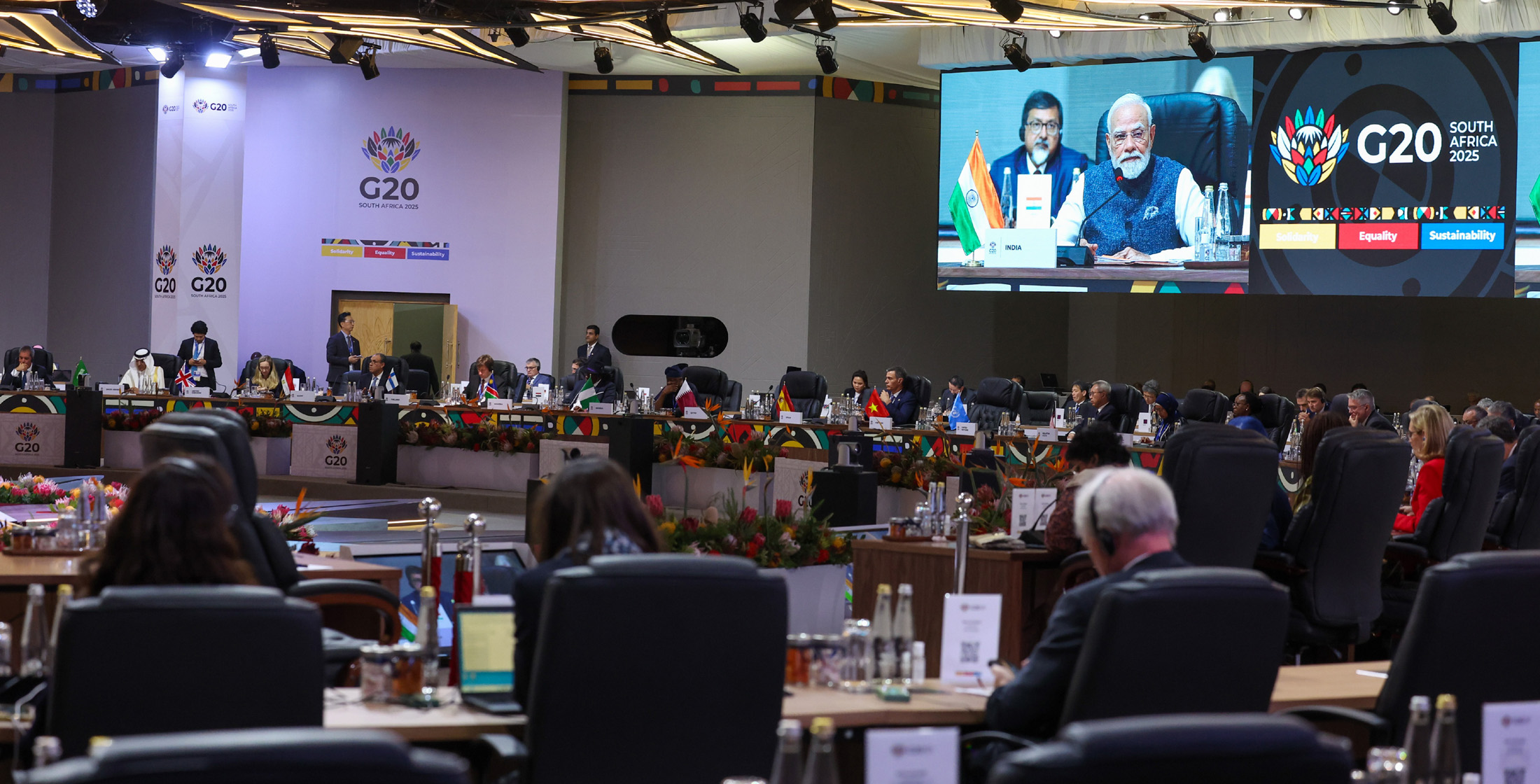
Prime Minister Narendra Modi addressing at the Session-3 of the G20 Leaders Summit at Johannesburg, in South Africa on November 23, 2025.
G20 Boosts India’s Global Role
Johannesburg: The first-ever G20 Summit on African soil, which concluded today with the adoption of a Leaders’ Declaration centred on solidarity, equality and sustainability, marked a notable gathering for India. Prime Minister Narendra Modi engaged in multiple sessions and bilateral discussions that highlighted areas of strategic alignment and potential collaboration.
The Summit Declaration strongly backs disaster resilience measures that directly support India’s priorities: voluntary high-level principles on disaster risk reduction, wider use of pre-arranged finance tools such as parametric insurance and catastrophe bonds, the Recovery Readiness Framework, and the push for universal early-warning coverage by 2027. It acknowledges synergies with the Sendai Framework for Disaster Risk Reduction and the 2030 Agenda for Sustainable Development, while commending South Africa’s roadmap under the United Nations Early Warnings for All Initiative.
On debt sustainability, the text reaffirms the timely implementation of the Common Framework, calls for greater private-creditor transparency, endorses an upgraded International Monetary Fund-World Bank methodology for low-income countries, and supports crisis-resilient clauses and capacity-building. Though India is not a debtor under the Common Framework, the strengthened global architecture reduces systemic risk and enhances the toolkit New Delhi can extend to Global South partners.
The section on just energy transitions recognises stark African access gaps and reaffirms support for tripling renewable capacity and doubling energy efficiency by 2030, scaled-up concessional and blended finance, voluntary technology transfer, South Africa’s Energy Security Toolkit, the Voluntary Infrastructure Investment Action Plan for clean cooking, and the Mission 300 platform to connect 300 million Africans to electricity by 2030. These commitments align closely with India’s own renewable targets and advocacy for affordable finance and technology access for developing countries.
The newly launched G20 Critical Minerals Framework stands out as particularly significant for India. As a major importer facing rising demand and supply-chain risks, New Delhi benefits from the emphasis on diversified sources, local beneficiation at source, resilient value chains, non-discriminatory standards, and preservation of producer-nation sovereignty — provisions that open space for downstream players to secure stable, sustainable supplies.
Prime Minister Modi used the platform to position India as a thought leader on technology governance. In the session on critical minerals, decent work and Artificial Intelligence (AI), he advocated human-centric, open-source and globally inclusive models, announced the AI Impact Summit to be hosted in India in February 2026 under the theme “Welfare for all, Happiness for all”, and proposed a future G20 Global Framework for Talent Mobility. Leaders from Japan, Canada, Italy and IBSA (India, Brazil, South Africa) partners promptly signalled support for the AI Summit.
On the sidelines, India advanced several bilateral tracks:
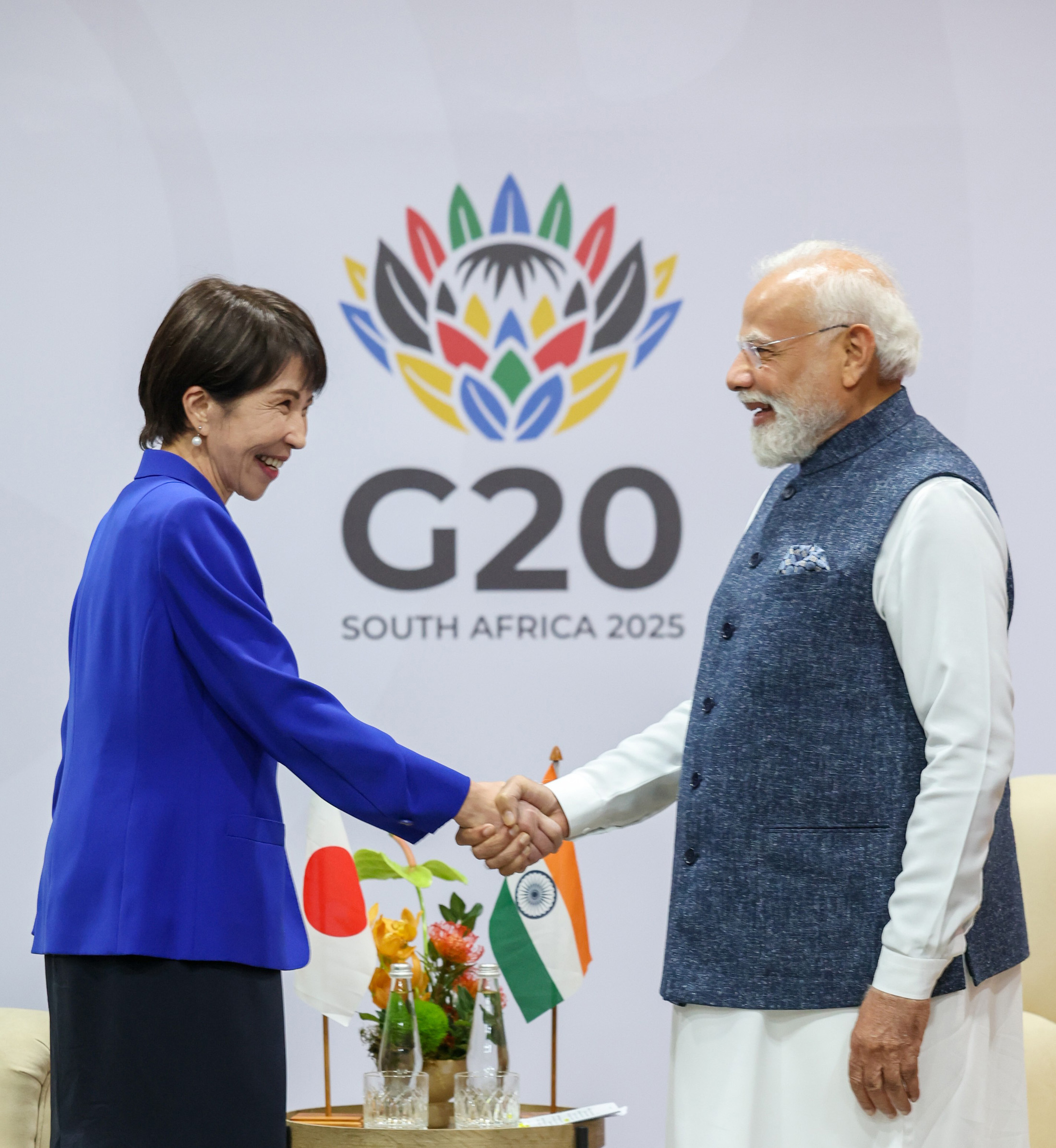
– Japan: deepened cooperation in defence, semiconductors, AI and critical minerals. In his meeting with Japanese Prime Minister Sanae Takaichi, the latter’s support for India’s upcoming AI Impact Summit in February 2026, themed around welfare and happiness for all, indicates potential for collaborative opportunities in strategic sectors.
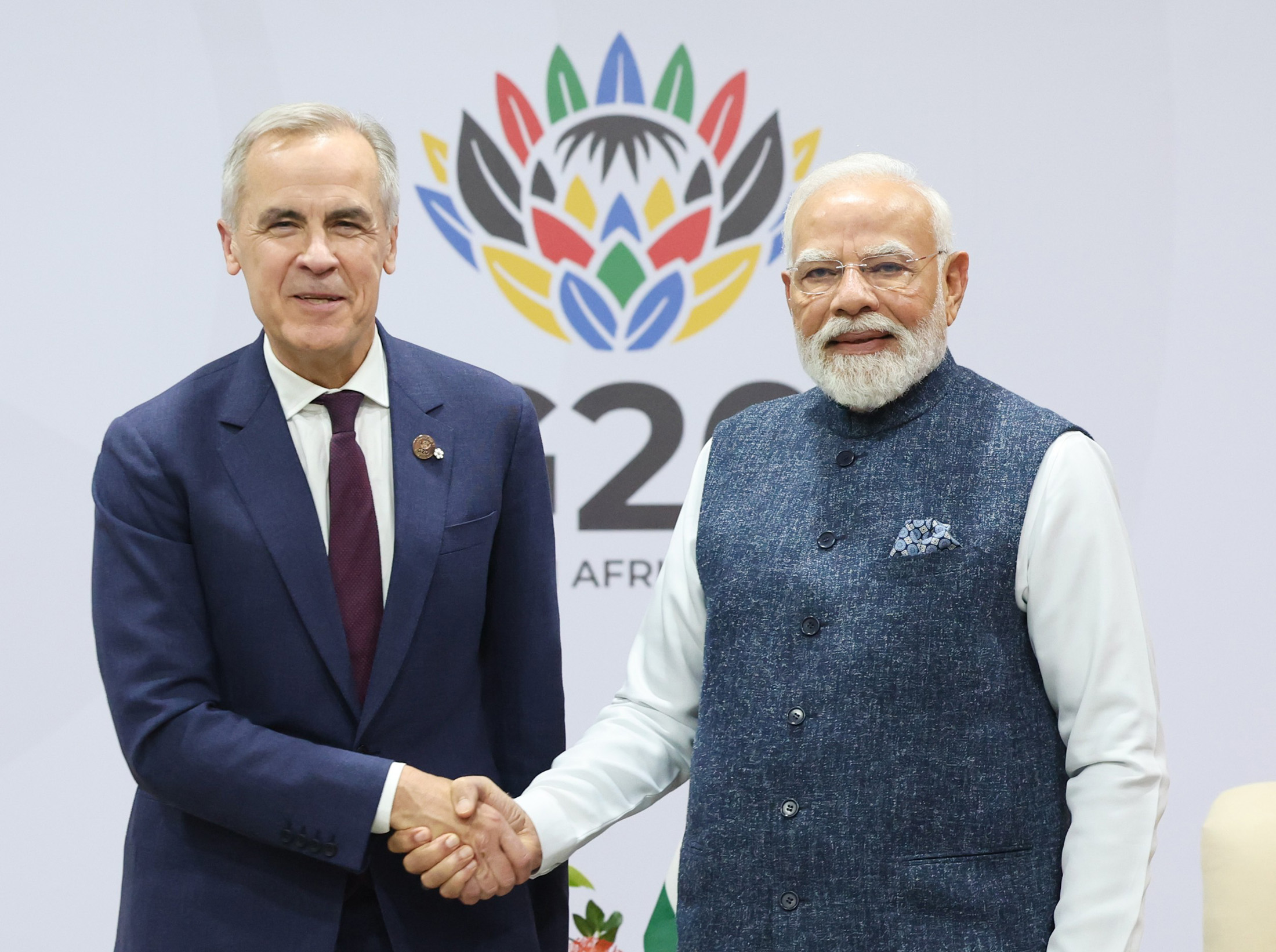
– Canada: launched the Australia-Canada-India Technology and Innovation (ACITI) Partnership, which focuses on critical technologies, nuclear energy and supply chain diversification. The interaction with Canadian Prime Minister Mark Carney reviewed progress in ties, and both Modi and Carney agreed to begin Comprehensive Economic Partnership Agreement negotiations, aiming to double bilateral trade to USD 50 billion by 2030, and noted ongoing talks on uranium supply, while Carney also backed the AI Summit.
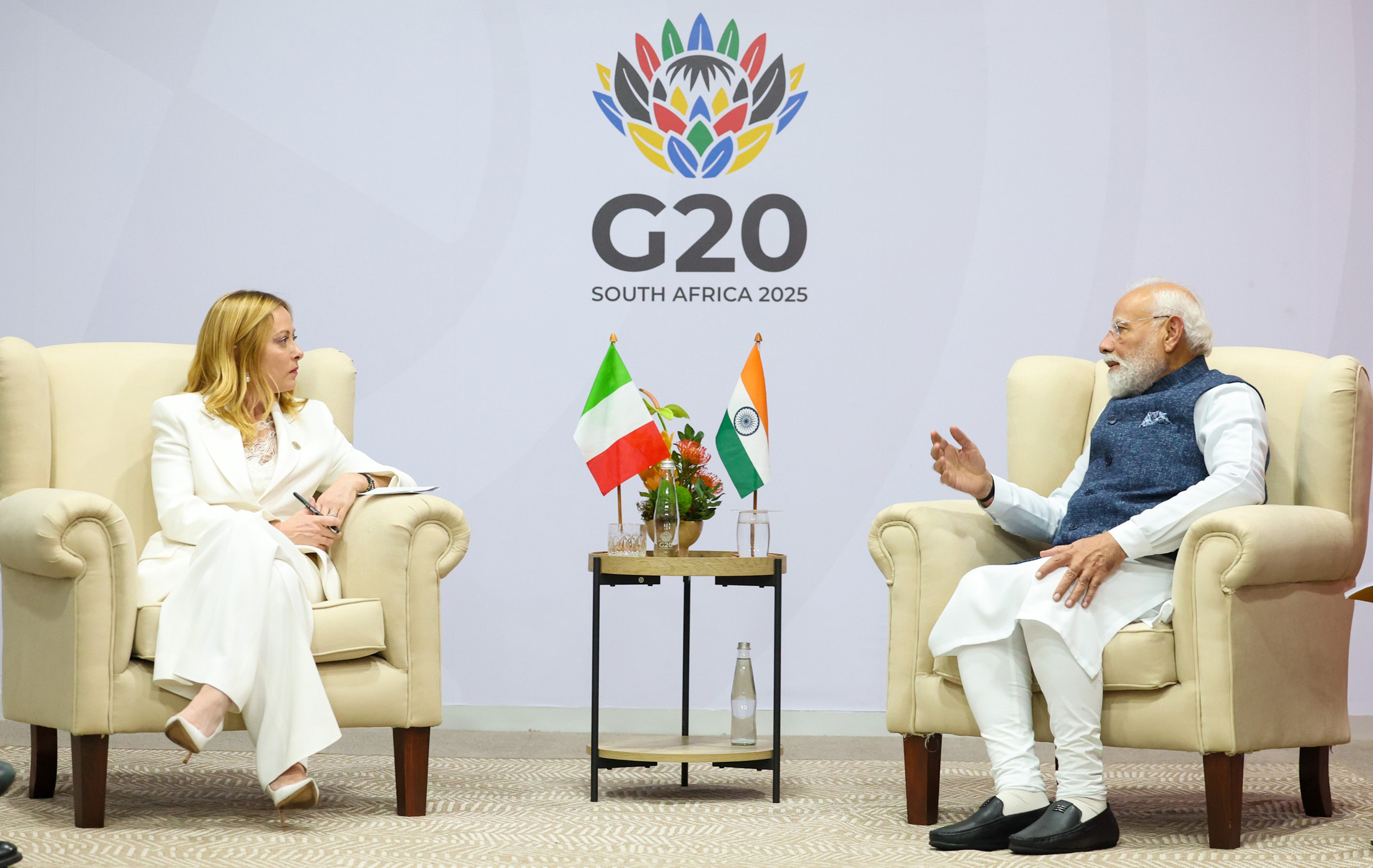
– Italy: The bilateral with Italian Prime Minister Giorgia Meloni included the adoption of a joint initiative to counter terrorism financing, building on the 2025-29 Joint Strategic Action Plan, with reviews of cooperation in trade, defence, space and education. Meloni’s support for an India-European Union Free Trade Agreement (EU AFTA) and the AI Summit highlights avenues for economic and technological gains.
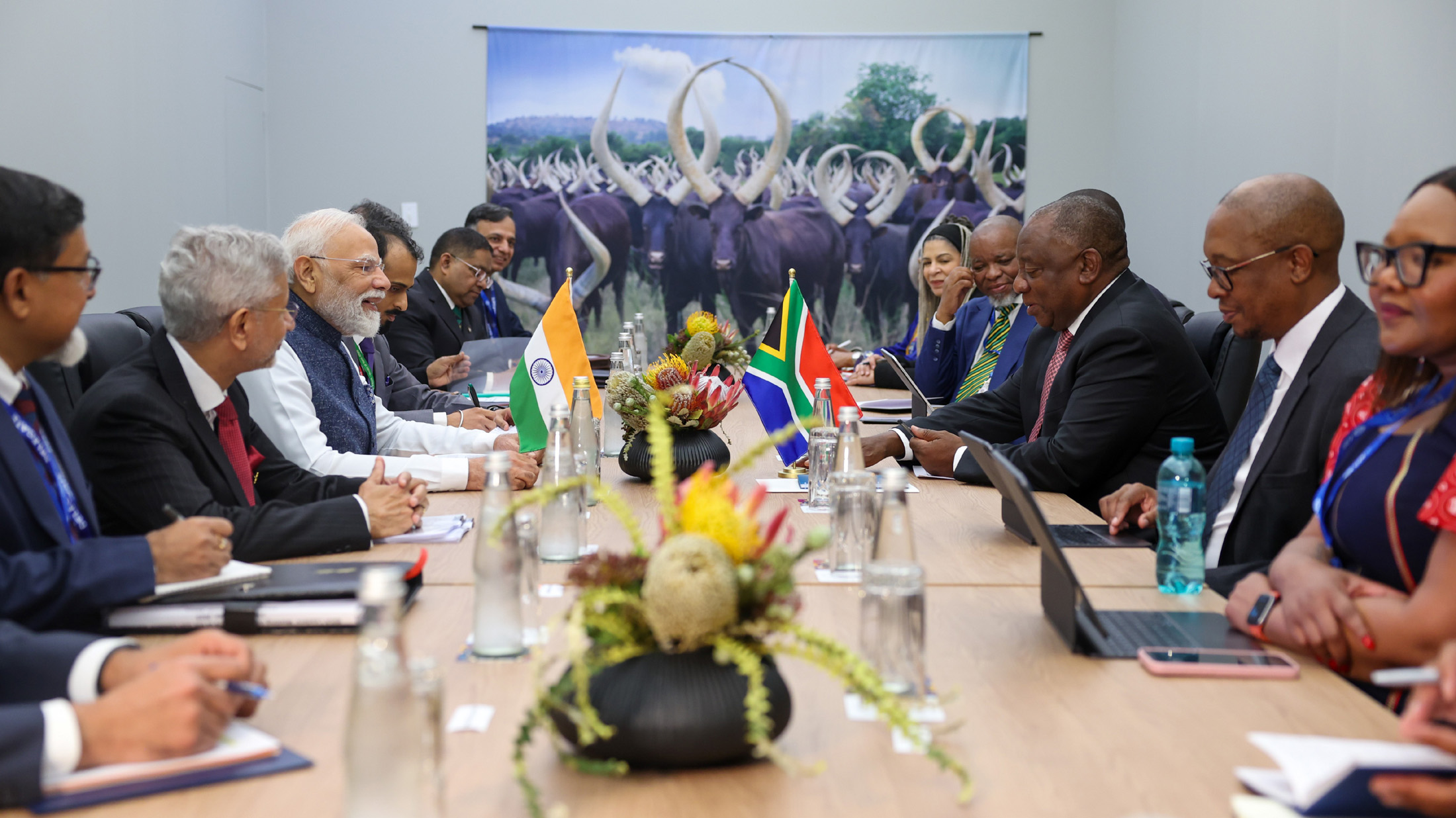
– South Africa: In discussions with South African President Cyril Ramaphosa, appreciation was expressed for building on the New Delhi G20 outcomes, with focus on AI, digital public infrastructure and critical minerals, alongside commitments to facilitate investments in infrastructure, mining and start-ups. The relocation of cheetahs from South Africa to India and an invitation to join the International Big Cat Alliance reflect environmental cooperation, while South Africa’s pledge of support for India’s 2026 BRICS (Brazil, Russia, India, China, South Africa)chairmanship strengthens Global South advocacy.
At the IBSA (India, Brazil, South Africa) Leaders’ Meeting, Modi emphasised the group’s role in connecting continents and advancing human-centric development, calling for UN Security Council reform and a unified stance against terrorism. Proposals included institutionalising national security advisors’ meetings and establishing an IBSA Digital Innovation Alliance to share infrastructure like Unified Payments Interface (UPI) and CoWIN (Covid Vaccine Intelligence Network), as well as an IBSA Fund for Climate-Resilient Agriculture. Invitations to the AI Summit were extended, positioning India to lead in shaping safe AI norms and talent mobility frameworks, building on the New Delhi Summit progress. The trilateral joint statement with Australia and Canada on the ACITI Partnership further underscores collaboration in green energy, critical minerals and AI, with officials set to convene in early 2026.

Taken together, the Johannesburg outcomes and engagements strengthened India’s voice on technology, energy and critical minerals, expanded its strategic partnerships, and secured international endorsement for initiatives it will lead in the coming year, reinforcing New Delhi’s narrative of sustainable development, trusted trade, fair finance and inclusive progress.
– global bihari bureau