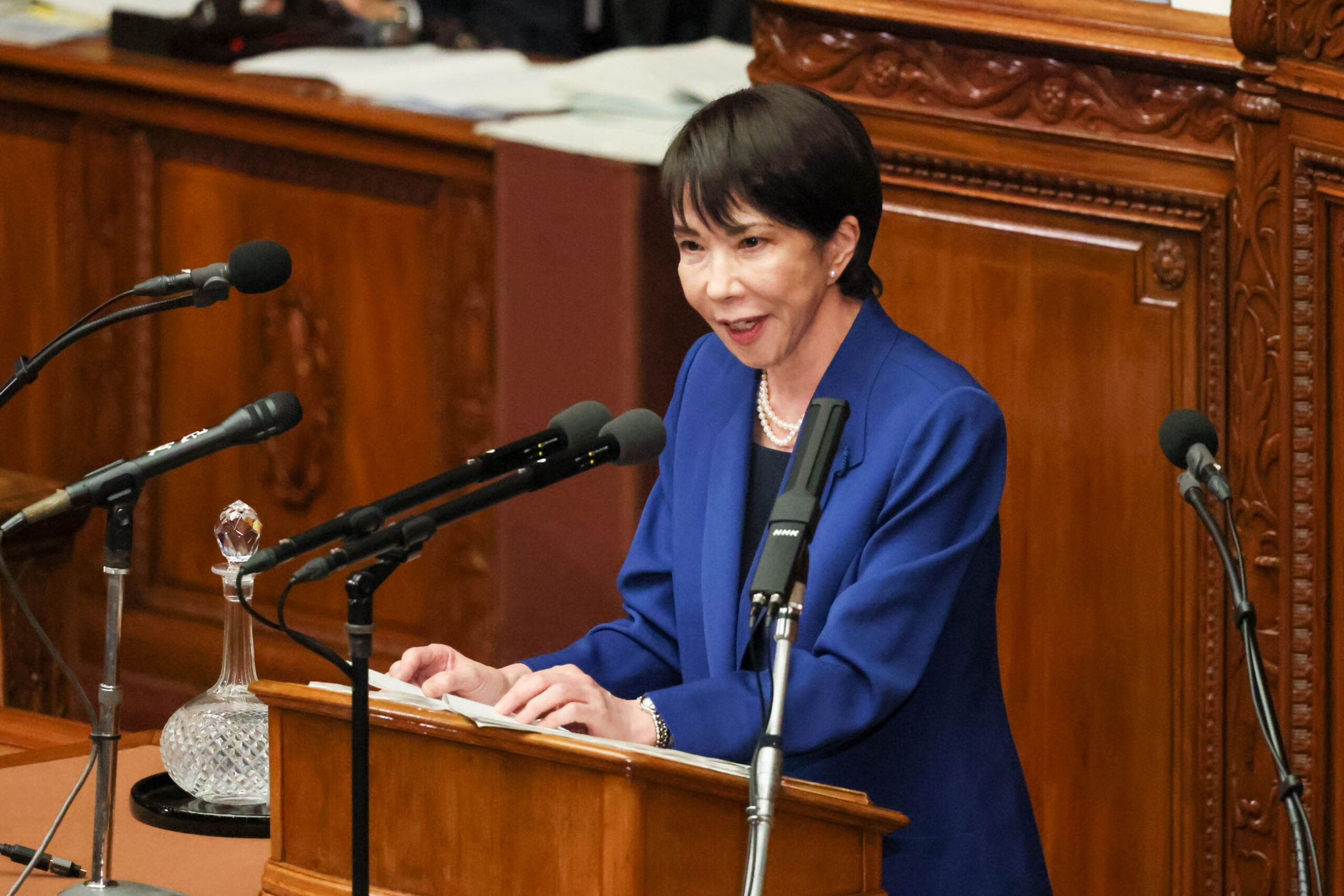
Japanese Prime Minister Prime Minister Takaichi Sanae
Takaichi’s Taiwan Warning Triggers Beijing’s Quiet Chill
Tokyo/Beijing: On the evening of November 7, 2025, in the hushed chamber of Japan’s Lower House Budget Committee, Prime Minister Sanae Takaichi delivered a sentence that now echoes across East Asia like a cracked bell. “A contingency in the Taiwan Strait,” she said without hesitation, “would constitute a situation threatening the survival of Japan.” The wording is not entirely new—previous leaders had circled it cautiously—but never with this bluntness, never from a prime minister whose political roots lie deep in the revisionist wing of the Liberal Democratic Party and who has long described Taiwan as Japan’s “lifeline.” In Beijing, the statement landed not as continuity but as a deliberate escalation. Within days, the temperature of Sino-Japanese relations, already cool, dropped toward deep freeze.
What followed has been a cascade of consequences no one in Tokyo openly foresaw, and few in Beijing appear eager to reverse. Dozens of Japanese concerts have disappeared from venue listings in Beijing and Shanghai, with promoters citing sudden venue unavailability or vague safety concerns rather than any explicit order. Japanese films, from animated family features to live-action dramas, remain stuck in regulatory limbo, their release dates quietly evaporating. Industry and media sources report significant reductions in flights between China and Japan extending into spring 2026, though when asked directly on November 26, Foreign Ministry spokesperson Mao Ning simply referred reporters to “competent authorities” without confirming or denying the cuts. Many Chinese travel agencies have suspended or sharply curtailed Japan-bound bookings. A travel advisory warns citizens of heightened risks in Japan, pointing to allegations by Chinese authorities of repeated assaults on Chinese nationals—including the recent arrest of five suspects in one case—and a broader climate of hostility, even as Japanese police data show no dramatic year-on-year rise in serious crimes against Chinese visitors, a discrepancy Beijing dismisses as beside the point.
The heart of the dispute is brutally straightforward. Takaichi’s phrasing triggers Japan’s 2015 security laws, which permit limited collective self-defence when an ally is attacked, and Japan’s own existence is judged to be at stake. Past cabinets insisted the bar had not yet been met for Taiwan. Takaichi cleared it in public and has refused to retreat. On November 25, 2025, her government issued a written reply to parliament: no change in policy on existential crises or collective self-defence. Beijing heard evasion. Mao Ning’s response carried a note of weary disappointment: Japan keeps repeating “consistent position” and “unchanged policy,” yet when asked to spell out exactly what that position is and whether it fully respects the one-China principle agreed in 1972, Tokyo falls silent. In Beijing, the silence feels like a calculated gamble that the storm will blow over.
That silence—or Beijing’s interpretation of it—has become the true fault line. Tokyo believes it is only acknowledging geographic reality: most of its energy imports and a huge share of its semiconductors pass through waters beside Taiwan. Beijing hears a refusal to state plainly that Taiwan is an internal Chinese affair and that Japan will never treat a Taiwan contingency as grounds for military action. The gap is no longer academic; it is the narrow, dangerous space where deterrence meets red line.
The chill has seeped into everyday life in ways that feel both orchestrated and deniable. Music fans in China open apps to find refund notices instead of concert dates. Film distributors watch schedules collapse without a single official rejection letter. University exchange offices postpone departures “until the atmosphere improves.” None of the measures arrives with a government stamp reading “retaliation,” yet their timing is too neat to be a coincidence. Mao Ning’s consistent refrain—“the erroneous remarks gravely hurt the feelings of the Chinese people and poisoned the atmosphere for exchanges”—is delivered calmly, almost regretfully, as if Beijing is merely observing a natural consequence rather than engineering it.
The wider chessboard adds further tension. Hours after her November 25 Diet appearance, Takaichi took a warm telephone call from United States President Donald Trump, who briefed her on his recent conversation with Chinese President Xi Jinping and promised continued coordination on Indo-Pacific challenges. The next day, Mao Ning described the Trump–Xi channel as positive and constructive, then added with clinical precision that the Trump–Takaichi call was strictly a matter between Washington and Tokyo. The subtext was unmistakable: Beijing will manage its relationship with the United States on its own terms and will not allow Japan to shelter behind America’s umbrella on the Taiwan question.
Beneath the diplomatic sparring runs an older argument about history. Some Japanese voices have revived the claim that Japan surrendered to the Republic of China (ROC) in 1945, not the People’s Republic of China (PRC) founded four years later, and therefore Beijing has no standing to invoke postwar agreements on Taiwan. Mao Ning’s rebuttal is delivered like a patient professor correcting a stubborn student: the subject of international law called “China” never changed; only the government did. The Potsdam Proclamation and Japan’s Instrument of Surrender refer simply to “China,” and the 1972 Joint Communiqué explicitly recognises the PRC as its sole legal government. To question that continuity, she says, is to distort both history and law.
For now, both sides appear locked in a test of endurance. At home, Takaichi’s approval numbers—battered earlier by inflation and a weak yen—have edged upward as voters reward her plain speaking. In China, public anger, whether genuine or amplified, reminds leaders that any hint of weakness on Taiwan is politically toxic. Behind closed doors, quieter voices in both foreign ministries still hunt for an exit ramp: perhaps a carefully worded Japanese clarification that satisfies Beijing without handcuffing Tokyo, or a gradual thawing of cultural visas once winter travel slows. Yet with each passing day, the ice thickens, and the ladder back to warmer relations becomes harder to reach.
Winter is settling over the East China Sea, carrying a question that will hover over Asia well into 2026 and beyond: can two proud nations, bound by geography and scarred by history, find a way to talk about survival and sovereignty in the same breath without one day meaning it with missiles instead of memos? For now, the only certainty is the lingering echo of a single sentence spoken in a Tokyo committee room, still bouncing unanswered off the walls of Zhongnanhai.
– global bihari bureau