Women-Led Yamuna Samvad Yatra Begins from Pachnada
Grassroots Women Lead Yamuna Revival Dialogue
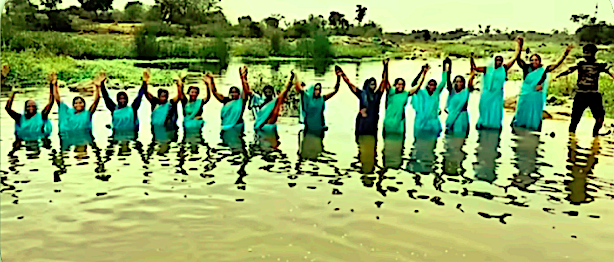
Jhansi: ‘Jal Sahelis‘ drawn from a wider network of thousands of rural women across Bundelkhand and the Yamuna Valley will inaugurate the Yamuna River Samvad Yatra on January 29, 2026, extending more than a decade of village-level water stewardship into a river-wide public dialogue focused on the revival of the Yamuna. The initiative brings together women who have worked for years in some of India’s most water-stressed regions, translating practical experience in conservation and community mobilisation into a collective engagement with one of the country’s most culturally revered rivers.
Across Bundelkhand, these women have led the revival of dried ponds and johads, constructed small check dams and contour structures, restored traditional rainwater harvesting systems and strengthened local governance around shared water resources. Their work has contributed to improved water availability in numerous villages and has received formal recognition from national institutions, with their efforts being acknowledged by the concerned ministry and referenced on multiple occasions by the Prime Minister. This accumulated experience now underpins the Yamuna River Samvad Yatra, which seeks to carry local water wisdom beyond individual villages and along the length of the river itself.
The yatra is planned as a 500-kilometre foot journey beginning at Pachnada Dham in Jalaun district of Uttar Pradesh, where the Yamuna meets four major tributaries—Chambal, Sindh, Kunwari and Pahuj—before flowing onward toward Delhi. This confluence, often seen as a point where the river regains vitality, has been chosen as the starting point for a journey that will move downstream through villages, towns and pilgrimage centres, concluding at Vasudev Ghat in Delhi in the form of a Yamuna Katha that brings together voices gathered along the route.
Designed as a moving corridor rather than a single static march, the yatra will be carried forward by a core group of Jal Sahelis walking each stretch, with wider participation taking shape locally through river-side conversations, community dialogues, cultural interactions and shared reflection. Along the way, participants will engage with farmers, students, religious groups and local residents, documenting concerns related to pollution, encroachment, declining flows and the loss of traditional water bodies, while also recording local suggestions for restoring the river’s continuity and cleanliness.
The Yamuna holds a central place in India’s civilisational and spiritual life, deeply embedded in faith, folklore and everyday practice. It is inseparable from the stories of Lord Krishna, the sacred landscapes of Vrindavan and Mathura, and centuries of agricultural dependence along its banks. At the same time, the river today faces acute ecological stress. Large sections, particularly in and around Delhi, are marked by heavy pollution, with a significant share of the river’s contamination concentrated within the capital’s short stretch. In some areas, dissolved oxygen levels have fallen close to zero, affecting aquatic life and disrupting cultural and religious practices, including major rituals that traditionally depend on clean flowing water.
Climate variability has further intensified these pressures. Rising temperatures have altered glacial dynamics at the Yamunotri source, while erratic monsoons have brought sharper floods in some periods and prolonged dry spells in others. In Bundelkhand and parts of western Uttar Pradesh, declining rainfall, increased evaporation and falling groundwater levels have reduced the river’s capacity to dilute pollutants, placing additional strain on livelihoods linked to farming, fisheries and drinking water. These interconnected challenges form a central theme of the Samvad Yatra, which seeks to link local experience with broader ecological realities through sustained conversation.
The Yamuna River Samvad Yatra builds on the momentum of an earlier Jal Saheli Yatra held in 2025, which covered more than 300 kilometres and demonstrated the reach of women-led mobilisation in generating public engagement on water issues. Drawing from that experience, the Yamuna journey places emphasis on listening as much as speaking, encouraging shared responsibility rather than confrontation, and complementing ongoing government efforts by focusing on awareness, behaviour and community ownership.
The inauguration and opening session of the yatra will be held on January 29, 2026 from 10:00 AM onwards at Pachnada Dham, Kanjausa village, Jalaun district, Uttar Pradesh. From there, the journey will proceed downstream through key stretches of the Yamuna basin before entering Delhi, where the collective insights and concerns gathered along the route are expected to be articulated as shared commitments for the river’s revival.
As the Jal Sahelis set out from Pachnada, the Yamuna River Samvad Yatra seeks to renew the relationship between the river and its people. Rooted in lived experience and guided by women who manage water in their daily lives, the journey aims to keep the Yamuna at the centre of public consciousness, carrying forward the hope that it can once again flow with continuity, dignity and life.
– global bihari bureau