 By
By Walking 530 km for Yamuna and the Planet
Jal Sahelis Show the Power of Giving for Water
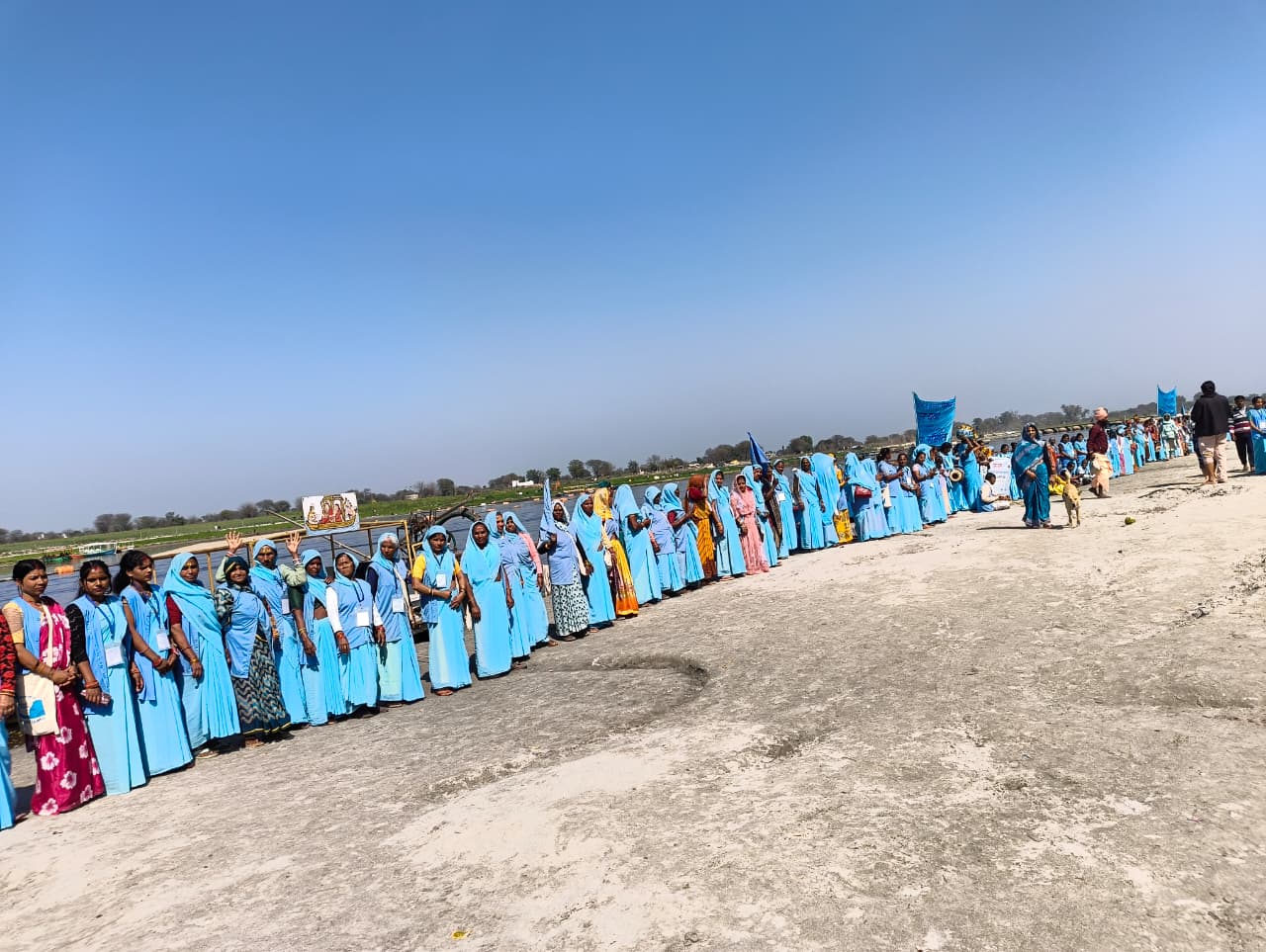
This year’s International Women’s Day campaign theme is ‘Give to Gain.’ And who embodies this better than the Jal Sahelis of Bundelkhand, best exemplified by their 530-kilometre-long Aviral Nirmal Yamuna Yatra. This yatra began from Pachnada in Jalaun district of Uttar Pradesh and culminated on Feb 26, at Vasudev Ghat, New Delhi.
The ‘Give To Gain’ Campaign encourages a mindset of generosity and collaboration. When people, organisations, and communities give generously, opportunities for women increase. While contributions come in various forms, contributing to women’s advancement helps create a more supportive and interconnected world. The philosophy is that giving is not a subtraction; it’s intentional multiplication.
But what if the women themselves emerge from a challenging and stifling rural environment, and come forward to give? For gain, not for themselves alone, but for their village and other villages spread across several districts, and then, like they did early this year, leave their homes for 30 days to a lifeline of India, the Yamuna? This is what the Jal Sahelis (women friends of water) did and in doing so, spread their wings.
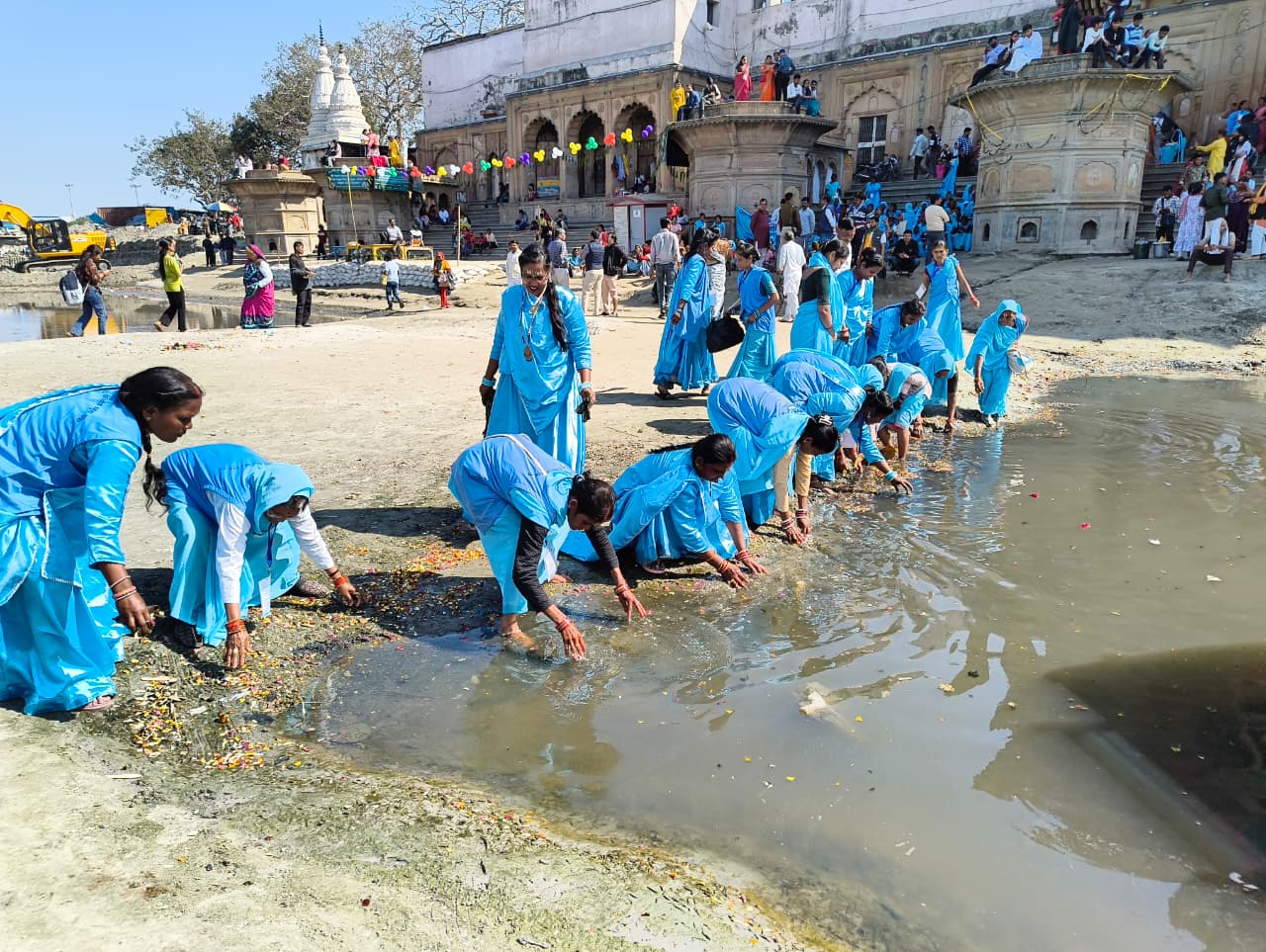
The inter-relationship between women and access to water, and water-related disasters such as drought or flood, is a complex web. Lack of access to water forces women in rural areas to walk kilometres for that elusive pot of water, facing taunts, abuse and violence. This is a daily stressful scenario, coupled with the uncertainty of whether their journey will bear fruit. Carrying heavy pots of water on their heads, they experience back pain. Personal hygiene goes for a toss; there is an increased risk of infection. Families are disrupted as the able-bodied workforce leaves the village to work as labour elsewhere. Livelihoods are lost. Food is hard to access, and a nutritious diet is almost impossible. Anaemia exacerbates, and women are constantly fatigued. Some pregnancies are lost, and the children born face increased risk of malnourishment, poor growth and stunting. Children drop out of school and turn to labour. Child marriages increase, so does trafficking. Water for women is thus deliverance, freedom, well-being and dignity.
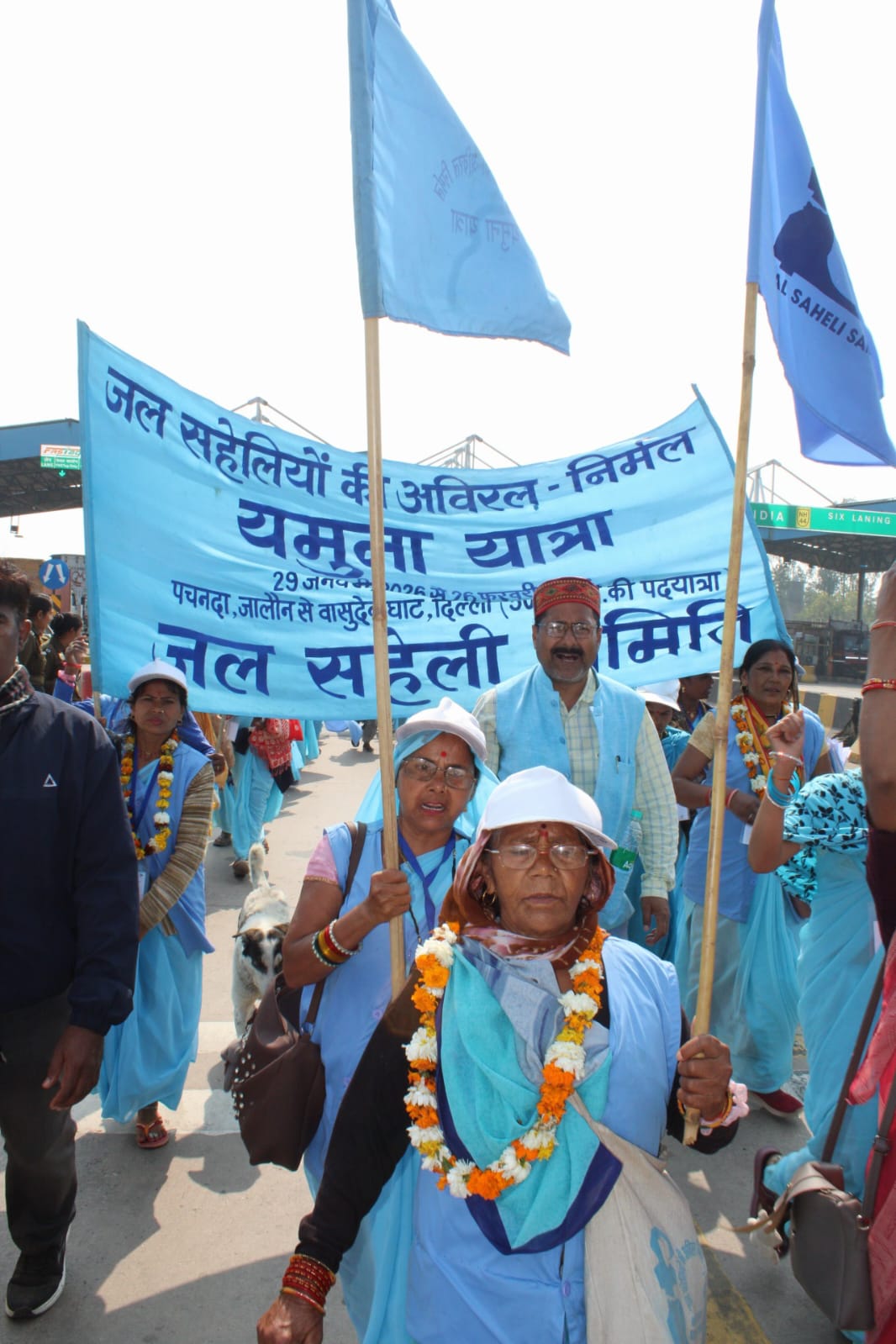
On January 29, a cold, wintry day, the Jal Sahelis stepped out of their homes from different villages, leaving their families behind, to raise their voice against what is now a global crisis, or as the UN recently called it: Water bankruptcy.
The women walked 15-20 km every day, interacting with common people, governments, civil society actors and youth. They raised awareness and responded to questions. Along the riverbanks, residents shared their personal and livestock health issues due to river pollution. One persistent complaint was the constant foul odour, foam formation and the declining water usability. They held jal chaupals and sessions in schools. All along the yatra, they observed the river, the challenges that this river faced, and possible action points to revive the river and enable local water security. The Jal Saheli band composed music on the spot, given the different scenarios they observed. Their inspirational songs remained a constant source of encouragement.
Some of the major challenges the Yamuna faces, as identified by them included solid waste dumping, untreated sewage and drain discharges, industrial and chemical pollution, agriculture runoff, degradation of riverbanks and floodplains and decline of traditional water bodies.
The Jal Sahelis identified eight huge traditional waterbodies near the river that had historically recharged groundwater, provided base flows to the river, and enabled local water security. Unfortunately, these were now in various stages of degradation due to neglect, siltation, and encroachment. The Jal Sahelis suggested that their revival could ease pressure on the river and contribute to the flows of the Yamuna.
Some other suggestions that they put together included (a) Drain Mapping and Sewage Treatment (b) Community awareness and behaviour change through expanding Nadi Chaupals, school awareness efforts and village campaigns for long term community stewardship for river protection (c) Strengthening partnerships with universities, civil society organizations, and local governments (d) Decentralized waste management (f) Formation of local river protection committees (e) Promotion of eco-friendly agricultural practices such as organic farming and water-efficient irrigation.
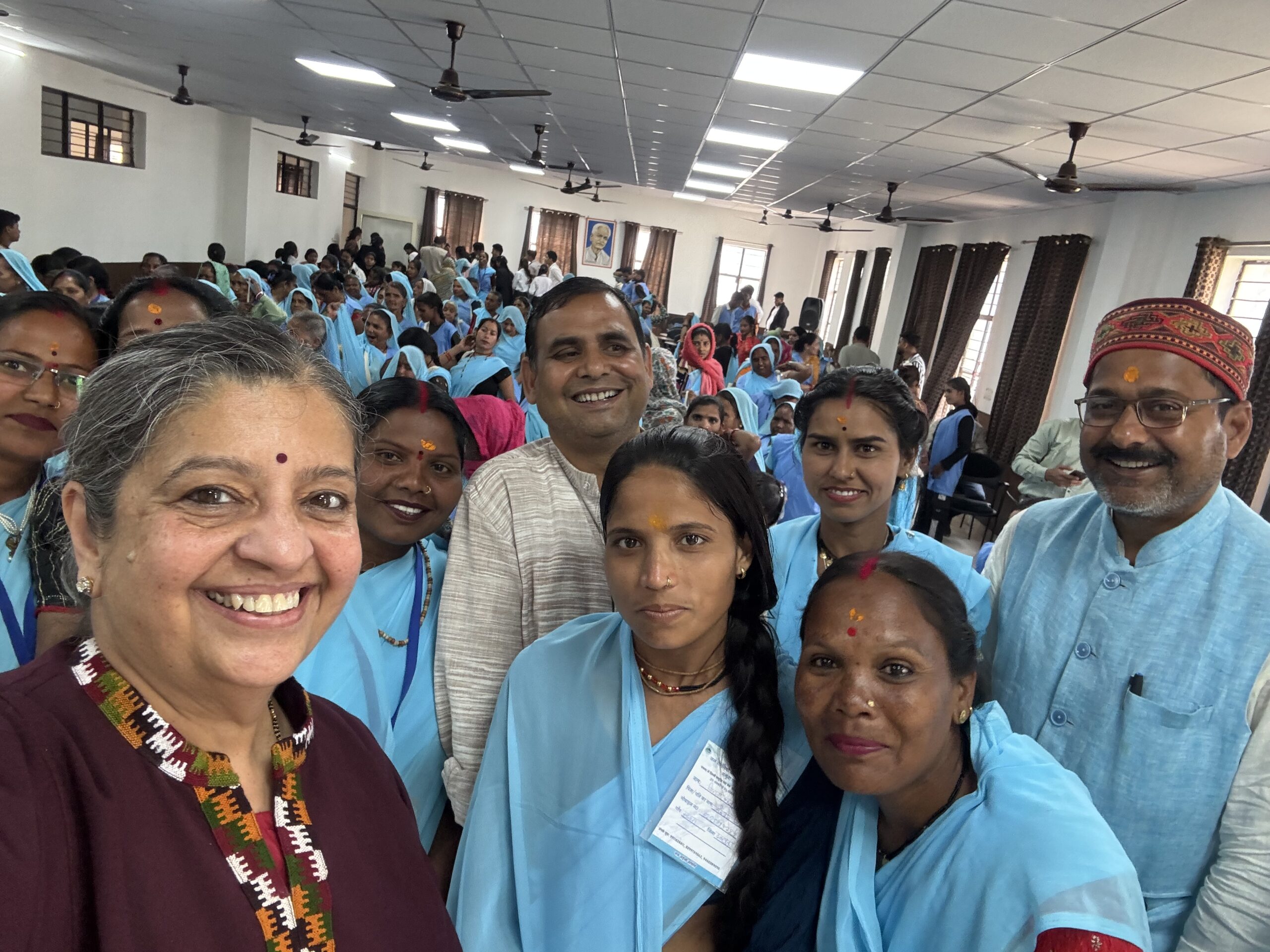
Pushpa Kushwaha, National President of the Jal Saheli Committee, reiterated that the journey was a solemn pledge to save water. Said Jal Saheli Lakshmi, “Water is the foundation of life itself. Without water conservation, she said, there can be no sustainable future. The mission of the Jal Sahelis is to reconnect people with the value of water and awaken a sense of responsibility toward nature.” Having endured years of water scarcity in Bundelkhand, these women had embarked to lead society toward awareness and action.
The women shared some of the challenges they faced when they left home and what kind of support they got. One Saheli left her child with special needs at home with the blessings of her family. Another’s father-in-law insisted that she go for this spiritual work. A mother-in-law and daughter combination completed the journey by taking turns.
The sense of accomplishment was palpable, and their energy resonated. Proud of their walk, in one voice, they all said, “Yes, the yatra had its physical challenges, and initially, we were worried: Where would we go to relieve ourselves? Would there be water available for our hygiene needs? Looking at the state of the Yamuna, all that pains us now is the state of our Yamuna. That is all we can think of. Physical discomforts don’t affect us anymore. We will do what it takes to revive this spiritual heritage of ours.”
On their return to their villages, these women in their blue sari uniforms are being felicitated in their village and their district. What stories they would be having to share!
Just how do the Jal Sahelis (women friends of water) seamlessly fit into this theme, without even knowing this? The answer lies perhaps in their self-realisation, and the realisation that the planet needs water, and that rivers are veritable civilizational cradles, without which there is little hope of survival.