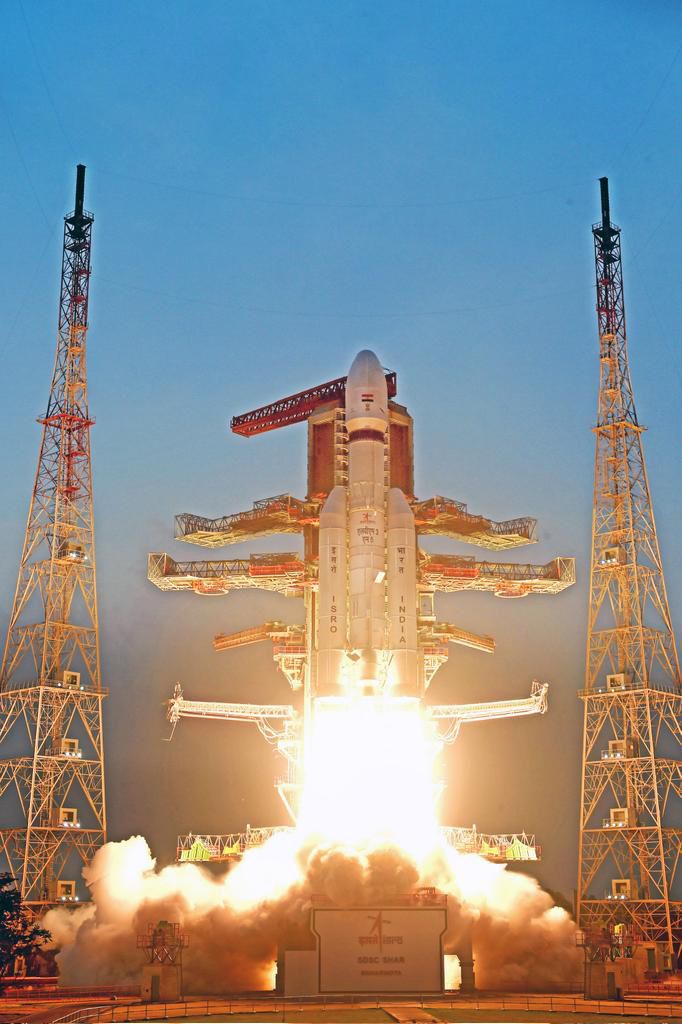
LVM3-M5 Places CMS-03 in Orbit
Boosts Naval Links, Strengthens India’s Space Communication
Sriharikota: India’s heaviest communication satellite, CMS-03, was successfully launched into Geosynchronous Transfer Orbit (GTO) from the Satish Dhawan Space Centre here today by the Indian Space Research Organisation (ISRO). The mission, carried out by the Launch Vehicle Mark-3 (LVM3) on its fifth operational flight (LVM3-M5), achieved a flawless orbital insertion described by ISRO as a “perfect injection.”
CMS-03, also designated GSAT-7R, weighs approximately 4,400 kilograms and is India’s heaviest communication satellite to date. It represents a major technological advancement in India’s space communication capabilities and incorporates numerous indigenously developed, state-of-the-art components specifically designed to meet the Indian Navy’s operational requirements. Its successful deployment underscores India’s growing self-reliance in high-end space technology under the national Aatmanirbhar Bharat (self-reliant India) vision.
Developed as a multi-band communication satellite, GSAT-7R will provide robust telecommunication coverage across the vast Indian Ocean Region, including the Indian landmass. Its advanced payload includes high-capacity transponders capable of supporting voice, data, and video links across multiple communication bands. This will enable seamless and secure connectivity between naval ships, submarines, aircraft, and Maritime Operations Centres, significantly strengthening the Indian Navy’s ability to maintain real-time coordination, data sharing, and surveillance across the region.
The satellite is designed to deliver enhanced bandwidth and resilient communication links critical for the Navy’s network-centric operations. It will not only support mission-critical naval communication but also bolster the country’s maritime domain awareness, ensuring secure, uninterrupted, and high-capacity communication even under complex security environments. In an era of evolving maritime challenges, GSAT-7R reflects the Navy’s determination to safeguard India’s maritime interests using advanced indigenous technologies.
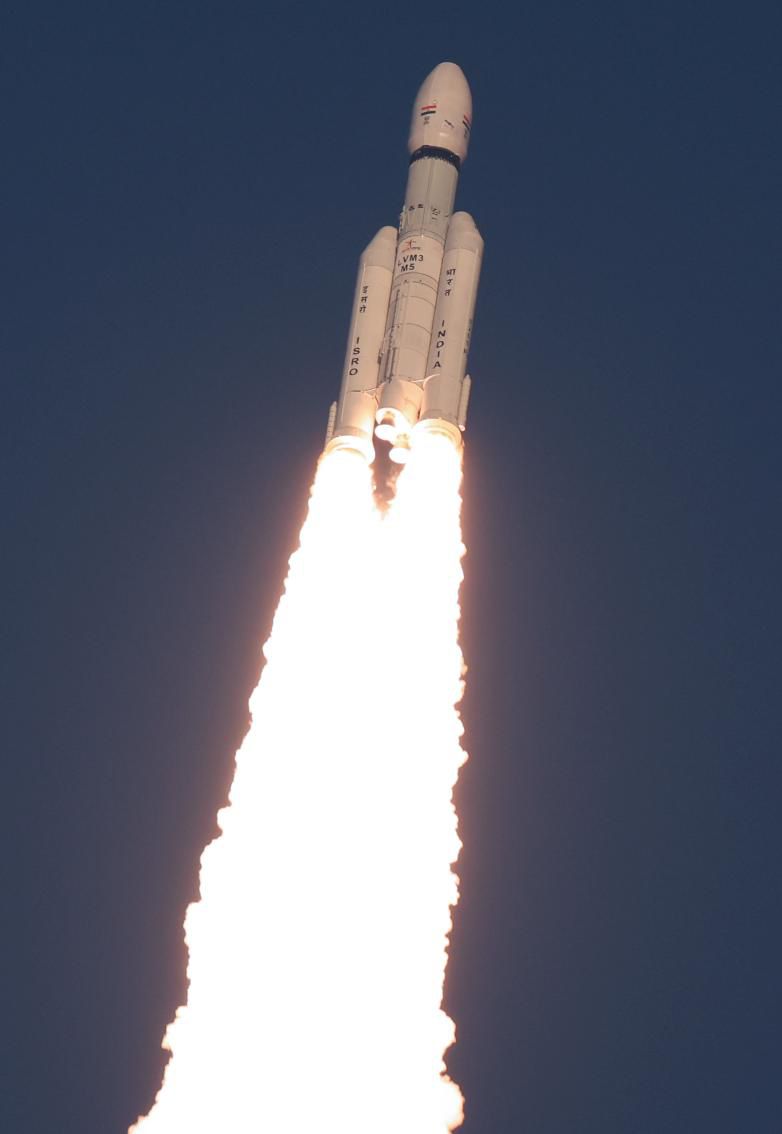
The LVM3—India’s operational heavy-lift launch vehicle—executed its flight sequence with precision. Standing 43.5 metres tall and weighing 642 tonnes at lift-off, the vehicle used a three-stage configuration comprising two solid strap-on boosters (S200), a liquid-propellant core stage (L110 using UH25 and nitrogen tetroxide), and a cryogenic upper stage (C25 using liquid hydrogen and liquid oxygen). The LVM3-M5 mission was launched from the Second Launch Pad (SLP) at the Satish Dhawan Space Centre, Sriharikota.
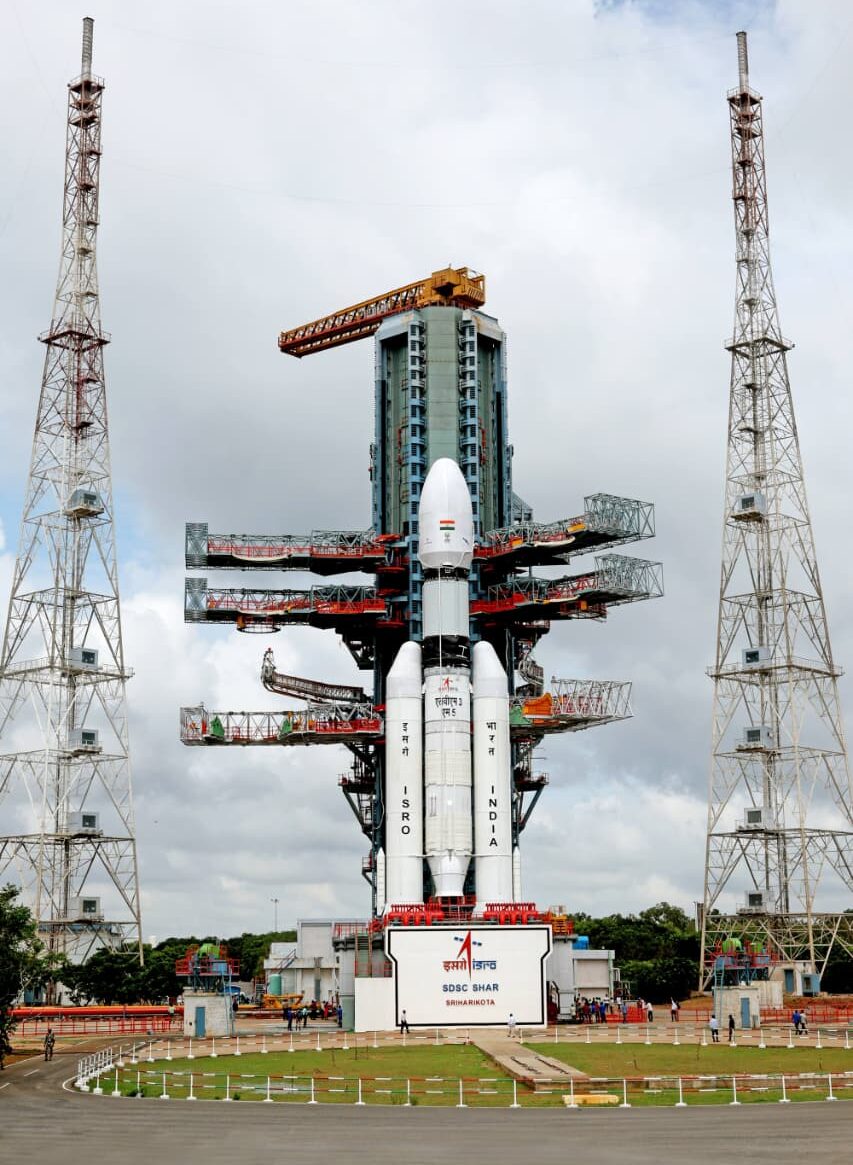
According to ISRO’s mission specifications, CMS-03 was injected into an orbit with a perigee of 170 kilometres, an apogee of about 29,970 kilometres, and an inclination of 21.4 degrees. The launch vehicle had been fully assembled and integrated with the spacecraft before being moved to the launch pad on October 26 for final pre-launch operations. Following a meticulously timed sequence of stage separations, CMS-03 separated from the cryogenic upper stage approximately 965 seconds after lift-off, at an altitude of about 180 kilometres and an inertial velocity of 10.15 kilometres per second.
CMS-03, weighing around 4,410 kilograms, is the heaviest communication satellite ever launched by ISRO into GTO. The launch follows a series of precision operations, from ignition to payload fairing separation and orbital injection, marking another successful milestone in India’s space programme.
The LVM3-M5 mission adds to the rocket’s record of consecutive successes, following its previous flight that carried Chandrayaan-3—India’s lunar mission that made history by landing near the Moon’s south pole. This was the fifth operational flight of the LVM3, which has now achieved seven consecutive successful missions. Together, these achievements demonstrate ISRO’s expanding capabilities in deep-space exploration, satellite technology, and orbital precision, consolidating India’s position among the world’s leading spacefaring nations.
Congratulating ISRO scientists, Prime Minister Narendra Modi described the achievement as “a symbol of excellence and innovation.” In a post on the social media platform X, he said the success of the CMS-03 launch reflects how India’s space sector “has become synonymous with progress and empowerment,” commending ISRO’s role in driving technological advancement that benefits national development and enhances India’s global standing.
Vice-President C. P. Radhakrishnan also congratulated ISRO and the Indian Navy, calling the launch a proud milestone in India’s pursuit of self-reliance. He noted that LVM3-M5 once again demonstrated the country’s indigenous capability to deploy heavy communication satellites with accuracy and reliability. The Vice-President said the indigenously developed CMS-03 satellite will significantly strengthen space-based communications, connectivity, and maritime domain awareness across the Indian Ocean Region, marking another proud moment in the nation’s progress towards Aatmanirbhar Bharat.
Officials said the satellite’s primary objective is to strengthen India’s space-based communication infrastructure, particularly for the Indian Navy.
With multi-band payloads operating across various frequencies, CMS-03 will expand secure, high-capacity connectivity among naval assets and improve situational awareness throughout the Indian Ocean Region. The satellite’s integration of advanced indigenous systems and its large communication payload make it a strategic asset for both defence and national development purposes.
In the context of complex maritime and security challenges, GSAT-7R embodies the Indian Navy’s resolve to protect the nation’s maritime interests through advanced, home-grown space-based communication systems. By enhancing bandwidth, resilience, and coverage, the satellite not only reinforces India’s naval communication network but also contributes to regional stability and technological self-reliance.
With CMS-03 now operational, ISRO stated that India’s space-based communication network is set to gain wider reach, higher reliability, and enhanced security, strengthening both strategic and developmental objectives in the years ahead.
– global bihari bureau