Sanctions Target Iran-Hezbollah Funds
Treasury Blocks Hezbollah Financiers
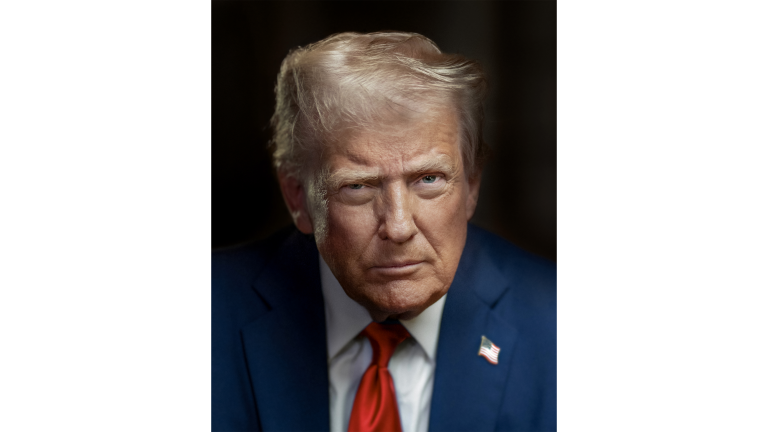
Washington: The United States (U.S.) has imposed sanctions on three key financial operatives accused of channelling tens of millions of dollars from Iran to the Lebanese militant group Hezbollah, marking a fresh escalation in the President Donald Trump administration’s campaign to sever Tehran’s support for what Washington labels a terrorist proxy. The move, announced late November 6, 2025, by the State Department and coordinated with Treasury actions, adds the individuals to the Specially Designated Nationals list, freezing their U.S. assets and barring American entities from dealings with them, while exposing any global partners to potential secondary penalties.
At the heart of the designations are Ossama Jaber, a 53-year-old Lebanese national based in Mayfadoun in the Nabatieh region; Samer Kasbar, a 53-year-old Syrian operating from the United Arab Emirates; and Ja’far Muhammad Qasir, a 35-year-old Lebanese citizen holding dual passports and residing in Lebanon. According to Treasury details, Jaber, born January 25, 1972, has been instrumental in collecting and converting funds through Lebanese money exchange houses, exploiting the country’s cash-heavy economy to launder proceeds from September 2024 through February 2025. Kasbar, born June 18, 1972, with Syrian passport number 013561783, serves as a director in a U.S.-designated Hezbollah front company, Hokoul SAL Offshore, and has collaborated on exports of Iranian metals and chemicals alongside other sanctioned figures. Qasir, born May 24, 1990, and holding Lebanese passports LR3609663 and LR1395783, oversees aspects of Hezbollah’s finance team, including efforts to recover seized assets like the oil tanker Arman 114—formerly the Adrian Darya 1—impounded in Indonesia in 2023, and coordinates oil sales and shipments that generate revenue for the group’s operations.
These sanctions, enacted under Executive Order 13224 as amended—which authorises measures against terrorists and their enablers—carry the [SDGT] tag for Specially Designated Global Terrorist, linking each directly to Hezbollah. The group itself was labelled a Foreign Terrorist Organisation by the State Department on October 8, 1997, and a Specially Designated Global Terrorist on October 31, 2001. All three face secondary sanctions risks under the Hezbollah Financial Sanctions Regulations, a framework stemming from the 2015 Hezbollah International Financing Prevention Act and its 2018 amendments. These rules allow the U.S. to penalise foreign financial institutions that knowingly facilitate significant transactions for Hezbollah or its affiliates, potentially restricting their access to the U.S. dollar system—a potent deterrent in global trade.
The action aligns with broader U.S. efforts to disrupt an estimated $1 billion in transfers from Iran’s Islamic Revolutionary Guards Corps-Qods Force to Hezbollah since January 2025, often routed through unscreened exchange houses and cryptocurrency channels in Lebanon’s beleaguered financial sector. Treasury officials described the network as exploiting Lebanon’s economic fragility, where cash transactions evade formal banking scrutiny, to fund weapons procurement, recruitment, and political influence. One example cited involves mid-2025 coordination among Qasir, Kasbar, and other operatives to export Iranian commodities, blending legitimate trade with covert funding streams that sustain Hezbollah’s military capabilities amid its entrenchment in southern Lebanon and beyond.
Principal Deputy Spokesperson Thomas “Tommy” Pigott, delivering the State Department’s statement, framed the designations as part of President Trump’s “whole-of-government policy of maximum pressure against Iran and its terrorist proxies,” explicitly referencing National Security Presidential Memorandum 2, signed February 4, 2025. That directive, NSPM-2, directs agencies to deny Iran nuclear and missile pathways, neutralise its regional aggression, and choke off resources to groups like Hezbollah through aggressive sanctions enforcement, diplomatic isolation, and export controls. It mandates Treasury to launch a “robust and continual sanctions enforcement campaign,” review waivers for relief, and guide sectors like shipping and insurance on compliance risks—echoing Trump’s first-term approach but intensified post-reelection.
Pigott emphasised U.S. solidarity with Lebanon, arguing that Iran’s backing of Hezbollah “holds Lebanon back and undermines its sovereignty,” perpetuating a cycle where the group—embedded in politics, economy, and security—forces the nation into isolation. “Iran and Hezbollah cannot be allowed to keep Lebanon captive any longer,” he stated, vowing to deploy “every tool at its disposal” to neutralise the threat to Lebanese civilians and regional stability. This rhetoric arrives as Lebanon grapples with economic collapse, with inflation soaring above 200 per cent and over 80 per cent of its population below the poverty line, conditions critics say Hezbollah exploits to maintain loyalty through social services funded by Iranian cash.
The designations build on a string of Treasury moves this year targeting Hezbollah’s evasion tactics. In March, five Lebanese individuals and three companies were hit for oil smuggling and commercial fronts tied to the late Muhammad Qasir, Ja’far’s relative, who led the finance team until his 2024 death. July saw sanctions on seven Al-Qard Al-Hassan officials, the group’s shadowy bank, accused of millions in shadow transactions. May’s actions struck two senior Lebanese and Iranian facilitators for transfer coordination. These efforts, officials say, have frozen over $500 million in assets since NSPM-2’s issuance, though Hezbollah’s adaptability—via family proxies, crypto, and Gulf-based shells—poses ongoing challenges.
Hezbollah, designated a terrorist entity by the U.S., European Union, and others, but a “resistance” force in Lebanon’s view, has dismissed such measures as “economic terrorism” in past statements, vowing resilience. Tehran, through spokespeople, has decried them as violations of sovereignty, while Lebanese officials navigate a tightrope: Prime Minister Najib Mikati’s government, fragile and Hezbollah-influenced, has quietly welcomed U.S. aid but avoided direct confrontation. Analysts question the sanctions’ bite in a dollar-scarce Lebanon, where parallel economies thrive, yet point to secondary risks chilling foreign banks—the United Arab Emirates (UAE) institutions, for instance, have tightened scrutiny on Syrian-Lebanese flows since Kasbar’s exposure.
As the U.S. ramps up pressure ahead of potential nuclear talks or escalations, these sanctions signal no letup. With Iran’s oil exports hovering at 1.5 million barrels daily despite caps, and Hezbollah’s arsenal estimated at 150,000 rockets, the financial squeeze aims to starve capabilities without kinetic confrontation. Whether it prompts disarmament talks in Beirut or hardens divides remains unclear; for now, it underscores Washington’s unyielding stance: Iran’s proxies, from Yemen’s Houthis to Gaza’s Hamas, face a unified financial blockade.
– global bihari bureau