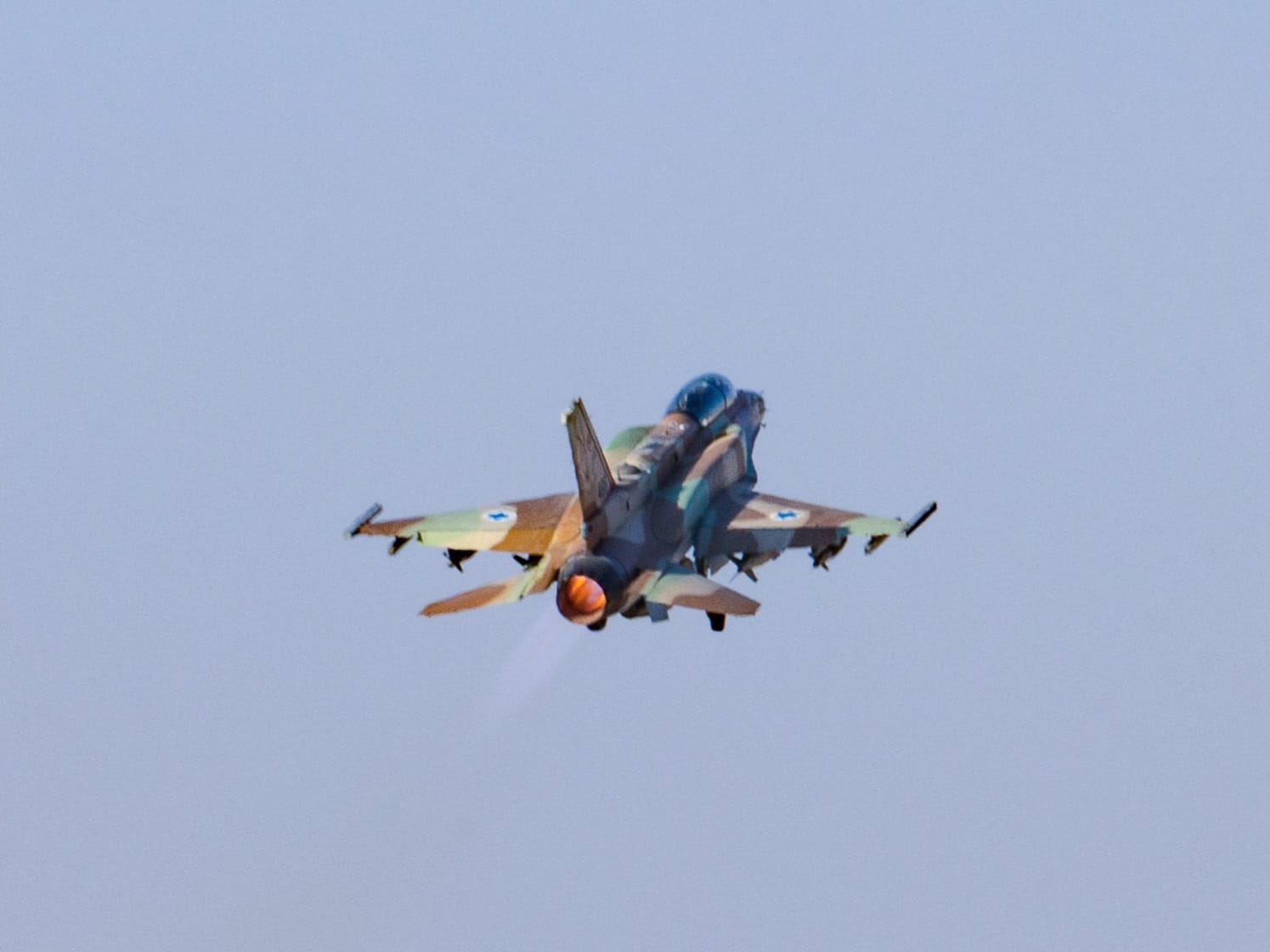
More than 25 Israeli Air Force fighter jets attacked and destroyed more than 35 missile storage and launch facilities in the Tiberias and Kermanshah areas of Iran today morning.
Iranian President Masoud Pezeshkian today issued a call for resolution to end the war imposed on Iran, stating the only path is the unconditional cessation of what he termed Zionist aggression and a halt to the regime’s adventurism for good. He stated, “We have always sought peace and tranquility, but in the current circumstances the only way to end the imposed war is the ‘unconditional cessation’ of the enemy’s aggression and absolute guarantee for the halt of adventurism of Zionist terrorists forever; otherwise, our response to the adversary will become more severe,” ensuring the enemy would regret its actions. On June 19, he urged resilience, posting, “Dear people of Iran, all ministries and government bodies have been tasked to use all their strength and resources to offer services, accompanying you in your cooperation and patience ‘for Iran.’ With God’s grace and through solidarity and cohesion, we will overcome these days.” These statements, during missile exchanges and airstrikes starting June 13, when Israel launched what Iran calls attacks on its territory, reflect Iran’s efforts to maintain public services and demand an end to hostilities, highlighting a crisis drawing global attention and raising concerns of a regional conflict.
On June 19,2025, Professor Benzion Netanyahu, father of Israeli Prime Minister Benjamin Netanyahu, marked his 100th birthday with a message to his son and an audience gathered to honour him. He addressed the threat to the Jewish people, stating, “The Jewish people’s existence is in question due to the threats to annihilate us, which are openly declared by our enemies.” He cited Iran’s vow that “Zionism will be destroyed when Iran possesses nuclear weapons,” yet noted Israel’s resolve, saying its people “show the world how a nation should behave when facing a threat: stare at the danger, consider what needs to be done, and be ready to enter the fray when the chances of success are reasonable.” He expressed belief that Israel’s strength would remove this danger, framing the military campaign as a defence against a threat, supporting Israel’s operations since June 13 to counter Iran’s missile and nuclear capabilities.
The Israel Defense Forces (IDF) conducted operations, with over 60 Israeli Air Force (IAF) fighter jets striking dozens of military targets in Iran overnight on June 20, using approximately 120 munitions. Targets included Tehran’s industrial sites manufacturing missiles for the Iranian Ministry of Defence, described by the IDF as an industrial centre, and the Organisation of Defensive Innovation and Research (SPND) headquarters, developing technologies and weapons for Iran’s military. The IAF struck missile systems and radar installations in Isfahan and Tehran, intended to target IDF aircraft. The IDF stated these actions expanded Israel’s aerial operation in Iranian airspace after a breakthrough with Tehran. Earlier, IAF jets hit Iran’s Internal Security Headquarters and its internal security units in Tehran, dismantled three surface-to-surface missile launchers prepared to fire toward Israel, and eliminated an Islamic Revolutionary Guard Corps (IRGC) base commander and soldiers in western Iran responsible for 15 missile launchers, identified by a remotely piloted aircraft. These operations reflect Israel’s claim of aerial superiority and focus on neutralising Iran’s military capabilities.
Iran accused Israel of war crimes and waging a war on truth and human conscience. Foreign Minister Abbas Araghchi, addressing the United Nations (UN) Human Rights Council in Geneva today, condemned Israel’s aggression, starting June 13, targeting off-duty military personnel, university professors, and civilians, killing hundreds and injuring many more. He described Iran as a nation inheriting one of the most ancient civilisations with 100 million people, subjected to aggression by a regime committing genocide in Palestine for the past two years and occupying neighbouring lands. Araghchi argued Israel’s actions violate Article 2(4) of the UN Charter, calling for the Council to address this injustice. He cited the attack on the Arak Heavy Water Reactor, under International Atomic Energy Agency (IAEA) safeguards and compliant with the Joint Comprehensive Plan of Action (JCPOA), as a war crime, risking an environmental and health catastrophe due to radiological leakage. Referencing UN Security Council Resolution 487, condemning Israel’s 1981 attack on Iraq’s nuclear facility, he stated the strikes threaten the nonproliferation regime, demanding accountability for selective principle application. Araghchi noted Iran was engaged in a June 15 diplomatic process with the United States to negotiate a nuclear agreement, underscoring Israel’s attack as a blow to diplomacy.
Iran’s Foreign Ministry spokesperson, Esmaeil Baqaei, condemned an Israeli attack on a Tehran ambulance, killing three civilian medical personnel, as a manslaughter violating the Geneva Conventions, protecting medical personnel and humanitarian vehicles. Baqaei accused Israel of attacking medical facilities, aid convoys, and healthcare workers, attributing this to inaction by those upholding International Humanitarian Law (IHL). He urged the UN Security Council, Switzerland as the Geneva Conventions’ custodian, the International Committee of the Red Cross (ICRC), the UN Human Rights Council, the World Health Organization (WHO), and others to ensure IHL compliance and hold Israel accountable. Iran’s Foreign Ministry claimed Israel bans foreign media from covering strikes, subject to IDF censorship, alleging Iran targets military sites while Israel massacres civilians, killing hundreds, including children, destroying hospitals, and leaving families in mourning. Iran plans global press tours to expose Israel’s alleged crimes, asserting Israel initiated aggression against a nation committed to peace.
The Israel-Iran conflict coincides with Gaza’s war, where the UN Children’s Fund (UNICEF) and WHO reported conditions on June 20, with people risking their lives for aid. UNICEF’s James Elder recounted a boy wounded by a tank shell at an aid site, who died, noting no medical evacuations and the destruction of hospitals like Nasser Medical Complex in Khan Younis. A video of 13-year-old Abed al-Rahman pleading for pain relief for shrapnel wounds was viewed thousands of times since June 6, highlighting shortages of medicines, ventilators, oxygen kits, hygiene packs, and incubators, previously UN-supplied but now restricted by Israel. Elder noted parents leaving hospitals fearing attacks, with children on oxygen dying in tents without equipment. The UN reported Israel’s restrictions cause starvation, with 500,000 Gazans risking their lives at militarised aid sites, called combat sites, where children died. Elder cited a grandmother unable to reach aid and young men failing seven times, noting inequity in a combat zone. Vulnerable groups—children, pregnant women, the elderly, and amputees—cannot reach non-UN aid hubs. WHO’s Christian Lindmeier reported 610 patients admitted for malnutrition complications, with many too weak to seek help due to blocked roads, shelled health centres, and no ambulances, impacting Gaza’s healthcare system.
The United States responded with sanctions and diplomacy. Today, the United States sanctioned eight entities and one individual, and identifed one vessel as blocked property, for their involvement in the procurement and shipment of proliferation-sensitive machinery from China for Iran’s defence industry. The State Department today also sanctioned actors supporting Iran-backed Ansarallah, known as the Houthis, in Yemen, under Executive Order 13224, targeting vessels, owners, operators, and front companies facilitating illicit trade. The United States aims to eliminate Houthi threats, protect servicemembers and allies, defend navigation, and address Houthi exploitation of Yemenis. Ansarallah was designated a Specially Designated Global Terrorist (SDGT) on February 16, 2024, and a Foreign Terrorist Organization (FTO) on March 5, 2025. Secretary of State Marco Rubio met Swedish Foreign Minister Maria Malmer Stenergard to discuss the Middle East, Russia-Ukraine, the North Atlantic Treaty Organization (NATO) Summit in The Hague, and supply chains, noting Sweden’s NATO contributions. Rubio spoke with Cyprus Foreign Minister Constantinos Kombos, affirming the United States’ readiness to counter threats in the Eastern Mediterranean, addressing stability amid the Israel-Iran conflict.
The Ukraine-Russia conflict connects to these crises. On June 19, Chinese President Xi Jinping and Russian President Vladimir Putin discussed the Middle East. Putin called Israel’s attack on Iran’s nuclear facilities a concern, stating that escalation serves no interest and the Iranian nuclear issue needs dialogue. He emphasised third-country nationals’ safety and Russia’s willingness to work with China for stability. Xi noted the Middle East’s period of change, proposing a four-point plan: ceasefire, civilian safety via international law, dialogue for a nuclear settlement, and international de-escalation. Xi affirmed China’s commitment to peace. China’s spokesperson Guo Jiakun stated on June 20 that China engages diplomatically with Iran and Israel, rejecting military force and prioritising a ceasefire, aiming for stability. Taiwan reported 24 People’s Liberation Army (PLA) aircraft, 15 crossing the Taiwan Strait’s median line, prompting Taiwan’s response with aircraft, vessels, and missiles. President Lai Ching-te cited Middle East distractions, which Guo called “newsjacking.” Guo noted China respects lawful navigation but opposes provocations, referencing British, Japanese, and United States actions.
UN Secretary-General António Guterres addressed the UN Security Council on June 20, calling the Israel-Iran conflict a moment with global consequences. He urged parties and the Council to “give peace a chance,” noting escalation’s toll on civilians, homes, infrastructure, and nuclear facilities, risking chaos. Guterres emphasised non-proliferation, noting Iran’s claim of not seeking nuclear weapons. He proposed diplomacy to bridge the trust gap with IAEA access, urging an end to fighting and negotiations. He called for Security Council unity and international diplomacy based on the UN Charter, citing Gaza’s situation, warning of unpredictable consequences and urging action.
Iran’s Supreme Leader, Ayatollah Ali Khamenei, stated on June 18, 2025, that Iran “will not capitulate to anyone in the face of coercion,” echoed by Pezeshkian’s resilience call. Araghchi noted Iran faced an attack during the June 15 diplomacy, calling Israel’s actions a blow to international law. He stated peace and the rule of law are at stake, with Israel violating the 1949 Geneva Conventions, urging Switzerland and state parties to act. Iran’s Foreign Ministry accused Israel of twisting facts, planning press tours. Israel claims its strikes target military assets, with the IDF operating in Iranian skies. Araghchi urged the UN Human Rights Council to stop Israel, warning of damage to international law. Guterres’s appeal emphasised diplomacy to prevent a global crisis. As Benzion Netanyahu’s message supports Israel’s resolve and Pezeshkian’s stance rallies Iran, the world observes a region at a crossroads, with actions from Tehran, Gaza, and Ukraine shaping global stability.
– global bihari bureau