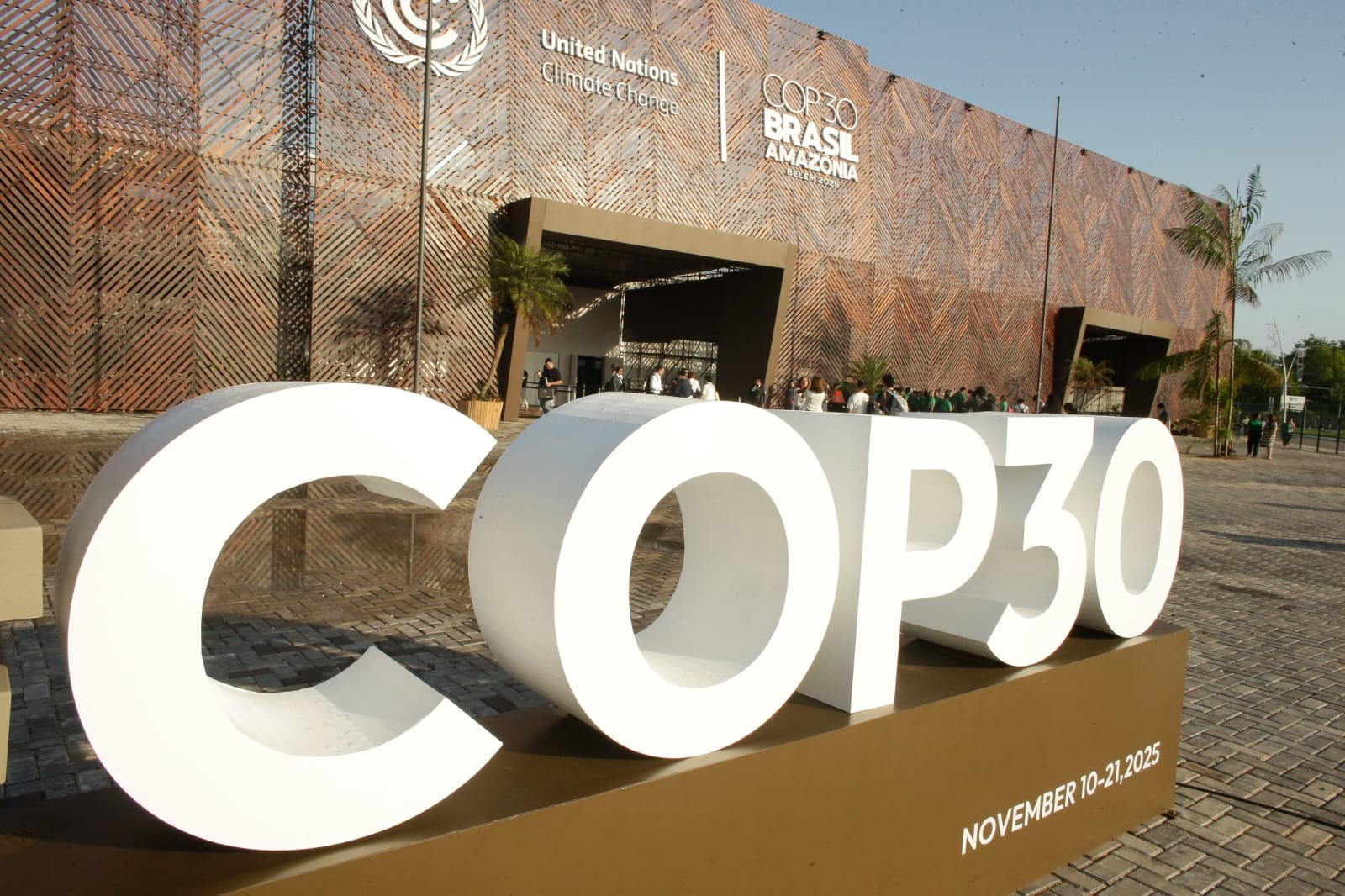
Photo: Raimundo Pacco/COP30
Winners, Losers and the Limits of COP30 Diplomacy
Belém: The final hours of the 30th Conference of the Parties (COP30) in Belém offered a curious blend of relief and unease. Delegates approved the Belém Package after days of tense negotiations, but the agreement’s calm exterior could not hide the fractures beneath. The summit ended with the familiar choreography of applause, statements, and rushed communiqués, yet the dynamics inside the negotiation rooms revealed a climate order negotiating uneasily with itself. The world is not moving toward a shared scientific threshold so much as toward the edge of what each political economy can accept. That tension ran like an undercurrent through the fossil-fuel debates, where the summit’s political heart truly beat.
Brazil set the tone with unmistakable ambition. Belém’s symbolism — the doorway to the Amazon, the land where Indigenous stewardship remains a living argument — gave the host nation a moral landscape from which to project leadership. The President Luiz Inácio Lula da Silva’s administration carefully showcased falling deforestation numbers, renewed engagement with Indigenous communities, and an image of Brazil as both a guardian of the forest and a responsible voice of the Global South. Yet the moment discussions turned to fossil fuels, the smooth narrative encountered sharper contradictions. Brazil’s desire to be seen as a climate leader sits alongside domestic pressures from Petrobras, debates over offshore oil exploration, and the broader challenge of reconciling developmental needs with ecological commitments. That balancing act influenced the diplomacy: assertive in tone, conciliatory in practice, and constantly reframing the conversation around forests, financing, and equity.
The most uncompromising force in the room, however, came from the petroleum economies. The Organization of the Petroleum Exporting Countries (OPEC)’s stance was not layered or tactical; it was a firm, direct block. Any mention of a “phase-out” of fossil fuels, or anything implying a constraint on future production, was flatly rejected. Even language on “unabated” fossil fuels — a phrase many countries interpret as a bridge toward eventual decline — was kept at arm’s length. The message from OPEC was unmistakable: political and fiscal dependence on oil revenues leaves no room for interpretive generosity. This blocking posture may have delivered the outcome its members wanted, but it deepened rifts inside the Global South. Small island states, least-developed countries, and many African nations, which are already grappling with escalating climate losses, found themselves confronting not just wealthy historical emitters but also fellow developing countries whose economic structures pull in the opposite direction.
Across the aisle, the European Union tried to push the envelope on ambition. The bloc sought clear language linking global temperature pathways to a managed decline of all fossil fuels. But Europe’s diplomacy, however well-prepared, ran into the limits of what others were willing to entertain. The continent’s own political headwinds — farmer protests, cost-of-living pressures, industrial competitiveness fears, and shifting electoral winds — hovered in the background. European negotiators were unable to achieve the consensus they sought, and their ambition clashed with a coalition of producers and fence-sitters unwilling to signal a definitive break from fossil fuel dependence.
The small island developing states spoke with the urgency of those living on the frontlines of climate destabilisation. For them, the argument is not theoretical. The difference between phased “down” and phased “out” determines whether entire communities survive. Their appeal for binding timelines, enhanced loss-and-damage commitments, and predictable climate finance resonated widely but did not convert into textual victories. Despite aligning with a broad moral consensus, they remained constrained by structural realities: they are the conscience of the negotiations, not the power centre.
The United States, unlike in earlier COPs, was not a central actor in shaping the Belém outcome because it had formally withdrawn from the talks. Its absence removed a traditional gravitational force — sometimes obstructive, sometimes catalytic — that usually tempers or redirects competing blocs. Without U.S. engagement inside the negotiation rooms, there was no stabilising counterweight to the more assertive players. The vacuum did not trigger an alarm but produced a quiet recalibration: other blocs pressed harder on their priorities, and the sense that the era of dependable U.S. climate leadership had faded became an unspoken backdrop to the diplomacy.
These dynamics produced an outcome that cannot be described as failure, yet cannot be celebrated as a breakthrough. The global climate order is not collapsing — but it is straining. The absence of assertive leadership from the world’s largest historical emitter, combined with the blunt veto power of petroleum economies, leaves the multilateral process burdened by internal contradictions. And yet, the machinery keeps moving. Brazil secured meaningful momentum on forest protection. The finance work programme advanced, if only incrementally. Renewable energy commitments widened. Procedural clarity for next year’s COP31 in Türkiye improved. These steps are small but real, and they reinforce why climate diplomacy, despite its imperfections, persists.
What COP30 ultimately revealed is a world negotiating at cross-purposes but still negotiating. The fractures are widening, but not to the point of rupture. Fossil-dependent states will not accept language that jeopardises their fiscal stability. Climate-vulnerable states cannot afford to settle for rhetoric. Emerging economies want development space. Developed nations are torn between ambition and politics. And major powers, especially the United States, are no longer the fulcrums they once were. This is the landscape Türkiye will inherit as COP31 president — a landscape where ambition is constrained, trust is fragile, and progress is measured not in leaps but in survival of the process itself.
If Brazil’s presidency showcased anything, it was that climate diplomacy today is a test of choreography rather than consensus. Multilateralism is holding, but only just. The world may be inching forward, but the seams are visible. The next year will determine whether these seams widen into fissures or remain tight enough for the machinery to keep turning.
– global bihari bureau