Illustrative Image
Jaipur, Telangana Tragedies Expose Safety Gaps
Jaipur/Hyderabad: Two devastating road crashes in Rajasthan and Telangana today killed at least 33 people and injured dozens more, reigniting national alarm over India’s road safety crisis—one that claims about 1.73 lakh lives annually, according to the Ministry of Road Transport and Highways (MoRTH).
The near-simultaneous collisions in Jaipur’s Harmada area and Rangareddy district near Hyderabad exposed familiar failures: unchecked speed, weak enforcement, and roads built for volume, not safety. Yet cities from Bogotá to Brisbane—and Sweden’s pioneering Vision Zero—have already shown that zero is possible, using local resources, political will, and relentless measurement to save thousands of lives.
It began in Jaipur on a typical Monday morning. A dumper truck, hurtling down Road No. 14 near Loha Mandi, lost control and smashed into a line of vehicles waiting at a traffic signal. At least 14 people died on the spot—a family from Agra in their car, a local weaver riding with his niece on a scooter, roadside vendors, motorcyclists, and commuters caught in the chaos. Witnesses said the truck was racing at high speed; police detained the driver, suspecting he had been drinking, likely exceeding India’s legal blood alcohol concentration (BAC) limit of 0.03% (30 mg per 100 ml of blood) for commercial drivers. The injured were rushed to SMS Hospital’s trauma centre, where several remain in critical condition.
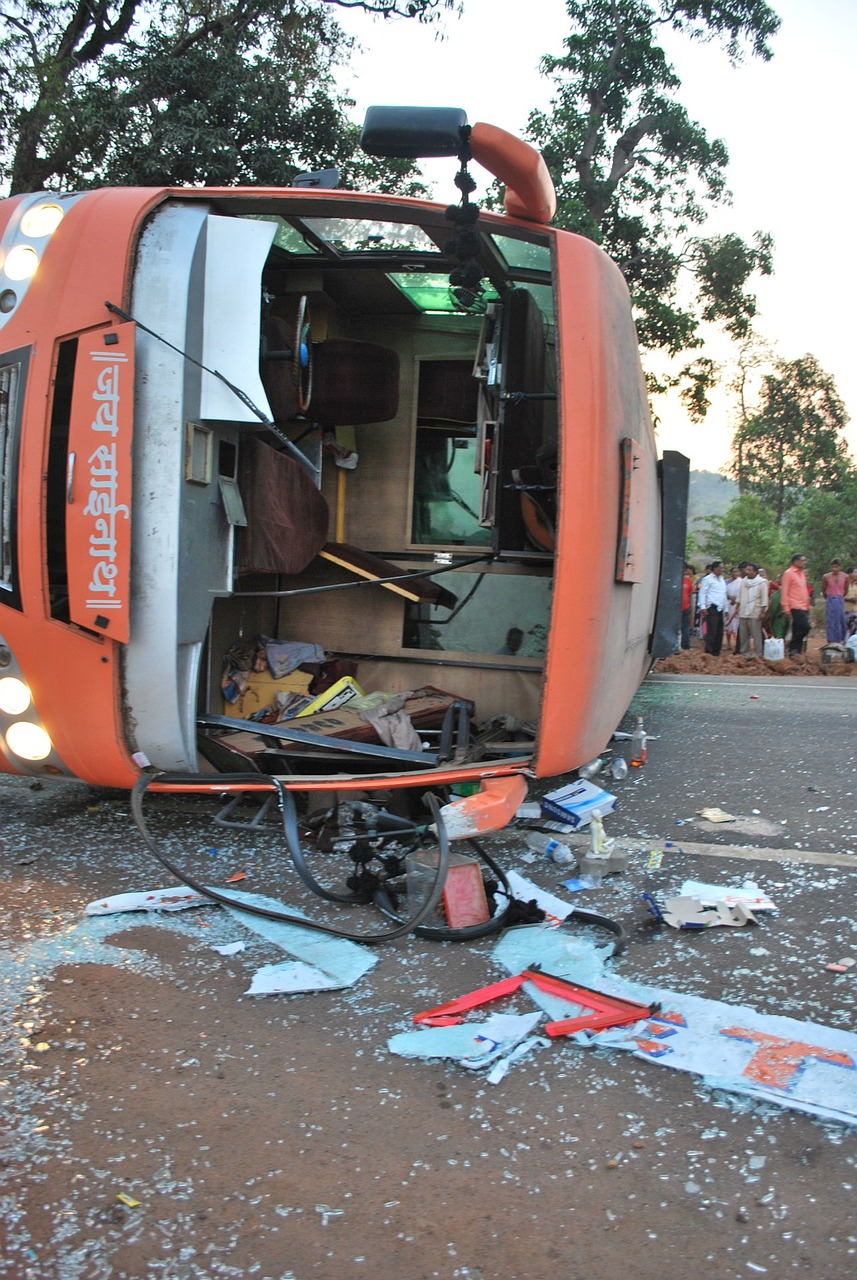
Just hours later, tragedy struck again on the Hyderabad–Bijapur highway. A gravel-loaded tipper truck veered into the wrong lane and collided head-on with a Telangana State Road Transport Corporation (TSRTC) passenger bus near Khanapur Gate in Rangareddy district. The impact crushed the bus’s front end, killing around 19 passengers instantly—mostly on the driver’s side. Rescue crews worked for hours with hydraulic cutters to free survivors from the twisted metal. Local police reported the absence of a median barrier on that stretch, while investigations are underway into whether speed and fatigue were factors. Emergency response times are under review, officials said.
These crashes were not isolated. They mirror a grim national pattern documented in the MoRTH’s Road Accidents in India 2023 report: 4.8 lakh crashes and about 1.73 lakh deaths, the highest since 2019. That’s 460 fatalities every day, or one life every three minutes. Overspeeding accounted for the largest share of fatalities, while wrong-side driving and driver fatigue each contributed to roughly one in ten fatal crashes. Heavy commercial vehicles—trucks, tippers, and buses—were involved in a significant proportion of deadly incidents.
Also read: 20 Dead in Kurnool: Wake-Up Call for Bus Safety Reform
Rajasthan and Telangana rank among the hardest-hit states, with over 10,000 and 7,000 accidents, respectively, in 2023, fueled by poor highway lighting, absent emergency lanes, and lax enforcement. Prime Minister Narendra Modi expressed grief and announced ₹2 lakh in compensation for each deceased family and ₹50,000 for the injured. Telangana Chief Minister A. Revanth Reddy ordered a detailed inquiry and directed hospitals to prioritise survivors. Rajasthan authorities pledged an immediate audit of dumper operations in urban areas. These steps, while necessary, are reactive. What India needs is a proactive, evidence-based commitment.
India’s roads, now spanning about 6.7 million kilometres, have expanded faster than safety infrastructure. Yet global evidence shows that urban speed limits of 30 km/h in populated zones reduce fatal crashes by up to 40 per cent, while traffic calming—speed humps, raised crossings, and segregated lanes—cuts pedestrian deaths dramatically.
Neither Jaipur’s urban arterial nor the Hyderabad–Bijapur highway featured such measures. In contrast, Oslo recorded zero pedestrian and cyclist deaths in 2019 after redesigning streets with protected intersections and reduced parking.
Overspeeding, the cause of most of India’s road deaths, is tamed elsewhere through high-visibility enforcement (HVE) and automated cameras. Brazil’s Salvador de Bahia programme lowered average speeds and crashes through coordinated enforcement and public campaigns.
Drink-driving, suspected in Jaipur, is curbed globally with BAC limits of 0.05%, random breath testing, and alcohol interlocks—interventions that reduce alcohol-related fatalities by up to 20 per cent.
Heavy commercial vehicles like dumpers and tippers, involved in a large share of fatal crashes in India, are another weak link. United Nations vehicle safety regulations mandate underrun guards (to prevent cars from sliding under trucks) and electronic stability control (ESC), preventing side-impact and rollover deaths by 30–50 per cent. Periodic inspections and graduated driver licensing (GDL) for commercial drivers—standard in Europe—could have flagged overloading in Jaipur or driver fatigue in Rangareddy. Instead, Rajasthan now plans a reactive audit; global best practice calls for proactive blackspot mapping and annual safety audits using tools like the International Road Assessment Programme (iRAP).
Post-crash delays compounded suffering. Emergency lanes and trained trauma responders remain scarce on most Indian highways, limiting the effectiveness of the “golden hour.” Countries that have invested in trauma systems—such as Uruguay and Iraq, which reported steep reductions in highway fatalities after coordinated emergency reforms—demonstrate the lifesaving potential of early care. The World Health Organization’s Save LIVES package, implemented across 15 countries through Bloomberg Philanthropies, saved over 300,000 lives by 2018 through similar measures.
A senior researcher at the Indian Institute of Technology (IIT) Delhi warned: “We’re building roads faster than we can make them safe—the system incentivises speed over survival.” The World Health Organization ranks India among the countries with the highest traffic death rates.
From Sweden to Salvador: Lessons for Indian Roads
Now consider what happened when other cities and nations refused to accept those numbers.
In Sweden, Vision Zero was born in October 1997 with a radical premise: no one should die or be seriously injured on the roads—ever. Instead of blaming drivers for human error, Sweden redesigned the entire system to absorb mistakes and protect lives. Urban speed limits dropped to 30 km/h in populated areas. On rural highways, 2+1 roads—alternating overtaking lanes separated by cable barriers—reduced head-on collisions by 80 per cent. Roundabouts replaced dangerous intersections, halving serious injuries. Seat belt use rose above 98 per cent through public campaigns and fines. A strict 0.2% BAC limit, paired with random breath testing and alcohol locks in fleet vehicles, cut alcohol-related deaths by about 20 per cent. Despite 30 per cent more traffic, Sweden’s annual road fatalities fell from 541 in 1997 to around 220 in 2023, one of the lowest rates globally at roughly 2 deaths per 100,000 people. Stockholm recorded zero pedestrian and cyclist deaths in 2019. Sweden’s STRADA crash database tracks every accident in real time, guiding annual safety audits and blackspot fixes.
In Bogotá, officials painted 30 km/h zones around every school and market, added raised crossings, and installed concrete curbs to protect pedestrians. Fatalities fell substantially within three years, using materials already available in local markets. In Salvador de Bahia, Brazil, community policing and public campaigns curbed speeding and drunk driving, cutting crashes by roughly 25 per cent within two years. In Addis Ababa, Ethiopia, traffic wardens waving red flags at risky junctions and wider sidewalks near schools reduced child deaths sharply—all without new funding. In Brisbane, Australia, new trucks were required to carry underrun guards—the same equipment already produced in India for export. Rear-end deaths halved within two years. In Dar es Salaam, Tanzania, drivers who maintained safe speeds earned fuel bonuses; fatalities on that corridor dropped by nearly 30 per cent.
None of these places waited for perfect laws or foreign consultants. They started small, measured every death, and scaled what worked.
India already has the tools: 30 km/h paint costs ₹8,000 per kilometre, second-hand speed cameras ₹2 lakh each, underrun guards are made in Pune, speed governors and GPS trackers are locally produced, and 108 ambulances are on payroll. The Motor Vehicles (Amendment) Act 2019 already mandates many of these measures—ESC, anti-lock brakes, and periodic vehicle inspections—but enforcement remains weak.
A practical, actionable blueprint that has already succeeded elsewhere could transform the landscape. In 2026, declare 30 km/h zones in 100 cities and mandate speed governors plus GPS tracking in all commercial vehicles. By 2027, construct 1,000 kilometres of 2+1 highways with cable barriers and launch a public, geo-tagged crash dashboard. In 2028, achieve full helmet and seat belt enforcement in 10 states while training 50,000 traffic police in high-visibility enforcement. By 2029, run zero-fatality pilots in five cities, including Jaipur and Hyderabad. And by 2030, halve annual road deaths to under 85,000.
Today’s twin tragedies were not inevitable—they were system failures of speed, design, enforcement, and response. Sweden, Bogotá, Salvador de Bahia, Addis Ababa, and others have proven that zero is achievable through engineering, political will, and a refusal to accept death as normal. India has the roads, the data, the models, and the manufacturing base. All that’s missing is the resolve to act. Start with pilots in Jaipur and Hyderabad: lower speeds, audit trucks, drill trauma response, install second-hand cameras, and train local wardens. Prove it works. Then scale it nationwide. Because another Monday is coming—and no family should have to pay the price again.
– global bihari bureau