Unit‑2 of Subansiri Lower Hydroelectric Project Commences Commercial Operation
New Delhi/Gerukamukh (Arunachal Pradesh): The Subansiri Lower Hydroelectric Project’s second 250 megawatt (MW) generating unit has entered commercial operation, marking a milestone in India’s largest hydropower project and significantly enhancing clean energy capacity for the North-East region and the national electricity grid. With Unit 2 now operational, the project built on the Subansiri River, a major tributary of the Brahmaputra, progresses toward its full 2,000 MW capacity, with three additional units expected to be commissioned shortly and the remaining four units through 2026–27.
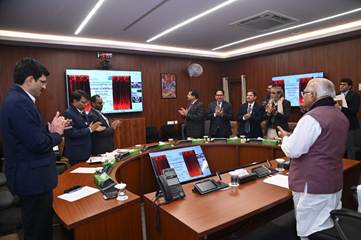
The unit was inaugurated virtually by Manohar Lal, Union Minister of Power, Housing and Urban Affairs, in the presence of Pankaj Agarwal, Secretary (Power), Bhupender Gupta, Chairman and Managing Director of NHPC Limited, and other senior officials from the Ministry of Power and NHPC, today. The minister described the commissioning as “not just a technical achievement, but a testament to years of hard work, dedication, and teamwork,” emphasising that the Subansiri Project, which is located at Gerukamukh, on the Arunachal Pradesh–Assam border, stands as a symbol of India’s commitment to clean and sustainable energy, supporting North-East India’s growth, strengthening the national grid, and advancing India’s Net Zero goals.
Secretary (Power) lauded NHPC’s achievement, highlighting that the Subansiri Lower Project will improve energy supply in the North-East and serve as a model for state-of-the-art, sustainable power systems. He stressed the importance of the timely commissioning of the remaining units and noted the project’s role in India’s transition to a net-zero energy future while generating socio-economic benefits for local communities. CMD NHPC expressed heartfelt gratitude to the Ministry, the governments of Arunachal Pradesh and Assam, former NHPC leadership, the project team, and all stakeholders, emphasising that the project strengthens the national grid, supports sustainable development in the North-East, and ensures reliable renewable energy to meet growing demand.
As India’s largest hydropower project, the Subansiri Lower Hydroelectric Project comprises eight 250 MW units and is designed as a run-of-river scheme with small pondage. Water is diverted through eight Head Race Tunnels to generate approximately 7,422 million units (MU) of renewable electricity annually, significantly contributing to India’s green energy future. The project features the largest dam in North-East India, a 116-metre-high concrete gravity dam, which enhances regional infrastructure, grid resilience, and flood moderation while supporting water management in the Subansiri River basin.
Engineering innovations underscore the project’s scale and efficiency. Unit 2 utilises India’s heaviest hydro generator rotors, largest stators, and biggest main inlet valves, complemented by the nation’s largest aggregate processing plants, highest-capacity batching plant, and the first-ever use of Rotec’s Tower Belt for dam concreting in India. The first cascaded dam on the Subansiri River provides flood moderation with a 442 million cubic metre flood cushion, and about one-third of the gross reservoir storage of 1,365 million cubic metres at Full Reservoir Level remains empty during floods to absorb excess water and protect downstream communities.
NHPC has implemented extensive riverbank protection and erosion control measures, completing works up to 30 km downstream and extending them up to 60 km at a cost of approximately ₹522 crore, stabilising banks for over five years. Community development initiatives in piggery, sericulture, and handloom, developed with the Institute of Rural Management Anand (IRMA), currently benefit around 5,000 women farmers, promoting sustainable socio-economic growth in the region.
The project supplies electricity to 16 beneficiary states, providing free power allocations to Arunachal Pradesh and Assam, with 1,000 MW dedicated to the North-East region, significantly strengthening regional energy availability. Approximately 7,000 local people were engaged daily during construction, creating numerous direct and indirect jobs through contractors, service providers, and local markets. Continuous power availability is expected to spur small-scale industries, tourism, and river navigation, expand employment and business opportunities, and reduce out-migration from the region.
NHPC has invested around ₹155 crore in Corporate Social Responsibility initiatives, including 3,129 toilets under Swachh Vidyalaya Abhiyaan, safe drinking water facilities at 1,841 locations, RO water with sanitation at nine locations, the establishment of Vivekananda Kendra Vidyalaya in Dollungmukh serving 250 students, and multiple rural development projects such as community halls, meeting halls, causeways, and water supply schemes.
Over the past five decades, NHPC stated it has successfully executed hydropower projects in challenging terrains and diversified into solar, wind, and green hydrogen, reinforcing its position as a 100 per cent Green Energy Company. With an installed capacity of 8,333 MW from 30 operational power stations and 14 projects totalling 9,704 MW under construction, NHPC continues to play a vital role in advancing India’s clean energy transition and strengthening national energy security.
What this really changes is multi-faceted: the Subansiri Lower Hydroelectric Project delivers large-scale renewable electricity to 16 states, ensures free power allocations for Arunachal Pradesh and Assam, strengthens grid resilience, supports employment and small industries, stabilises riverbanks, and establishes India’s capability to execute complex hydroelectric projects responsibly. Unit 2’s commissioning exemplifies India’s technical expertise in hydroelectric engineering while advancing sustainable, inclusive development in the North-East and across the nation.
– global bihari bureau