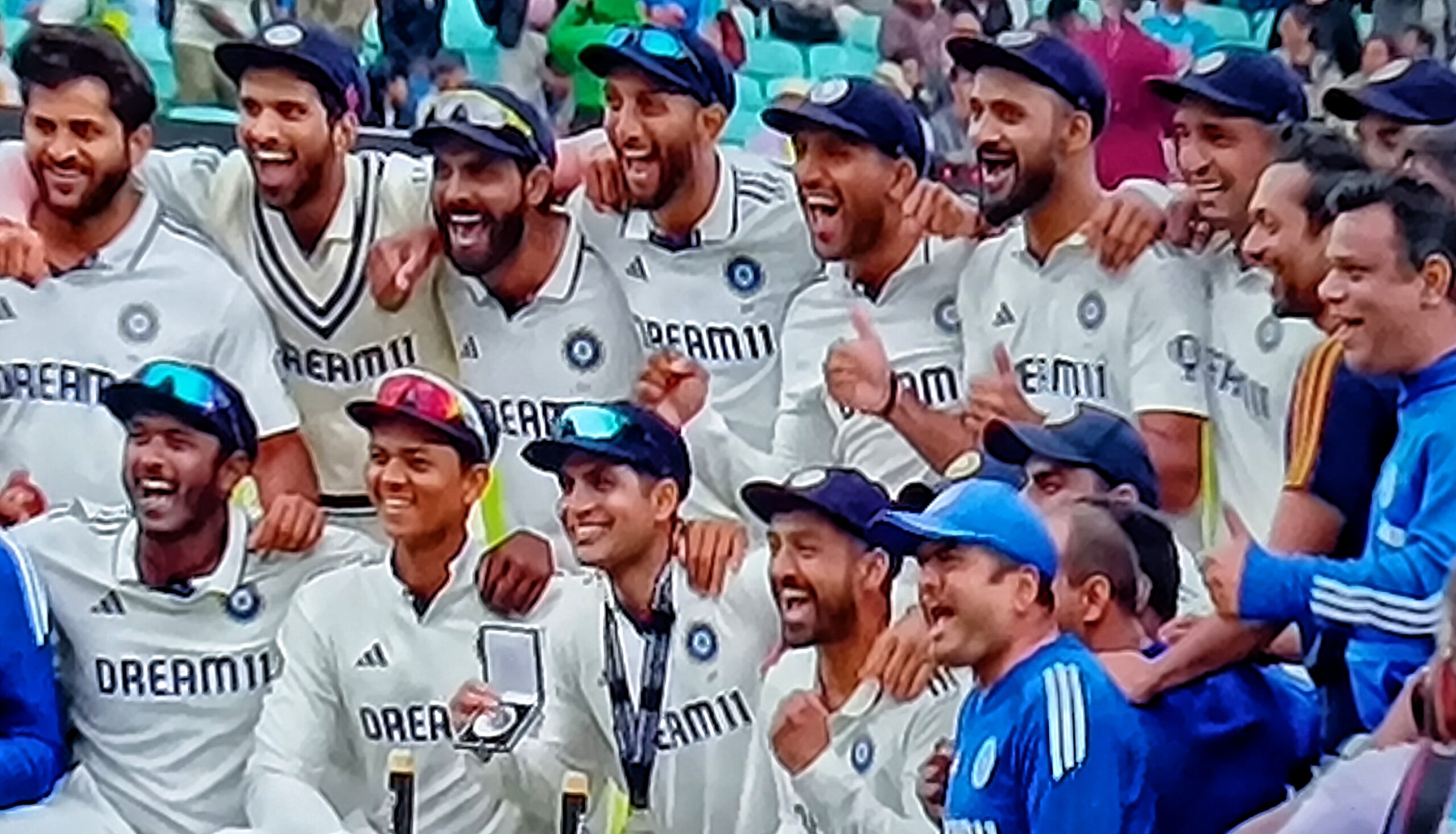
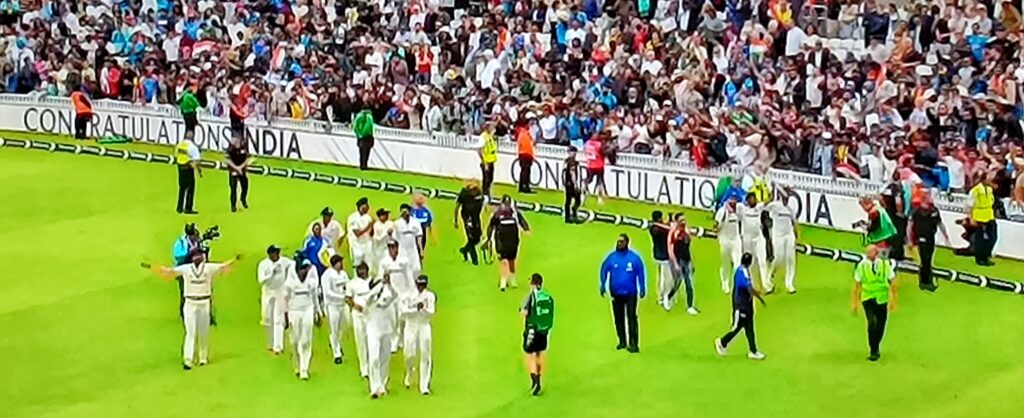
London: In a finale that could rival the suspense of a Hitchcock thriller, India clinched a heart-stopping six-run victory over England in the fifth Test at The Oval, levelling the Anderson-Tendulkar Trophy at 2-2 in a series that will be etched in cricket lore.
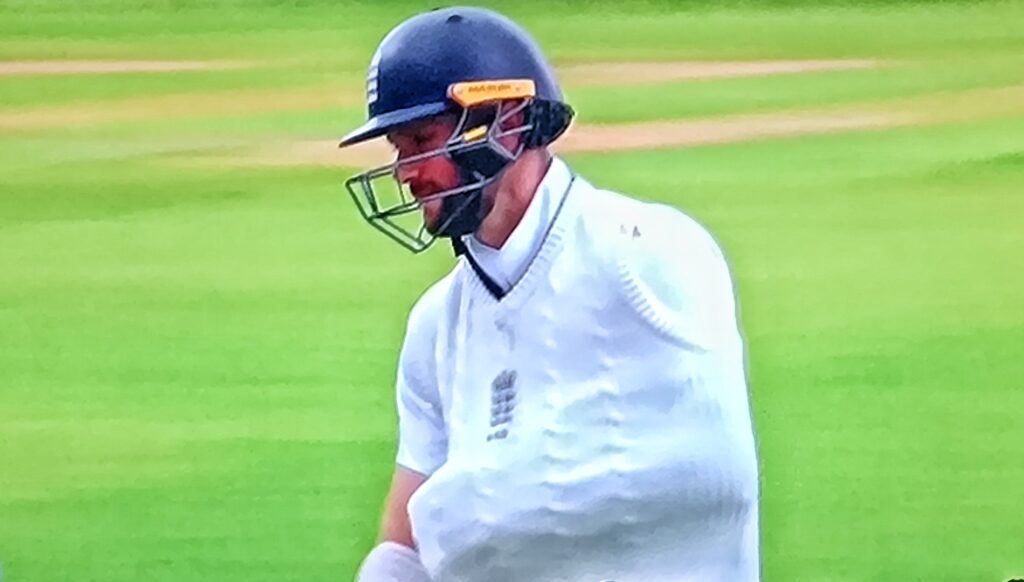
The match, a pulsating display of skill, grit, and raw emotion, culminated on a dramatic fifth day, with England’s Chris Woakes, battling a dislocated left shoulder, walking out to bat one-handed, his left arm tucked inside his sweater, embodying the unyielding spirit of this enthralling series.
Under the leadership of 25-year-old Shubman Gill, captaining for the first time, and guided by coach Gautam Gambhir, a young Indian side defied all odds to silence doubters who had written them off before they even set foot on English soil.
The series began with England, led by Ben Stokes and later Ollie Pope, holding a 2-1 lead after a record chase of 371 at Headingley and a stout defence of 193 at Lord’s. India, missing stalwarts Virat Kohli and Rohit Sharma, who retired abruptly before the tour, and Ravichandran Ashwin, who also stepped away, faced further challenges with Jasprit Bumrah missing two Tests to manage injury risks and Rishabh Pant sidelined for the fifth Test due to injury. Yet, this Indian team, under Gill’s youthful exuberance and Gambhir’s steely resolve, transformed adversity into opportunity, showcasing a tenacity that contrasted sharply with their struggles on the previous Australia tour.
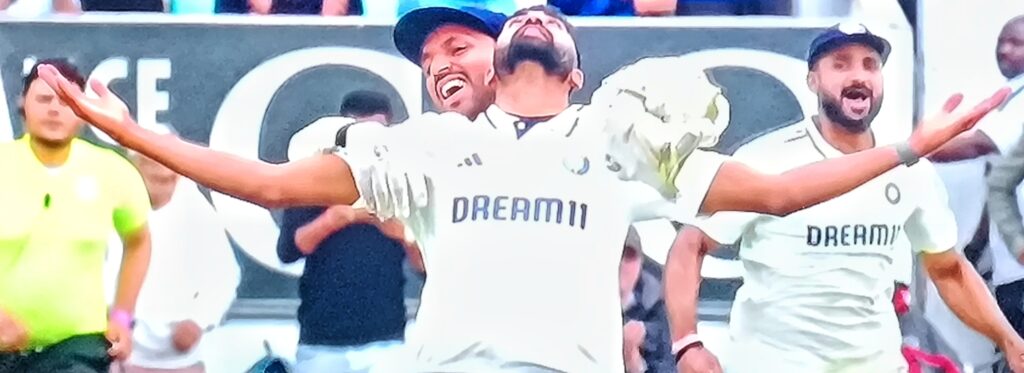
The Oval Test was a microcosm of the series’ intensity. India, batting first after losing their fifth consecutive toss, posted 224 in their first innings, with Karun Nair’s resilient 57 anchoring a shaky batting line-up against a fiery Gus Atkinson, who claimed five wickets. England responded with 247, but Mohammed Siraj’s fiery spell of 4/86, marked by his relentless energy and verbal sparring, swung momentum back to India. Siraj, sporting a Graham Thorpe headband in tribute to the late England legend, dismantled England’s middle order, his performance a nod to the emotional undercurrents of the match, which raised over £150,000 for mental health charities.
India’s second innings was a tale of redemption. Yashasvi Jaiswal’s resolute 118, despite being dropped twice, and Akash Deep’s maiden Test half-century as a nightwatchman propelled India to 396, setting England a daunting target of 374. Jaiswal’s majestic cover drives and Akash Deep’s fearless strokeplay, celebrated with a rare smile from Gambhir on the balcony, gave India a lead of 373. England’s chase, powered by centuries from Harry Brook (111) and Joe Root (105), seemed destined for victory. Brook’s audacious 91-ball ton, including a six off Prasidh Krishna that Siraj caught but carried over the boundary, and Root’s 39th Test hundred, dedicated to Thorpe with a poignant gesture to the skies, put England in control at 301/4.
But India, refusing to yield, staged a late fightback. Akash Deep dismissed Brook, caught by Siraj, and Prasidh Krishna, with 3/109, dismissed Root in quick succession. Root was caught behind after a feathered edge. As clouds gathered and bad light loomed, Siraj, bowling his 22nd over with speeds still touching 87mph, kept India’s hopes alive. The day ended prematurely due to rain, with England needing 35 runs and India four wickets, setting the stage for a nail-biting finale.

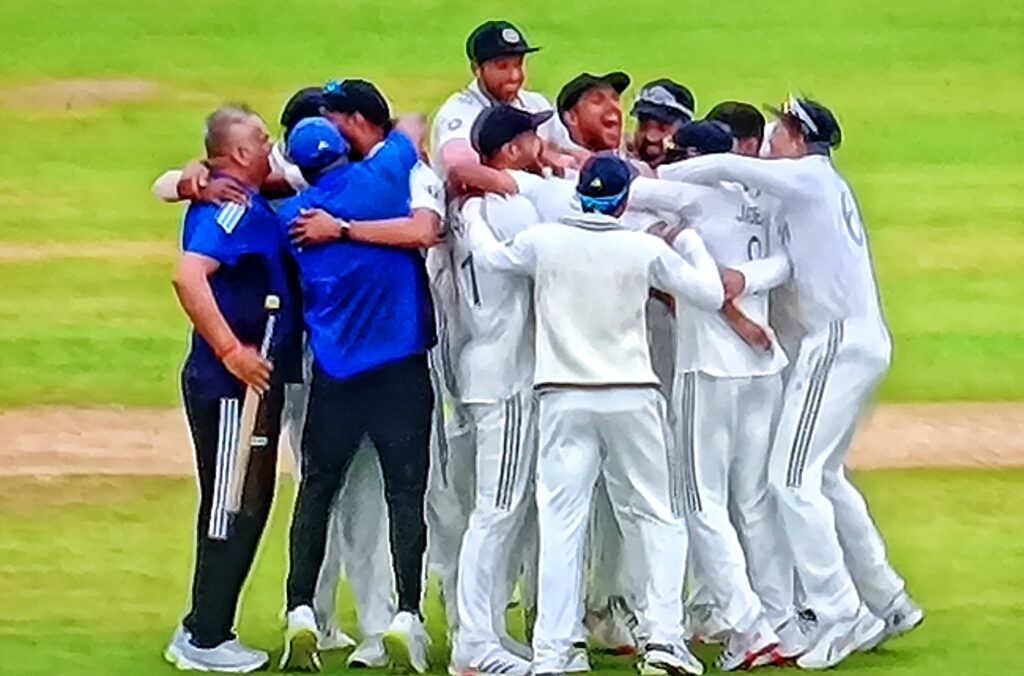
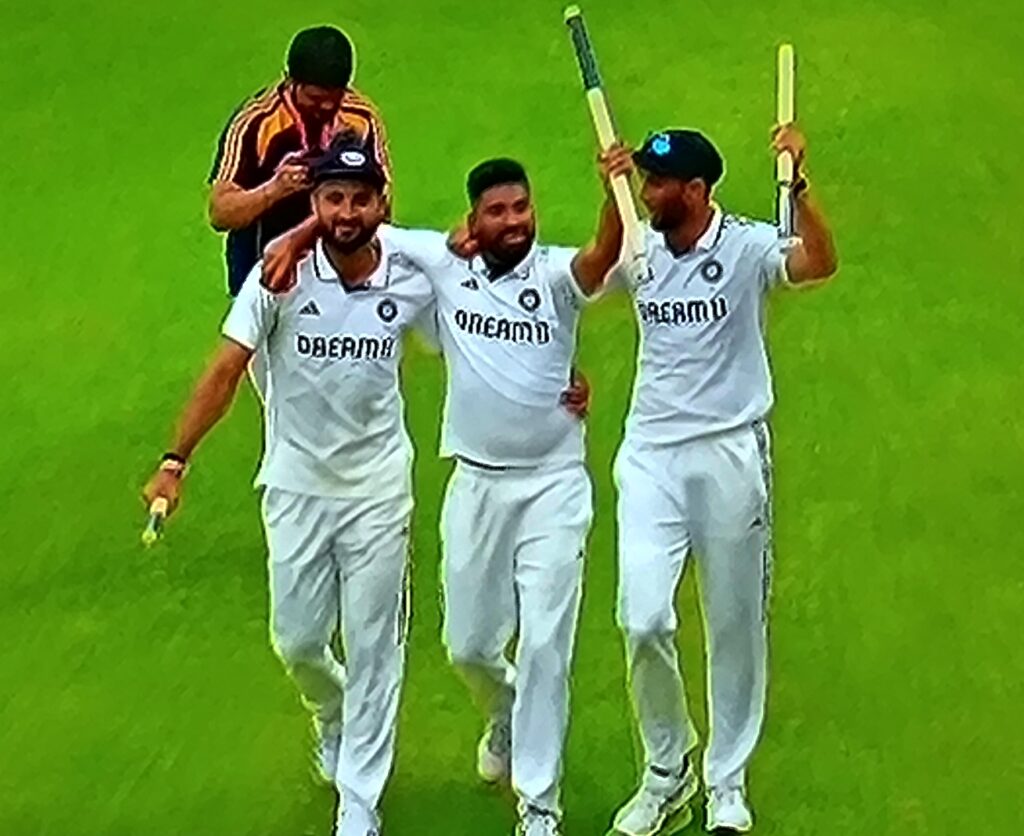
On the fifth day, The Oval was a cauldron of anticipation. England resumed at 339/6, with Jamie Smith and Jamie Overton at the crease. Siraj, named Player of the Match for his 5/104, struck early, getting Jamie Smith caught behind the wicket. Josh Tongue fell in quick succession, leaving England at 367/9. Woakes, despite his injury, walked out to a roaring crowd, his courage epitomising the series’ relentless spirit. With six runs needed, Siraj delivered a searing yorker that Gus Atkinson, swinging, couldn’t connect with, and the ball crashed into the stumps. The Oval erupted as India celebrated a victory that felt like a triumph of will.

Gill, with 754 runs in the series, including four centuries, was named Player of the Series alongside England’s Harry Brook (481 runs). His leadership, blending aggression with composure, marked him as a captain of immense promise. Gambhir, whose fiery exchanges with the English camp, including a spat with the Oval groundsman, added to the series’ rancour, proved his mettle as a coach. His strategic acumen, evident in India’s balanced bowling attack and bold batting approach, silenced critics who questioned his appointment after the Australia debacle.

The series was a testament to Test cricket’s enduring allure. From Gill’s double-century at Edgbaston to England’s collapse at Lord’s, every match swung like a pendulum. Sledging, dropped catches, and injuries—Woakes’ shoulder, Rishabh Pant’s absence—added layers of drama. KL Rahul, reflecting on the win, said, “So many questions about whether Test cricket stays or not, but both teams answered that here.” England’s Ollie Pope, gracious in defeat, acknowledged the series’ intensity: “It’s been a great advert for Test cricket.”
For India, this drawn series was a triumph of resilience. Without their senior core, they forced a draw against a formidable England side on their home turf. Siraj, whose belief in himself was inspired by a Google image captioned “believe,” symbolised India’s spirit. As he said post-match, “The Brook drop was a game-changer, but we fought hard.” For Gambhir, this was a vindication of his tough-love approach, setting the stage for India’s fearless new era.
This series marked a stark departure from India’s tour of Australia earlier in 2025, where a 3-1 defeat exposed frailties in the squad. In Australia, India’s batting crumbled under pressure from relentless pace bowling, and Shubman Gill was dropped from the Boxing Day test squad by his skipper, Rohit Sharma. Coach Gautam Gambhir’s tactics were criticised, with India often playing catch-up after early collapses.
In contrast, the England series showcased a revitalised India, emboldened by Gill’s proactive captaincy and Gambhir’s bold strategies. The team’s ability to fight back from deficits, as seen in the Oval chase and Edgbaston’s draw, highlighted a mental toughness absent Down Under, where defeats were often meek surrenders. The England tour also saw India’s bowlers thrive in seaming conditions, unlike their struggles on Australia’s tracks. Where Australia’s bowlers exploited India’s hesitancy, England’s attack met a side willing to counter-attack, with Jaiswal’s fearless strokeplay and Nair’s grit proving pivotal in the final test.
Throughout the India-England Test series of 2025, all-rounders from both teams played pivotal roles, significantly influencing the outcome of this tightly contested 2-2 series draw. India’s Ravindra Jadeja was a standout, becoming the first Indian to score over 500 runs at No. 6 or lower in a Test series, surpassing VVS Laxman’s record, while also taking 70 wickets across his career against England, including a notable 7 in this series. His marathon batting effort alongside Washington Sundar, who scored his maiden Test century, was crucial in securing a draw in the fourth Test at Old Trafford, with their unbroken 203-run partnership frustrating England’s bowlers. Washington Sundar emerged as a promising allrounder, his promotion to No. 5 after Rishabh Pant’s injury showcasing his adaptability and potential as India’s next elite allrounder. For England, Ben Stokes, despite battling injuries, delivered a historic performance as the first English captain to score a century and take a five-wicket haul in the same Test, contributing significantly with bat and ball before missing the final Test due to a shoulder injury. Chris Woakes also shone, and his brave move to come to bat in a sling in the second innings of the fifth Test, despite an injury, nearly clinched a dramatic victory for England. These all-rounders’ contributions, blending resilient batting and incisive bowling, were instrumental in the series’ thrilling ebb and flow, epitomising the intensity of Test cricket.
Gambhir’s emphasis on adaptability—rotating bowlers to maintain intensity and encouraging aggressive batting—contrasted with the conservative approach in Australia, where India often seemed unprepared for the opposition’s onslaught. This series, with its high-stakes battles and India’s refusal to buckle, signalled a turning point, transforming a team once written off into one that could stand toe-to-toe with a cricketing powerhouse on their home soil.
– global bihari bureau