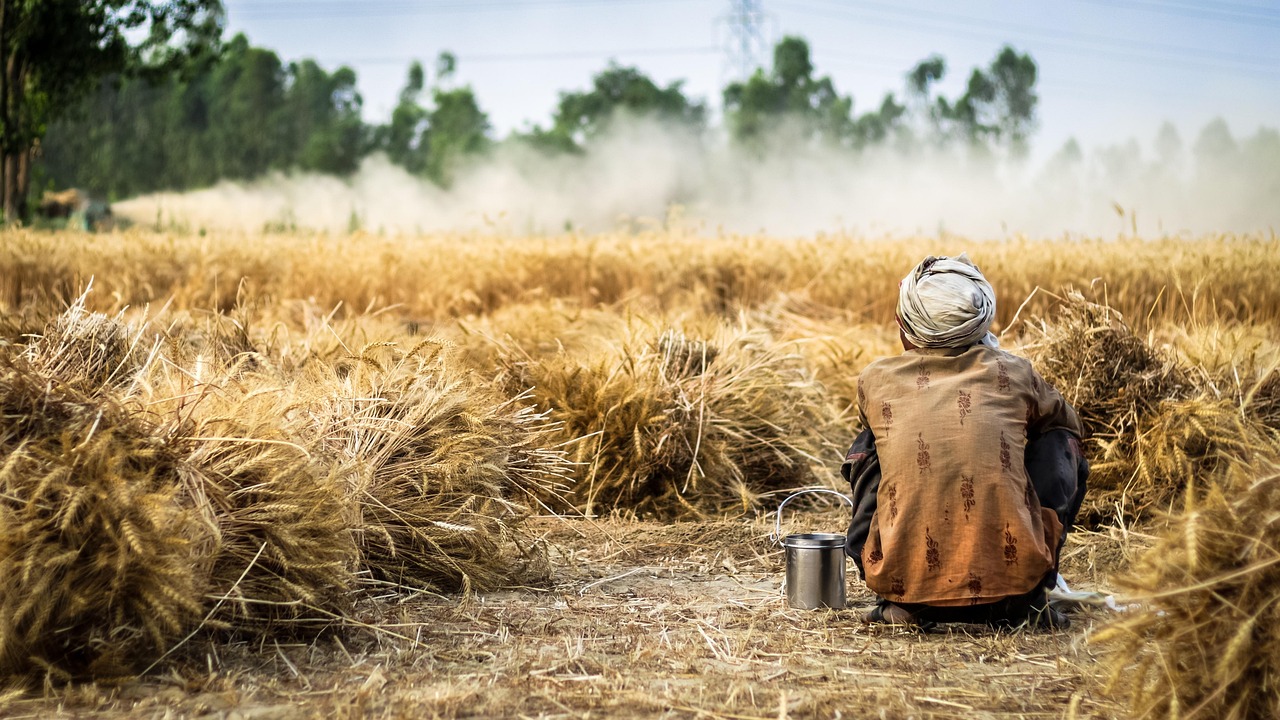
India’s Output Eases Food Price Pressures
Rome: The Food and Agriculture Organization (FAO) of the United Nations reported that its Food Price Index, a benchmark for global food commodity prices, averaged 128.0 points in June 2025, rising 0.5 percent from May 2025, with India’s robust agricultural output playing a pivotal role in stabilizing global cereal supplies and influencing price dynamics.
The index, tracking monthly changes in international prices of globally traded food commodities, was 5.8 per cent higher than June 2024 but remained below its March 2022 peak. India’s record-breaking wheat, maize, and rice production, as highlighted in the FAO’s Cereal Supply and Demand Brief, drives a projected global cereal production of 2,925 million tonnes in 2025, reinforcing India’s critical position in ensuring global food security and shaping trade flows, though weather risks and import dependencies pose challenges.
The FAO Cereal Price Index fell 1.5 per cent in June from May, driven by sharp declines in maize prices due to abundant supplies from Argentina and Brazil, alongside drops in sorghum and barley prices. Wheat prices rose due to weather-related concerns in the European Union (EU), the Russian Federation, and the United States of America (USA), but India’s higher-than-expected wheat yields mitigated global supply pressures, stabilising prices for millions of consumers worldwide. International rice prices dipped slightly, primarily for Indica varieties, reflecting softer demand, with India’s record rice output ensuring ample global availability. The FAO Vegetable Oil Price Index increased 2.3 per cent, led by gains in palm, soy, and rapeseed oils, with India’s substantial demand for palm oil, as one of the world’s largest importers, contributing to a nearly 5 per cent price surge, per the FAO report. The FAO Meat Price Index rose 2.1 per cent to an all-time high, driven by bovine, pig, and ovine meat price increases, while poultry prices fell. The FAO Dairy Price Index edged up 0.5 per cent, with butter prices hitting a record high due to tight supplies in Oceania and the EU, exacerbated by strong demand from India and other Asian markets. The FAO Sugar Price Index dropped 5.2 per cent, reaching its lowest level since April 2021, largely due to improved production outlooks in India, Brazil, and Thailand, where favourable weather and expanded plantings promise higher outputs.
The FAO’s Cereal Supply and Demand Brief projected global cereal production in 2025 at 2,925 million tonnes, up 0.5 per cent from the previous month and 2.3 per cent above 2024, with India’s agricultural prowess anchoring this record high. India’s wheat output, part of the global forecast of 805.3 million tonnes, benefits from higher-than-expected yields, positioning India as a major exporter that counters supply disruptions in other regions, as noted in the FAO brief. India’s larger-than-anticipated maize planted area and favourable conditions drive global maize production growth, offsetting reductions in Ukraine and the EU due to dry weather. Global rice production is expected to reach a record 555.6 million tonnes on a milled basis, with India’s improved prospects, alongside Bangladesh, Pakistan, and Viet Nam, leading the surge, despite declines in Iraq and the USA. However, forecasts of hot and dry weather in parts of India threaten maize yields, potentially impacting farmers and rural communities reliant on stable harvests. Global cereal utilisation in 2025/26 is forecast at 2,900 million tonnes, up 0.8 per cent from 2024/25, with India’s rising rice consumption, driven by food demand and sustained ethanol production for biofuel, significantly shaping global trends. World cereal stocks are projected to reach 889.1 million tonnes, a 2.2 per cent increase, with India’s wheat and rice contributions bolstering a global stocks-to-use ratio of 30.3 per cent, ensuring a comfortable supply outlook.
Global cereal trade in 2025-26 is projected at 486.9 million tonnes, up 1.2 per cent from 2024-25, with India’s wheat and rice exports fueling growth, particularly in rice, which is expected to reach a record 60.8 million tonnes. India’s role as a leading rice exporter, supported by expanded plantings and favourable monsoon conditions, strengthens its influence on global markets, though its heavy reliance on imported vegetable oils, particularly palm oil, exposes it to price volatility, as seen in the FAO’s reported 2.3 per cent rise. India’s strategic grain reserves, emphasised in the FAO’s Agricultural Market Information System (AMIS) Market Monitor, align with recommendations for small, simple, and smart reserves, enabling India to buffer domestic price fluctuations and support exports, per FAO. However, the potential for weather-related yield reductions in maize could strain India’s rural economy, requiring enhanced irrigation and climate-resilient farming practices. India’s growing demand for dairy and vegetable oils, coupled with its sugar production improvements, further shapes global price trends, reinforcing its dual role as a producer and consumer in the food commodity landscape. The FAO’s projections underscore India’s centrality in maintaining global food security, with its agricultural output and trade policies directly influencing supply chains and price stability for billions worldwide.
– global bihari bureau