
Indian Embassy Launches Baku Evenings
Baku Evenings Opens with Sanskrit, Hindi
Baku: On a cool February evening in Baku, the sound of Sanskrit shlokas and animated Hindi conversations drifted through the halls of the Embassy of India, as young Azerbaijani students gathered to celebrate languages that originated thousands of kilometres away. The occasion marked the launch of “Baku Evenings,” a new cultural series inaugurated with an interactive session devoted to Sanskrit and Hindi.
The programme featured Dhruv Trivedi, Lecturer of Sanskrit and Hindi at the Azerbaijan University of Languages, where both languages are taught within the foreign languages curriculum. While Hindi and Sanskrit are not spoken in daily life in Azerbaijan, their presence at the university level reflects a sustained—if specialised—academic engagement.
Students from the university demonstrated their learning through recitations of classical Sanskrit verses and spontaneous exchanges in Hindi, drawing applause from an audience that included members of the Indian diaspora and Azerbaijani social media influencers.
Azerbaijan’s linguistic environment is shaped primarily by Azerbaijani, with Russian and English widely used in higher education and business. In that context, the study of Indian languages remains niche. Yet educators say that student interest has been consistent, driven by curiosity about India’s literary traditions, philosophical texts and contemporary cultural output. Sanskrit, taught largely as a classical language, attracts those interested in comparative linguistics and ancient knowledge systems, while Hindi’s appeal often extends to modern literature, cinema and global communication.
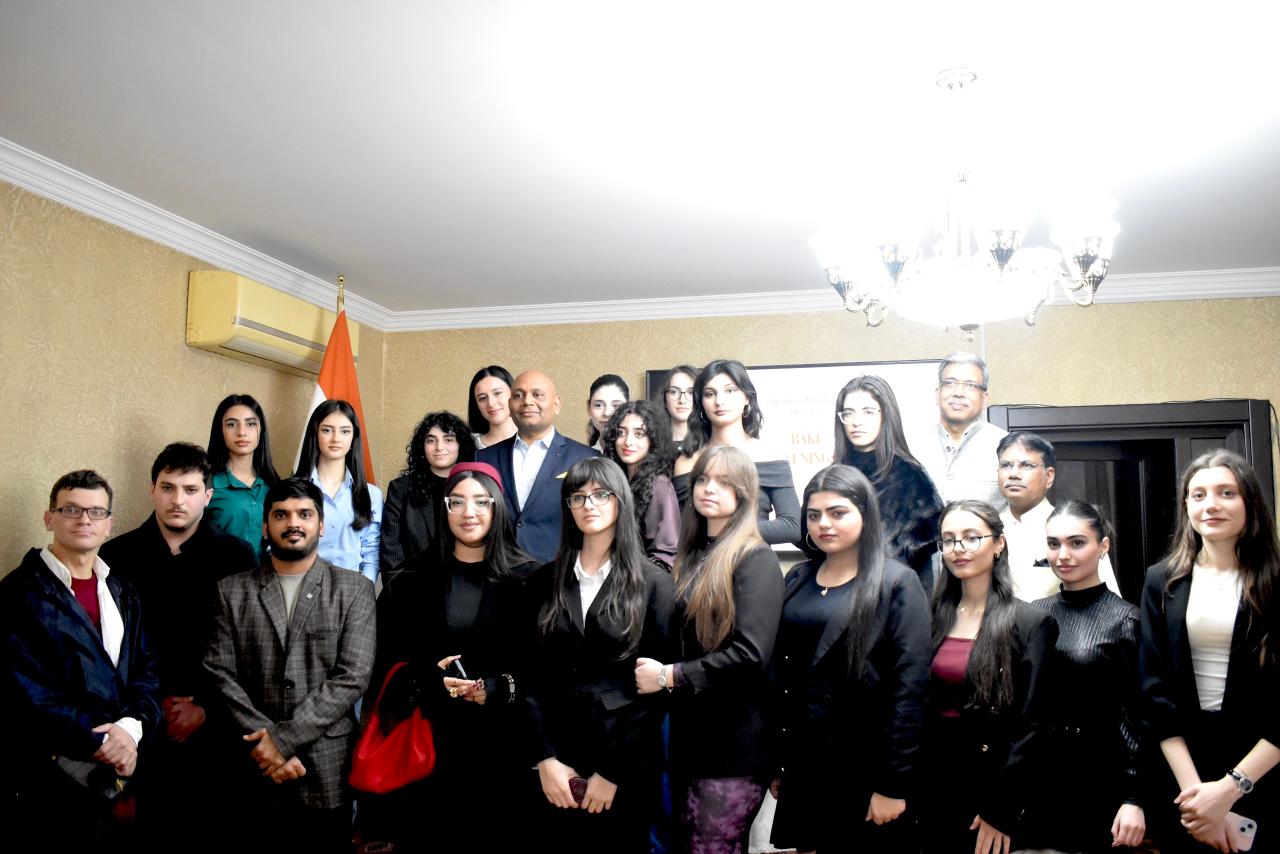
Ambassador Abhay Kumar engaged directly with the students in an informal dialogue rather than delivering a formal address. Participants spoke about the intellectual discipline required to master Sanskrit grammar and the expressive range of Hindi poetry and prose. One student described Sanskrit as offering “access to ideas preserved across centuries,” while another said speaking Hindi allowed her to “connect with people and stories beyond translations.”
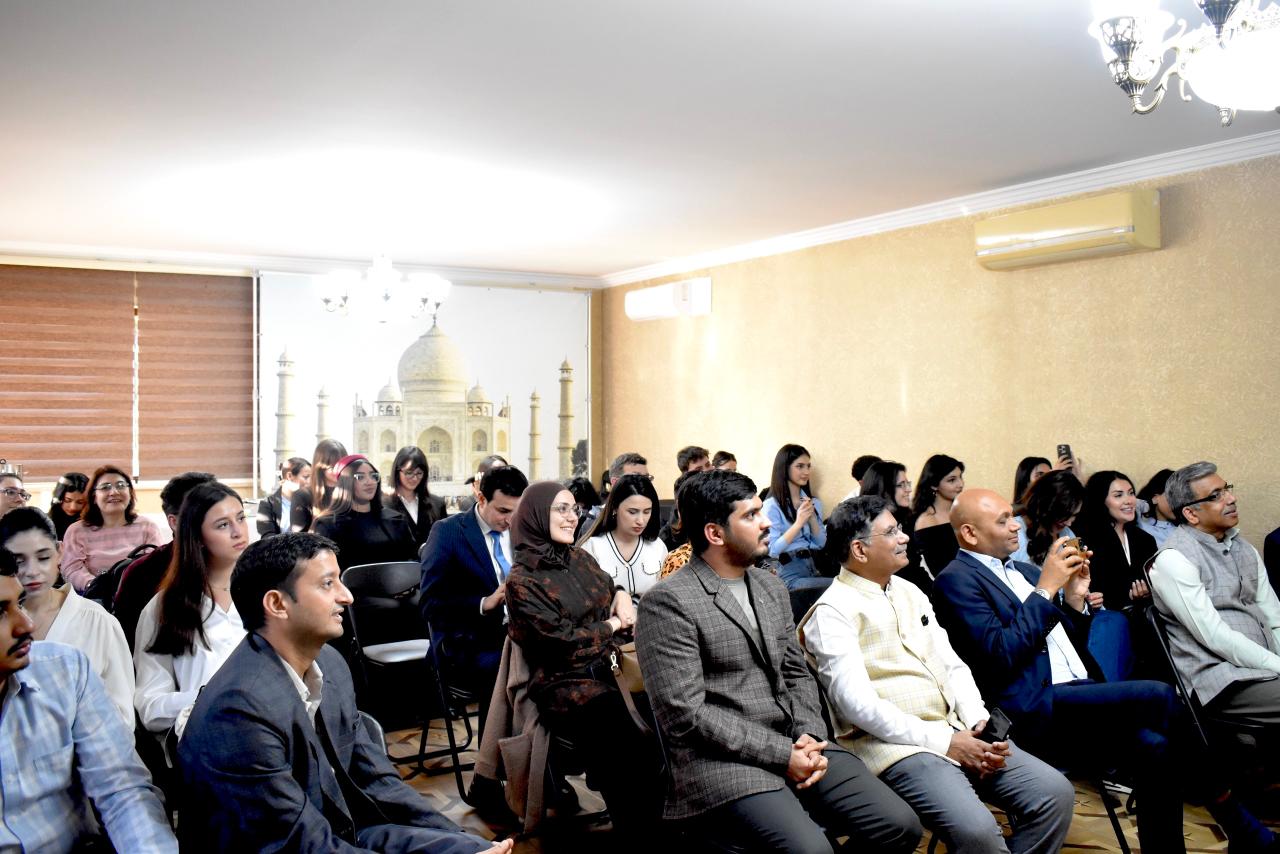
Expressing satisfaction at the turnout and the enthusiasm on display, Ambassador Kumar said, “Initiatives like Baku Evenings bring alive the shared values and cultural affinities between our two nations. We are inspired by the dedication of the young Azerbaijani students, and look forward to many more such enriching interactions.” His remarks underscored the Embassy’s intent to make the series a sustained platform for dialogue rather than a one-off cultural showcase.
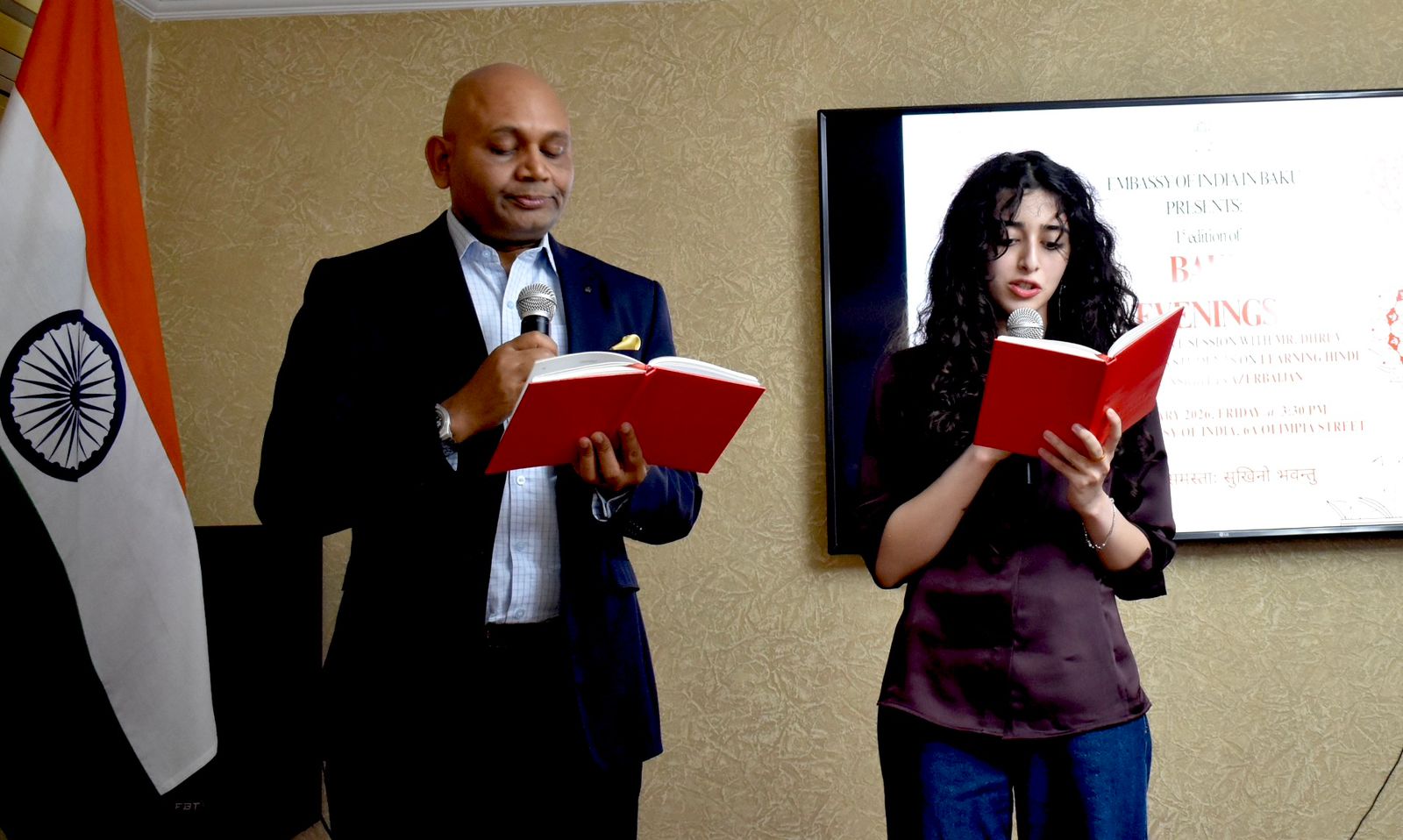
The evening concluded with a reading from Gitanjali by Rabindranath Tagore, whose poetry has long travelled across linguistic and national boundaries. Guests later sampled Indian cuisine, adding a culinary dimension to the cultural exchange.
The launch of Baku Evenings comes amid steady growth in India–Azerbaijan engagement spanning energy cooperation, trade and educational contacts. Although cultural diplomacy represents a smaller strand within the bilateral relationship, language initiatives are increasingly viewed as tools for deepening people-to-people ties. Embassy officials described the new series as a platform to promote Indian culture, arts, education and heritage through regular community-oriented events in Azerbaijan.
The Indian community in Azerbaijan remains relatively small, consisting largely of professionals and students, but it has played a visible role in sustaining cultural outreach activities. Observers note that while Hindi and Sanskrit are far from mainstream subjects in Azerbaijan’s education system, their institutional foothold at the university level, combined with embassy-supported programming, signals a gradual broadening of academic and cultural exchange.
As the inaugural session drew to a close, clusters of students lingered to discuss pronunciation subtleties and literary references, their conversations moving fluidly between Azerbaijani, English and Hindi. In a city where Azerbaijani dominates public life and global languages shape commerce, the confident recitation of Sanskrit and exchange in Hindi offered a quieter testament to curiosity and connection—suggesting that even distant languages can find resonance when carried by determined young voices.
– global bihari bureau