New Traceability Plan Puts Spotlight on Seafood Value
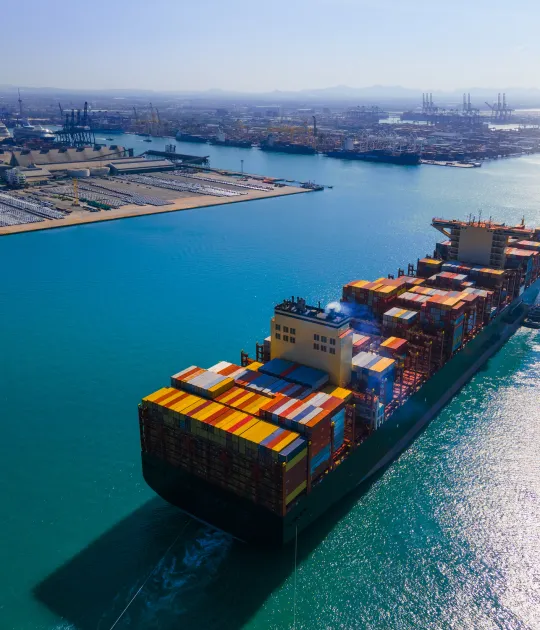
New Delhi: India’s fisheries administration today placed traceability at the centre of its export strategy, unveiling the National Framework on Traceability in Fisheries and Aquaculture 2025. The document proposes a nationwide digital system that will allow real-time tracking of seafood from “farm to plate” and “catch to consumer.”
According to the Department of Fisheries, the system will rely on tools such as blockchain, Internet of Things (IoT) devices, Global Positioning System (GPS) tools and Quick Response (QR) codes, and is designed to unify a sector where traceability is currently fragmented across states, production systems and exporters. By creating a common digital backbone, the framework aims to raise food safety standards, meet global sustainability requirements and ensure that even small-scale fishers and farmers remain part of export-linked supply chains.
The release of the framework became the centrepiece of World Fisheries Day 2025 celebrations in Delhi, held under the theme of strengthening value addition in India’s seafood exports. Union Minister Rajiv Ranjan Singh, speaking through a recorded message, framed the launch as a step toward deepening India’s access to competitive global markets. He emphasised that compliance with packaging norms, international certification, biosecurity measures and digital documentation has become non-negotiable for exporting countries, and said India must leverage Free Trade Agreements (FTAs) more strategically to expand its reach. His appeal for coordinated action was aimed both at industry and at state governments, which share regulatory responsibility for aquaculture and capture fisheries.
The framework was released alongside a cluster of operational documents: a Standard Operating Procedure (SOP) for mariculture, an SOP for developing and managing smart and integrated fishing harbours, another SOP for basic infrastructure at notified marine fish landing centres, guidelines for reservoir fisheries management, and a compendium of coastal aquaculture guidelines. Together, these documents signal an attempt to modernise physical infrastructure while tightening regulatory systems that influence export quality.
Minister of State George Kurian described the sector’s scale-up over the past decade—fish production rising from 96 lakh tonnes to 195 lakh tonnes—while arguing that the next phase must focus less on volumes and more on value addition. The government’s target of ₹1 lakh crore in seafood exports by 2030, with 30% coming from higher-value processed products, dominated the economic messaging at the event. Kurian noted that investments of ₹38,572 crore under schemes including the Pradhan Mantri Matsya Sampada Yojana (PMMSY) had laid the groundwork for the current expansion.
Minister of State S.P. Singh Baghel drew attention to the three crore people whose livelihoods depend on fisheries and aquaculture, and to the rapid rise in registered exporters—signals, he said, of widening participation in global markets. His remarks highlighted how digitisation, Goods and Services Tax (GST) simplification and training interventions have improved ease of doing business for small and medium enterprises in the sector.
Secretary of Fisheries Abhilaksh Likhi placed the traceability framework in the context of export performance: 16.85 lakh tonnes of seafood exported in 2024–25, representing an 88% increase over the decade, with sectoral growth averaging 9% annually. He also underlined ecological compliance efforts, particularly the Marine Mammal Stock Assessment Project and the adoption of Turtle Excluder Devices (TEDs), which have become important for meeting international sustainability requirements.
The Food and Agriculture Organization (FAO) Representative in India, Takayuki Hagiwara, linked India’s efforts to global developments. He noted the role of the Blue Port Initiative in attracting private investment for harbour modernisation and warned that antimicrobial resistance in aquaculture supply chains poses a growing threat to market access. FAO, he said, is working with the government to reduce drug use across the seafood processing value chain as part of its support for sustainability and resilience.
The event drew delegates from 19 embassies and multilateral bodies, including the World Bank, the Agence Française de Développement (AFD), the German Agency for International Cooperation (GIZ), the Japan International Cooperation Agency (JICA), the Bay of Bengal Programme and the Marine Stewardship Council. Their participation signalled the increasing diplomatic focus on fisheries within India’s trade and sustainability negotiations. Several of these governments—particularly Thailand, Indonesia, Japan and Australia—have recently held bilateral discussions with India on export promotion and capacity-building.
Technical sessions through the day focused on the expansion of inland and freshwater fish exports, the scope for innovation in processing, digital traceability systems and the branding of value-added products. Inputs from these discussions will feed into Phase 2 of the Pradhan Mantri Matsya Sampada Yojana, which aims to deepen market diversification and modernise the supply chain from harvesting units to export hubs. The overarching question emerging from the discussions was whether India can align its infrastructure, compliance systems and small-scale producers quickly enough to meet the export goals it has set for the end of the decade.
– global bihari bureau