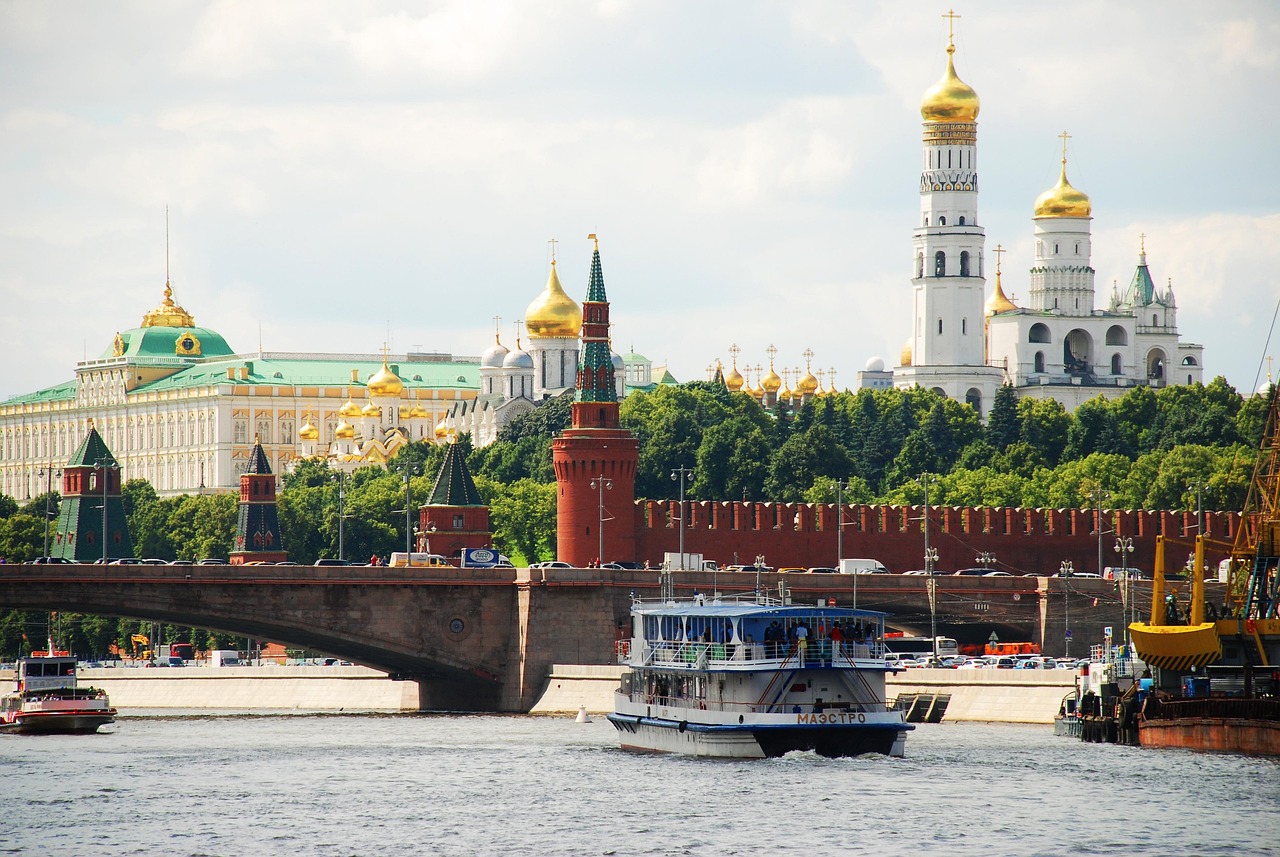
Kremlin, Moscow
FTA Momentum Builds as India Holds Talks in Moscow
Moscow: India’s effort to expand its network of free trade agreements (FTAs) gained renewed momentum this week as Commerce Secretary Rajesh Agrawal reviewed the ongoing negotiations for an India–Eurasian Economic Union (EAEU) free trade pact during a series of meetings with senior Russian and Eurasian Economic Commission officials in Moscow. The visit, positioned against India’s broader strategy to secure deeper market access and diversified supply chains, comes at a time when New Delhi is negotiating or exploring trade arrangements across multiple regions, including the Gulf, Africa and Latin America.
Officials familiar with the discussions said the Moscow review was intended to ensure that early progress on the proposed pact is maintained. The Commerce Secretary met Andrey Slepnev, Minister in charge of Trade at the Eurasian Economic Commission, and Mikhail Yurin, Russia’s Deputy Minister of Industry and Trade. He also addressed a plenary gathering of Indian and Russian business leaders, where companies were urged to align their commercial plans to reach US$100 billion in annual bilateral trade by 2030 — a target endorsed by the leaders of both countries.
At the review meeting with Minister Slepnev, the Commerce Secretary examined the next steps for the free trade agreement in goods. The Terms of Reference signed on 20 August 2025 set an 18-month work plan for negotiations. Officials said the proposed framework aims to open new markets for Indian exporters, including micro, small and medium enterprises, farmers and fishermen. With guidance from the political leadership on both sides, the negotiations are also expected to consider services and investment as they advance.
In his meeting with Deputy Minister Yurin, the Commerce Secretary focused on trade diversification, regulatory predictability and practical solutions to reduce barriers faced by businesses. Both sides discussed a time-bound pathway for expanding cooperation across pharmaceuticals, telecom equipment, machinery, leather, automobiles and chemicals. They also agreed to quarterly regulator-level engagement to address certification requirements, agricultural and marine product listings, prevention of monopolistic practices and other non-tariff challenges. Logistics, payments and standards — areas that frequently slow cross-border trade — were identified as priority issues for sustained follow-up.
At the industry plenary, business leaders were told that India’s expanding digital public infrastructure, upgraded logistics corridors, and industrial partnerships offer scope for co-production and co-investment in both goods and services. Companies were encouraged to broaden the export basket, shift from exploratory discussions to implementable contracts, and build supply chains that are resilient to geopolitical shocks. Officials said the emphasis was on generating sustainable value, jobs and long-term economic stability in both countries.
India’s renewed urgency on FTAs also reflects broader external pressures. The United States imposed significant reciprocal tariffs on Indian exports in 2025 — particularly targeting labour-intensive sectors such as textiles, leather and chemicals — prompting New Delhi to accelerate its diversification strategy. Analysts argue that these tariffs not only risk slowing India’s export growth but have also catalysed India’s resolve to deepen trade ties beyond its traditional partners. By simultaneously pushing FTAs with the Eurasian Economic Union, the Gulf, Europe, Latin America and Africa, India is pursuing a multi-vector trade policy aimed at building resilience and reducing over-reliance on any single market.
India’s parallel negotiations in the Gulf Cooperation Council bloc — including Saudi Arabia, the United Arab Emirates, Qatar, Kuwait, Bahrain and Oman — remain among its most advanced tracks outside the Indian subcontinent. The formal resumption of India–Gulf Cooperation Council free trade talks in late 2022 has continued through 2024–2025, with both sides signalling strong political will to conclude a modern agreement covering goods, services and investment. Officials say the Gulf remains a strategic priority because of established energy ties, a large Indian diaspora, and rapidly expanding investment flows, particularly with the UAE, with which India already has a Comprehensive Economic Partnership in force.
India’s outreach to Africa has moved largely through targeted bilateral engagements and exploratory studies rather than continent-wide negotiations. Mauritius became the first African nation to conclude a Comprehensive Economic Cooperation and Partnership Agreement with India in 2021, and New Delhi has since used it as a template for investment facilitation, services cooperation and technology partnerships in the region. Discussions with several African economies on trade facilitation, digital payments linkages and pharmaceutical supply chains have expanded, although officials acknowledge that India is not currently engaged in African Continental Free Trade Area negotiations. Instead, India has focused on sectoral cooperation and regulatory harmonisation with select partners.
In Latin America, India has steadily upgraded long-dormant trade arrangements. Negotiations with the Southern Common Market bloc — comprising Brazil, Argentina, Uruguay and Paraguay — have proceeded intermittently over the past few years, with both sides conducting technical rounds to expand the limited preferential trade agreement currently in place. India has also intensified bilateral commercial engagement with Mexico, Chile and Peru, including discussions on expanding market access for pharmaceuticals, textiles, marine products and information technology services. Officials say Latin America’s resource base and demand for diversified supply chains make it a region of growing strategic interest for India’s outward trade policy.
Progress with the European Union has been considerably slower. India and the European Union relaunched negotiations in 2022 after a nine-year hiatus, covering a free trade agreement, an investment protection agreement and a geographical indications pact. Multiple rounds have been held through 2024 and 2025, but significant gaps remain on digital trade rules, intellectual property standards, sustainability commitments and market access for automobiles, alcohol and agricultural products. While both sides have publicly reiterated their intention to push the negotiations forward, diplomats familiar with the process say a breakthrough is unlikely without political movement on issues that have remained unresolved for more than a decade.
The Moscow meetings are being seen as part of India’s broader push to lock in secure and diversified trading arrangements as it works toward its 2047 goal of becoming a developed economy. Whether the India–EAEU negotiations can maintain the pace required to conclude a meaningful free trade agreement within the stipulated timeline will depend on how effectively both sides manage sector-specific sensitivities and regulatory challenges in the coming months.
– global bihari bureau