Rajnath Singh Reviews Troops, Releases Procurement Manual
Jaisalmer/New Delhi: Defence Minister Rajnath Singh combined frontline troop engagement in Jaisalmer with high-level policy and procurement decisions in New Delhi today, underscoring operational vigilance alongside a major upgrade of military capabilities.
Today’s events—Singh’s troop visit, ₹79,000 crore acquisitions, Defence Procurement Manual 2025 launch, and naval review—align frontline deterrence with procurement reforms and indigenisation to sustain military readiness.
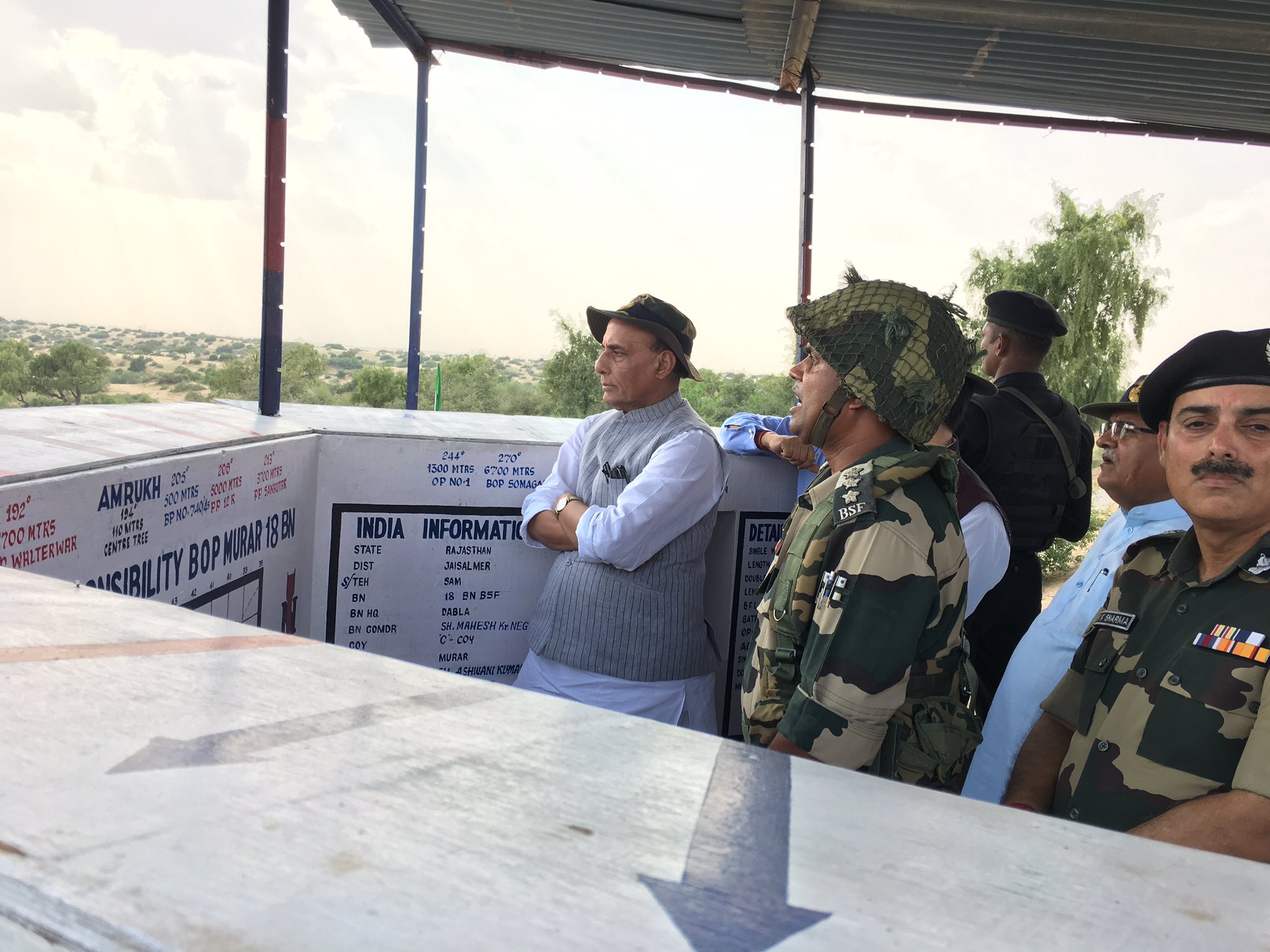
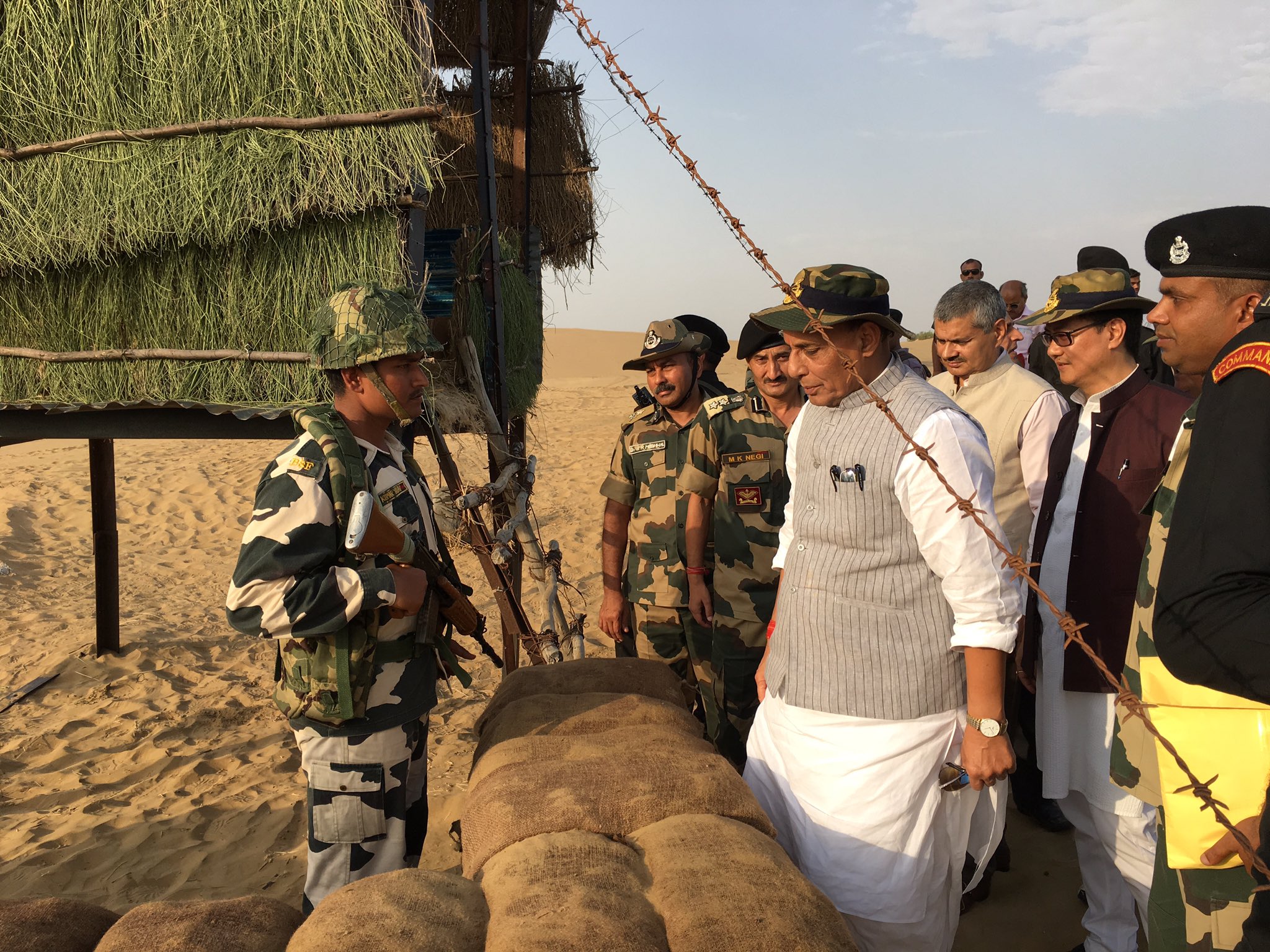
During a visit to forward areas in the Thar Desert, the Minister joined soldiers for a Barakhana, reviewed combat readiness, and inaugurated infrastructure projects. He told troops that Operation Sindoor had demonstrated India’s resolve and served as a global signal of preparedness. The operation, he said, remains on pause rather than concluded, and the armed forces must stay alert against persistent threats. He added that any hostile action would trigger a decisive counter, and asserted that Pakistan would “think twice before attempting any misadventure against India”.
In New Delhi, the Defence Acquisition Council (DAC), under his chairmanship, approved capital acquisition proposals worth approximately ₹79,000 crore. The Indian Army gained Acceptance of Necessity for the tracked Nag Missile System Mk-II, a fire-and-forget weapon to destroy tanks, bunkers, and field defences; the Ground Based Mobile ELINT System for continuous tracking of enemy radar and radio signals; and high-mobility vehicles with integrated cranes for supply operations across mountains, plains, and waterways.
The Indian Navy secured approvals for Landing Platform Docks to conduct amphibious landings with the Army and Air Force, as well as humanitarian, disaster relief, and peacekeeping missions; 30 mm Naval Surface Guns for close-range engagements and anti-piracy patrols alongside the Coast Guard; Advanced Light Weight Torpedoes, developed by DRDO’s Naval Science and Technological Laboratory, to engage conventional, nuclear, and small submarines; Electro-Optical/Infrared Search and Track Systems; and precision-guided ammunition for 76 mm Super Rapid Gun Mounts.
The Indian Air Force received clearance for the Collaborative Long Range Target Saturation/Destruction System, an autonomous platform able to take off, navigate, identify targets, and deliver ordnance in contested zones.
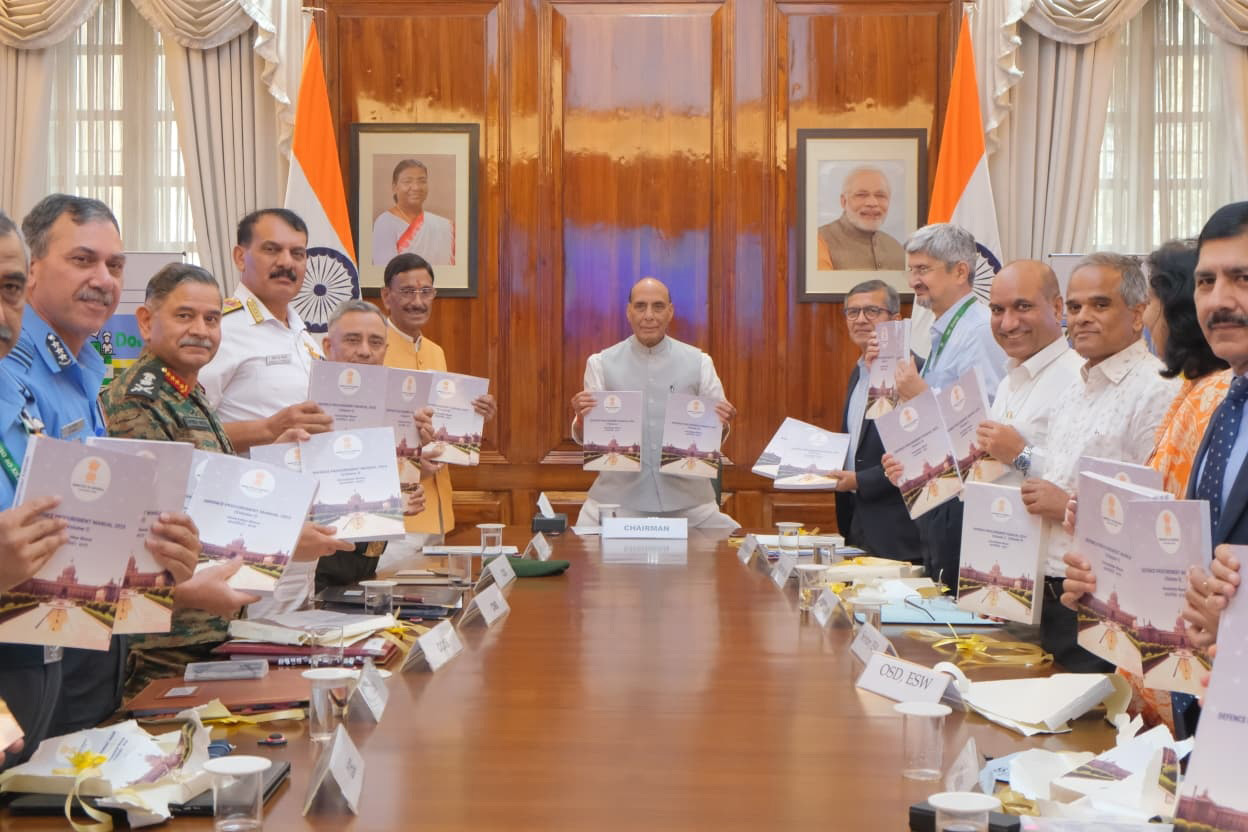
Concurrently, the Minister launched the Defence Procurement Manual 2025 (DPM 2025), effective November 1, 2025. The manual will oversee annual revenue purchases of roughly ₹1 lakh crore across the services and the Ministry of Defence organisations. It introduces streamlined rules to speed up acquisitions, standardise practices, and bolster domestic industry involvement while maintaining transparency and accountability.
Notable changes include capping liquidated damages at 10 per cent only for severe delays, with a reduced rate of 0.1 per cent per week for indigenously developed items; guaranteed orders for up to five years or more for products designed locally by public or private entities; permission for limited tender enquiries up to ₹50 lakh, and higher in justified cases; removal of the prior requirement for clearance from the former Ordnance Factory Board when sourcing elsewhere; and a 15 per cent contingency allowance in contracts for ship repairs, refits, and aircraft overhauls to limit downtime. Proprietary Article Certificate rules now carry a two-year initial validity.
All requests for proposals (RFPs) issued on or after November 1, 2025, will follow DPM 2025. Cases with RFPs issued by October 31, 2025, remain under the amended DPM 2009. Retracted RFPs reissued from November 1 onward will adopt the new manual. The document is divided into two volumes: Volume I contains 14 chapters on core procedures, including new sections on fostering innovation and indigenisation, information and communication technology acquisitions, and consultancy services; Volume II compiles forms, appendices, and related government orders. A digital copy is accessible on the Ministry of Defence website.
In Jaisalmer, the Minister opened Shauryavan, a desert botanical and cacti garden symbolising endurance and environmental care. He paid homage at the Jaisalmer War Memorial under the Bharat Ranbhoomi Darshan programme and launched a holographic light and sound presentation showcasing captured war relics and Army heritage. He described the Barakhana as a reflection of national unity, with troops from varied faiths, regions, and backgrounds sharing a meal.
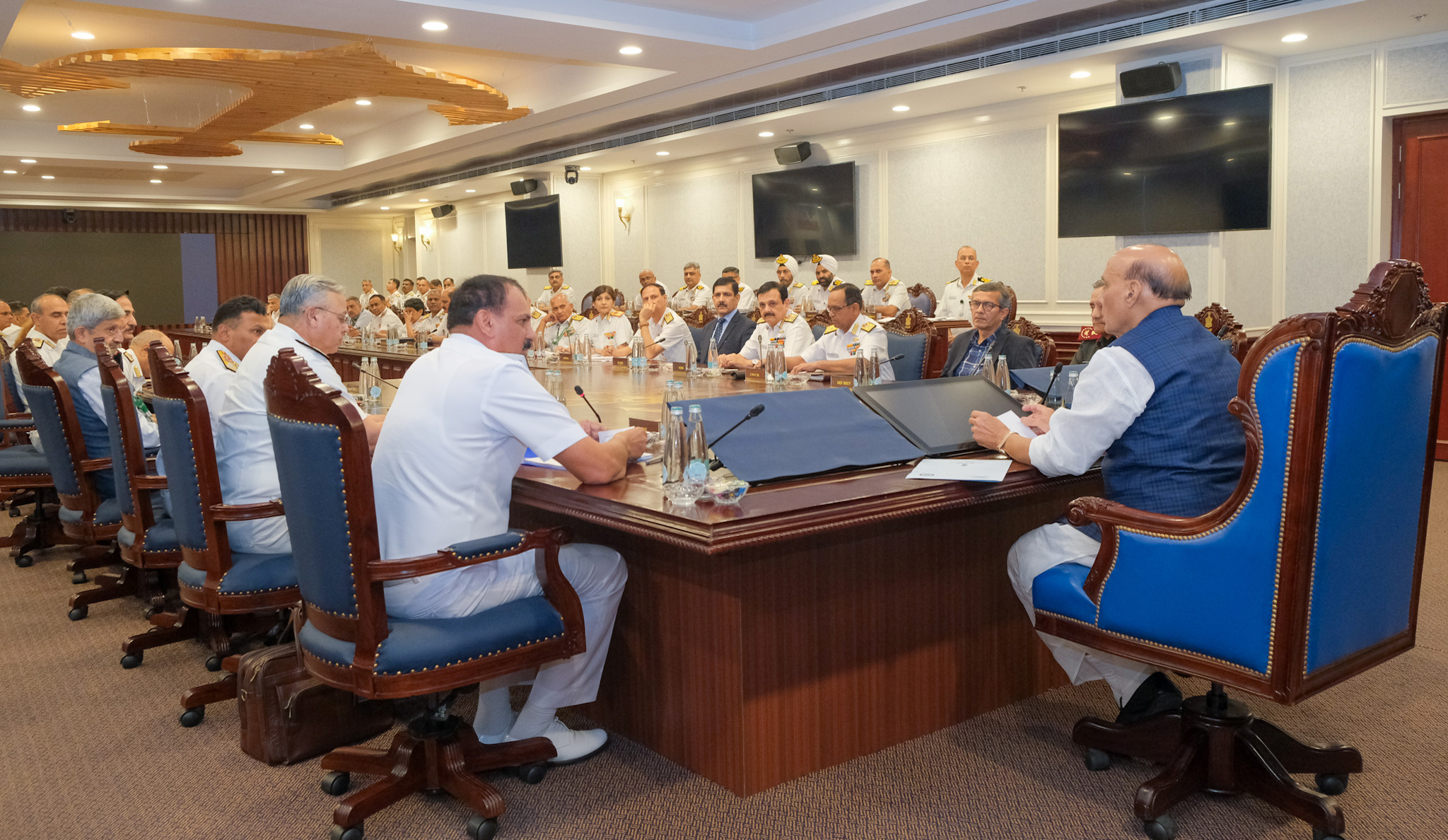
At the Naval Commanders’ Conference in New Delhi, the Minister stated that naval deployments during Operation Sindoor confined an adversary to coastal waters and displayed operational proficiency. He noted the Navy’s presence in the Indian Ocean Region reassures partners and deters disruption. In the past six months, Indian warships escorted 335 merchant vessels carrying 1.2 million metric tonnes of cargo valued at $5.6 billion.
Singh reported that 67 per cent of naval capital contracts over the last decade went to Indian firms. The Navy is advancing 194 indigenisation projects through iDEX, Technology Development Fund, SPRINT, and Make-in-India programmes. Project 17A frigates, with more than 75 per cent domestic content, have generated around 1.27 lakh jobs. Contracts worth ₹315 crore were recently placed with smaller shipyards for utility craft. Aviation efforts include multi-role maritime reconnaissance aircraft, utility helicopters, twin-engine deck-based fighters, and shipborne unmanned aerial systems.
The Minister emphasised that modern warfare demands equal focus on equipment, doctrine, and execution, noting that fleet size and technology must be matched by tactical flexibility and adaptability. He called for progress in three areas: capability enhancement, personnel welfare, and partnerships with industry, academia, and international navies.
Events in Jaisalmer and New Delhi were attended by Chief of Defence Staff General Anil Chauhan, Chief of the Army Staff General Upendra Dwivedi, Chief of the Naval Staff Admiral Dinesh K Tripathi, Defence Secretary Rajesh Kumar Singh, Vice Chief of the Army Staff Lieutenant General Pushpendra Singh, Chairman DRDO Dr Samir V Kamat, Secretary (Defence Production), Secretary (Ex-Servicemen Welfare), Financial Advisor (Defence Services) Dr Mayank Sharma, and other senior officials.
The Defence Minister is scheduled to visit forward positions on October 24 to observe a Southern Command capability demonstration and address the Army Commanders’ Conference.
– global bihari bureau