Photos by Rahul Laxman Patil
 By Rahul Laxman Patil*
Panchgarh-1 Poll Tests Border Trade and Political Stability
Panchgarh: Long before it entered the arithmetic of modern parliamentary politics, Panchgarh formed part of the Siliguri district under British India, a region shaped by porous borders, shared markets and interlinked communities. That geography continues to define Panchgarh-1, Bangladesh’s northernmost parliamentary constituency, where political choices are inseparable from history, border economics and regional memory. Located along the India–Bangladesh border and linked to key trade routes, the seat occupies a strategic place in Bangladesh’s domestic politics and its engagement with neighbouring India, Nepal and Bhutan. As Bangladesh approaches its 13th National Parliamentary Elections, the contest in Panchgarh-1 has drawn attention well beyond the district’s agrarian landscape.
Also read:
- Bangladesh Elections: Dhaka-14 and the Battle for Urban Trust
- Between Regret and Rights: Bihari Muslims in Bangladesh
- Bangladesh Poll 2026: Minority Vote Key in BNP–Jamaat Fight
The constituency’s strategic relevance is reinforced by its proximity to the Banglabandha land port, one of Bangladesh’s most important overland gateways connecting the country with India, Nepal and Bhutan. This corridor has elevated Panchgarh-1’s importance in discussions on cross-border trade, logistics and sub-regional connectivity. For voters, these strategic considerations translate into everyday concerns, ranging from agricultural exports and market access to employment opportunities and cross-border healthcare. As a result, electoral expectations here extend beyond routine development pledges to include stable border management, infrastructure expansion and pragmatic relations with India.
Panchgarh-1 also carries electoral weight because of its shifting political history. Traditionally considered a Bangladesh Nationalist Party stronghold through the 1990s and early 2000s, the seat later moved into the Awami League’s column from 2008 onwards, reflecting changing political currents in northern Bangladesh. In the last general election held in January 2024, the constituency was won by the Awami League candidate with a decisive margin, underscoring the ruling party’s organisational reach in the region. The seat has remained vacant since August 2024 ahead of the current election cycle, adding to the significance of the upcoming contest. Recent constituency boundary adjustments finalised by the Election Commission in 2025 have further sharpened political interest, as parties reassess voter composition and turnout dynamics.
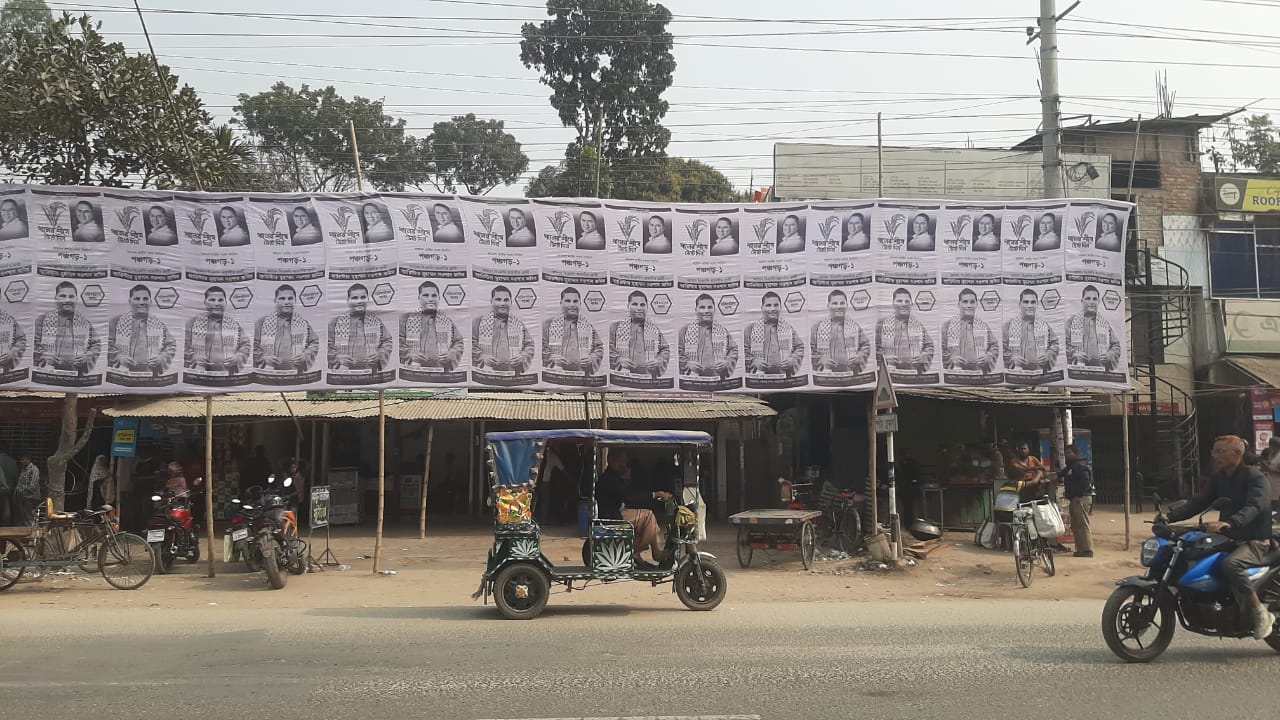
Against this backdrop, the Panchgarh-1 race has taken on a high-voltage character. Veteran Bangladesh Nationalist Party candidate Barrister Muhammad Naushad Zamir is widely regarded by local observers as the front-runner, drawing strength from political experience, local roots and organisational backing. Challenging him is Sarjis Alam of the National Citizen Party, a first-time parliamentary candidate and prominent student leader whose energetic campaign has introduced uncertainty into what might otherwise have been a more predictable contest.
The constituency has a population of 987,644, including 496,725 men and 490,919 women. Muslims number 820,629, while Hindus account for 163,404. Hindu voters, who have traditionally leaned towards the Awami League, are seen as potentially decisive in close races, particularly in a constituency where margins can be shaped by turnout rather than party loyalty alone. The registered electorate stands at over 430,000 voters, with a notable presence of young and first-time voters. Across communities, stability, development, healthcare and cross-border cooperation consistently emerge as central electoral concerns.
Barrister Muhammad Naushad Zamir’s campaign has sought to align itself closely with these priorities. An experienced lawyer and politician from a prominent political family, he has emphasised education, healthcare expansion, agricultural support and the preservation of long-standing cross-border linkages that local livelihoods depend upon. His outreach to farmers, educators and youth leaders has reinforced his image as a familiar and accessible figure capable of navigating both grassroots concerns and broader political dynamics tied to the border economy.
Sarjis Alam represents a contrasting political trajectory. Emerging from the Students Against Discrimination movement, which played a significant role in youth mobilisation, he has built his campaign around high-energy rallies and direct engagement with younger voters. Since 2025, he has served as Chief Organiser for the National Citizen Party’s Northern Region, giving him organisational visibility beyond Panchgarh. His alliances with Jamaat Islam activists have expanded his campaign’s reach, though analysts note that his India-critical rhetoric has tempered enthusiasm among sections of the electorate in a border constituency where cross-border dependence remains pronounced.
Despite the intensity of the contest, both candidates have emphasised civility. Sarjis Alam has publicly described Barrister Zamir as a brother and stated that cordial relations will continue beyond the election, underlining cooperation despite political differences. Zamir, addressing supporters during the campaign, has acknowledged that his party is contesting the election while mourning the loss of national leader Begum Khaleda Zia, yet has reaffirmed his commitment to delivering development, stability and continuity in cross-border relations that residents rely upon.
The strategic weight of Panchgarh-1 has also drawn visible attention from the state. Ministers and officials from the Ministry of Local Government, Rural Development and Co-operatives and the Ministry of Health have visited the district during the campaign to review election preparedness and public service delivery. Their presence reflects heightened official focus on infrastructure, healthcare access and governance performance in a sensitive border constituency, particularly during an election cycle.
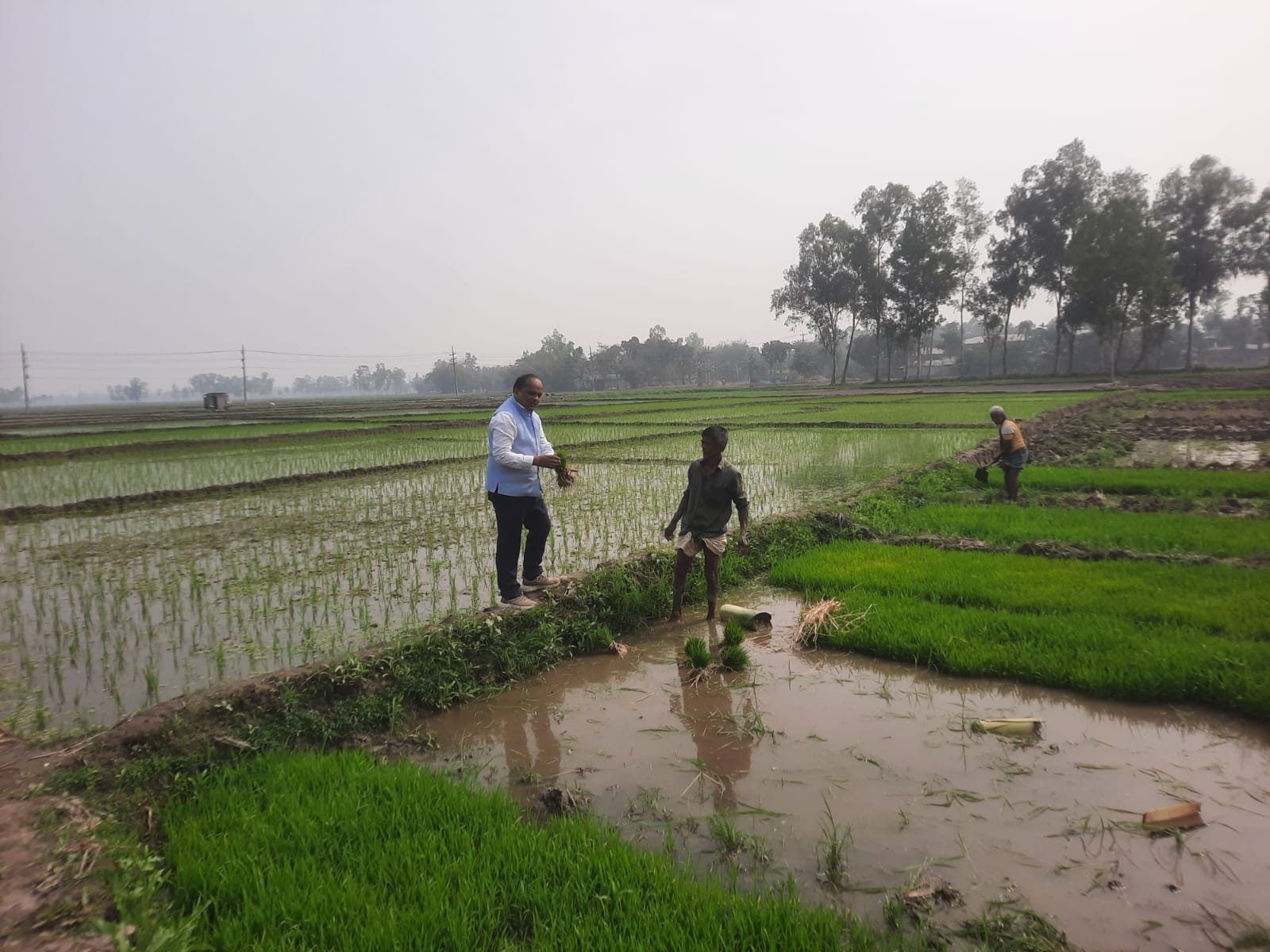
Economically, Panchgarh-1 remains predominantly agrarian, producing rice, sugarcane, potatoes, legumes and vegetables. Farmers depend heavily on seasonal rainfall, limited irrigation facilities and access to markets that are often linked, directly or indirectly, to India. Healthcare infrastructure within the constituency is limited, compelling many residents to seek treatment in Siliguri and nearby Indian towns. Both leading candidates have therefore highlighted healthcare expansion and cross-border medical cooperation as essential components of their policy platforms.
Political observers assessing the race suggest that the BNP’s organisational depth, Zamir’s experience and his development-focused agenda give him an advantage, though they caution that this assessment is based on ground-level observations rather than formal polling. At the same time, Sarjis Alam’s student-led mobilisation introduces unpredictability, particularly among younger voters seeking new political voices. Voter turnout, traditionally variable in the region, is expected to play a decisive role.
Historical memory continues to run beneath the contemporary campaign. Encounters with residents during the election period revive recollections of 1971, when families in North Bengal set aside personal security and official positions to support the Liberation War. Many still speak with respect for the role of the Indian Army and the leadership of then Prime Minister Indira Gandhi, underscoring how shared history shapes present-day perceptions along the border. Political contexts may change, but local narratives suggest that human bonds and collective memory endure.
As Panchgarh-1 moves towards polling day, it stands as a constituency where history, geography, trade and politics intersect sharply. With Barrister Muhammad Naushad Zamir maintaining his position as the perceived front-runner and Sarjis Alam energising the race with a youth-driven challenge, the outcome will reveal how voters at Bangladesh’s northern gateway balance legacy, livelihood and the promise of change in a strategically important frontier seat.
*Political and Strategic Analyst