Asian Nations Join Hands to Boost Health Research
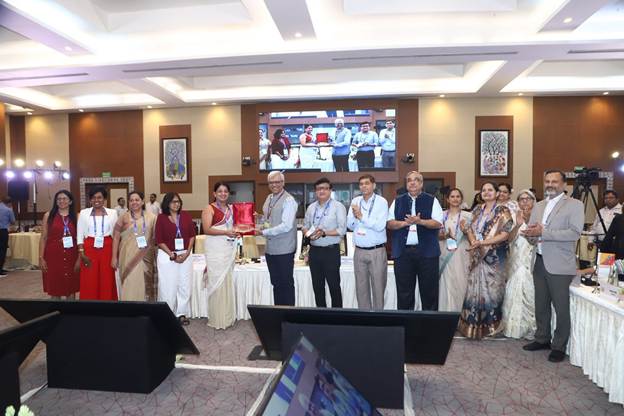
New Delhi: South and Southeast Asian nations agreed to strengthen health research systems through regional collaboration at a high-level meeting hosted by the Indian Council of Medical Research (ICMR), here on August 22, 2025.
Representatives from Bhutan, Nepal, Sri Lanka, Timor-Leste, and India gathered at Sushma Swaraj Bhawan to align health research with policy, address shared health challenges, and build sustainable, future-ready health systems across the region.
Organised by the ICMR and the Department of Health Research (DHR), Ministry of Health and Family Welfare, the dialogue marked a significant step toward fostering South–South cooperation.
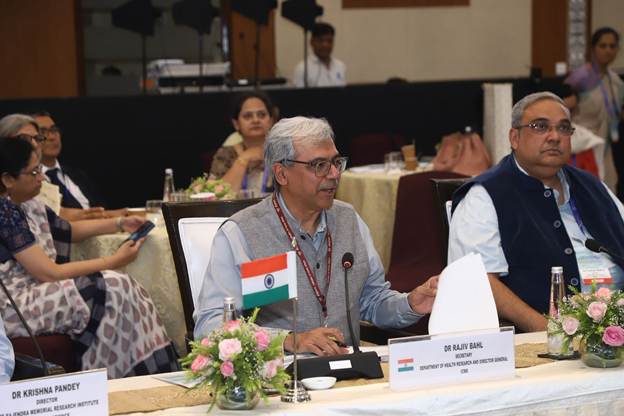
The event brought together a distinguished group of experts and policymakers to deliberate on regional health priorities. Notable attendees included Dr V.K. Paul, Member of the National Institution for Transforming India (NITI) Aayog, who provided strategic insights on policy integration; Amit Agrawal, Secretary of the Department of Pharmaceuticals, who chaired a session on medical technology innovation; Dr Rajeev Singh Raghuvanshi, Drugs Controller General of India; Prof. Dr K. Srinath Reddy, Honorary Distinguished Professor at the Public Health Foundation of India (PHFI); Dr Shamika Ravi, Member of the Economic Advisory Council to the Prime Minister (EAC-PM); Dr Shivkumar Kalyanaraman, Chief Executive Officer of the Anusandhan National Research Foundation (ANRF); Rajesh Bhushan, former Secretary of the Ministry of Health and Family Welfare; and Dr Renu Swarup, former Secretary of the Department of Biotechnology. Their contributions enriched discussions on how research can address pressing regional health needs.
The meeting focused on fostering collaboration to tackle shared challenges, including antimicrobial resistance (AMR), non-communicable diseases (NCDs), One Health initiatives, infectious and vector-borne diseases, maternal health, and medical innovation. Participants underscored the importance of pooling resources and expertise to enhance research capabilities across the region. Shri Amit Agrawal highlighted India’s advancements in medical technology innovation, stating, “India today stands at the forefront of scientific research and innovation for health. I urge our research platform partners to actively engage with India’s open innovation platforms, so that together we can nurture start-ups, accelerate MedTech breakthroughs, and deliver affordable solutions that serve both economic growth and the larger public good.” This call to action emphasised the potential for collaborative innovation to drive affordable healthcare solutions.
A key outcome was the commitment to bridge research and policy through formal mechanisms, ensuring that scientific evidence directly informs public health programs. Dr Rajiv Bahl, Secretary of the DHR and Director-General of the ICMR, emphasised the role of science diplomacy, stating, “Global partnerships and science diplomacy have always been central to India’s strategy. South–South collaboration remains a priority through joint projects and capacity building to ensure that the region benefits from each other’s expertise. Above all, science and research must serve people directly.” This vision underscored the meeting’s focus on practical, people-centric outcomes.
To support countries with emerging research systems, the ICMR offered to share critical resources, including standardized ethics review forms and free online training courses in research methods, ethics, grant writing, and science communications. These tools aim to help nations like Bhutan and Timor-Leste, which are in the early stages of developing their research frameworks, build capacity without starting from scratch. The representatives agreed to establish structured collaboration mechanisms, including annual or biannual convenings, exchange visits for researchers, and joint capacity-building programs. These initiatives will focus on strengthening skills in key areas such as epidemiology, data analysis, and ethical research practices.
The dialogue also saw a collective commitment to transition from knowledge-sharing to joint action. Each country agreed to explore leadership roles in specific thematic areas, such as pandemic preparedness, infectious diseases, vector-borne diseases, NCDs, maternal health, and medical innovation. For instance, discussions highlighted the potential for India to lead in medical technology innovation, while Nepal and Bhutan expressed interest in advancing One Health initiatives to address zoonotic diseases. Sri Lanka and Timor-Leste emphasised maternal health and infectious disease research, respectively, aligning their contributions with regional needs.
Additional contributors included Dr Vishwajeet Kumar, Founder and Chief Executive Officer of Community Empowerment Lab, who shared insights on community-driven health research, and senior ICMR leaders who moderated sessions: Dr Sanghamitra Pati, Manisha Saxena, Dr R.S. Dhaliwal, Dr Roli Mathur, Dr Taruna Madan, Dr Tanvir Kaur, and Dr Nivedita Gupta. “Their moderation ensured focused discussions on technical and policy aspects of health research,” the Ministry of Health and Family Welfare claimed today.
The meeting concluded with a shared resolve to create resilient health systems that respond directly to regional priorities, leveraging science diplomacy to foster long-term collaboration.
The specific event underscored the importance of sustained regional cooperation to address complex health challenges. By committing to joint action, resource sharing, and policy alignment, the participating nations laid the groundwork for a robust health research ecosystem in South and Southeast Asia, with the potential to deliver tangible benefits for public health and innovation.
– global bihari bureau